Ringgenberg Castle
Ringgenberg Castle is a striking medieval fortress perched on the rocky heights above Lake Brienz in the municipality of Ringgenberg, Switzerland. Established in the early 13th century, this hill castle served as a strategic stronghold overseeing the surrounding landscape and waterways. Its history is deeply intertwined with local noble families, religious institutions, and the political shifts that shaped the Bernese Oberland region through the Middle Ages and into the modern era.
The castle's origins are linked to the Barons of Brienz and Raron, who owned the land around the lake during the Middle Ages. Around 1231, they relocated to the village of Ringgenberg and soon after established the castle as their seat of power. The fortress was likely constructed in several phases throughout the 13th century, with the first documented mention occurring in 1240. Over time, the Counts of Ringgenberg expanded their influence, often clashing with the powerful Interlaken Abbey over territorial control.
Medieval origins and historical significance
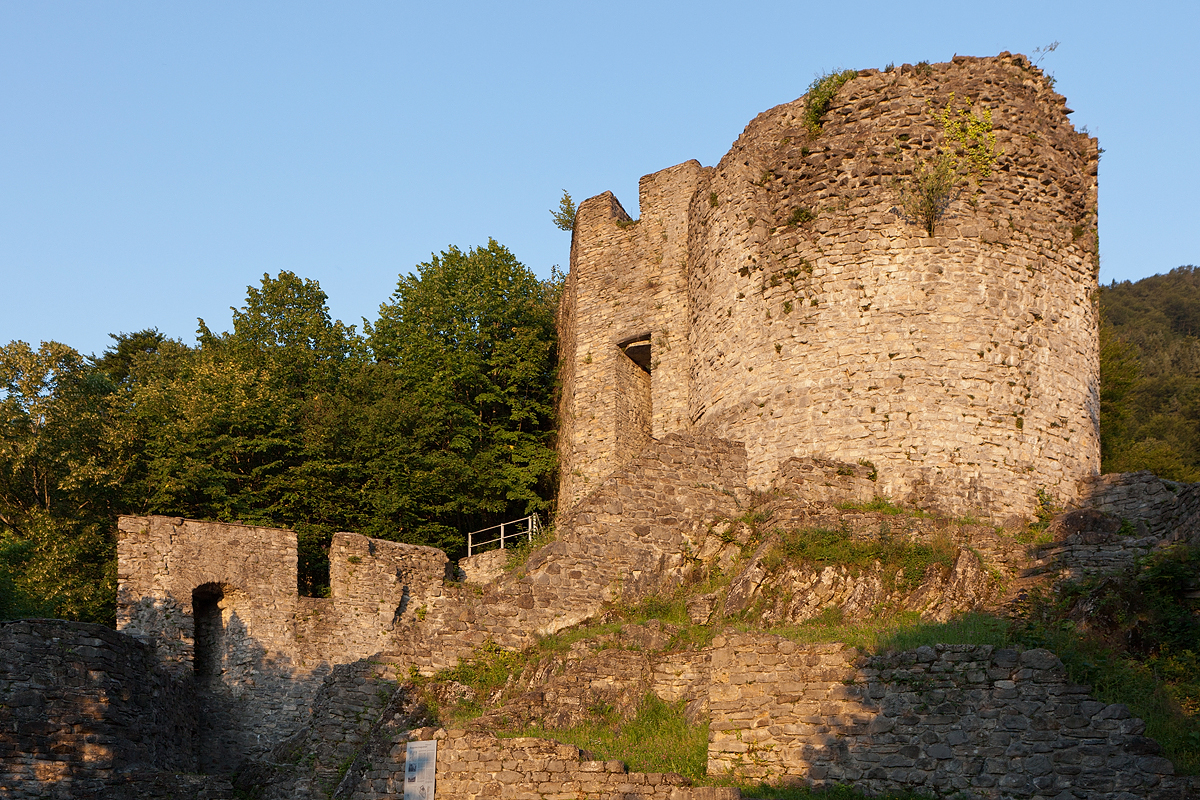
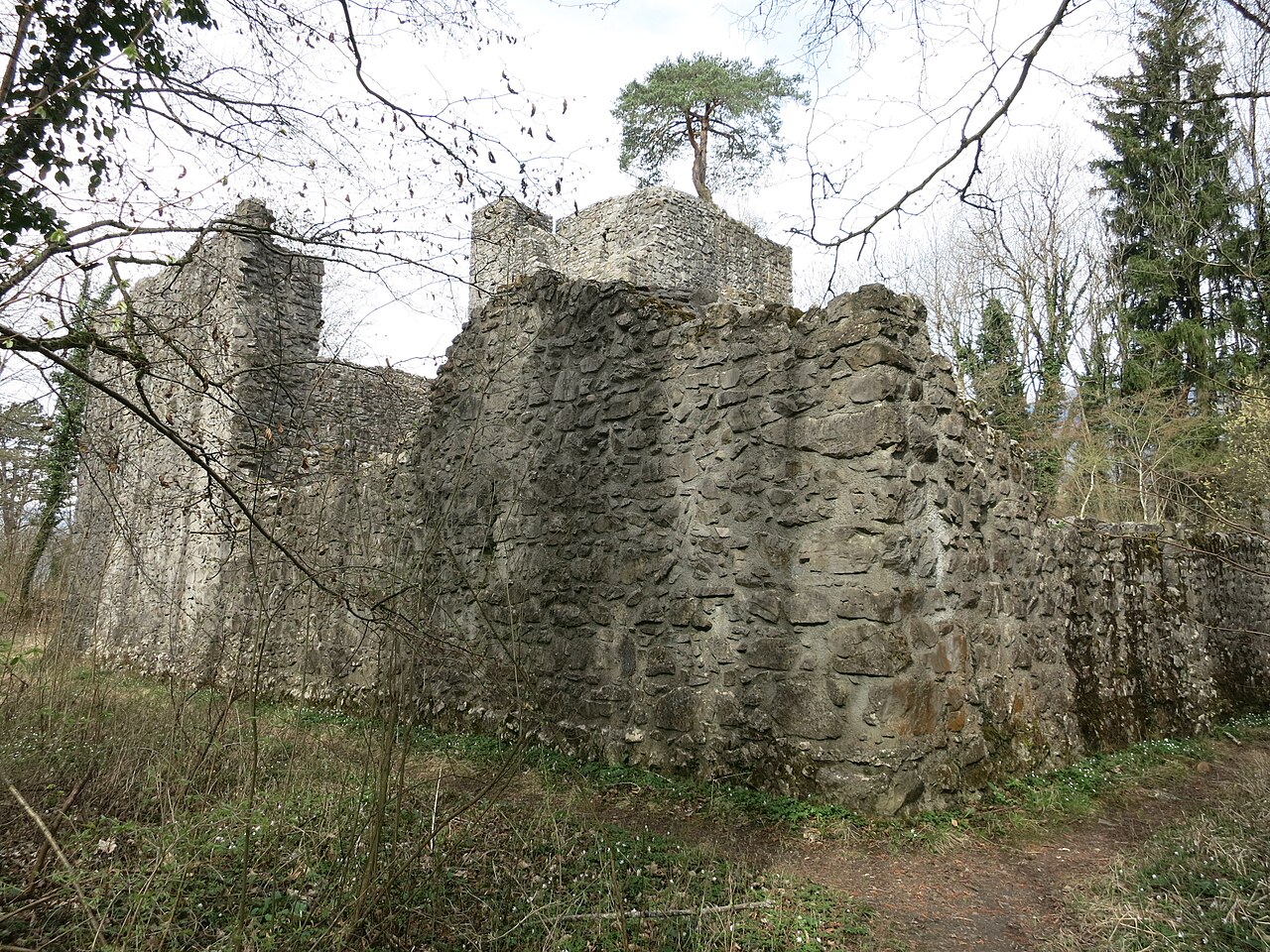
The castle's initial construction reflects typical high medieval defensive architecture, featuring a bergfried (a large main tower), palas (residential building), and both inner and outer courtyards enclosed by thick curtain walls. The northern walls of the inner courtyard and the palas were built with exceptional thickness—approximately 2.5 meters—to withstand siege weaponry. The bergfried tower served multiple defensive functions, acting as a lookout, refuge, and a formidable shield wall.
Access to the bergfried was strategically designed with an entrance likely located on the northern courtyard wall, reached by a wooden staircase. This elevated entry point was a common defensive feature to hinder attackers. During the castle's expansion, the palas was enlarged by removing the outer courtyard and constructing a new inner wall about two meters thick. Additional battlements were added to the outer walls, accessible from the palas's first floor, enhancing the castle's fortifications.
The main residential tower evolved from a single-story, nearly square structure into a three-story building. Each floor contained one room connected by wooden stairs. The second floor housed the knights' hall, notable for its tall, recessed windows with built-in seating accessed by small wooden steps. This hall lacked a fireplace, suggesting it was used primarily during warmer seasons or for special gatherings. After battlements and walkways were added, the tower's main entrance shifted to the third floor, accessible from the battlement on the southern side.
Decline, conflict, and changing ownership
The estate began to decline during the rule of Philipp von Ringgenberg (1351–1374), who faced financial difficulties and was forced to sell parts of the land to the nearby Interlaken Abbey. The region became unstable due to conflicts, culminating in 1381 when troops from the Canton of Uri attacked, burning and plundering the castle. Count Petermann von Ringgenberg was captured and taken prisoner to Obwalden.
In 1386, the castle and its lands were assigned to the city of Bern, but lacking funds to restore the fortress, Bern sold parts of the property back to Interlaken Abbey in 1411 and 1439. Ownership fluctuated between Bern and the Abbey until the mid-15th century. The Protestant Reformation in 1528 brought further transformation when Bern secularized the Abbey's lands, including Ringgenberg, integrating them into the Bernese bailiwick of Interlaken.
The church and preservation efforts
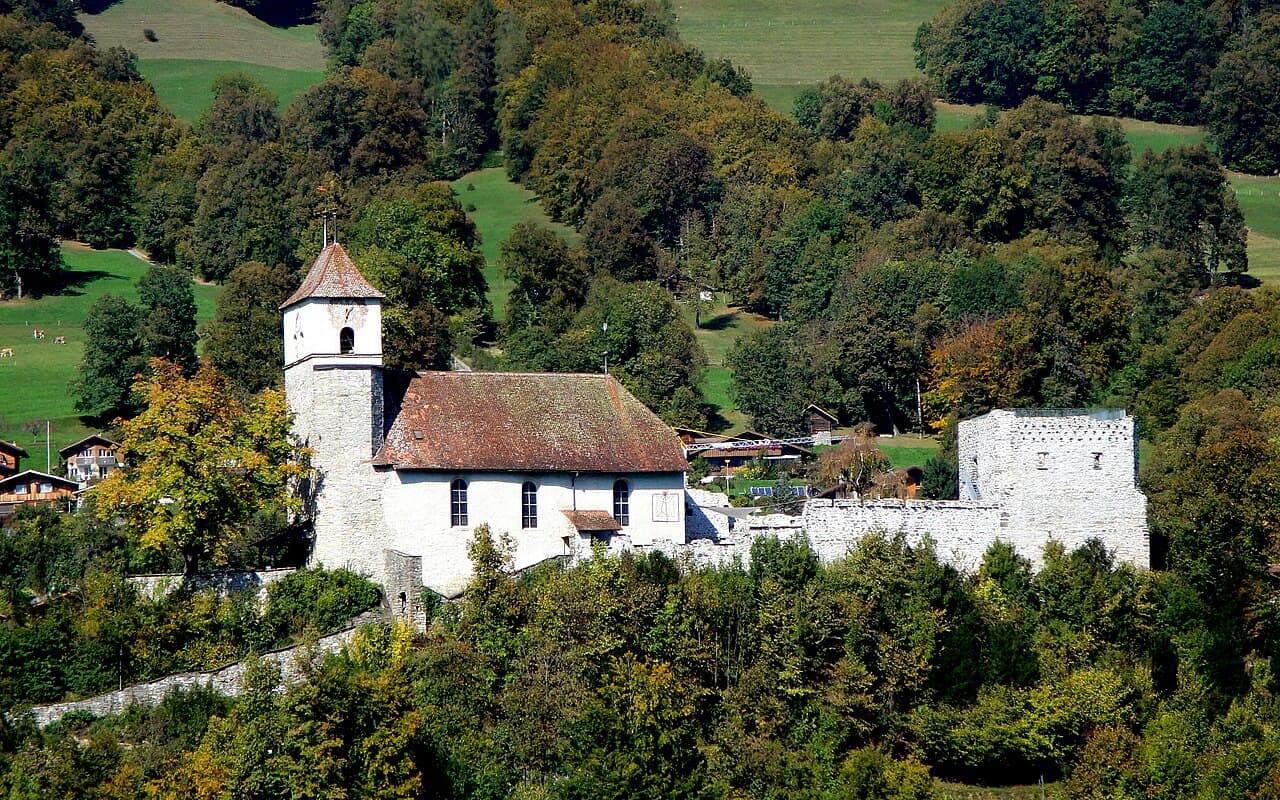
A significant chapter in the site's history began in 1670 when the architect Abraham Dünz constructed a church within the castle ruins. This 17th-century church ingeniously incorporated surviving sections of the fortress, including parts of the castle walls and the Romanesque residential tower. The tower was modified with a new ground-level entrance to serve the church's needs while preserving its medieval character.
Throughout the 20th and early 21st centuries, the castle ruins underwent several preservation and restoration campaigns—in 1928, 1946–49, and 2006–08—to stabilize the structure and maintain its historical presence. Today, the ruins stand as a testament to the region's layered history, blending medieval military architecture with post-Reformation religious heritage.
Architectural features and visitor experience
Visitors to Ringgenberg Castle can explore the remains of a typical medieval hill castle with its distinctive components. The site includes a bergfried tower, palas, and remnants of thick curtain walls and battlements. The castle's strategic hilltop location offers commanding views of Lake Brienz and the surrounding mountains, including notable peaks like Roteflue and Loucherhorn.
A highlight for visitors is the 12-meter-high observation platform within the ruins, accessible by climbing 52 steps. From this vantage point, one can appreciate the castle's original defensive purpose while enjoying panoramic vistas of the village below and the breathtaking natural landscape.
Ringgenberg Castle's blend of medieval fortification and 17th-century ecclesiastical architecture makes it a unique cultural landmark. The integration of the church within the castle walls exemplifies adaptive reuse of historical structures, preserving the site's significance across centuries.
Historical figures associated with the castle
- Baron Cuno von Brienz: Early 13th-century imperial bailiff, possibly responsible for the initial construction or expansion of the fortress.
- Johann von Ringgenberg: A notable medieval poet and member of the Ringgenberg family, whose works are included in the Codex Manesse.
- Philipp von Ringgenberg: Count who faced financial difficulties leading to the castle's decline in the mid-14th century.
- Petermann von Ringgenberg: Count captured during the 1381 Uri attack.
- Abraham Dünz: Architect who designed the 17th-century church built into the castle ruins.
Cultural and heritage significance
Ringgenberg Castle stands as a monument to the turbulent history of the Bernese Oberland, illustrating the transition from medieval feudal power to religious and civic authority under Bernese rule. The castle's ruins and the church symbolize the region's architectural evolution and the enduring legacy of Swiss cultural heritage.
Preservation efforts have ensured that the site remains accessible and informative for visitors, offering insights into medieval castle construction techniques, feudal politics, and the impact of the Reformation on local communities.
Frequently asked questions (FAQ)
- When was Ringgenberg Castle originally built?
- Ringgenberg Castle was built in several stages during the 13th century, with the first historical mention in 1240.
- What architectural features can I see at Ringgenberg Castle?
- Visitors can explore the bergfried tower, palas, curtain walls, battlements, and a 12-meter-high observation platform offering panoramic views.
- What is the significance of the church at Ringgenberg Castle?
- The 17th-century church, designed by Abraham Dünz, was built within the castle ruins, incorporating medieval walls and a residential tower.
- Who were some notable historical figures associated with Ringgenberg Castle?
- Important figures include Baron Cuno von Brienz, Johann von Ringgenberg the poet, Philipp von Ringgenberg, Petermann von Ringgenberg, and architect Abraham Dünz.
- How did the Protestant Reformation affect Ringgenberg Castle?
- In 1528, Bern secularized the lands of Interlaken Abbey, including Ringgenberg, after the region's unsuccessful rebellion against the new faith.
Photo gallery

Information
Architect
Abraham Dünz
Current owner
Evangelical Reformed Church community of Ringgenberg
Website
Visit websiteSources & official resources
Verify the information above using these authoritative references.
Loading map...
Visitor reviews
No reviews yet. Been here? Write the first review and help other travelers!
Write the first reviewVisited this castle? Share your experience
Your review helps other travelers and adds first-hand knowledge to our encyclopedia.