Wegelnburg Castle
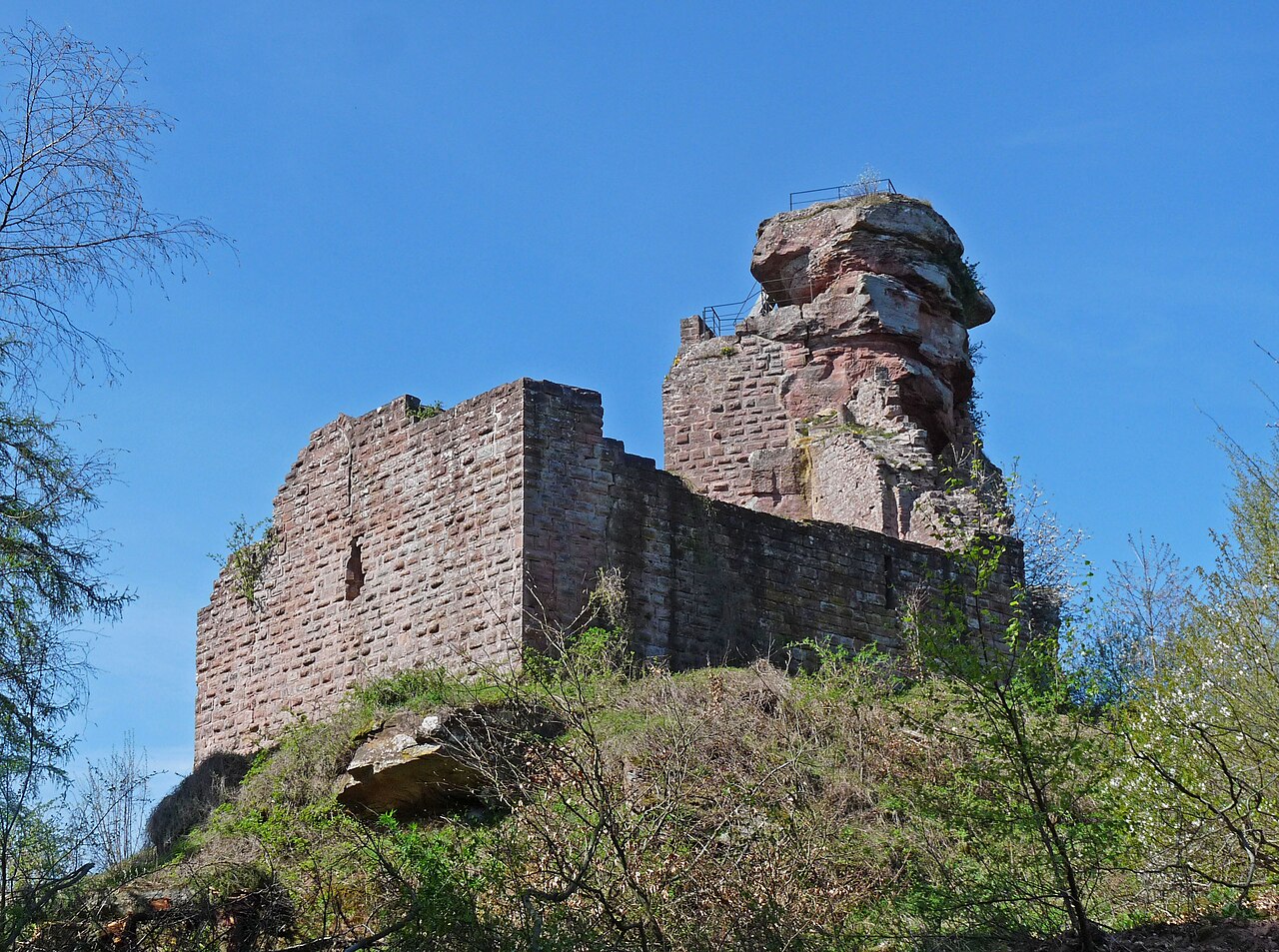
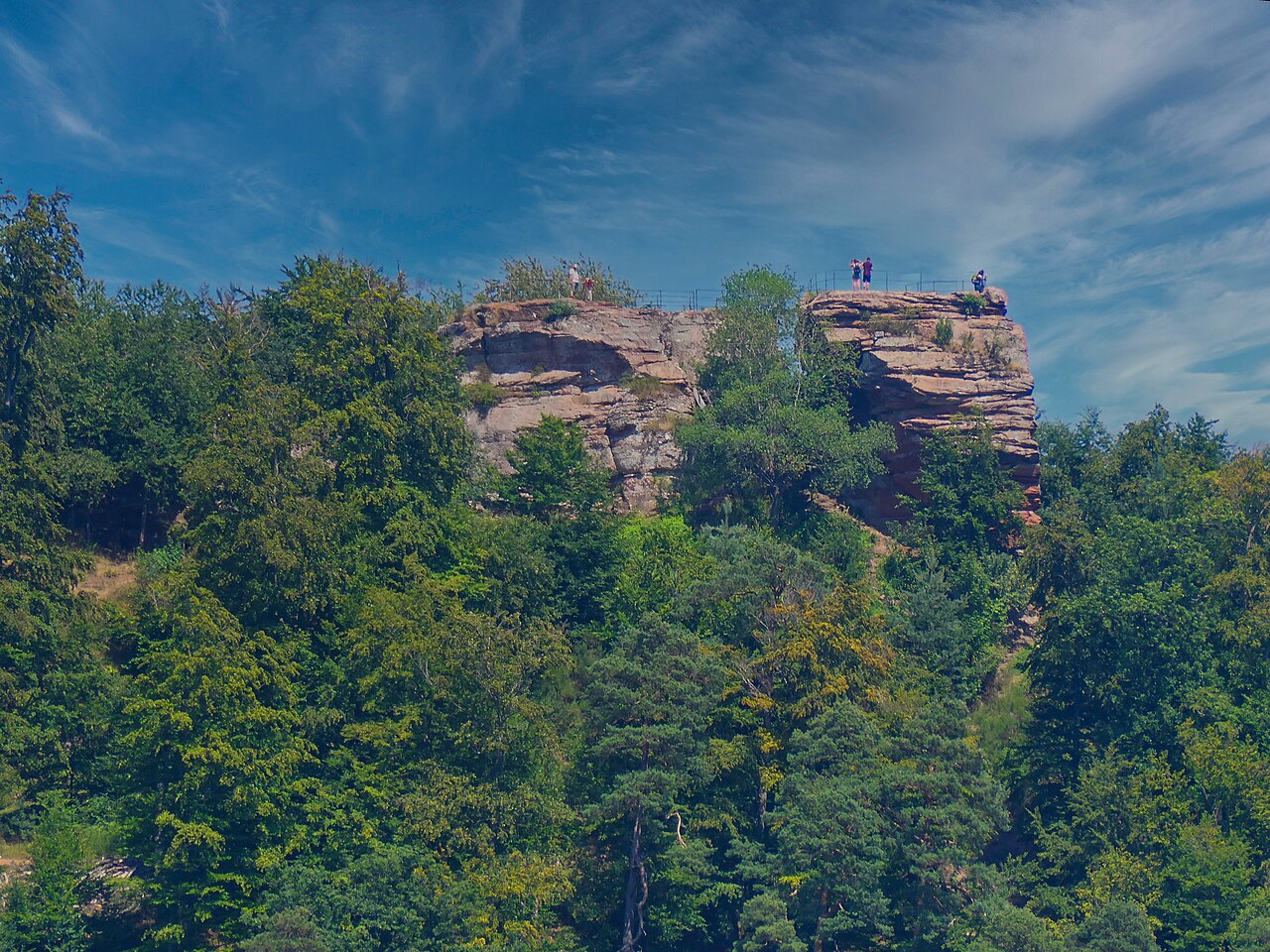
Wegelnburg Castle, located southwest of the village of Nothweiler in the Rhineland-Palatinate region of Germany, stands as a remarkable example of a high medieval fortress strategically positioned near the border with France. Built atop a large sandstone rock, it is the highest castle in the Palatinate Forest, offering commanding views of the surrounding landscape. Its location just 300 meters from the French border underscores its historical role as a defensive stronghold.
The castle's origins trace back to the 12th or early 13th century, likely constructed by the Hohenstaufen dynasty to protect their territorial boundaries. The first documented mention of Wegelnburg dates to 1247. Its strategic importance is highlighted by its involvement in regional conflicts; notably, in 1272 (or possibly 1282), it was seized by troops from the Prince-Bishopric of Strasbourg following a breach of peace, subsequently coming under the control of Rudolf I of Germany.
Medieval history and ownership transitions
Following its capture, Wegelnburg became a royal possession managed by ministerials, who undertook significant expansions over the subsequent decades. By 1330, the castle was pledged to the Electoral Palatinate but was never redeemed, indicating a shift in regional power. Later, in 1417, ownership passed to the Dukes of Palatine-Zweibrücken, reflecting the complex feudal relationships and territorial exchanges typical of the period.
Architectural features and layout
Wegelnburg Castle is architecturally notable for its division into three distinct wards: the lower, middle, and upper baileys. The lower bailey is situated on the western side and was likely the initial defensive enclosure. The castle's internal gateway has been preserved and restored, showcasing the medieval craftsmanship in fortification design. Access to the upper ward is facilitated by rock staircases hewn directly into the sandstone, a testament to the integration of natural terrain into defensive architecture.
Within the lower and middle baileys, visitors can observe niches, timber holes, staircases, and restored arches, which provide insight into the castle's functional spaces and construction techniques. The foundation walls exhibit a remarkable smooth transition between the sandstone rock and masonry, highlighting the builders' skill in blending natural and man-made elements. Additionally, rock caves associated with the upper and middle baileys add to the castle's defensive and storage capabilities.
Later history and decline
During the 16th and 17th centuries, Wegelnburg underwent repairs and enlargements, reflecting its continued strategic relevance. However, the Thirty Years' War brought significant damage when imperial mercenaries occupied and damaged the fortress. The castle's decline culminated in 1679 when French troops, acting under the terms of the Treaties of Nijmegen, deliberately demolished it to prevent future military use.
Following its destruction, Wegelnburg remained a ruin but retained historical significance. Ownership passed from the Palatinate to Bavaria and eventually to the state of Rhineland-Palatinate. Since 1963, the castle has been managed by the state's Castles Administration, which undertook restoration efforts between 1979 and 1982 to preserve the remaining structures and remove accumulated rubble.
Geographical context and nearby castles
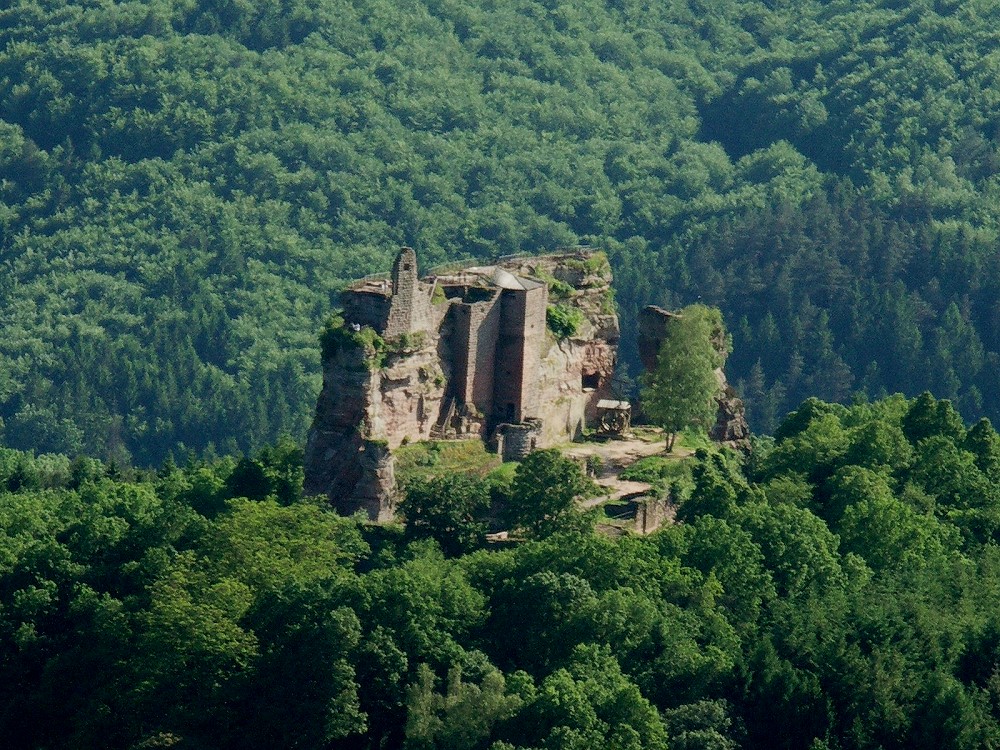
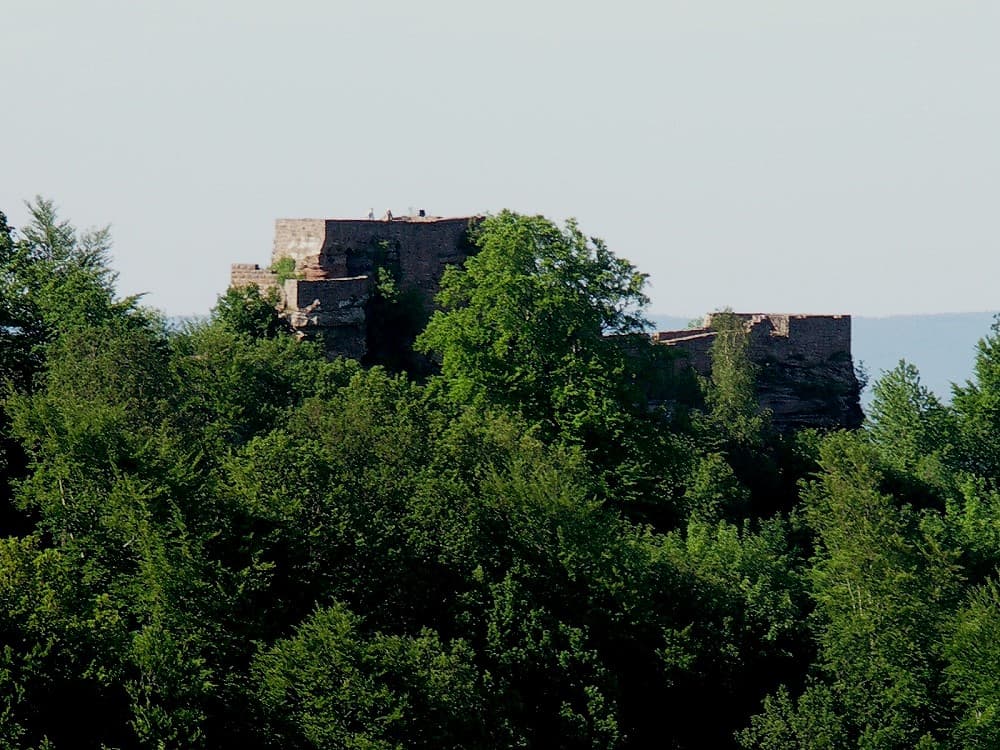
Wegelnburg's proximity to the French border places it near several other notable castles, including Hohenbourg and Lœwenstein, both located approximately 600 to 800 meters to the south in France. Additionally, Fleckenstein Castle is situated nearby, forming a cluster of medieval fortifications that historically controlled this border region.
Visiting Wegelnburg today
Today, Wegelnburg Castle is freely accessible to the public, offering visitors a chance to explore its ruined walls, rock-cut staircases, and scenic surroundings. The castle's elevated position provides panoramic views of the Palatinate Forest and the borderlands, making it a popular destination for hikers and history enthusiasts alike. The preservation of key architectural elements allows for an immersive experience into the castle's medieval past.
Frequently asked questions (FAQ)
- How do I get to Wegelnburg Castle?
- Wegelnburg Castle is located southwest of Nothweiler in the Palatinate Forest near the German-French border. It is accessible by hiking trails from nearby villages and parking areas.
- What is the historical significance of Wegelnburg Castle?
- Wegelnburg Castle was built in the 12th or 13th century by the Hohenstaufen dynasty to protect their territory. It played a key role in regional conflicts and changed hands among important medieval rulers.
- Can I explore the castle ruins freely?
- Yes, Wegelnburg Castle is freely accessible to the public. Visitors can explore the ruins, including the rock-cut staircases and preserved gateway, at their own pace.
- When was Wegelnburg Castle destroyed?
- The castle was significantly damaged during the Thirty Years' War and was demolished by French troops in 1679 under the Treaties of Nijmegen to prevent its military use.
- Are there other castles nearby worth visiting?
- Yes, nearby castles include Hohenbourg and Lœwenstein in France, as well as Fleckenstein Castle, forming a cluster of historic fortifications near the border region.
Photo gallery

Information
Current owner
Rhineland-Palatinate Castles Administration
Loading map...
Visitor reviews
No reviews yet. Been here? Write the first review and help other travelers!
Write the first reviewVisited this castle? Share your experience
Your review helps other travelers and adds first-hand knowledge to our encyclopedia.