Hohenbourg Castle
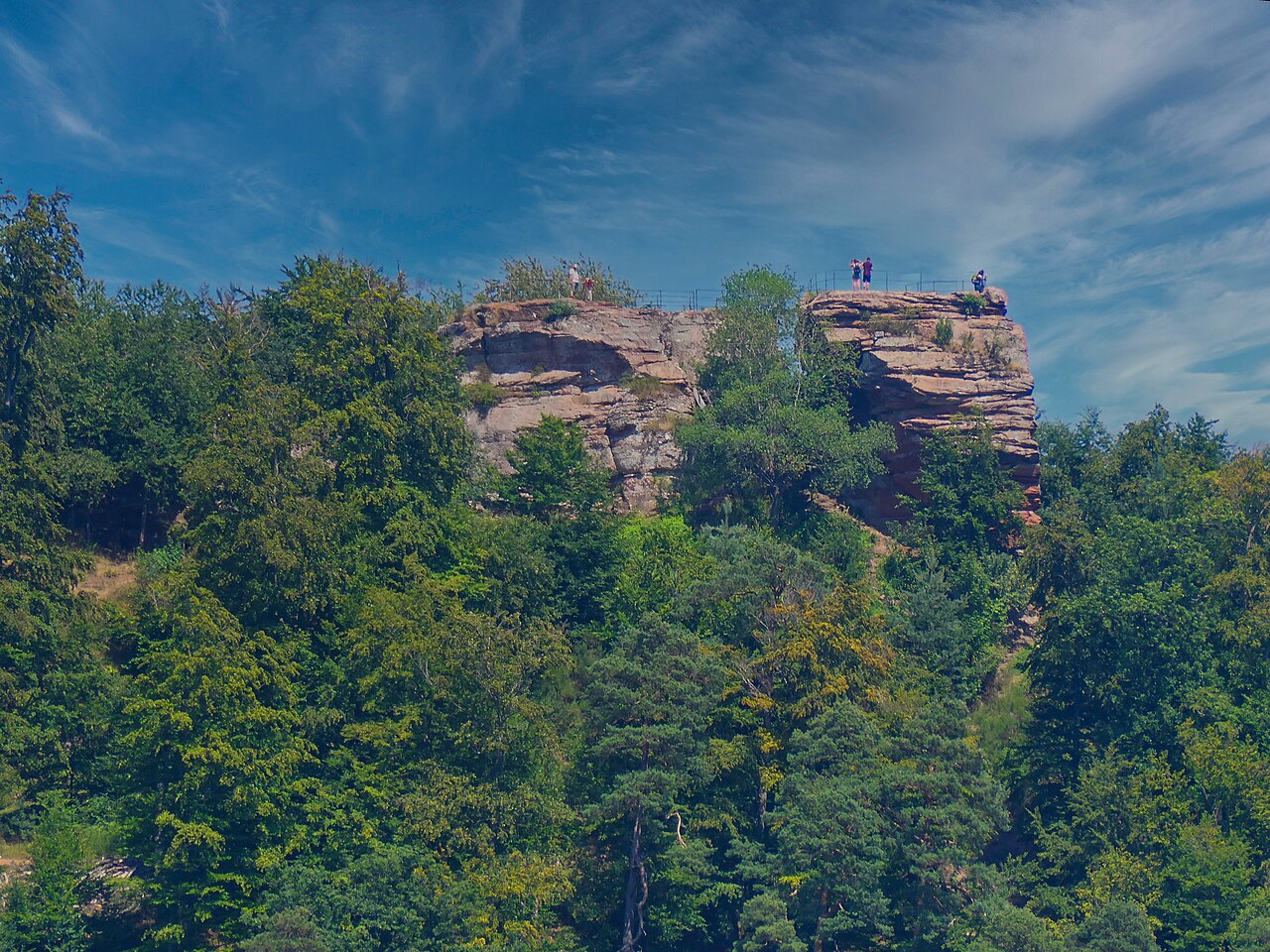
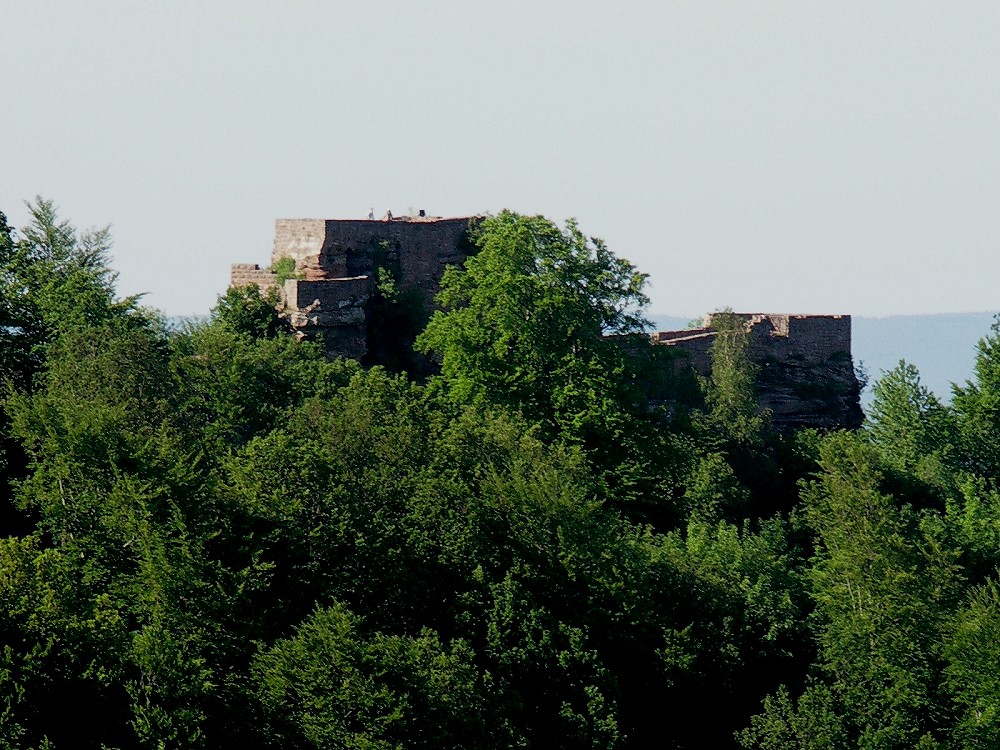
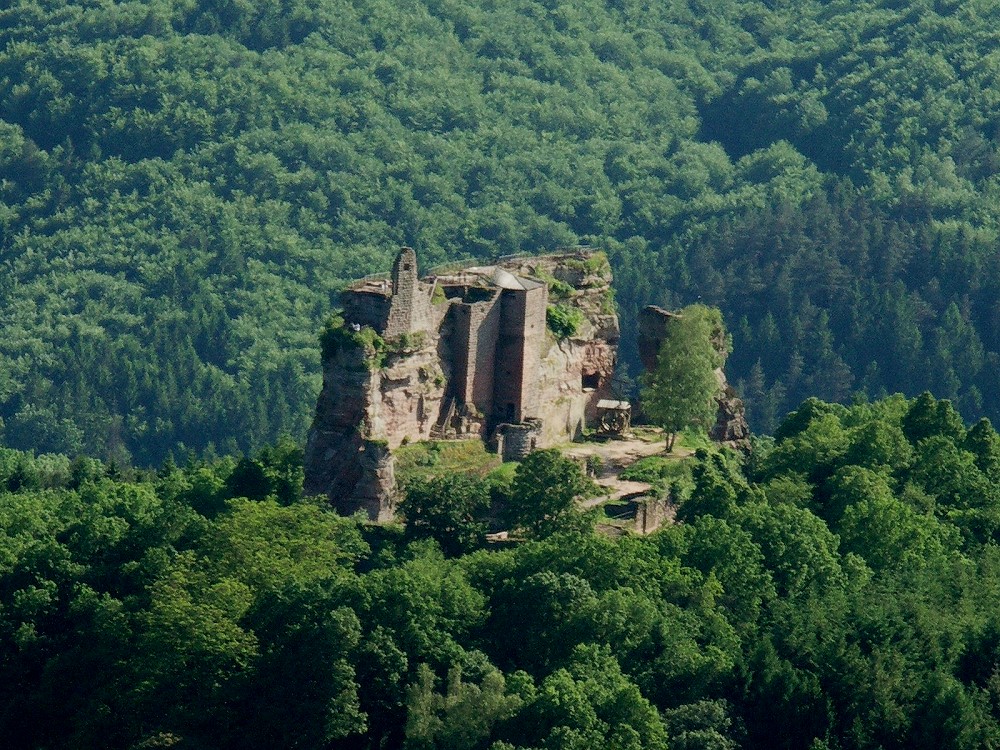
Hohenbourg Castle, locally known as Château du Hohenbourg, is a remarkable medieval fortress situated in the dense woods northwest of the town of Wingen in the Bas-Rhin department of France. Located just about 300 meters from the German border, this castle stands in the historic region of Northern Alsace or the Northern Vosges. It is renowned as the highest castle in the Northern Vosges, strategically perched upon and integrated with a large natural rock formation, which classifies it as a rock castle or Felsenburg. The castle’s elevated position at approximately 551 meters above sea level provided commanding views over the surrounding landscape, including the Northern Vosges and the Palatinate region, with visibility extending to the Upper Rhine Plain on clear days.
Early history and construction
The origins of Hohenbourg Castle trace back to the high medieval period, with its construction dated to the 13th century. The castle was likely built during the first half of the century by Gottfried Puller, a figure who served militarily under Emperor Friedrich II in 1236. The Puller family later took on the name Puller of Hohenbourg, becoming the castle’s earliest known owners. The first documented mention of the castle appears in 1262, when Konrad and Heinrich of Hohenburg transferred property rights to the bishop Heinrich II of Speyer. This period also saw feudal entanglements involving the nearby Fleckenstein family and the Counts Palatine, which led to disputes and conflicts in the region.
Feudal conflicts and ownership changes
Between 1273 and 1289, the castle and its owners were embroiled in a series of conflicts with the Fleckenstein family. These disputes escalated to the point that Landvogt Otto von Ochsenstein intervened, seizing neighboring fortresses to restore order. Throughout the late 14th and early 15th centuries, ownership of Hohenbourg changed several times. In 1389, Vye von Wasigenstein handed the castle to Elector Palatine Ruprecht I, who then granted it in 1401 to Konrad Puller von Hohenburg. The mid-15th century saw further familial transfers, including Wilrich II von Hohenburg giving the castle to his wife, Jutta von Schöneck. Their son Richard later engaged in disputes with the Elector Palatine, which resulted in the castle's seizure and Richard's execution in 1482.
Renaissance transformation and military significance
By the late 15th century, the estate passed to the Sickingen family through marriage, with Swicker VIII von Sickingen acquiring it in 1475. Under the leadership of Franz von Sickingen, the castle underwent significant military enhancements in 1504. Notably, Franz added a horseshoe-shaped artillery bastion at the entrance, reflecting the evolving military technologies of the time. This bastion featured thick walls between 3.6 and 4.6 meters, pierced by two large gateways and gun ports designed for firearms and artillery deployment.
Despite these fortifications, in 1523 the castle was besieged and destroyed by a coalition of forces led by Elector Palatine Ludwig V, Archbishop-Elector of Trier Richard von Greiffenklau zu Vollrads, and Philip I, Landgrave of Hesse. The Von Sickingen family rebuilt the castle by 1542, incorporating Renaissance architectural elements into its design, including a Renaissance-style doorway that still partially survives today, although it has suffered from vandalism over time.
Architectural features and layout
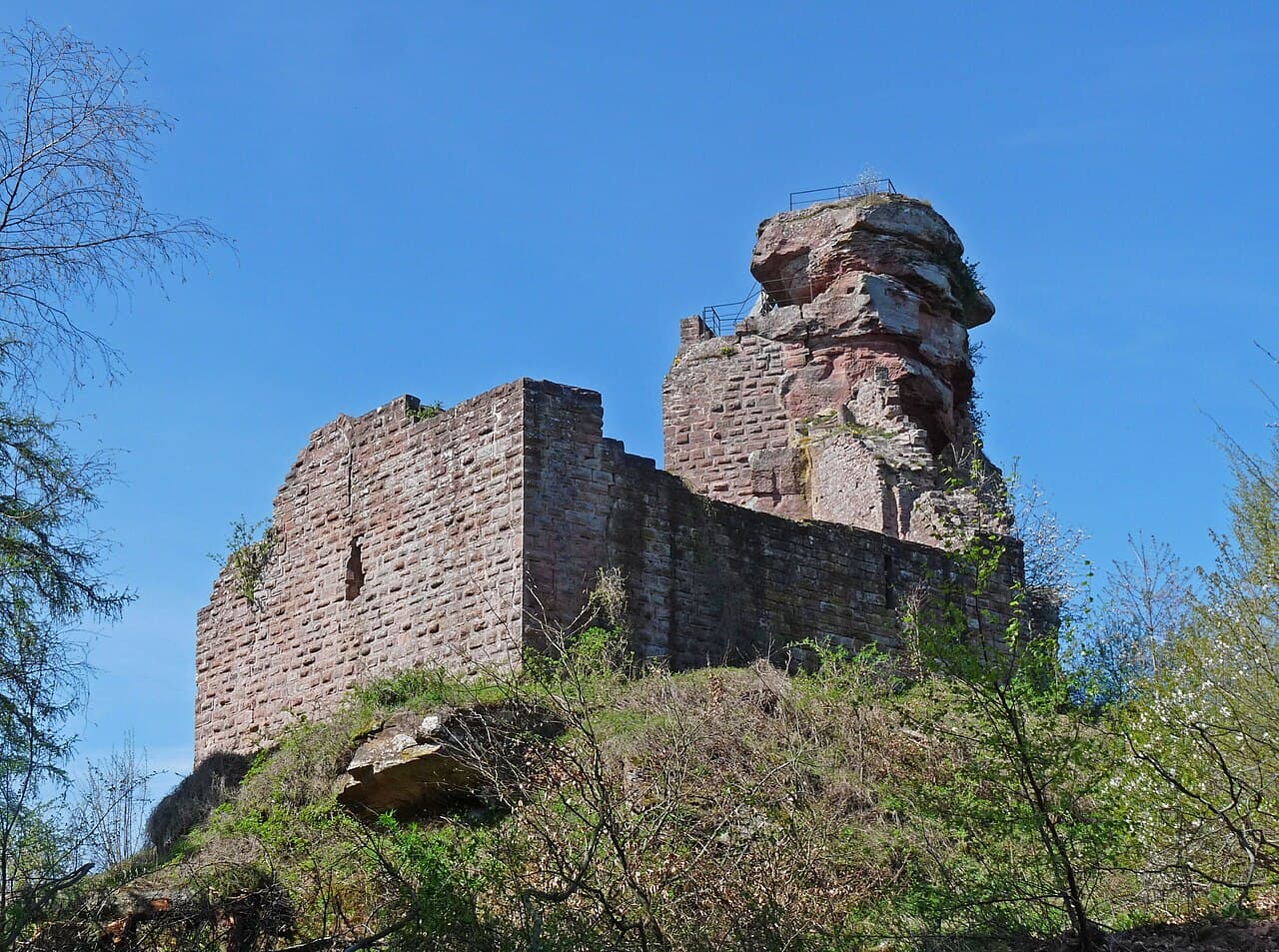
The castle is a prime example of a semi-troglodytic fortress, built partly within and upon natural rock formations on the Schlossberg hill. The ruins are arranged around a prominent rock that likely supported a residential tower in the castle’s prime. A well remains visible near this rock, indicating the medieval inhabitants’ ingenious method of accessing water within the stronghold.
The castle’s layout capitalizes on the natural steep rock surfaces for defense and habitation, with fortified walls, battlements, and the artillery bastion designed to withstand contemporary siege warfare. The Renaissance modifications included an artillery rondel, a rounded defensive tower specifically designed to accommodate firearms, enhancing the castle’s protection during the early 16th century.
Decline and destruction
During the Thirty Years' War in the 17th century, Hohenbourg Castle sustained severe damage inflicted by Swedish troops. The conflict further weakened its defenses and structural integrity. The final blow came in 1680 when French troops commanded by cavalry general Joseph de Montclar, acting under orders from King Louis XIV, demolished the castle completely. This destruction marked the end of the castle’s military and residential use.
Following its destruction, the castle remained under French control, with the Sickingen-Hohenburg family maintaining claims to the property until 1836. Since the 19th century, several archaeological excavations have taken place, although many were uncoordinated. The site was officially recognized as a historic monument in December 1898 and has undergone partial restoration during the 1970s to preserve its ruins.
Surrounding castles and regional context
Hohenbourg Castle is part of a network of medieval fortifications in the region. Approximately 200 meters to the south lie the scarce remains of Lœwenstein Castle, believed to have been constructed in the 13th century as a siege castle to Hohenbourg and later used as an advanced post by the Puller family. Just over the border in Germany, about 600 meters to the north, stands Wegelnburg Castle, while the notable Fleckenstein Castle is also nearby. This cluster of castles reflects the strategic importance of the area during the medieval period, particularly in controlling the borderlands between France and Germany.
Visiting hoyhenbourg castle today
Today, the ruins of Hohenbourg Castle are freely accessible to the public. Visitors can reach the site via forest paths maintained by the Club Vosgien, starting from the nearby village of Lembach and passing through the Gimbelhof area. The castle’s elevated position and rugged surroundings offer a scenic and historically rich experience for hikers, history enthusiasts, and those interested in medieval architecture.
The site’s fragmented remains still convey the castle’s strategic design and phased development, with notable features such as the artillery bastion, Renaissance doorway, and the well near the rock formation. The castle’s location within the Northern Vosges Regional Nature Park adds to its appeal, combining natural beauty with cultural heritage.
Frequently asked questions (FAQ)
- How do I get to Hohenbourg Castle?
- Hohenbourg Castle is accessible via forest trails maintained by the Club Vosgien, starting from the village of Lembach. The hike offers scenic views and a moderately challenging path through the Northern Vosges woods.
- What is the historical significance of Hohenbourg Castle?
- Hohenbourg Castle is a key medieval fortress that played a strategic role in the border region between France and Germany. It showcases architectural evolution from the high medieval period through Renaissance military adaptations.
- When was Hohenbourg Castle built?
- The castle was constructed in the 13th century, likely in the first half, by Gottfried Puller, marking it as a high medieval stronghold.
- Can I explore the ruins of Hohenbourg Castle?
- Yes, the castle ruins are freely accessible to visitors. While the remains are fragmented, key features like the artillery bastion and Renaissance doorway can be explored safely.
- Is there an entrance fee to visit Hohenbourg Castle?
- There is no entrance fee; the ruins are open to the public free of charge.
- What are the best times to visit Hohenbourg Castle?
- Spring through autumn offers the best conditions for hiking and exploring the castle ruins, with pleasant weather and vibrant natural surroundings.
Photo gallery

Information
Website
Visit websiteSources & official resources
Verify the information above using these authoritative references.
Loading map...
Visitor reviews
No reviews yet. Been here? Write the first review and help other travelers!
Write the first reviewVisited this castle? Share your experience
Your review helps other travelers and adds first-hand knowledge to our encyclopedia.