Fleckenstein Castle
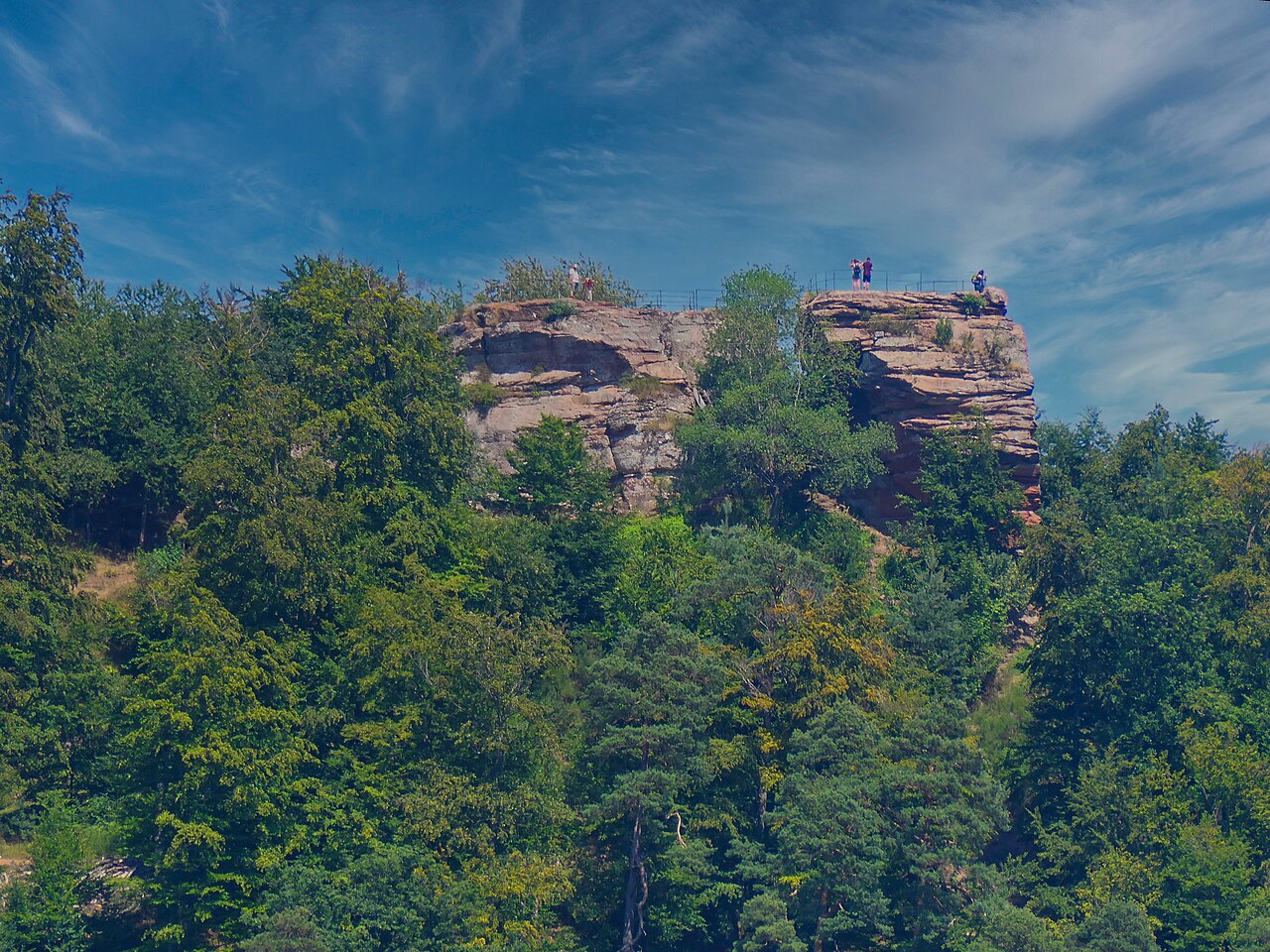
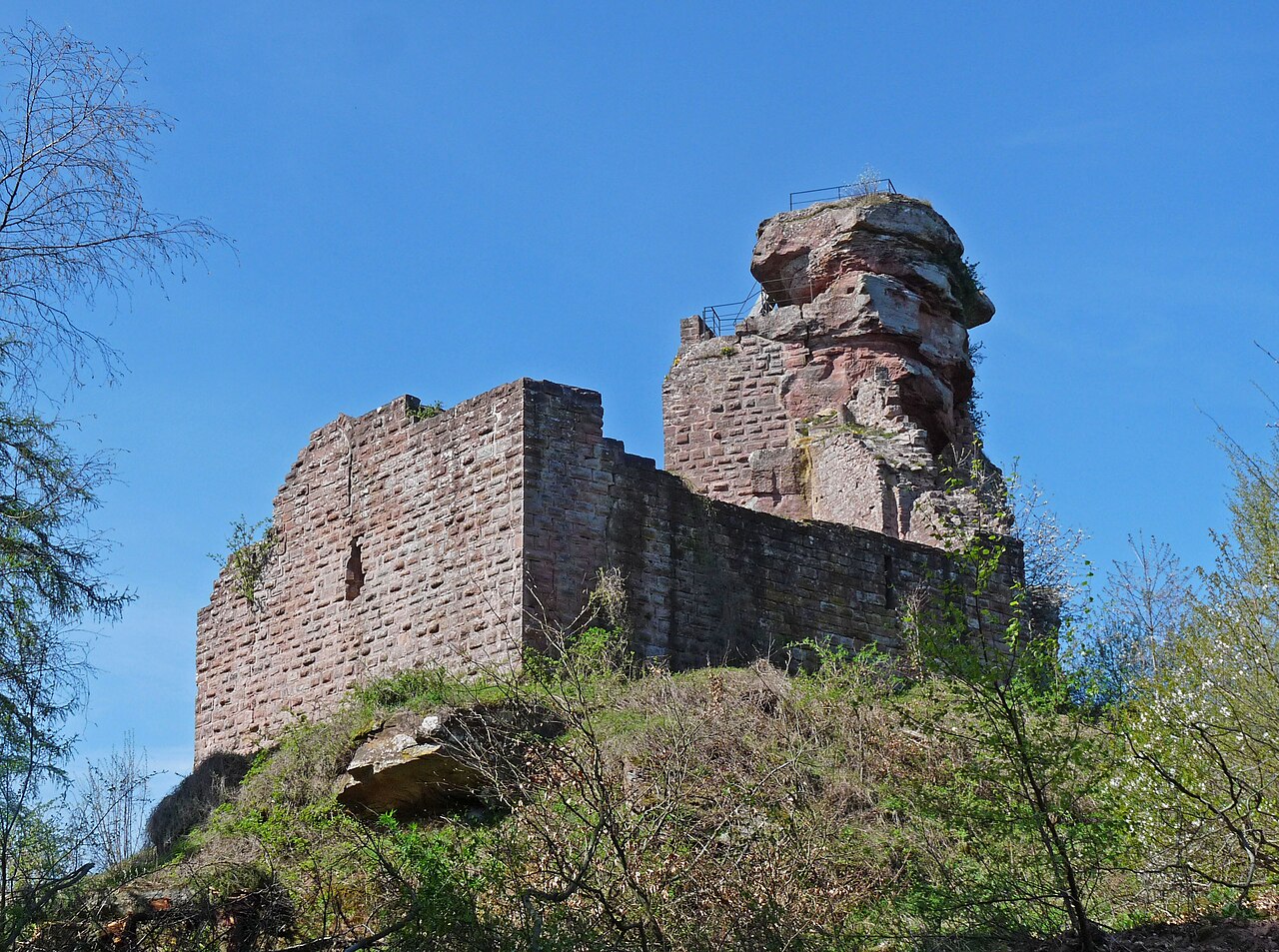
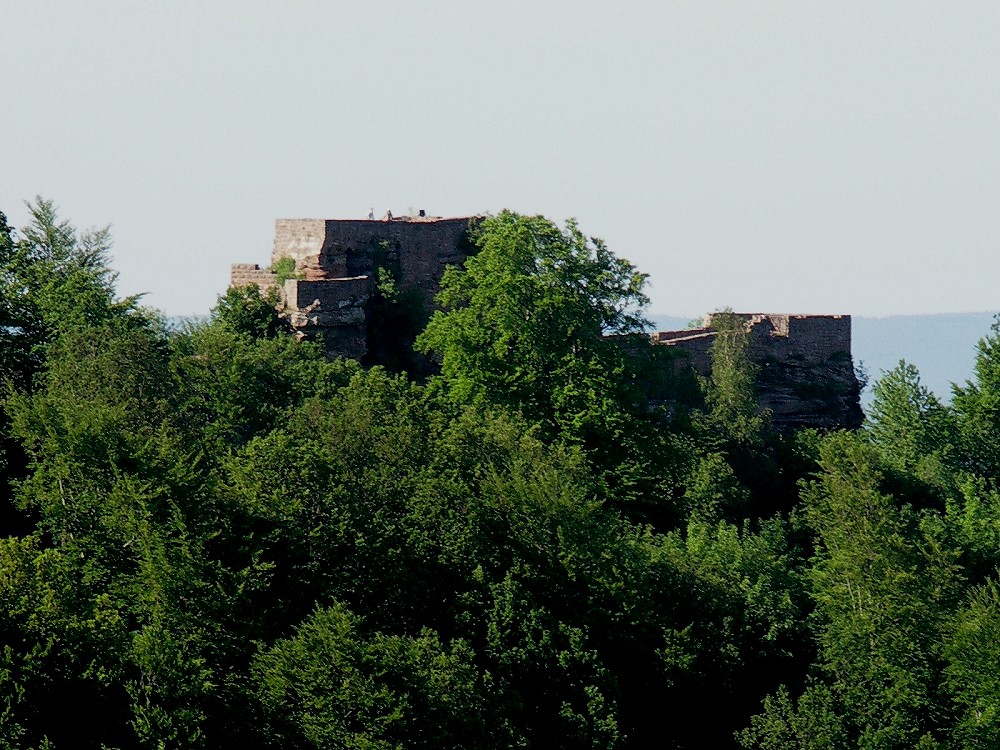
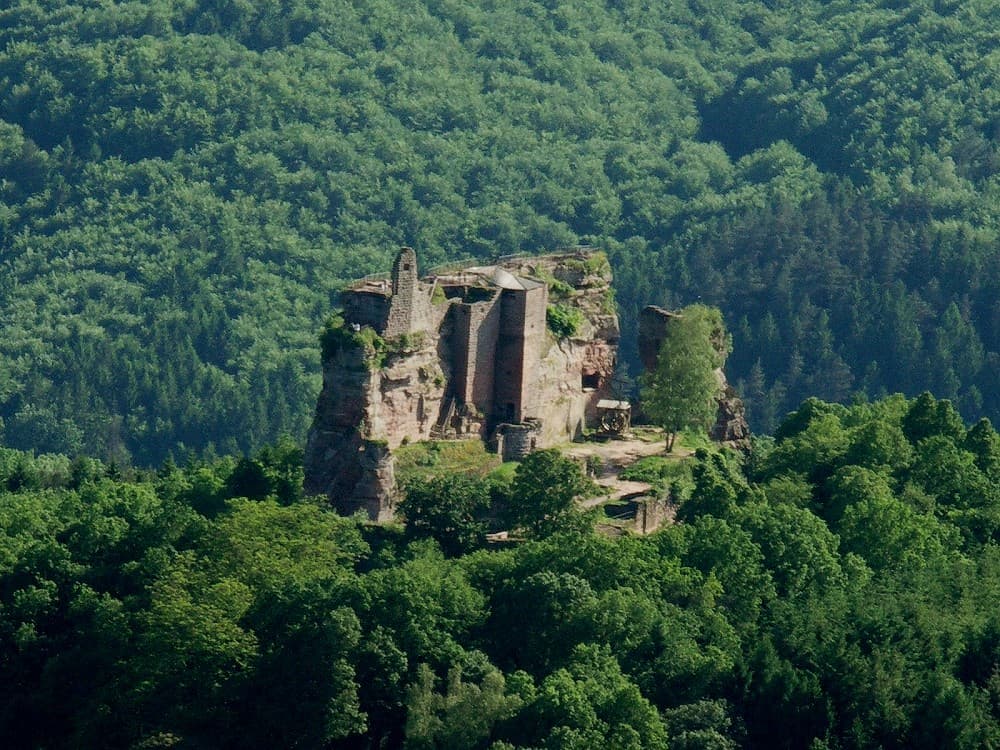
Fleckenstein Castle, known locally as Château-fort de Fleckenstein, is a remarkable medieval fortress situated in the Bas-Rhin department of France, near the German border in the region historically known as Northern Alsace or the Northern Vosges. Perched atop a massive sandstone rock formation measuring approximately 90 meters long, 30 meters high, and 10 meters wide, the castle's unique semi-troglodyte construction integrates natural rock features with man-made defensive structures, creating an imposing silhouette that resembles a ship sailing through a sea of trees.
The castle was originally built in the 12th century by the Fleckenstein family, ministerials to the powerful Hohenstaufen dynasty. Its strategic position near a key medieval route between the imperial palaces of Haguenau and Kaiserslautern underscored its military and administrative importance during the High Medieval period. The first indirect mention of the castle dates to 1174, confirming its early role in regional affairs.
Architectural evolution and features
Fleckenstein Castle's architecture reflects centuries of modifications, particularly significant renovations during the 16th century (between 1541 and 1570). The castle's original Romanesque elements include steps carved directly into the sandstone, troglodyte rooms carved into the rock, and a cistern, which highlight the integration of natural terrain into the fortress design.
The castle's defensive structures include a well tower whose lower part dates from the 13th or 14th century, with upper sections added in the 15th and 16th centuries. The inner and outer gates bear faded inscriptions from the early 15th century, marking the castle's ongoing development during the Late Medieval period. A notable feature is the stairwell tower, adorned with the coats of arms of Friedrich von Fleckenstein (died 1559) and his wife Catherine von Cronberg, reflecting the castle's ownership and status during the Renaissance.
Troglodyte elements and rock integration
The castle's semi-troglodyte design is particularly distinctive. Rooms, stairways, and passageways are carved into and around the sandstone rock, blending natural and constructed spaces. This design provided natural insulation and defense advantages, making Fleckenstein a unique example of rock castle architecture in the region.
Historical significance and ownership
The Fleckenstein family maintained ownership of the castle until their lineage ended in 1720. Throughout its history, the castle witnessed various military actions, most notably during the Franco-Dutch War. In 1674, French forces under the renowned military engineer and Marshal Sébastien Le Prestre de Vauban captured the castle without resistance. However, the fortress was completely destroyed in 1680 by troops commanded by General Ezéchiel du Mas, Comte de Mélac, acting on behalf of King Louis XIV of France, as part of a campaign to secure French borders.
Following the French Revolution, the castle ruins were seized as national property and sold. For much of the 19th century, the ruins deteriorated until efforts to preserve and restore the site began late in the century and continued into the 20th and 21st centuries. The castle was declared a protected monument, reflecting its cultural and historical importance.
Modern status and visitor experience
Today, Fleckenstein Castle operates as a museum and is accessible to the public for a fee. It ranks as the second most visited castle in the Alsace region after the famous Haut-Kœnigsbourg Castle. The site is a highlight of the "Route of the Four Castles", a popular hiking trail that includes the nearby ruins of Lœwenstein, Hohenbourg, and Wegelnburg (the latter located just across the German border).
Visitors can explore a complex network of rooms, stairways, and passageways carved into the rock, offering a hands-on experience of medieval defensive architecture. The castle's elevated position, approximately 370 meters above sea level, provides panoramic views of the surrounding forested landscape. Accessibility is convenient via road or hiking trails, making it a favored destination for history enthusiasts and tourists alike.
Preservation and restoration efforts
Major restoration campaigns have taken place since the late 19th century, particularly around 1908 and from 1958 onward, aimed at stabilizing the ruins and enhancing visitor safety. These efforts have preserved key architectural features while respecting the site's historical integrity.
Location and geographical context
Fleckenstein Castle is located near the village of Hirschtal, nestled between the towns of Lembach to the south and Hirschtal to the north. It lies only about 200 meters southeast of the current French-German border, highlighting its historical role as a frontier fortress. The castle's position in the Northern Vosges mountain range adds to its dramatic setting and strategic significance.
The surrounding area is rich in natural beauty and cultural heritage, making Fleckenstein Castle not only a site of historical interest but also a gateway to exploring the broader landscape of Alsace and its medieval past.
Frequently asked questions (FAQ)
- How do I get to Fleckenstein Castle?
- Fleckenstein Castle is accessible by road and via several hiking trails. It is located near the village of Hirschtal in the Bas-Rhin department, close to the French-German border.
- What is the historical significance of Fleckenstein Castle?
- Fleckenstein Castle was built in the 12th century by the Fleckenstein family, ministerials of the Hohenstaufen dynasty. It played a strategic role due to its location between imperial palaces and was involved in military actions during the Franco-Dutch War.
- Can I visit the interior of Fleckenstein Castle?
- Yes, the castle operates as a museum open to visitors. You can explore rooms, stairways, and passageways carved into the sandstone rock, experiencing its unique semi-troglodyte architecture.
- When was Fleckenstein Castle destroyed and by whom?
- The castle was completely destroyed in 1680 by French troops led by General Ezéchiel du Mas, Comte de Mélac, during the reign of Louis XIV, following its capture by Vauban's forces in 1674.
- Is Fleckenstein Castle part of any tourist routes?
- Yes, it is a main attraction on the "Route of the Four Castles," a popular hiking trail that includes the nearby ruins of Lœwenstein, Hohenbourg, and Wegelnburg.

Information
Current owner
French state
Website
Visit websiteAddress
Lieu-dit Fleckenstein, Bas-Rhin, France
Sources & official resources
Verify the information above using these authoritative references.
Loading map...
Visitor reviews
No reviews yet. Been here? Write the first review and help other travelers!
Write the first reviewVisited this castle? Share your experience
Your review helps other travelers and adds first-hand knowledge to our encyclopedia.