Wasserschloss Tatenhausen
Wasserschloss Tatenhausen stands as a remarkable example of a water castle combining medieval foundations with Renaissance and Baroque architectural elements. Located in the municipality of Halle in Germany, this historic estate has roots dating back to at least the 14th century, with significant construction phases beginning in the mid-16th century. Its evolution over centuries reflects the changing tastes, functions, and ownership typical of noble residences in the region.
The medieval origins and noble lineage
The earliest records of Wasserschloss Tatenhausen identify it as a fortified residence within the Tatenhauser Forest region. The estate was originally owned by the knight Bernd Hoberg, documented in 1491, marking its origins firmly in the late medieval period. This initial phase likely involved defensive features common to fortified manors of the time, although much of the surviving structure dates from later periods.
In the early 16th century, the estate passed by marriage to the Korff-Schmising family. In 1524, Heinrich Korff-Schmising, son-in-law of the last Hoberg owner, acquired the property, establishing Wasserschloss Tatenhausen as the ancestral seat of the Freiherren (Barons) and Counts von Korff genannt Schmising. This family maintained stewardship of the estate for over 470 years, influencing its architectural development and regional importance.
Architectural development through the Renaissance and Baroque periods
Renaissance construction and features
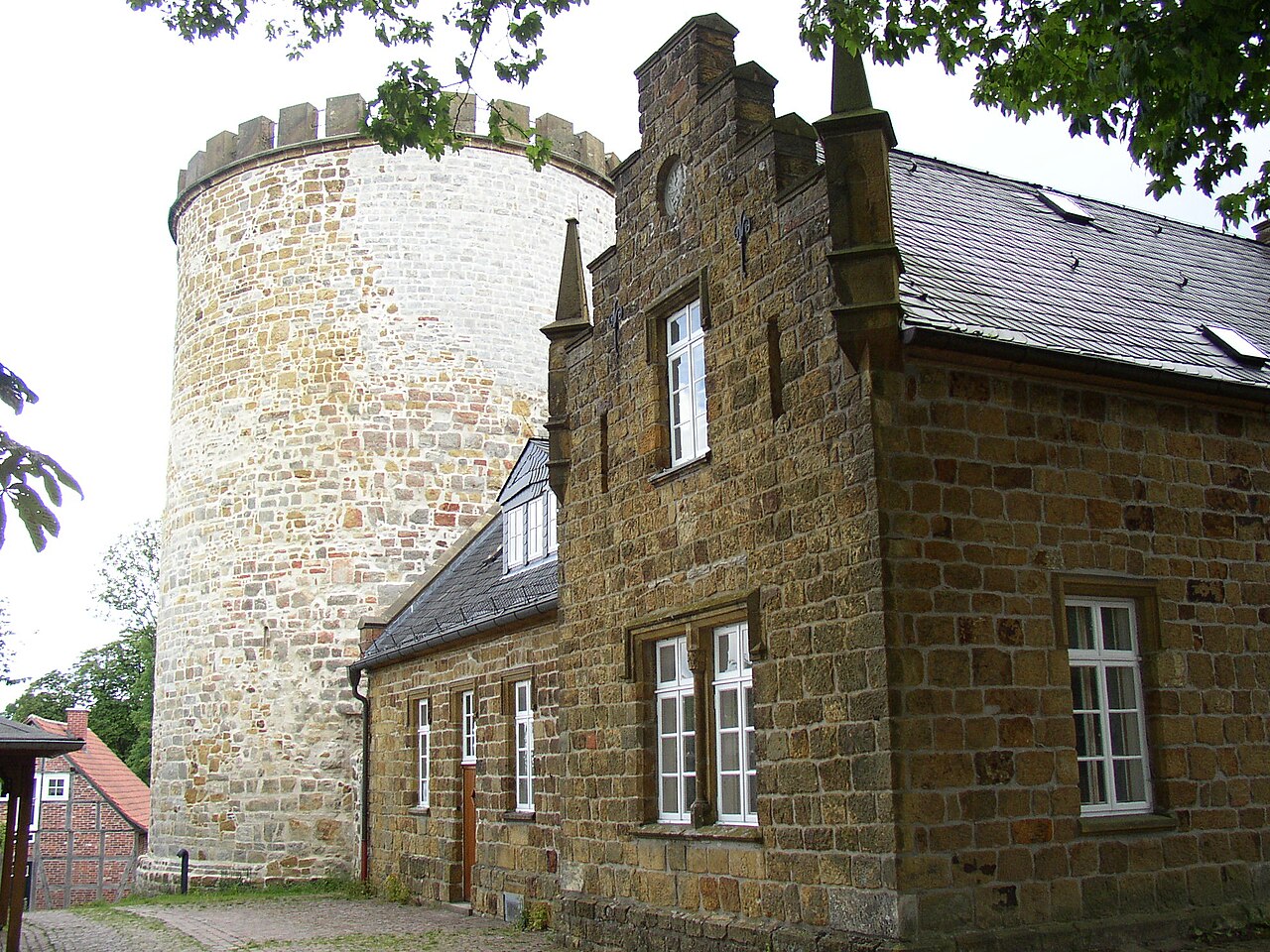
The main construction phase began around 1540 with the erection of the main house and the first east wing. These buildings exhibit typical Weser Renaissance characteristics, including radzinnen gables—stepped gable designs that are emblematic of the regional Renaissance style. A distinctive stair tower was also added, serving both functional and aesthetic roles as the central architectural feature of the estate.
Late 17th-century expansions
By approximately 1671, the estate was expanded with a second east wing and a defensive tower. These additions enhanced the residential and service areas, reflecting the evolving needs of the noble family. The construction during this period balanced practical fortification with increasing emphasis on comfort and status display.
Baroque influences and later additions
At the turn of the 18th century, the estate underwent further transformation with the addition of the west wing, a new main entrance, and a terrace designed in a restrained Baroque style. This stylistic shift favored simpler, elegant forms over the more ornate Renaissance details.
A significant Baroque feature is the orangery, constructed in 1751 by the renowned architect Johann Conrad Schlaun. Serving as a greenhouse for tender plants, the orangery remains part of the estate complex, although it is currently not accessible to the public. This building exemplifies the integration of functional garden architecture within noble estates of the period.
Water features and spa heritage
The castle is classified as a water castle due to its location and integration with surrounding water features. Central to the estate is the castle lake, which is fed by the nearby Laibach stream. This lake not only enhances the landscape aesthetics but also historically contributed to the defensive capabilities of the site.
In the 18th century, the discovery of mineral-rich springs on the grounds introduced a new chapter in the estate’s history. Around 1720, healing springs were identified, and by 1799, drilling efforts enabled the exploitation of these waters. This development led to the establishment of a spa destination offering mineral water cures and mud baths.
The construction of a dedicated bathhouse in the late 18th century supported these health treatments, marking a shift from purely aristocratic residence to a site of public health interest. Although the spa’s popularity waned by the late 19th century, this period remains a distinctive aspect of Wasserschloss Tatenhausen’s multifaceted history.
Notable residents and cultural significance
Beyond its architectural and functional evolution, Wasserschloss Tatenhausen holds cultural importance through its association with notable figures. From 1812 to 1816, the estate was home to Friedrich Leopold zu Stolberg-Stolberg, a poet linked to the Hainbund literary circle. His residence at the castle represents a brief but meaningful cultural interlude amid its aristocratic heritage.
Later ownership passed to the Freiherren Teuffel von Birkensee family through inheritance, continuing the tradition of noble stewardship that characterizes the estate’s history.
Preservation and current status
The complex today remains well preserved and occupied, reflecting ongoing care and use of the historic buildings. The estate’s layout presents a harmonious blend of medieval foundations with Renaissance and Baroque architectural developments. The main house, east and west wings, stair tower, and orangery form a coherent ensemble that illustrates the estate’s continuous adaptation over more than five centuries.
While the orangery is not open to the public, the castle and its grounds continue to be significant for their architectural, historical, and cultural value. The integration of water features, noble heritage, and spa history makes Wasserschloss Tatenhausen a unique and multifaceted historical site in Germany.
Frequently asked questions (FAQ)
- How do I get to Wasserschloss Tatenhausen?
- Wasserschloss Tatenhausen is located in Germany and is easily accessible by car or public transport. If you're traveling by car, you can use the address for navigation. There are also local train and bus services that can take you close to the castle.
- What is the historical significance of Wasserschloss Tatenhausen?
- Wasserschloss Tatenhausen dates back to the 14th century and is a remarkable example of medieval architecture. It has served various purposes over the centuries, including as a noble residence and a fortress. The castle's rich history reflects the cultural and political changes in the region.
- When was Wasserschloss Tatenhausen built?
- Construction of Wasserschloss Tatenhausen began in the late 14th century, with significant alterations and expansions occurring in the following centuries. The castle has preserved many of its original architectural features, making it a valuable site for historical study. Its long-standing presence adds to the charm of the surrounding area.
- Can I visit Wasserschloss Tatenhausen year-round?
- Yes, Wasserschloss Tatenhausen is open to visitors throughout the year, though specific opening hours may vary by season. It's advisable to check their official website for the most current visiting hours and any special events. This allows you to plan your visit accordingly.
- Why is the architecture of Wasserschloss Tatenhausen unique?
- The architecture of Wasserschloss Tatenhausen showcases a blend of medieval and Renaissance styles, characterized by its impressive towers and moats. The castle's design is not only aesthetically pleasing but also reflects its historical function as a defensive structure. This unique combination makes it a fascinating site for architecture enthusiasts.
- Is it possible to arrange guided tours at Wasserschloss Tatenhausen?
- Yes, guided tours are available at Wasserschloss Tatenhausen, providing visitors with in-depth insights into the castle's history and architecture. These tours are typically led by knowledgeable guides who can share fascinating stories and facts. It's recommended to book in advance, especially during peak tourist seasons.
- What are the ticket prices for visiting Wasserschloss Tatenhausen?
- Ticket prices for Wasserschloss Tatenhausen vary based on age and group size, with discounts often available for students and seniors. Family tickets may also be offered for those visiting with children. For the latest pricing information, visit the official website or contact the castle directly.
- What is the best time to visit Wasserschloss Tatenhausen?
- The best time to visit Wasserschloss Tatenhausen is during the spring and early autumn when the weather is pleasant and the gardens are in full bloom. Summer can also be a great option, but it may be busier with tourists. Checking the castle's calendar for special events can enhance your experience.
- Are there any nearby attractions to Wasserschloss Tatenhausen?
- Yes, there are several attractions near Wasserschloss Tatenhausen, including beautiful parks and quaint villages rich in history. Visitors can explore nearby hiking trails or enjoy local dining options that highlight regional cuisine. This makes it easy to create a full day of exploration around your castle visit.
Information
Loading map...
Visitor reviews
No reviews yet. Been here? Write the first review and help other travelers!
Write the first reviewVisited this castle? Share your experience
Your review helps other travelers and adds first-hand knowledge to our encyclopedia.