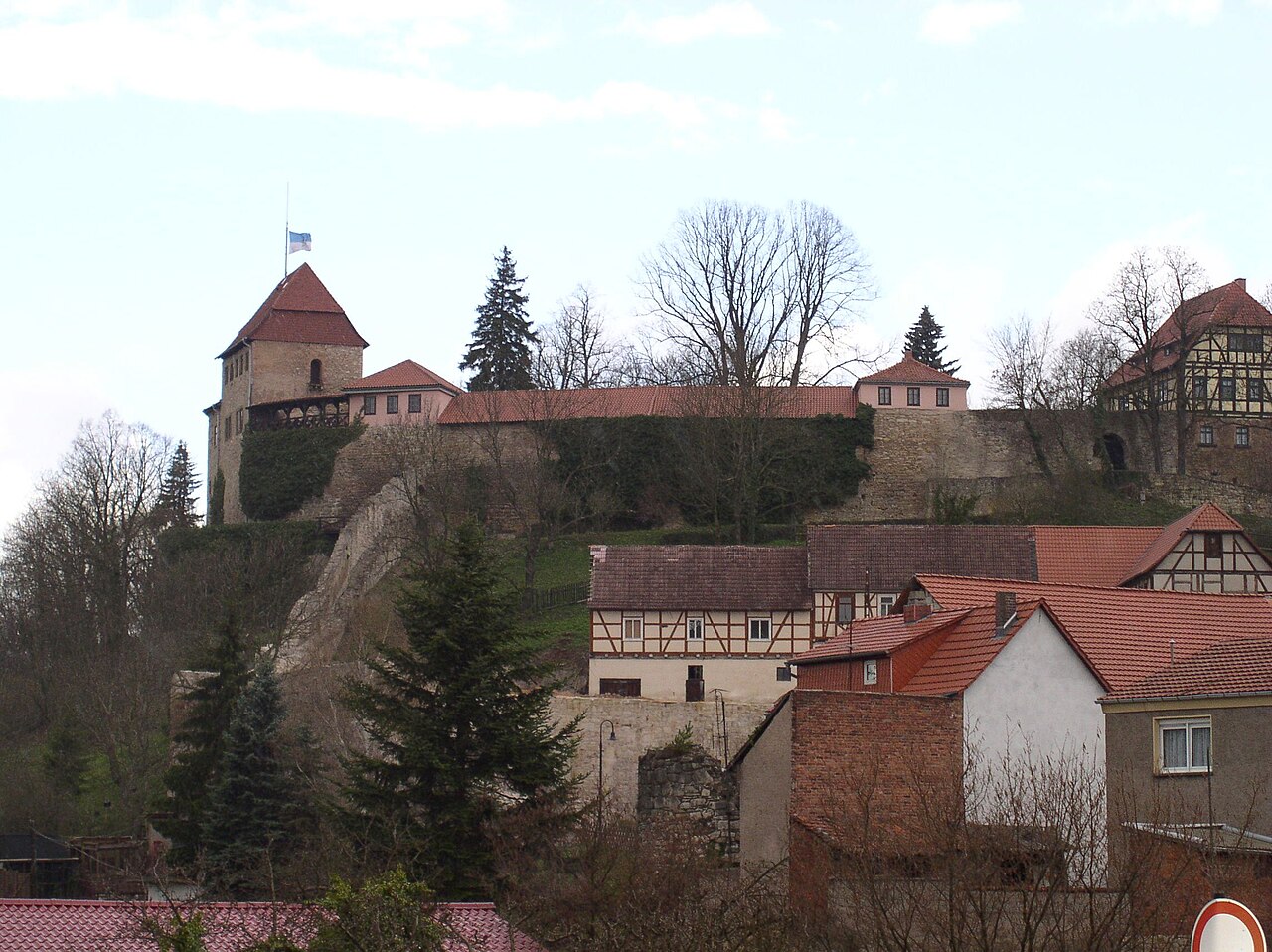
Wasserschloss Seebach
Wasserschloss Seebach stands as a remarkable example of a medieval water castle located in the town of Mühlhausen in modern-day Germany. Its origins trace back to the early 13th century, making it a significant historical and architectural landmark that reflects the complex feudal and ecclesiastical dynamics of the region. The castle was initially constructed under the auspices of the Archbishopric of Mainz, a powerful ecclesiastical territory that wielded both religious and political influence during the medieval period.
The castle’s foundation dates to around 1227, when Lutz von Seebach established the fortress as a water castle, strategically incorporating surrounding water features for defensive purposes. This design typifies the use of natural and artificial watercourses to create moats and barriers that hindered enemy advances, a common defensive strategy in the High Medieval era. The castle’s original layout likely included a moat or series of water defenses encircling the main structures, although detailed records of these features have not survived.
Medieval origins and feudal transitions
Initially, Wasserschloss Seebach belonged to the Archbishopric of Mainz, underscoring the church's extensive territorial control. The castle's ownership history is marked by complex feudal relationships and political maneuvering. In 1307, half of the castle was pledged as security to the brothers Albert and Hermann von Sebeche by the Archbishop of Mainz, reflecting the financial and political pressures faced by the archbishopric. This pledge illustrates how castles served not only military and residential purposes but also as valuable assets in feudal economies.
The direct line of the Seebach family ended in 1522 with the death of Wolf von Seebach, who left no heirs. The estate then passed through marriage to Günther von Bünau, a councilor to the Duke of Saxony, signaling a shift from ecclesiastical to secular ducal control. Following legal disputes, Günther sold the fief in 1523 to Hans Sittich von Berlepsch, a regional official and castle captain, for 6,000 guilders. This transaction highlights the growing influence of local noble families in managing such estates during the late medieval period.
Destruction and rebuilding during the peasants’ war
The castle suffered significant damage during the Peasants’ War in May 1525, when rebel groups from Mühlhausen attacked and destroyed both the castle and the adjacent village. Hans von Berlepsch was imprisoned during the uprising but was released through the intervention of the Duke of Saxony. By 1527, the Berlepsch family regained control and undertook the castle’s reconstruction. This rebuilding phase marked a transition from a purely defensive fortress to a more residential and administrative estate, reflecting changes in military technology and social structures of the time.
Architectural evolution and 19th-century renovations
Throughout the 19th century, Wasserschloss Seebach underwent extensive architectural renovations that transformed its appearance and function. The castle was expanded and rebuilt as a multi-story stone building, blending traditional medieval defensive elements with more modern residential needs. Between 1911 and 1914, further modifications included the addition of a half-timbered upper floor, a characteristic feature of central European architecture that added aesthetic and structural complexity to the castle’s silhouette.
This combination of solid masonry and timber framing reflects the castle’s adaptation over centuries, merging medieval fortification techniques with regional architectural styles. The current structure thus presents a layered historical narrative visible in its fabric, illustrating the evolution from a water castle with defensive moats to a stately residence incorporating traditional craftsmanship.
The bird protection park and cultural significance
Beyond its architectural and historical importance, Wasserschloss Seebach is notable for its pioneering role in wildlife conservation. In 1885-1886, a bird protection park was established on the castle grounds, making it one of Germany’s earliest dedicated facilities for avian preservation. Initially privately managed until 1908, the park later became the State Bird Protection Station Seebach in 1936, underscoring the site’s unique blend of cultural heritage and environmental stewardship.
This bird protection park remains an integral part of the castle’s identity, linking its medieval origins with modern conservation efforts. Visitors to Wasserschloss Seebach can experience both the historical ambiance of the castle and the natural beauty of the protected avian habitats, offering a multifaceted cultural and ecological attraction.
Architectural features and current condition
The present-day Wasserschloss Seebach is characterized by its multi-level stone construction topped with a distinctive half-timbered upper floor. This architectural synthesis showcases the castle’s evolution from a fortified medieval water castle to a refined residential estate. While the original water defenses such as moats have not been fully documented or preserved, the castle’s location and design still reflect its strategic use of water for protection.
The castle’s well-preserved condition allows visitors to appreciate its historical layers and architectural details. The blend of stone masonry and timber framing is typical of central German castles that adapted to changing times while maintaining traditional craftsmanship. The grounds, including the bird protection park, contribute to the castle’s unique atmosphere and historical significance.
Defensive elements and layout
Although specific details about the original moat system are scarce, Wasserschloss Seebach’s classification as a water castle indicates a strategic placement near watercourses or wetlands. Such positioning was intended to enhance defense by creating natural barriers against attackers. The castle’s main structures would have been arranged to maximize protection while serving residential and administrative functions.
Architectural style and influences
The castle’s architectural style reflects a blend of medieval defensive construction and later 19th and early 20th-century renovations. The half-timbered upper floor added in the early 1900s is emblematic of traditional central European timber framing, which contrasts with the robust stonework below. This combination illustrates the castle’s adaptation to evolving architectural trends while preserving its historical essence.
Frequently asked questions (FAQ)
- How do I get to Wasserschloss Seebach?
- Wasserschloss Seebach is located in the town of Mühlhausen in Thuringia, Germany. It is accessible by car and local public transport. Visitors should check local transit schedules for the most convenient routes.
- What is the historical significance of Wasserschloss Seebach?
- Wasserschloss Seebach is significant for its origins in the early 13th century as a water castle under the Archbishopric of Mainz. It reflects the feudal and ecclesiastical history of the region and survived major events like the Peasants’ War.
- When was Wasserschloss Seebach built?
- The castle was originally built around 1227 by Lutz von Seebach, making it a High Medieval structure with later renovations.
- Can I visit the bird protection park at Wasserschloss Seebach?
- Yes, the bird protection park established in the late 19th century is part of the castle grounds and highlights early conservation efforts. Visitors can enjoy the natural setting alongside the historical site.
- What architectural styles are visible at Wasserschloss Seebach?
- The castle features a blend of medieval stone construction and 19th to early 20th-century half-timbered additions, typical of central European architecture.
Information
Website
Visit websiteSources & official resources
Verify the information above using these authoritative references.
Loading map...
Visitor reviews
No reviews yet. Been here? Write the first review and help other travelers!
Write the first reviewVisited this castle? Share your experience
Your review helps other travelers and adds first-hand knowledge to our encyclopedia.