Wasigenstein Castle
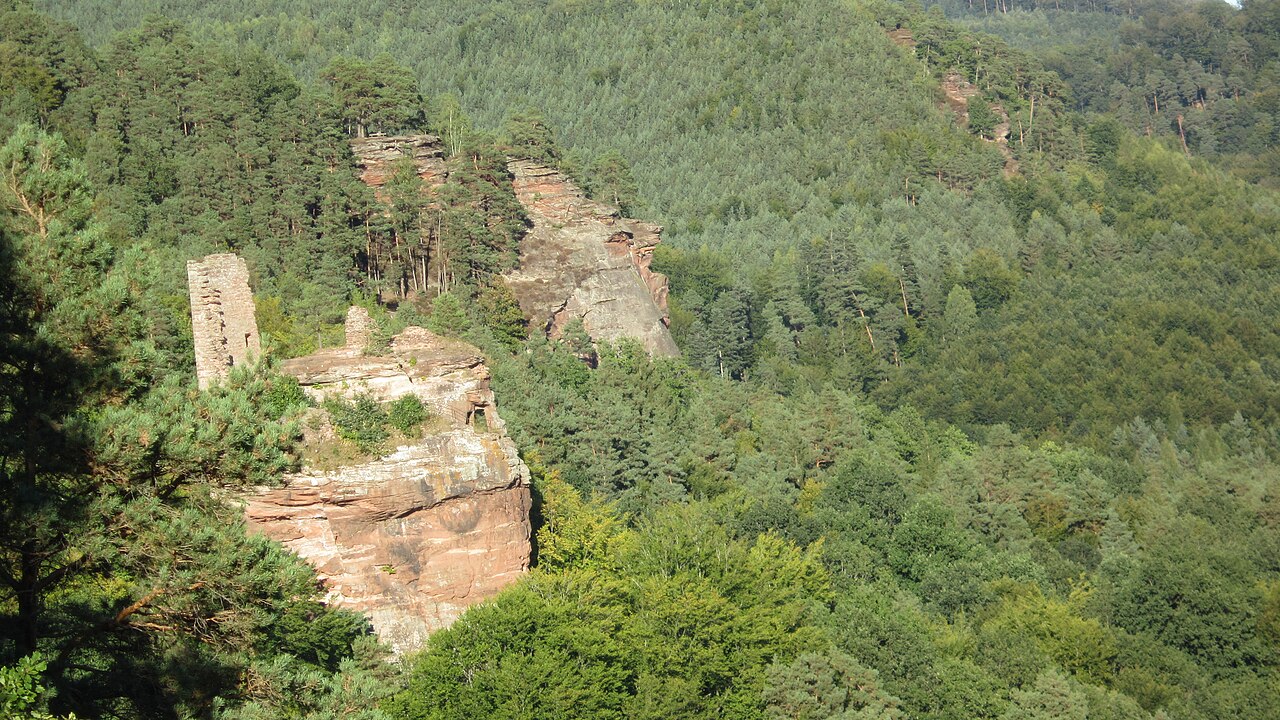
Wasigenstein Castle, also known locally as Château du Wasigenstein, is a fascinating medieval ruin located in the dense woods west of the village of Wengelsbach, in the Bas-Rhin department of France. Nestled within the scenic region of Northern Alsace or the Northern Vosges, the castle is perched upon two narrow sandstone spurs separated by a deep fault, offering a dramatic natural defensive position. This unique geological setting not only defines the castle's structure but also inspired its legendary association with the 10th-century epic poem Waltharius, where the hero Walter of Aquitaine famously battles his pursuers in a rocky chasm.
Historical origins and early mentions
The origins of Wasigenstein Castle trace back to the 10th century, as evidenced by its mention in the Latin poem Waltharius. However, the castle itself was first documented in historical records in 1270. It is believed that the initial construction of the castle occurred earlier in the 13th century, beginning with the eastern spur, which forms the larger and older section of the fortress. The castle's strategic location allowed it to control the surrounding territory and oversee important routes through the Vosges Mountains.
Architectural layout and dual fortress structure
Wasigenstein Castle is remarkable for its composition of two distinct castles built on separate sandstone spurs divided by a fault line. The eastern spur hosts the original, older castle, while the smaller, more recent castle was constructed on the western spur after the property was divided in 1299 among the Wasigenstein family members. This division led to the creation of two fortified complexes in close proximity but separated by natural rock formations.
Eastern spur: the original castle
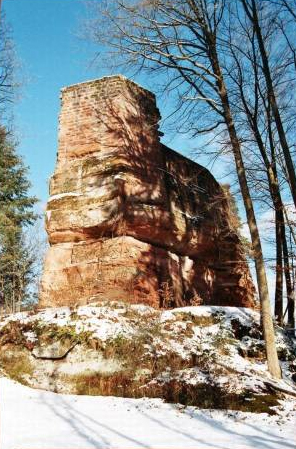
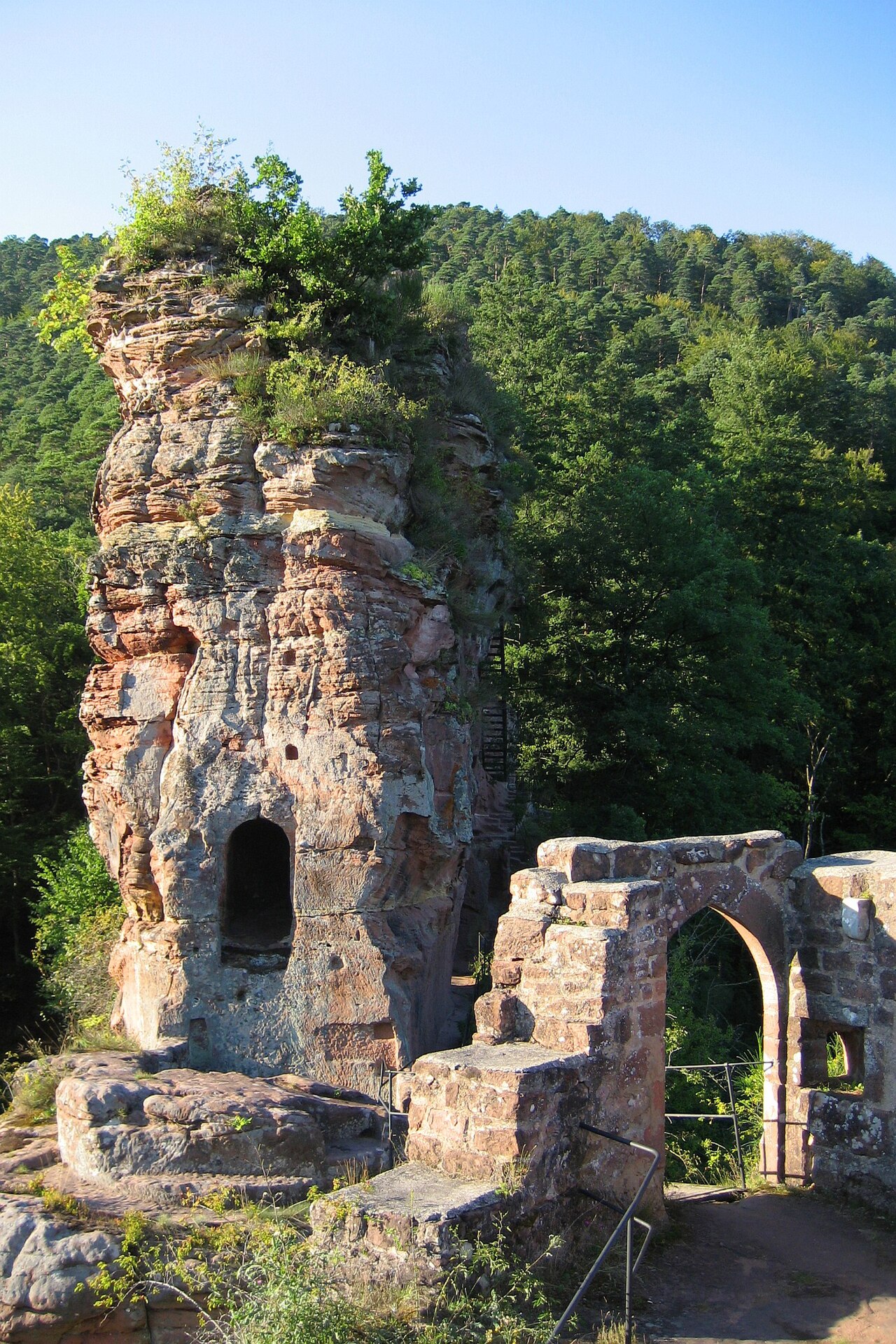
The eastern castle features typical medieval defensive elements, including rock-cut chambers, fortified walls, and remnants of battlements. The builders skillfully integrated the natural sandstone formations into the castle's design, carving out rooms and passageways directly from the rock. This not only enhanced the castle’s defense but also provided natural shelter and storage spaces.
Western spur: the later addition
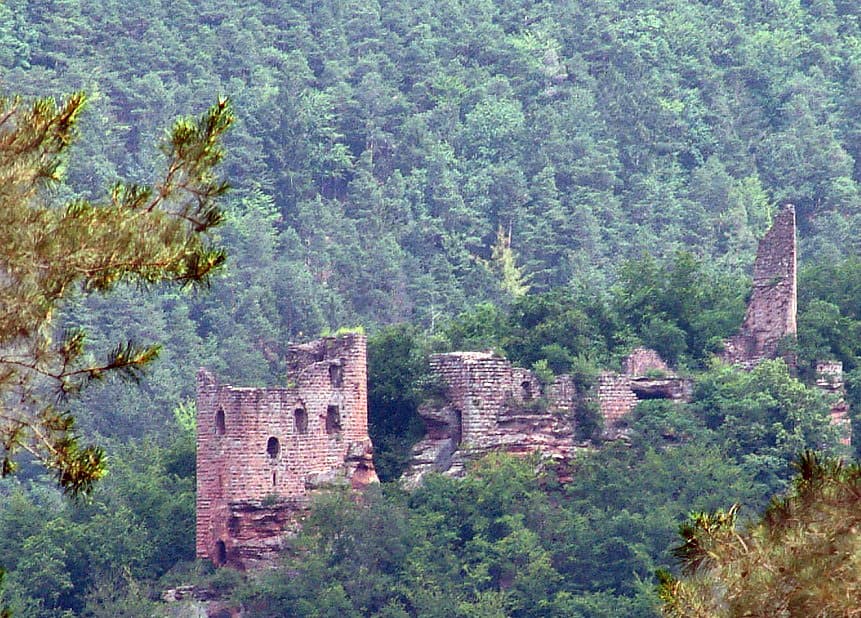
Following the division of the estate in 1299, the western spur was developed with new fortifications to accommodate the branch of the Wasigenstein family that inherited this section. Though smaller, this castle retained many of the defensive characteristics of its older counterpart, including towers and curtain walls, adapted to the narrow and rugged terrain.
Medieval ownership and feudal conflicts
Throughout the 14th century, Wasigenstein Castle was partitioned among various noble families and branches, including the Lords of Fleckenstein and the Puller of Hohenbourg. This fragmented ownership often led to disputes and feuds. In 1358, a significant conflict erupted between co-owners Werner von Ramberg and the Lords of Ochsenstein, resulting in a siege where the Ochsenstein faction seized full control of the castle.
Subsequent decades saw repeated feuds and sieges, notably in 1410, 1435, 1447, and 1464. These conflicts weakened the castle's defenses and contributed to its gradual decline. In 1468, the castle was besieged by the Counts of Hanau-Lichtenberg, further damaging the fortifications.
Decline, destruction, and current state
Due to the extensive damage from repeated sieges and internal conflicts, Wasigenstein Castle was abandoned during the 16th century. Over time, it fell into ruin. The castle's decline was exacerbated during the Thirty Years' War (1618-1648), when the ruins were set on fire, and later during the Nine Years' War in 1680, when French troops under cavalry general Joseph de Montclar destroyed the remaining structures.
Today, Wasigenstein Castle remains a captivating ruin, notable for its partially carved sandstone architecture and its evocative setting amidst the forested Vosges. The site is freely accessible to visitors, who can explore the remains of the rock-cut chambers, fortified walls, and the natural fault that divides the two castle spurs.
Visiting Wasigenstein Castle
The castle is reachable via a footpath managed by the Club Vosgien, marked with red rectangles, starting from the Wengelsbach pass on the D 190 road. Visitors can park at Wasigenstein and enjoy a scenic hike through the forest to the ruins. The site offers not only a glimpse into medieval military architecture but also spectacular views of the surrounding Alsace landscape.
Architectural features to observe
- Sandstone spurs: The castle’s unique location on two sandstone ridges separated by a fault is a rare geological and architectural feature.
- Rock-cut chambers: Many rooms and passages are carved directly into the sandstone, showcasing medieval ingenuity in adapting to natural terrain.
- Fortified walls and battlements: Remnants of defensive walls and battlements illustrate the castle’s military function.
- Towers and curtain walls: Both the eastern and western castles had towers and curtain walls adapted to the narrow spurs.
Historical significance
Wasigenstein Castle stands as a testament to the complex feudal history of the Alsace region during the Middle Ages. Its repeated sieges and changing ownership reflect the turbulent political landscape of the time. The castle’s connection to the legendary figure Walter of Aquitaine adds a layer of cultural significance, intertwining history with medieval legend.
As a ruin, Wasigenstein offers valuable insights into medieval castle construction techniques, particularly the integration of natural rock formations into defensive structures. Its preservation as a freely accessible site allows historians, architects, and tourists to appreciate the layered history and rugged beauty of this medieval fortress.
Frequently asked questions (FAQ)
- How do I get to Wasigenstein Castle?
- Wasigenstein Castle is accessible via a footpath marked with red rectangles by the Club Vosgien, starting from the Wengelsbach pass on the D 190 road. There is parking available at Wasigenstein for visitors.
- What is the historical significance of Wasigenstein Castle?
- Wasigenstein Castle is historically significant as a medieval fortress with a unique dual structure on sandstone spurs. It played a role in regional feudal conflicts and is linked to the 10th-century legend of Walter of Aquitaine.
- Can I visit Wasigenstein Castle for free?
- Yes, Wasigenstein Castle is freely accessible to the public. Visitors can explore the ruins and enjoy the natural surroundings without an entrance fee.
- What architectural features can I see at Wasigenstein Castle?
- Visitors can observe the castle's distinctive sandstone spurs, rock-cut chambers, fortified walls, battlements, towers, and curtain walls that illustrate medieval defensive architecture.
- When was Wasigenstein Castle abandoned and destroyed?
- The castle was abandoned during the 16th century due to damage from feuds and sieges. It was further destroyed during the Thirty Years' War and finally demolished by French troops in 1680 during the Nine Years' War.

Information
Loading map...
Visitor reviews
No reviews yet. Been here? Write the first review and help other travelers!
Write the first reviewVisited this castle? Share your experience
Your review helps other travelers and adds first-hand knowledge to our encyclopedia.