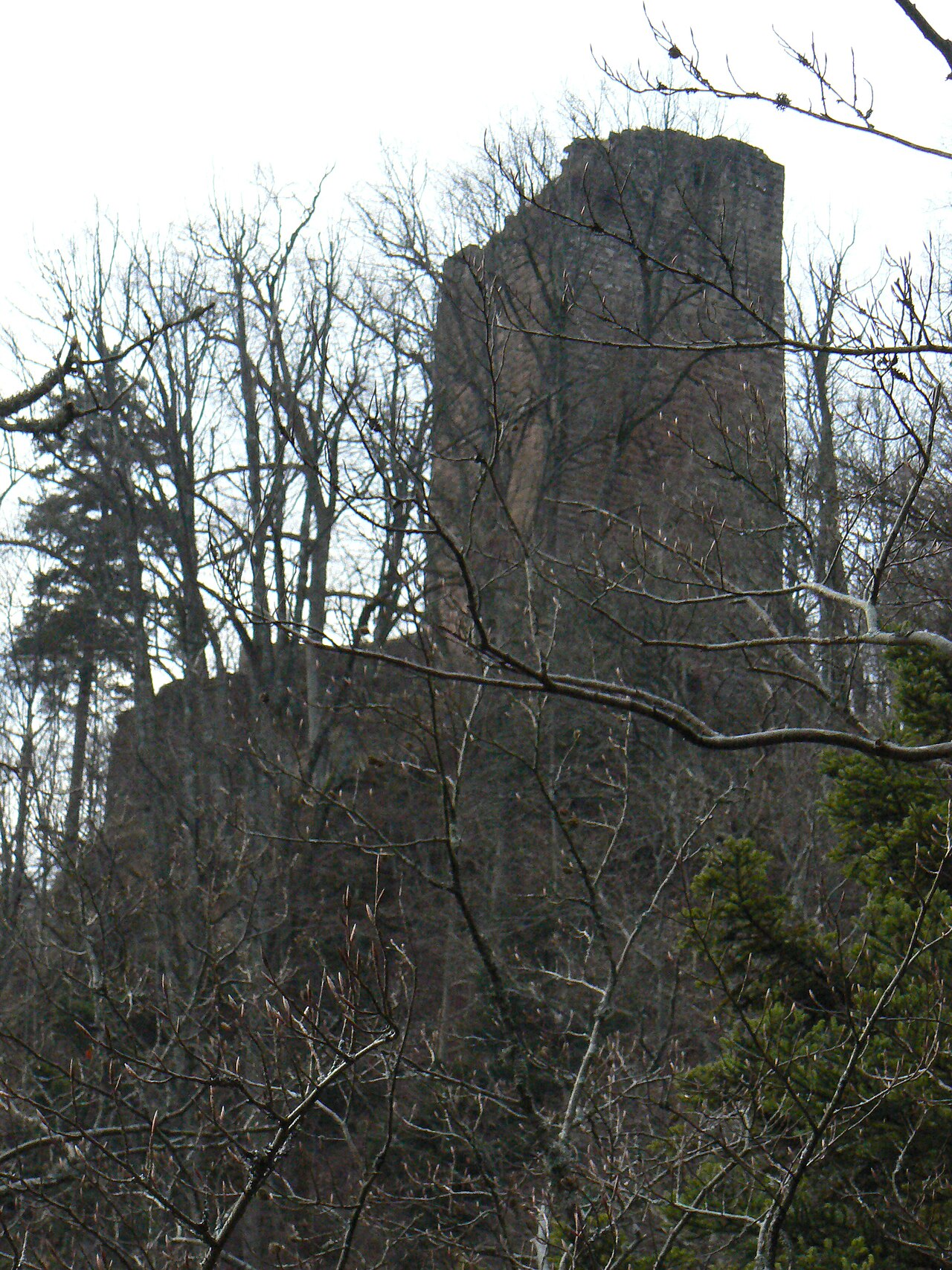
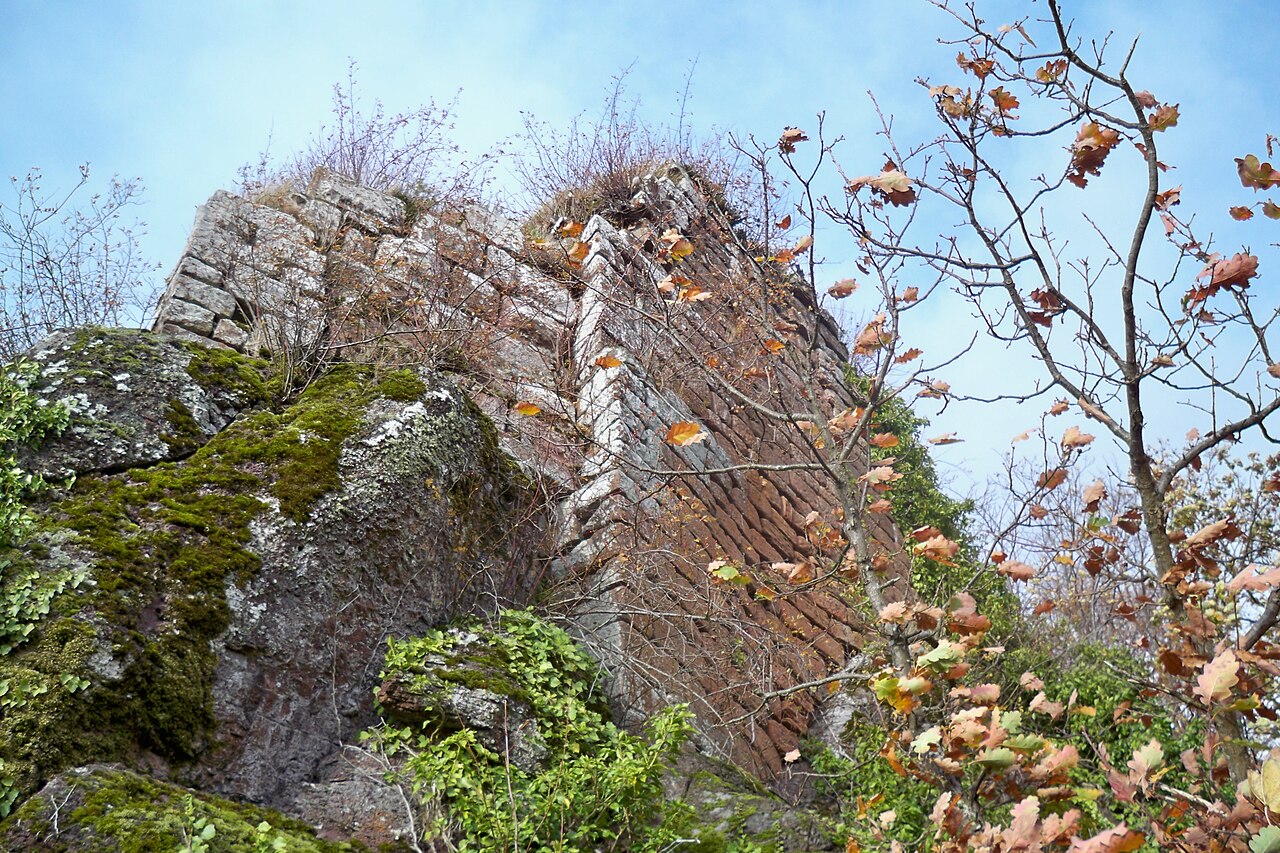
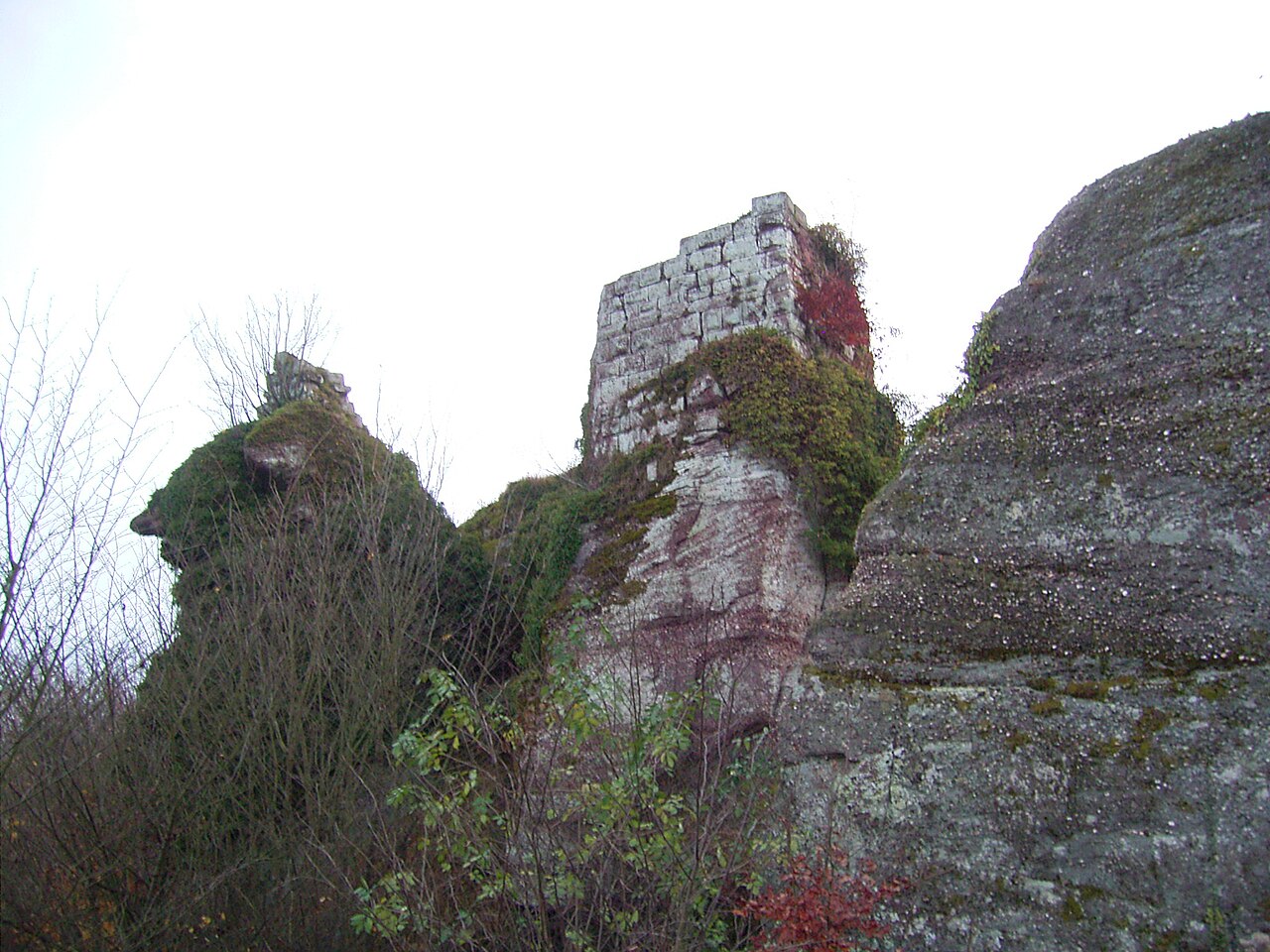
Wangenbourg Castle
Wangenbourg Castle, also known locally as Château de Wangenbourg, is a striking ruined hill castle located east of the village of Wangenbourg-Engenthal in the Bas-Rhin department of the Grand-Est region in France. Nestled on a rocky outcrop within the scenic Middle Vosges or Northern Alsace area, the castle commands panoramic views of the surrounding landscape and stands as a testament to the region's complex medieval and Renaissance history.
The castle's origins date back to the late 13th century, with architectural evidence suggesting its initial construction around 1295. Although documentary references to the castle only appear from 1357 onward, the surviving structural elements indicate a foundation rooted in the High Medieval period. The original fortress was strategically positioned to control local routes and assert feudal power in the region.
Medieval origins and architectural evolution
The core of Wangenbourg Castle was built as a hill castle with defensive features typical of the late 13th and early 14th centuries. The earliest phase includes the polygonal enceinte and a keep whose base preserves remains of an even earlier 13th-century tower. The keep itself, dating from the beginning of the 14th century, was a dominant feature designed for both defense and residence.
Additional medieval structures include the remains of a chapel tower and a Gothic residential building located against the northern curtain wall. These elements highlight the castle's dual function as a military fortress and noble residence. The bailey to the east, now largely reduced to foundational remnants, once included curtain walls and successive gates, reflecting the castle's complex defensive layout.
Renaissance reconstruction and later history
By the early 16th century, the castle had fallen into disrepair. Significant restoration and reconstruction efforts were undertaken beginning in 1535 by the Lords of Wangen. These works introduced notable Renaissance architectural features, particularly in the residential logis rebuilt between 1535 and 1550. This period marked a transition from purely defensive architecture towards more comfortable noble living spaces, incorporating Renaissance stylistic elements such as larger windows and decorative stonework.
The castle's ownership became politically complicated in the early 16th century. In 1504, following the War of Succession of Bavaria, Holy Roman Emperor Maximilian I confiscated the castle from the Lords of Wangen and granted it to the Count of Tiestein, who then transferred it to the Archbishop of Strasbourg, Wilhelm III von Hohnstein, in 1516. Despite this, a branch of the von Wangen family continued to occupy the castle intermittently.
From 1578 onwards, a prolonged dispute over property rights ensued between the Archbishop of Strasbourg and the Lords of Wangen. The Wangens were expelled in 1578 but managed to reassert their claims by 1595. The castle's strategic importance continued into the 17th century, culminating in its occupation by French troops in 1680 during a period of regional conflict.
Decline, damage, and preservation efforts
The French garrison's departure from Wangenbourg Castle was marked by deliberate damage to key defensive structures, including the keep and battlements, which significantly weakened the fortress. By 1702, the castle was recorded as being in ruins, reflecting the broader decline of medieval fortifications in the face of evolving military technology and political changes.
Despite its ruined state, the castle's remains continued to attract attention. Restoration initiatives began in the early 20th century and were renewed in 1931, aiming to stabilize and preserve the ruins for future generations. A notable modern addition is the footbridge constructed in 1961, replacing the original drawbridge and facilitating visitor access.
Architectural remains and features
Today, visitors to Wangenbourg Castle can explore the vast polygonal enceinte that still outlines the fortress's perimeter. The bases of interior walls and foundations of residential buildings provide insight into the castle's layered construction phases. The remains of the chapel tower, the Gothic residential building, and the Renaissance logis illustrate the castle's architectural evolution over several centuries.
The dry moat area contains remnants of a 17th-century ramp that once provided access over the battlements, a rare feature that underscores the castle's military adaptations. The cistern and the base of the earlier keep between it and the main keep highlight the castle's water management and defensive strategies.
Cultural significance and visitor experience
Wangenbourg Castle holds significant cultural and historical value as a monument historique, having been officially listed since December 6, 1898, by the French Ministry of Culture. Although privately owned, the castle is freely accessible to the public, allowing visitors to climb the keep and explore the ruins. Its location near the village and the scenic Vosges landscape makes it a popular destination for history enthusiasts and hikers alike.
The castle's layered history from medieval fortress to Renaissance residence, and its involvement in regional political struggles, provide a compelling narrative that enriches the visitor experience. Interpretive signage and preservation efforts help convey the site's importance while maintaining its authentic ruined character.
Access and practical information
The castle is situated on Rue du Château in Wangenbourg-Engenthal, easily reachable by local roads. Visitors are advised to wear sturdy footwear due to the uneven terrain and rocky outcrop setting. The site is open year-round without an entrance fee, making it an accessible historical landmark for both casual tourists and dedicated castle enthusiasts.
Nearby attractions in the Grand-Est region include other medieval castles, natural parks, and cultural sites that complement a visit to Wangenbourg Castle, offering a rich exploration of Alsace's heritage.
Frequently asked questions (FAQ)
- How do I get to Wangenbourg Castle?
- Wangenbourg Castle is located on Rue du Château in Wangenbourg-Engenthal, accessible by local roads. Visitors can reach it by car or hiking from nearby villages.
- What is the best time to visit Wangenbourg Castle?
- The castle is open year-round and free to visit. Spring through autumn offers the best weather and scenic views for exploring the ruins.
- Can I climb the keep at Wangenbourg Castle?
- Yes, visitors are allowed to climb the keep, which provides panoramic views of the surrounding Vosges landscape and the village below.
- What architectural styles are present at Wangenbourg Castle?
- Wangenbourg Castle features a mix of <strong>High Medieval</strong> defensive architecture and <strong>Renaissance</strong> residential elements, reflecting its historical evolution.
- Is Wangenbourg Castle suitable for families and accessible to all visitors?
- The castle ruins involve uneven terrain and rocky paths, so it may be challenging for visitors with mobility issues. Families with children should exercise caution and wear appropriate footwear.
Information
Current owner
Private owner
Address
Rue du Château, Wangenbourg-Engenthal, Bas-Rhin, France
Loading map...
Visitor reviews
No reviews yet. Been here? Write the first review and help other travelers!
Write the first reviewVisited this castle? Share your experience
Your review helps other travelers and adds first-hand knowledge to our encyclopedia.