Château du Grand Ringelstein
Château du Grand Ringelstein, also known as Château Ringelsbourg, is a medieval castle ruin located in the commune of Oberhaslach in the Bas-Rhin département of France. Perched at an altitude of 644 meters on a series of sandstone rock formations, this fortress is a remarkable example of high medieval military architecture adapted to rugged terrain. The castle dates primarily from the early 13th century, though its origins trace back to the mid-12th century when it was first recorded as a possession of the Eguisheim family.
Architectural features and layout
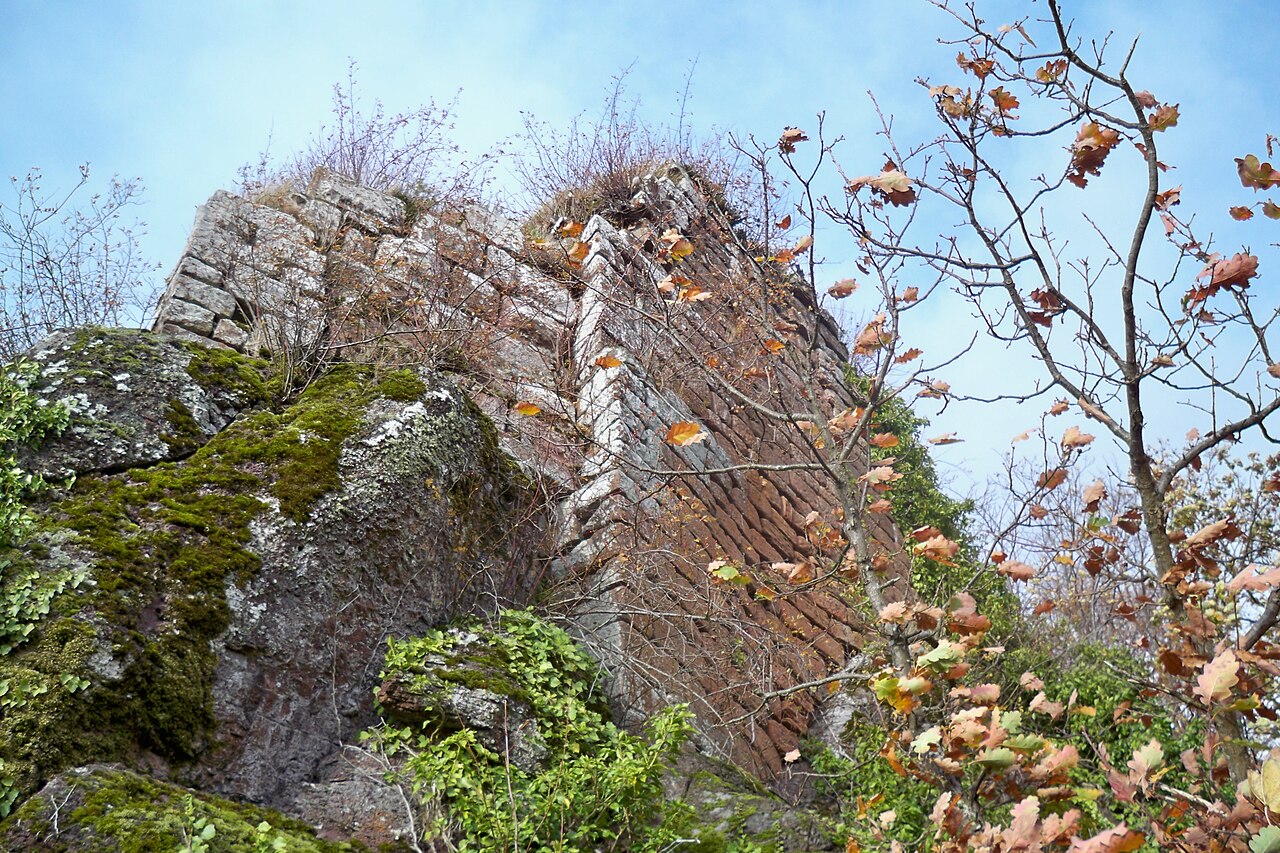
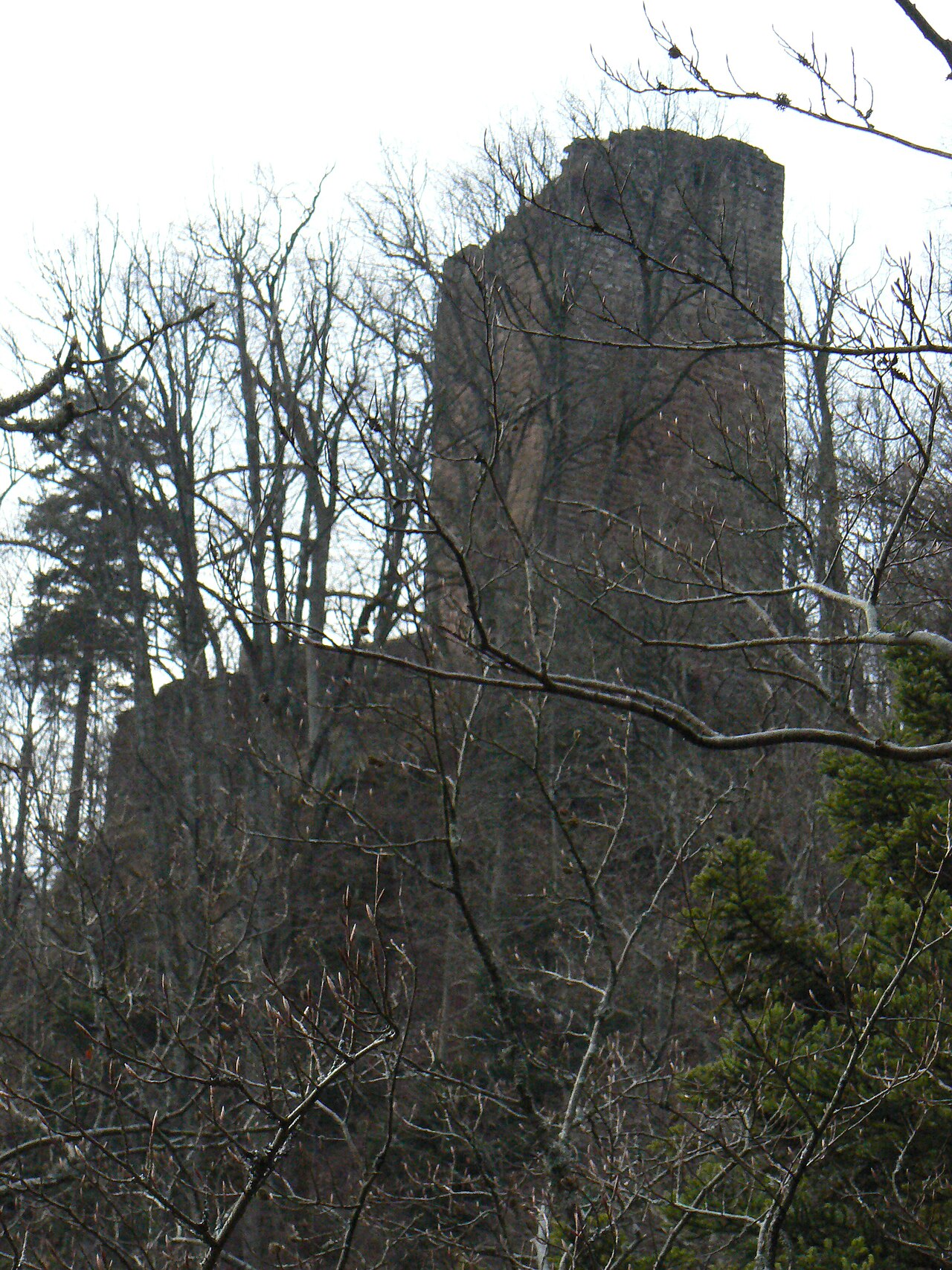
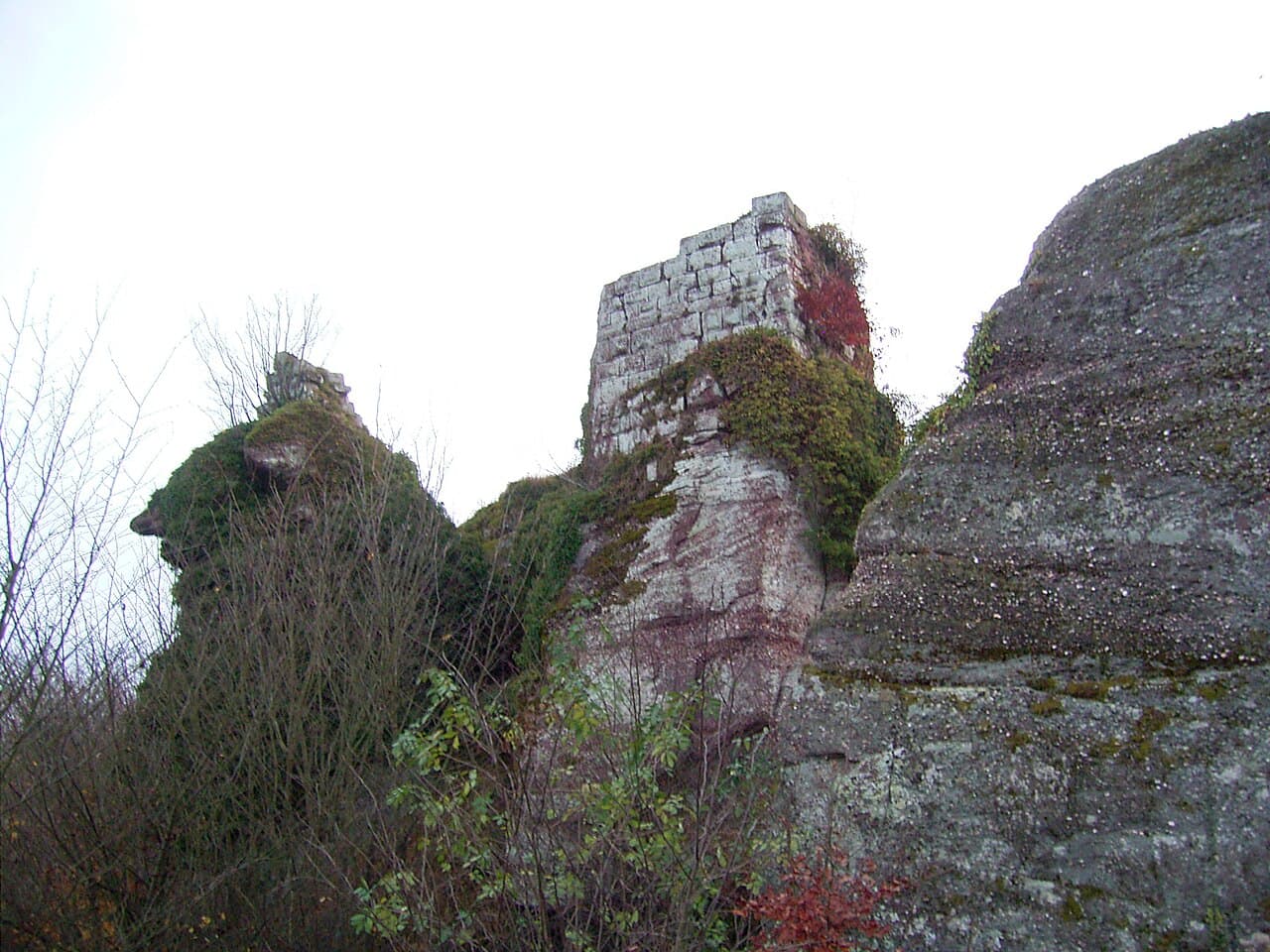
The castle's design takes full advantage of the natural sandstone outcrops, with its structures built around and atop these imposing rocks. At the summit, only scant remains of the original buildings survive, most notably the remnants of a pentagonal keep situated on the northernmost rock. This keep was the most accessible part of the castle and would have served as a last line of defense as well as a lookout point over the surrounding landscape.
Encircling the group of rocks is a polygonal enceinte—a defensive curtain wall—that remains remarkably well-preserved, especially along the southwest side. This wall features several small fully arched openings which likely functioned as arrow slits or ventilation points. The enceinte's polygonal shape was an advanced design choice for its time, offering improved defense angles against attackers.
The castle's position on elevated sandstone and its robust fortifications reflect typical high medieval strategic considerations, combining natural defenses with man-made structures to create a formidable stronghold.
Historical background and ownership
The Eguisheim family, a noble lineage prominent in the region during the 12th century, originally owned the castle. The site was first documented in the mid-1100s, underscoring its significance during the high medieval period. Following the extinction of the Eguisheim line, ownership passed to the Bishops of Strasbourg, who controlled many territories in Alsace during the late medieval era.
During the 15th century, the castle gained notoriety as a refuge for brigand knights, local warlords who operated outside the law, taking advantage of the castle's defensible position. This reputation led to its eventual destruction in 1470, likely as part of efforts to suppress lawlessness and consolidate regional power.
Preservation and cultural significance
Today, Château du Grand Ringelstein stands as a protected archaeological ruin, recognized for its historical and architectural value. It was officially listed as a monument historique by the French Ministry of Culture in 1898, ensuring its preservation under state ownership. Visitors to the site can explore the surviving enceinte and the fragmented keep, gaining insight into medieval fortification techniques and the turbulent history of Alsace.
The castle's integration with the natural sandstone formations offers a unique glimpse into medieval construction methods adapted to challenging landscapes. Its ruins provide valuable information for historians and archaeologists studying feudal power structures, defensive architecture, and regional conflicts of the high medieval and late medieval periods.
Visiting the castle
Located in the scenic region of Bas-Rhin, Château du Grand Ringelstein attracts visitors interested in history, architecture, and hiking. The site’s rugged terrain requires a moderate level of physical fitness to access the summit and explore the ruins safely. While the castle does not have extensive facilities, its evocative remains and panoramic views offer a rewarding experience for those keen on medieval heritage.
As a state-owned monument, the castle is generally accessible to the public, although specific visiting hours and guided tours may vary seasonally. Visitors are encouraged to respect the fragile ruins and natural environment during their visit.
Architectural significance in the region
The castle exemplifies the use of natural rock formations in fortress construction, a technique common in the Alsace region during the high medieval period. Its polygonal enceinte and pentagonal keep represent advanced defensive features for the time, illustrating the evolution of castle design in response to changing military technologies and tactics.
Role in regional conflicts
Château du Grand Ringelstein's history as a stronghold for brigand knights highlights the instability and fragmented authority characteristic of late medieval Alsace. Its destruction in 1470 marks a turning point in the region's efforts to establish centralized control over feudal lords and outlaw elements.
Frequently asked questions (FAQ)
- How do I get to Château du Grand Ringelstein?
- You can reach Château du Grand Ringelstein by car or public transportation. The castle is located near the town of Ringelstein and is accessible via the D-road network. For those using public transport, the nearest train station is a short bus ride away.
- What is the historical significance of Château du Grand Ringelstein?
- Château du Grand Ringelstein dates back to the 12th century and played a pivotal role in the defense strategies of the region during the medieval period. Its architectural style reflects the evolution of fortification techniques in France. The castle also served as a residence for various noble families over the centuries.
- When was Château du Grand Ringelstein built?
- The construction of Château du Grand Ringelstein began in the early 1100s and was completed in the late 12th century. Over the years, it has undergone several renovations and expansions, showcasing various architectural styles. Today, it stands as a testament to medieval engineering and design.
- Can I take guided tours of Château du Grand Ringelstein?
- Yes, guided tours are available at Château du Grand Ringelstein, providing visitors with in-depth knowledge about its history and architecture. Tours are typically offered in multiple languages and can be booked in advance. Self-guided tours are also an option for those who prefer to explore at their own pace.
- Why is Château du Grand Ringelstein popular among tourists?
- Château du Grand Ringelstein is popular due to its stunning architecture, rich history, and picturesque surroundings. Visitors are captivated by the breathtaking views from the castle's ramparts and its beautifully preserved interiors. The castle also hosts various cultural events throughout the year, attracting even more visitors.
- Is it possible to host events at Château du Grand Ringelstein?
- Yes, Château du Grand Ringelstein offers event spaces for private functions such as weddings, corporate events, and receptions. The unique ambiance and historical setting make it a memorable venue. It is advisable to contact the castle management in advance to discuss availability and arrangements.
- What are the opening hours for Château du Grand Ringelstein?
- Château du Grand Ringelstein is open to visitors from 9 AM to 6 PM, with extended hours during the summer months. It is closed on Mondays and certain public holidays, so it's best to check the official website for the most current schedule. Arriving early can enhance your experience with fewer crowds.
- What are the ticket prices for visiting Château du Grand Ringelstein?
- Ticket prices for Château du Grand Ringelstein are typically €10 for adults, with discounted rates for children and seniors. Family packages are also available, offering savings for groups. Tickets can be purchased on-site or online in advance to secure your visit.
- What is the best time to visit Château du Grand Ringelstein?
- The best time to visit Château du Grand Ringelstein is during the spring and fall when the weather is mild and the surrounding landscape is particularly beautiful. These seasons also offer fewer crowds compared to the peak summer months. Special events are often hosted during this time, enhancing your visit.
- Are there nearby attractions to Château du Grand Ringelstein?
- Yes, there are several nearby attractions, including charming villages, local vineyards, and hiking trails. The region is also rich in history, with other castles and historical sites within a short drive. Exploring the local area can provide a well-rounded experience of the rich culture and heritage of France.
Photo gallery

Information
Loading map...
Visitor reviews
No reviews yet. Been here? Write the first review and help other travelers!
Write the first reviewVisited this castle? Share your experience
Your review helps other travelers and adds first-hand knowledge to our encyclopedia.