
Nideck Castle
Nideck Castle, locally known as Château du Nideck, stands as a striking ruined fortress located northeast of the village of Oberhaslach in the Bas-Rhin department of France. Perched atop a rocky volcanic ridge overlooking the Hasel valley, the castle commands dramatic views including the nearby Nideck waterfall, which cascades nearly 25 meters down the slope. This picturesque setting has made Nideck a popular destination for visitors interested in medieval history, natural beauty, and regional folklore.
The castle complex is unique in comprising two distinct medieval castles, known as Grand-Nideck (Upper Nideck) and Petit-Nideck (Lower Nideck), which occupy different elevations on the ridge. The older Grand-Nideck castle, dating from the early 13th century, is situated higher on the ridge and is characterized today by small masonry remains. It was first documented in 1262 in a charter mentioning the castellan Gunther of Ergersheim, later called Gunther of Nideck. This castle likely served as the original stronghold and residence for the local nobility.
The Petit-Nideck castle, located on the lower part of the ridge, was first mentioned in 1336 and is believed to have been constructed following a division of the original castle estate during the 13th or 14th century. This younger castle features a prominent 20-meter high square bergfried or keep, which served as a defensive refuge. The keep's entrance today is a modern addition, but it remains a key architectural feature of the ruins. The castle's layout, with its enclosing walls and residential tower, reflects the early Gothic architectural style prevalent in the region during the late medieval period.
Historical context and ownership
The history of Château du Nideck is intertwined with the complex feudal and political landscape of the Alsace region during the late medieval period. Originally under the authority of the Bishop of Strasbourg, the castle was held by various local lords and families over the centuries. In 1264, a charter records the castle as the property of sire Bourckard, the burgrave of Nideck, underscoring its importance as a seat of regional power.
Throughout the 14th and 15th centuries, the castle passed through the hands of several noble families amid frequent regional conflicts and shifting allegiances. Notably, in 1448, the castle was besieged by forces from the city of Strasbourg, highlighting its strategic significance. Following this, the prominent Müllenheim family took possession and maintained control until 1509.
By the mid-15th century, the lower castle may have already fallen into ruin, while the upper castle remained inhabited until at least 1508. The castle ultimately suffered destruction by fire in 1636, after which it was abandoned and gradually fell into decay. The ruins have since become a protected historic monument, listed by the French Ministry of Culture since 1898, and are currently state-owned.
Architectural features and archaeological findings
The remains of Nideck Castle provide valuable insight into medieval military architecture and domestic arrangements. The castle is situated on a rhyolite rock formation at approximately 550 meters altitude on the slope of Bärenberg hill. The site’s natural defensive advantages were enhanced by man-made fortifications.
The shield wall of the castle, constructed with bossed stone blocks (buckelquader), is a notable feature designed to absorb and deflect attacks. This technique, common in medieval fortifications, gave the walls a rugged, protruding appearance and increased their resilience. The castle's perimeter walls and residential tower remain partially preserved, allowing visitors to appreciate the scale and complexity of the original structure.
The imposing square bergfried or keep of the lower castle is the most prominent surviving element. Standing about 20 meters tall, it served as a last refuge during sieges. Archaeological evidence indicates the castle was provisioned to support around twenty defenders for a two-month siege, with supplies including bread, wine, wood reserves, and an internal oven for baking. These findings demonstrate the castle's preparedness for prolonged defense and highlight the strategic planning of its medieval occupants.
The ruins and visitor experience
Today, the ruins of Château du Nideck remain accessible to the public. Visitors can reach the site via a forest path that requires approximately a 30-minute hike from the nearest parking area. The castle's location amidst natural beauty, including the nearby waterfall and the scenic Hasel valley, enhances its appeal beyond its historical significance.
Although the ruins are small and some remains are difficult to interpret, the site offers a tangible connection to the medieval past. A memorial plaque near the entrance to the bergfried honors the poet Adalbert von Chamisso, who immortalized the castle's legend in his poem inspired by the Brothers Grimm's fairy tales. This cultural association adds a layer of literary heritage to the castle's historical and architectural importance.
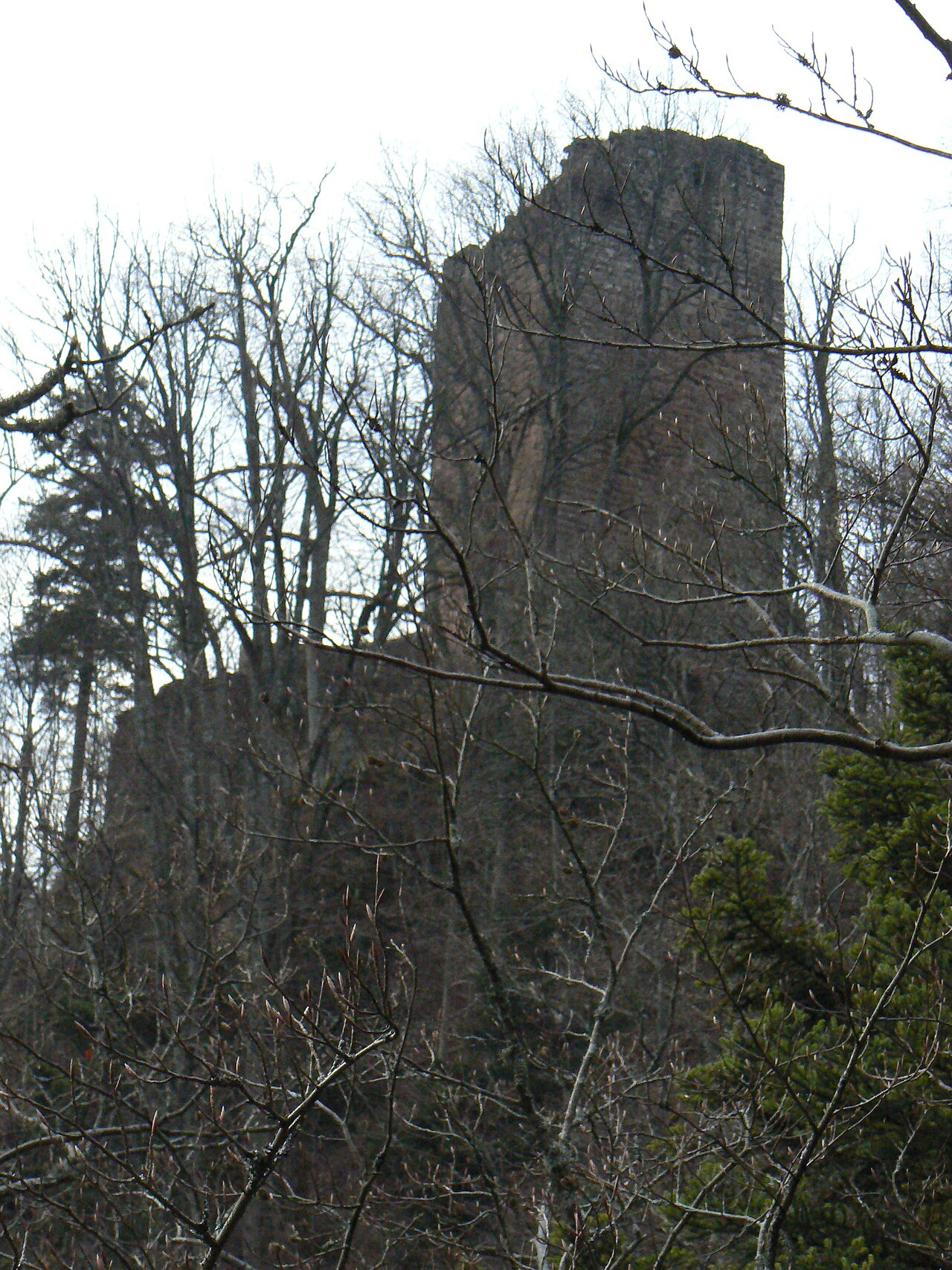
Photo by Pradigue • CC BY-SA 3.0
Legend and cultural significance
Nideck Castle is not only significant for its military and architectural history but also for its role in European folklore. In 1816, the castle became linked to the Brothers Grimm fairy tale collection through the story "Das Riesen-Spielzeug" (The Giant's Toy). This legend tells of a giant family inhabiting the castle, with their daughter venturing into the Alsace plains and mistaking humans for toys. The tale reflects the castle's imposing presence on the landscape and its integration into local myth.
The legend inspired the poet Adalbert von Chamisso to write "Das Riesenfräulein" (The Giant's Daughter), further embedding the castle in the cultural imagination of the region. This intersection of history, architecture, and folklore enriches the visitor experience and underscores the castle's enduring significance.
Preservation and heritage status
Recognized for its historical and cultural value, Château du Nideck has been officially listed as a monument historique by the French Ministry of Culture since 1898. The castle is owned and maintained by the state, ensuring its protection and accessibility for future generations.
While the ruins are in a ruined condition, ongoing conservation efforts focus on preserving the remaining structures and preventing further deterioration. The site serves as an important educational resource for understanding medieval fortifications in the Alsace region and the complex history of feudal Europe.
Visitors to Nideck Castle can explore the evocative ruins, enjoy the surrounding natural landscape, and reflect on the rich tapestry of history and legend that this remarkable site embodies.
Frequently asked questions (FAQ)
- How do I get to Nideck Castle?
- Nideck Castle is located in Oberhaslach, France, and can be accessed by car or on foot via designated hiking trails. The nearest major city is Strasbourg, which is approximately 40 kilometers away. Public transportation options are limited, so driving or hiking is recommended for the best experience.
- What is the historical significance of Nideck Castle?
- Nideck Castle dates back to the 13th century and was originally built as a defensive fortress. It holds historical importance as a representation of medieval architecture and the feudal system in the Alsace region. The castle's ruins provide insight into the lifestyle and military strategies of the time.
- When was Nideck Castle constructed?
- Nideck Castle was constructed in the early 13th century, with its origins traced back to around 1230. It served various noble families over the centuries and played a crucial role in the regional power dynamics during its prime. The castle has since fallen into ruins, but its historical essence remains intact.
- Can I visit Nideck Castle year-round?
- Yes, Nideck Castle is accessible to visitors throughout the year. However, it is advisable to check weather conditions, as winter months may present challenges for hiking to the site. The best time to visit is during the spring and autumn when the weather is mild and the surrounding landscapes are particularly beautiful.
- Why is Nideck Castle a popular tourist attraction?
- Nideck Castle is popular due to its breathtaking views and picturesque setting in the Vosges Mountains. The combination of its historical significance, stunning architecture, and the opportunity for hiking makes it a favorite among history buffs and nature lovers alike. Additionally, the ruins evoke a sense of adventure and exploration.
- Is it possible to have guided tours at Nideck Castle?
- Currently, there are no formal guided tours offered at Nideck Castle, as it primarily remains a site for independent exploration. Visitors are encouraged to bring a guidebook or use mobile apps to learn about the castle's history and architecture during their visit. Informational signs are also placed around the ruins to enhance the experience.
- What are the opening hours for Nideck Castle?
- Nideck Castle is open to the public year-round, and there are no specific opening hours since it is an outdoor site. Visitors can explore the castle grounds at their convenience, making it a flexible option for those wishing to enjoy the site. Always check local resources for any seasonal changes or visitor advisories.
- Are there any ticket prices for visiting Nideck Castle?
- There is no admission fee to visit Nideck Castle, making it an accessible destination for all visitors. However, consider bringing cash for potential donations to help with the site's maintenance. Enjoying the castle and its surroundings is free, but donations can support ongoing preservation efforts.
- What nearby attractions should I visit while at Nideck Castle?
- While visiting Nideck Castle, consider exploring the nearby towns of Oberhaslach and Schirmeck, which offer charming streets and local cuisine. The picturesque Vosges Mountains also provide numerous hiking trails and natural parks. Additionally, the historic Château de Schirmeck is a short drive away and worth a visit for history enthusiasts.
Photo gallery

Information
Loading map...
Visitor reviews
No reviews yet. Been here? Write the first review and help other travelers!
Write the first reviewVisited this castle? Share your experience
Your review helps other travelers and adds first-hand knowledge to our encyclopedia.