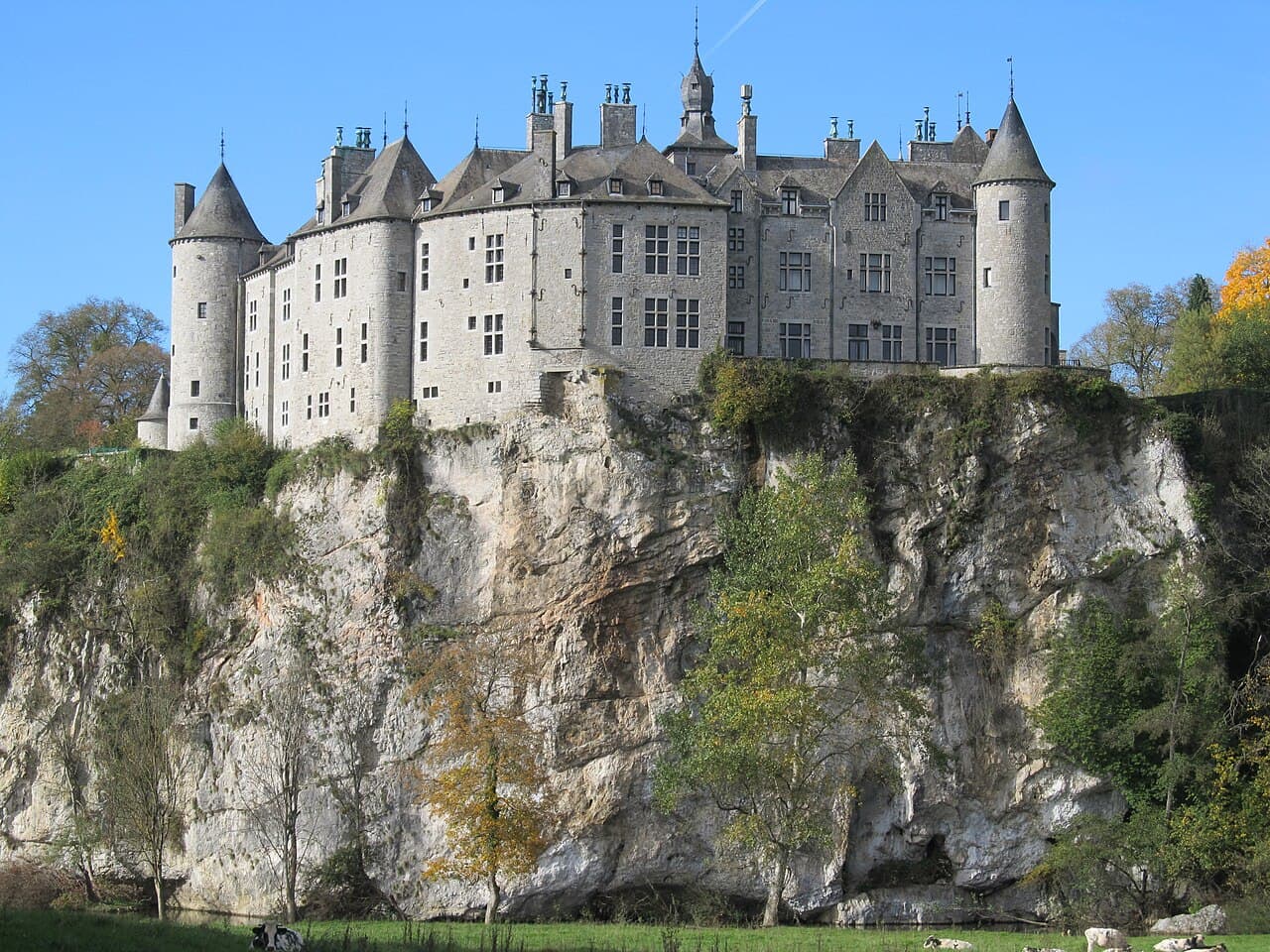
Walzin Castle stands majestically perched on a vast rocky headland overlooking a dramatic meander of the river Lesse, near the city of Dinant in the Namur region of Belgium. This imposing fortress has captivated visitors and artists alike, including the renowned French writer Victor Hugo, who immortalized the castle in a drawing in 1863. The castle's commanding position on the cliff provides not only a strategic defensive advantage but also breathtaking views of the surrounding Ardennes landscape.
Originally constructed in the 13th century during the High Medieval period, Walzin Castle was built to control the vital river passage and protect the region. The initial medieval structure was typical of hill castles of the era, featuring robust stone walls and defensive towers designed to withstand sieges and assaults. However, much of the original medieval fabric has been lost over the centuries due to destruction and subsequent restorations.
Medieval origins and strategic importance
The castle's earliest phase dates back to the 1200s, a time when feudal lords established fortified residences to assert control and defend their territories. Walzin's location atop a rocky promontory made it a natural fortress, difficult to assault and easy to defend. Its position enabled control over river traffic on the Lesse, a key route for trade and military movements in the region.
Despite its formidable natural defenses, Walzin Castle was not immune to conflict. In 1554, during the turbulent wars involving France and the Habsburg Netherlands, the castle was burned down by the French army. This event marked a significant turning point in the castle's history, necessitating substantial rebuilding and alterations in the following centuries.
Renaissance additions and architectural evolution
One of the most notable surviving elements from the post-medieval period is the Renaissance horseshoe tower, constructed in the 15th century. This tower is distinguished by its unique horseshoe shape and features four cannon ports, reflecting the evolution of military architecture to accommodate gunpowder artillery. The design of this tower illustrates the transitional phase from medieval fortifications to early modern defensive structures.
The horseshoe tower remains a prominent feature of the castle, providing a tangible link to its Renaissance past. Its robust construction and strategic placement allowed defenders to cover multiple angles of approach, enhancing the castle's defensive capabilities during an era of changing warfare tactics.
Restorations and 20th-century revival
Following centuries of neglect and partial ruin, Walzin Castle underwent several restorations. The most significant restoration took place between 1930 and 1932, led by Baron Fréderic Brugman. His work aimed to unify the castle's appearance by adopting a traditional architectural style that respected the castle's historical character while ensuring stylistic consistency throughout the complex.
This restoration phase involved rebuilding and refurbishing the castle's structures, blending medieval and Renaissance elements with early 20th-century sensibilities. The result is a castle that, while not entirely original, offers a coherent and evocative representation of its historical periods.
Architectural features and setting
Walzin Castle exemplifies a hill castle typology, utilizing its natural rocky outcrop for defense. The castle's walls and towers are integrated with the rugged landscape, creating a dramatic silhouette against the sky. The horseshoe tower with its cannon ports remains the most architecturally significant surviving medieval feature.
The castle's setting is arguably its most striking attribute. The sharp bend of the river Lesse below creates a natural moat on several sides, enhancing the fortress's defensibility and scenic appeal. Visitors today are drawn as much by the castle's impressive natural environment as by its historical architecture.
Cultural significance and visitor experience
Walzin Castle holds a cherished place in the cultural heritage of the Namur region. Its evocative ruins and restored structures inspire imagination and connect visitors to the turbulent history of medieval and Renaissance Europe. The castle's association with Victor Hugo adds literary significance, attracting enthusiasts of history and art alike.
While the castle is privately owned and not always open to the public, it remains a popular subject for photographers, hikers, and history buffs exploring the Ardennes. The surrounding landscape offers numerous walking trails that provide spectacular views of the castle and the river below.
Visitor tips
- Best visiting times are during spring and summer when the natural scenery is at its most vibrant.
- Access to the castle itself may be limited, so visitors should check local tourism resources for current visiting hours and any guided tour availability.
- Nearby Dinant offers additional attractions, including the Citadel of Dinant and the Collegiate Church of Notre Dame, enriching the historical experience of the area.
Frequently asked questions (FAQ)
- How do I get to Walzin Castle?
- Walzin Castle is located in Dinant, Belgium, and is easily accessible by car or public transport. If you are driving, take the N92 road and follow signs to Dinant. Public transport options include trains to Dinant station, followed by a short taxi ride or a scenic walk to the castle.
- What is the historical significance of Walzin Castle?
- Walzin Castle is a remarkable example of medieval architecture, dating back to the 10th century. It has played a significant role in the region's history, serving as a stronghold during various conflicts. The castle's strategic location overlooking the Meuse River highlights its importance in historical defense.
- When was Walzin Castle built?
- Construction of Walzin Castle began in the 10th century, with significant modifications and expansions occurring over the centuries. The castle features elements from different architectural periods, showcasing its evolution through time. Its current form reflects restorations made in the late 19th century.
- Can I visit Walzin Castle?
- Yes, visitors are welcome at Walzin Castle, although access may be limited during certain periods due to private ownership. It is advisable to check the official website or local tourism information for the latest visiting hours and any guided tour options. Group tours can also be arranged for a more in-depth experience.
- Why is Walzin Castle a popular tourist attraction?
- Walzin Castle is a stunning sight, perched dramatically on a cliff overlooking the Meuse River, making it a favorite among photographers and history enthusiasts. Its picturesque setting and rich history offer visitors a glimpse into medieval life. Additionally, the surrounding natural beauty enhances the overall experience.
- Is it possible to explore the interior of the castle?
- Access to the interior of Walzin Castle may be limited due to its status as a private residence. However, guided tours might be available during special events or open days, allowing visitors to explore its historical rooms and learn about its fascinating past. Always check for updates regarding public access.
- What are the nearby attractions to Walzin Castle?
- Nearby attractions include the charming town of Dinant, known for its stunning cliffs and the Collegiate Church of Notre Dame. The area is also famous for outdoor activities, such as hiking and kayaking along the Meuse River. Visitors can enjoy exploring the local cafes and shops that enhance the experience.
- What are the opening hours of Walzin Castle?
- Walzin Castle's opening hours can vary depending on the season and special events. It is best to consult the official website or contact local tourism offices for the most current information regarding visiting times. Generally, the castle is more accessible during the warmer months.
- What are the ticket prices for visiting Walzin Castle?
- Ticket prices for Walzin Castle can vary based on events or guided tours. Generally, access may be free during open days, while special tours may have a nominal fee. It's recommended to verify prices through the official website or at local tourist information centers before planning your visit.
Photo gallery

Information
Website
Visit websiteSources & official resources
Verify the information above using these authoritative references.
Loading map...
Visitor reviews
No reviews yet. Been here? Write the first review and help other travelers!
Write the first reviewVisited this castle? Share your experience
Your review helps other travelers and adds first-hand knowledge to our encyclopedia.



