Wakayama Castle
Wakayama Castle, located in Wakayama City, Japan, stands as a remarkable example of a hill castle with a rich history dating back to the late 16th century. Constructed in 1585 under the orders of Toyotomi Hidenaga, the younger brother of the renowned Toyotomi Hideyoshi, the castle was strategically established to govern the Kii area. This castle played a significant role in Japan’s feudal era, witnessing the transition of power among influential clans and the evolution of Japanese castle architecture.
Historical background and significance
The origins of Wakayama Castle trace back to the turbulent period of the Sengoku era, a time marked by constant military conflict and political upheaval. Toyotomi Hidenaga, entrusted with overseeing the Kii Province, commissioned the castle to consolidate control and fortify the region. Upon completion, Hidenaga shifted his main base to Yamato Koriyama Castle and appointed Kuwayama Shigeharu as the castle's custodian, ensuring its strategic importance was maintained.
Following the decisive Battle of Sekigahara in 1600, which paved the way for Tokugawa Ieyasu's dominance, the castle came under the stewardship of Asano Yoshinaga. Later, in 1619, Tokugawa Ieyasu's tenth son, Tokugawa Yorinobu, was installed as the castle lord. From this point until the Meiji Restoration in the late 19th century, Wakayama Castle remained under the control of successive Tokugawa family rulers, marking it as a significant seat of power within the Tokugawa shogunate's domain.
Architectural features and design
Complex keep style (renritsushiki)
One of the most distinctive aspects of Wakayama Castle is its complex keep style, known as renritsushiki. This architectural design involves a series of interconnected buildings that fully enclose the main keep courtyard, providing enhanced defensive capabilities and a unique spatial arrangement. Such a layout is rare among Japanese castles, making Wakayama Castle an important study subject for castle architecture enthusiasts.
Stone walls and baileys
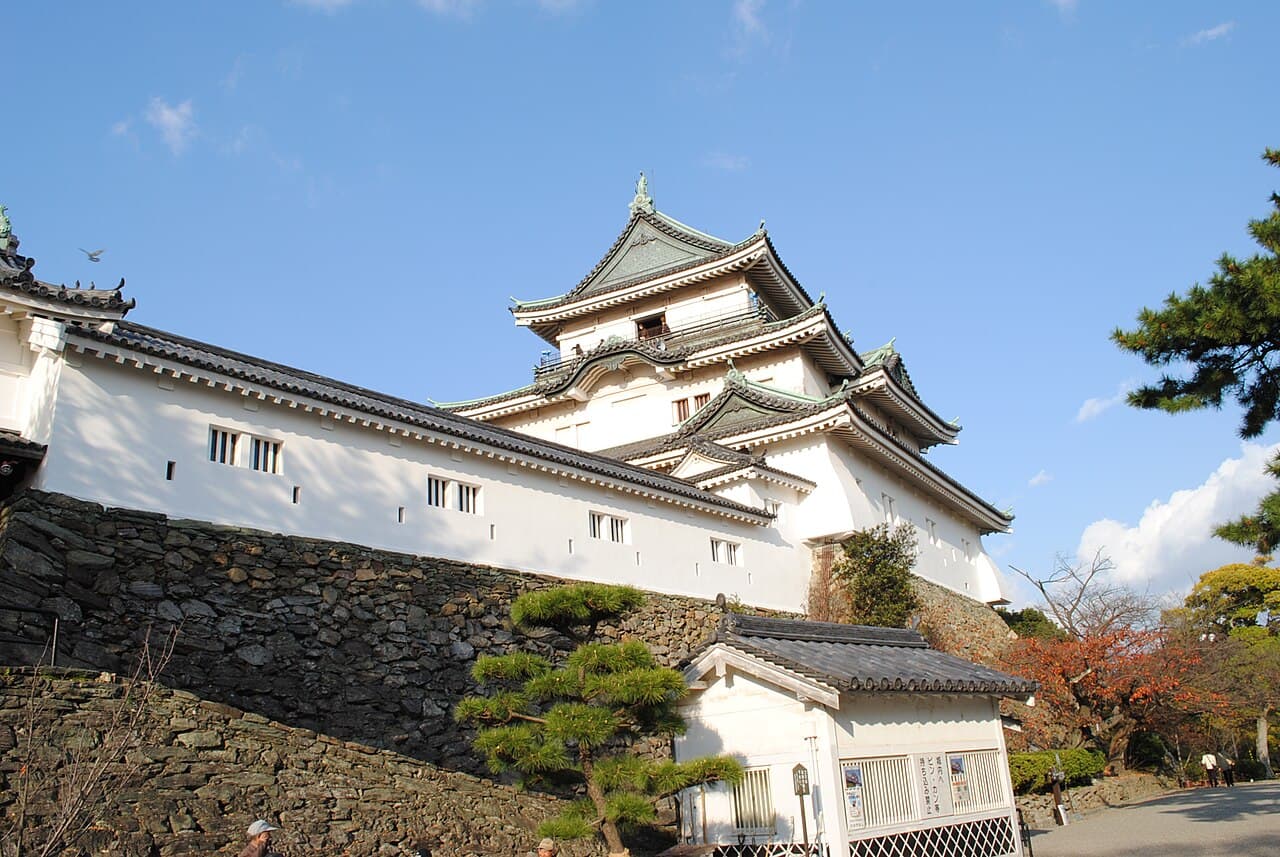
The castle grounds boast an impressive array of stone walls and multiple baileys that have survived through centuries. Visitors can observe various styles of stone masonry, reflecting different construction phases and techniques used over time. These walls not only served defensive purposes but also demonstrated the craftsmanship and aesthetic sensibilities of the builders.
Original gates and yagura towers
Wakayama Castle retains two original gates, which stand as rare survivors of the castle's original fortifications. Additionally, the site features an original bell tower yagura and the kitchen yagura from the honmaru palace, offering insights into the functional aspects of castle life. The presence of a samurai home within the castle town further enriches the historical context, providing a glimpse into the daily lives of the warrior class.
Reconstructed elements
While the main keep and several connected buildings were destroyed during the bombings of 1945 in World War II, they have been carefully reconstructed to reflect their original appearance. The castle also features a beautifully restored covered bridge, enhancing the visitor experience and preserving the castle’s historical ambiance.
Cultural importance and preservation
Wakayama Castle is celebrated alongside Himeji Castle and Iyo-Matsuyama Castle as one of the Three Great Flatland Mountain Castles in Japan. Despite suffering damage in the 20th century, the castle's grounds remain partially restored and accessible to the public, serving as a cultural heritage site that honors Japan's feudal past.
The castle's preservation efforts have maintained its historical stone walls, original gates, and distinctive architectural features, making it a valuable destination for historians, architects, and tourists alike. Walking through the castle grounds offers a tangible connection to Japan’s samurai era and the architectural ingenuity of the period.
Visitor experience and recommendations
Visitors to Wakayama Castle are encouraged to explore the extensive grounds on foot to fully appreciate the variety of stone walls, baileys, and the unique renritsushiki complex keep. The castle’s layout provides numerous vantage points for viewing the surrounding city and landscape.
The presence of original structures such as the bell tower yagura and the kitchen yagura offers an authentic glimpse into the castle's operational past. The reconstructed covered bridge and samurai residences add depth to the historical narrative, making the visit both educational and immersive.
Given its rich history and architectural significance, Wakayama Castle is highly recommended for those interested in Japanese history, castle architecture, and cultural heritage.
Frequently asked questions (FAQ)
- How do I get to Wakayama Castle?
- Wakayama Castle is conveniently located in Wakayama City and can be accessed by public transport. You can take a train to Wakayama Station and then use a short bus ride or a pleasant walk to reach the castle grounds.
- What is the historical significance of Wakayama Castle?
- Wakayama Castle, originally built in the 16th century, is a symbol of the city and reflects Japan's feudal era. It served as the residence of the Tokugawa clan and played a vital role in the region's history.
- When was Wakayama Castle built?
- The construction of Wakayama Castle began in 1585 under the orders of the feudal lord Toyotomi Hideyoshi. The castle has undergone several renovations and reconstructions over the centuries, with the current main tower completed in 1958.
- Can I enter the castle grounds for free?
- Yes, you can access the outer grounds of Wakayama Castle free of charge. However, there is a fee to enter the main keep, which houses a museum showcasing the castle's history and artifacts.
- Why is Wakayama Castle a popular tourist attraction?
- Wakayama Castle is popular for its stunning architecture, beautiful gardens, and panoramic views of the surrounding area. Additionally, its rich history and cultural significance draw visitors interested in Japan's heritage.
- Is it possible to visit Wakayama Castle year-round?
- Yes, Wakayama Castle is open to visitors throughout the year, with different seasonal attractions such as cherry blossoms in spring and colorful foliage in autumn. However, it's advisable to check for any maintenance closures or special events before planning your visit.
- What are the opening hours for Wakayama Castle?
- Wakayama Castle is typically open from 9:00 AM to 5:00 PM, with last admissions at 4:30 PM. During peak seasons, such as cherry blossom season, the hours may be extended, so it's best to verify the schedule ahead of your visit.
- What are some nearby attractions I can visit?
- Nearby attractions include the Wakayama Prefectural Museum of Natural History and the beautiful Nishinomaru Garden, which offers a serene environment for relaxation. Additionally, the Kishu Toshogu Shrine is a short distance away, providing more insight into the region's history.
- How much is the entrance fee for Wakayama Castle?
- The entrance fee for the main keep of Wakayama Castle is typically around 410 yen for adults, with discounts available for children and seniors. It's a good value considering the historical and cultural experience offered inside the castle.
Photo gallery

Information
Sources & official resources
Verify the information above using these authoritative references.
Loading map...
Visitor reviews
No reviews yet. Been here? Write the first review and help other travelers!
Write the first reviewVisited this castle? Share your experience
Your review helps other travelers and adds first-hand knowledge to our encyclopedia.