Wachsenburg Castle
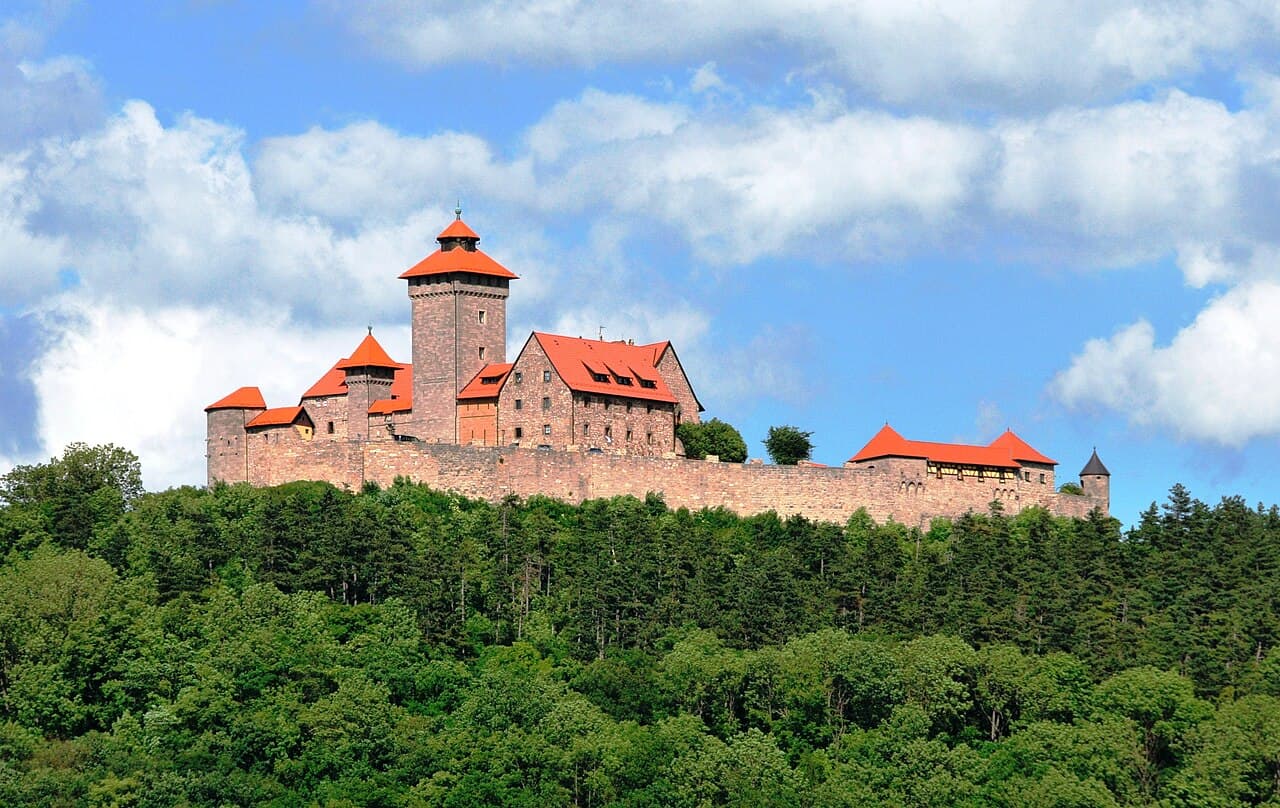
Wachsenburg Castle stands as a remarkable example of a medieval hill castle in the heart of Thuringia, Germany. Originally constructed in the 10th century, this fortress has witnessed centuries of tumultuous history, architectural evolution, and cultural significance. Perched strategically on a hill near Arnstadt, it was initially established by the imperial abbey of Hersfeld to protect its lands during a period marked by feudal conflicts and territorial disputes.
The castle’s long history is marked by phases of construction, destruction, and restoration. Notably, it was extensively rebuilt in the 17th and 19th centuries, incorporating neo-Romanesque and neo-Gothic architectural styles that reflect the tastes and defensive needs of those periods. Today, Wachsenburg Castle is well-preserved and serves multiple functions including a museum, hotel, and restaurant, welcoming visitors who come to explore its rich heritage and panoramic views.
Early history and strategic importance
Founded around 930 AD, Wachsenburg Castle was a vital stronghold for the imperial abbey of Hersfeld. The abbey’s intent was to secure its extensive landholdings in the region, which were vulnerable to raids and local feuds. The castle’s location on a hill provided a commanding view of the surrounding landscape, allowing its occupants to monitor and control key routes.
Between 1090 and 1098, the castle was home to Abbot Friedrich of Hersfeld, who undertook restoration efforts to reinforce its defenses amid ongoing disputes. Around 1100, ownership transitioned from ecclesiastical to secular hands when the Landgraves of Thuringia took control, marking a significant shift in the castle’s role and governance.
Medieval conflicts and ownership changes
The castle first appears in written records in 1140, with a knight named Adelher von Wassenburg documented as its castellan. Earlier, in 1120, the fortress endured a siege aimed at expelling imperial knights who had become bandits, using the castle as a base for raids. This early incident highlights the castle’s role in regional power struggles.
During the 12th and 13th centuries, Wachsenburg was embroiled in conflicts between rival imperial factions. It served as a refuge for the pro-Welf Archbishop of Cologne and changed hands multiple times. A notable event occurred in 1204 when Philip of Swabia captured the castle amid these disputes.
From 1306, the castle came under the possession of the Schwarzburg-Blankenburg family. Count Günther XII initiated expansions and fortifications, enhancing the castle’s defensive capabilities. However, financial pressures led to its sale in 1366 to cover war debts.
Robber baron era and military use
In 1441, the castle was seized by the infamous robber baron Apel Vitzthum, who used it as a base for raiding merchants from Erfurt. The castle was besieged until 1451, when defenders successfully undermined the shield wall, forcing Vitzthum’s surrender. This episode underscores the castle’s strategic importance and robust defenses.
Following this turbulent period, Wachsenburg Castle declined and fell into disrepair. In 1640, Duke Ernst I acquired the property with intentions to transform it into a palace. Notable improvements included the drilling of a deep well in 1651 to secure a reliable water supply, a critical feature for any fortress.
The castle’s function evolved over the centuries, serving as a military prison and an orphanage. The last commandant died in 1856, marking the end of its military administrative role.
19th and 20th century renovations and museum development
In 1861, the castle became home to a castellan and innkeeper, signaling a shift toward civilian use. Extensive renovations in the late 19th and early 20th centuries introduced neo-Romanesque and neo-Gothic architectural elements. These restorations prepared the castle to house a military and local history museum, supported by ducal patrons and local committees.
The Hohenlohe Tower, a prominent bergfried or keep standing 30 meters tall, was inaugurated in 1905. Named after Prince Ernst II of Hohenlohe-Langenburg, it features a ceremonial hall on the ground floor and exhibition spaces above. Its gallery offers panoramic views through sixteen windows, making it a highlight for visitors.
Between 1907 and 1913, additional defensive structures were added, including the artillery bastion Bastion Herzog Carl-Eduard and a powder tower built in 1910 for gunpowder storage. A decorative half-round defensive tower combining limestone and half-timbered construction was also added in 1913.
Until 1918, the castle remained under the ownership of the Dukes of Saxe-Coburg and Gotha. In 1920, it became property of the state of Thuringia, which committed to its preservation and museum support.
Role during world war ii and post-war period
During World War II, Wachsenburg Castle served as a cultural depot, safeguarding art collections from Weimar. In April 1945, it was occupied by US troops and hosted a historic meeting between Generals Patton and Eisenhower. Soon after, Soviet forces took control.
The post-war period saw the loss and confiscation of many museum collections. Remaining ethnographic and folk collections were displayed until the museum closed in 1962. Restoration efforts between 1964 and 1969 revitalized the castle, and a hotel and restaurant opened in 1966.
Following German reunification, the castle returned to Thuringian ownership in 1991. Further restoration was undertaken, and in 2001 the castle was privatized. A small private museum reopened, and in 2003 the chapel of St. George was consecrated.
That same year, the Ordo Militaris Teutonicus Levantis e.V., a self-styled secular knightly order, established its headquarters at Wachsenburg. The castle remains a significant historic site surrounded by a protected nature reserve.
Architectural features and castle layout
Upper castle and bergfried
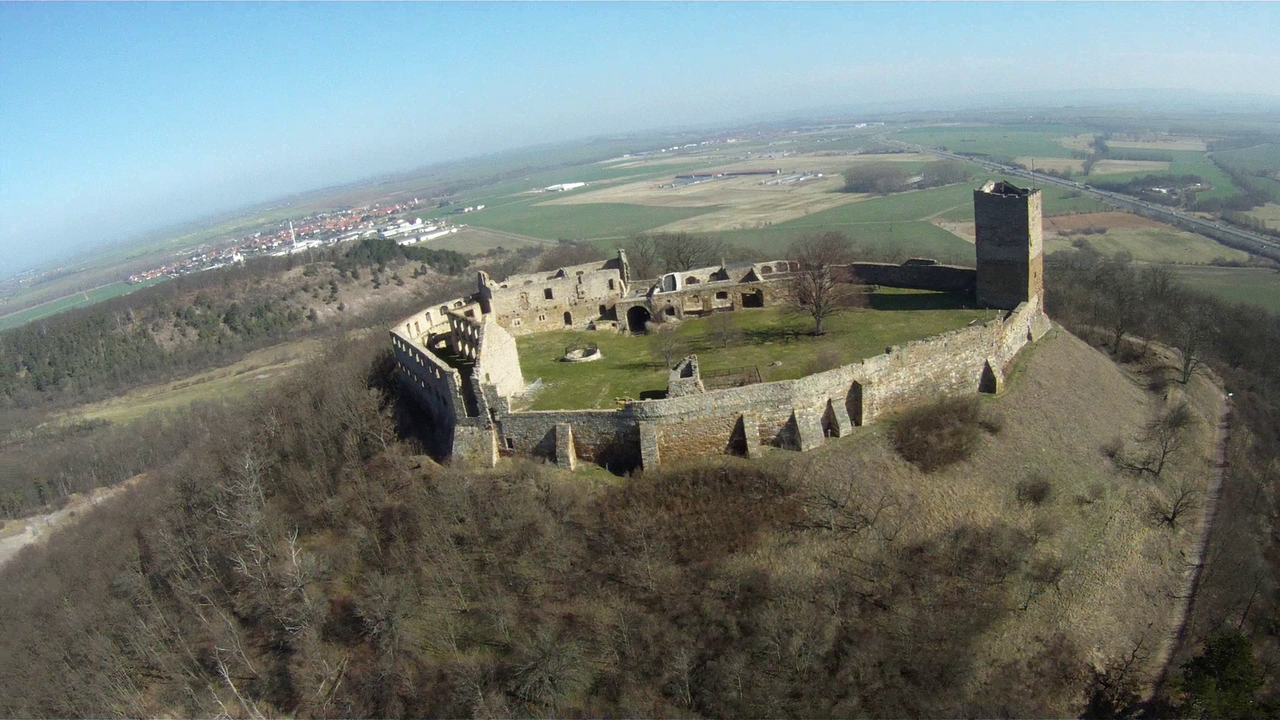
The core of Wachsenburg Castle is its irregular quadrangular upper castle, or citadel, consisting of three residential wings and the imposing Hohenlohe Tower. This tall, square bergfried serves as a dominant feature and was designed for both defense and ceremonial functions.
The buildings are connected by robust stone walls enclosing a compact courtyard. The tower’s ground floor houses a ceremonial hall, while the upper floors serve as exhibition spaces. The top gallery’s sixteen windows provide sweeping views of the surrounding Thuringian landscape.
Lower castle and defensive structures
The lower castle, or outer bailey, envelops the upper castle on all sides except the northern wing. It is protected by a ring wall and historically contained essential support buildings such as warehouses, a smithy, soldiers’ quarters, and stables.
Key defensive features include the main gate with a battlemented walkway and the Thörlein tower, which together create a fortified entrance and a closed inner courtyard. The artillery bastion Bastion Herzog Carl-Eduard and the powder tower reflect early 20th-century military adaptations.
The half-round defensive tower added in 1913 combines limestone and half-timbered construction, primarily serving decorative purposes rather than practical defense.
Water supply and other buildings
A deep well drilled in 1651 near the castle gate reaches a depth of 93 meters, tapping into groundwater to provide a vital water source. Water was historically raised by a pedal wheel until 1912, underscoring the castle’s self-sufficiency during sieges and military use.
Other notable structures include the Rittersaal or Knights’ Hall, the Neubau (New Building) dating from 1664, the commandant’s house, and the Arresthaus or prison house, which contains masonry fragments from the 12th century.
Interior decoration and cultural heritage
The castle’s interiors were extensively decorated by local artist Eduard Fiedler, who created 471 works including frescoes, portraits, and drawings. Although eight frescoes in the southern room of the Rittersaal were lost during the GDR era, photographic documentation from 1952 preserves their memory.
The careful restoration of stone walls and battlements during the early 20th century and after German reunification has preserved the castle’s architectural integrity. Today, Wachsenburg Castle functions as a hotel and restaurant, with parts of the complex hosting private museum exhibitions, allowing visitors to engage with its rich history.
Natural surroundings and conservation
Wachsenburg Castle is surrounded by a protected nature reserve featuring steep, rugged slopes and diverse habitats. This environment supports rare species such as the blue-winged grasshopper, smooth snake, and adonis flower, highlighting the castle’s role not only as a historic monument but also as a guardian of natural heritage.
The combination of cultural significance and environmental conservation makes Wachsenburg a unique destination for history enthusiasts and nature lovers alike, offering a rich experience that spans centuries of human endeavor and natural beauty.
Frequently asked questions (FAQ)
- How do I visit Wachsenburg Castle?
- Wachsenburg Castle is open to visitors year-round, offering guided tours, a museum, hotel accommodations, and a restaurant. It is advisable to check the official website for current opening hours and booking information.
- What is the historical significance of Wachsenburg Castle?
- Wachsenburg Castle played a key role in regional defense and politics from the 10th century onward. It was a stronghold for ecclesiastical and secular powers, witnessed robber baron sieges, and served various military and cultural functions over the centuries.
- Can I stay overnight at Wachsenburg Castle?
- Yes, the castle houses a hotel that allows guests to experience its historic ambiance while enjoying modern amenities. Booking in advance is recommended, especially during peak tourist seasons.
- What architectural styles are present at Wachsenburg Castle?
- The castle features a blend of medieval architecture with later neo-Romanesque and neo-Gothic renovations from the 17th and 19th centuries, visible in its towers, walls, and decorative elements.
- Is Wachsenburg Castle accessible for people with mobility issues?
- Due to its historic nature and hilltop location, some areas of Wachsenburg Castle may be challenging for visitors with mobility impairments. It is best to contact the castle administration in advance to inquire about specific accessibility accommodations.
- When is the best time to visit Wachsenburg Castle?
- Spring through early autumn offers the most pleasant weather and natural scenery, enhancing the experience of both the castle and its surrounding nature reserve. Special events and guided tours are often scheduled during these months.
- Are there any nearby attractions to visit along with Wachsenburg Castle?
- Visitors often combine a trip to Wachsenburg Castle with visits to nearby historic towns like Arnstadt and the cultural sites of Thuringia, including other castles, museums, and natural parks.
Photo gallery

Information
Sources & official resources
Verify the information above using these authoritative references.
Loading map...
Visitor reviews
No reviews yet. Been here? Write the first review and help other travelers!
Write the first reviewVisited this castle? Share your experience
Your review helps other travelers and adds first-hand knowledge to our encyclopedia.