Ehrenburg (Plaue)
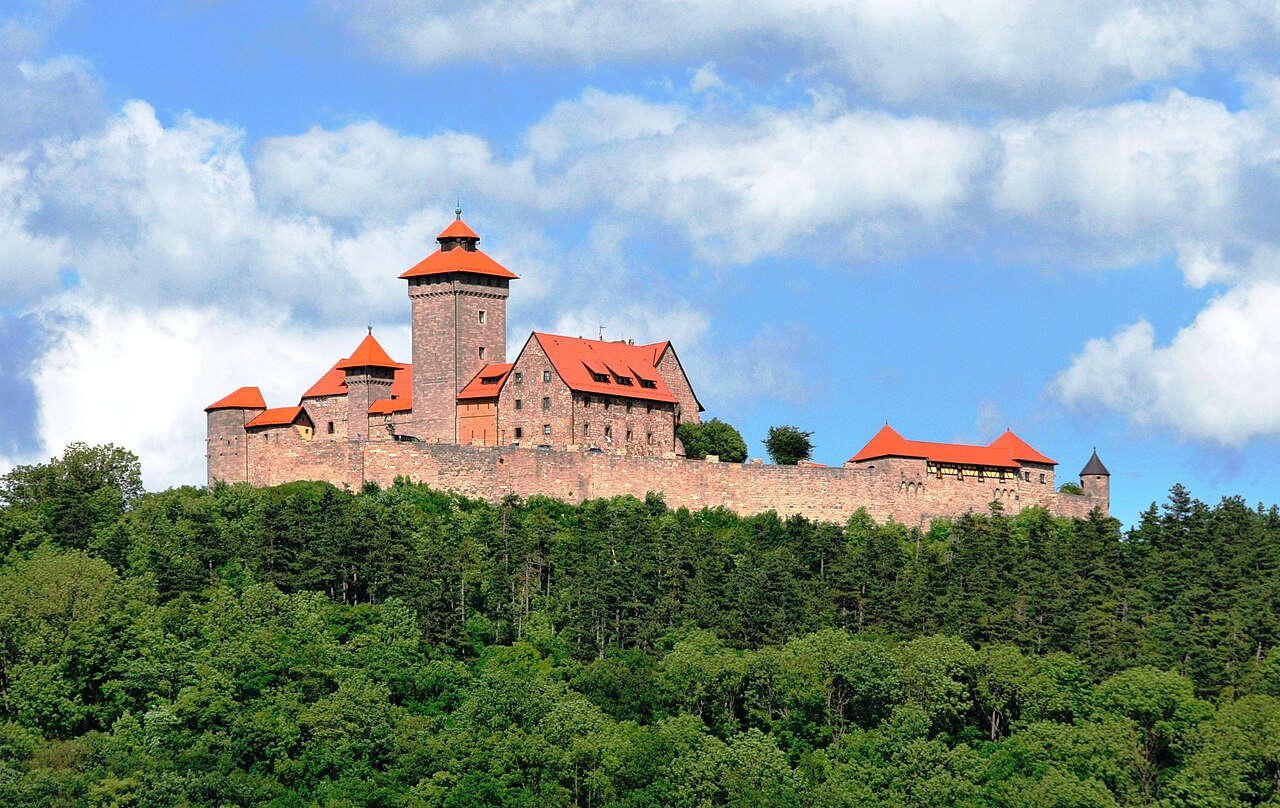
The Ehrenburg castle, also known as Honour Castle, is a significant hill castle located above the town of Plaue in the Thuringia region of Germany. Constructed in the 14th century, it exemplifies the late medieval period of castle building in central Europe. The castle's strategic position on elevated terrain provided a commanding view over the surrounding landscape, serving both defensive and administrative functions.
Historical context and construction
The Ehrenburg was built during a time of regional territorial conflicts and feudal power consolidation in Thuringia. Its construction in the late medieval era reflects the architectural and military needs of the period, emphasizing fortified walls, defensive towers, and a secure gatehouse. The castle was likely commissioned by local nobility seeking to assert control and protect their lands from rival factions and external threats.
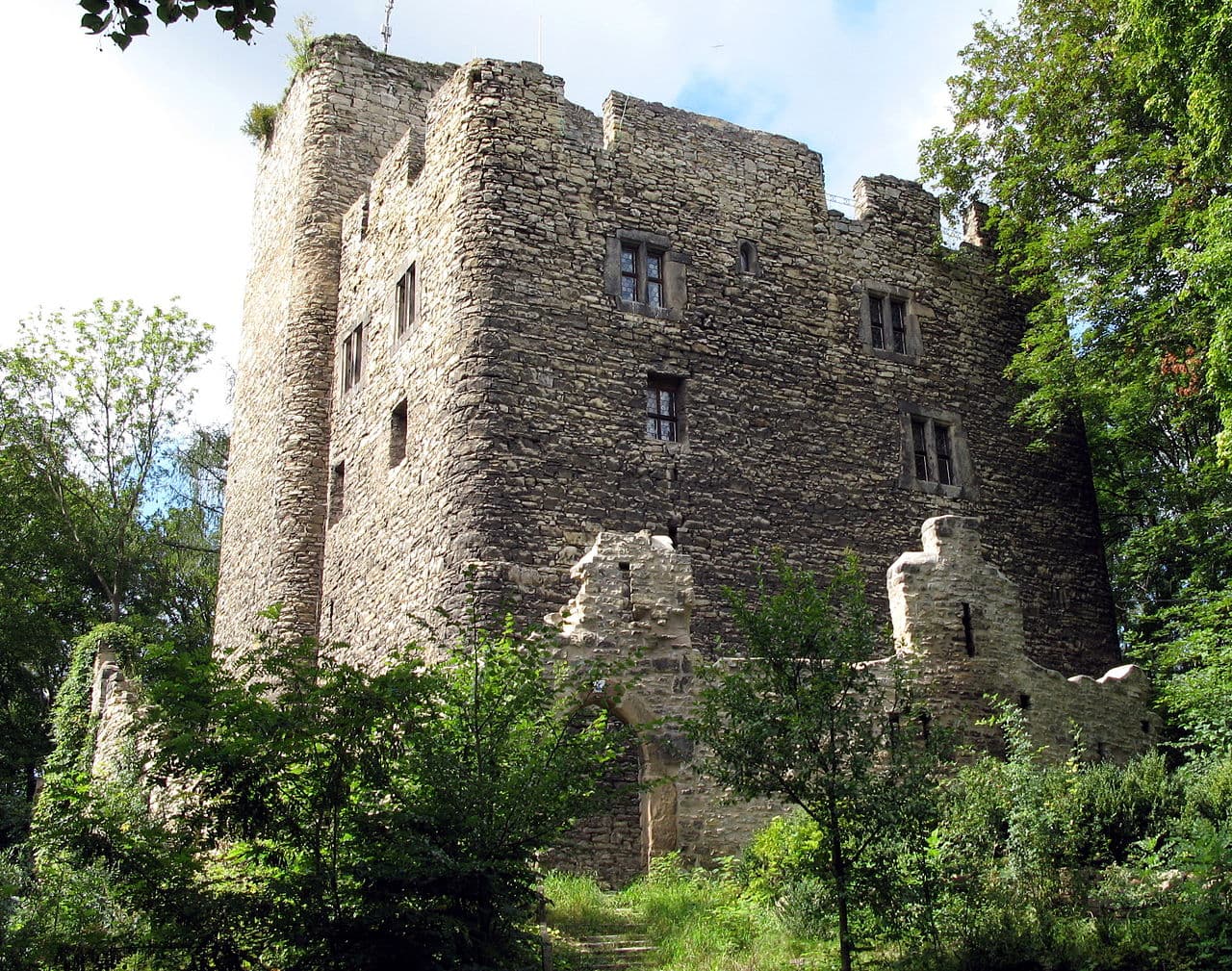
While specific records about the original builders are scarce, the design follows typical hill castle features prevalent in the 14th century, including a keep or donjon as the central stronghold, surrounded by curtain walls and defensive battlements. The use of local stone materials and medieval masonry techniques is evident in the surviving structures.
Architectural features and layout
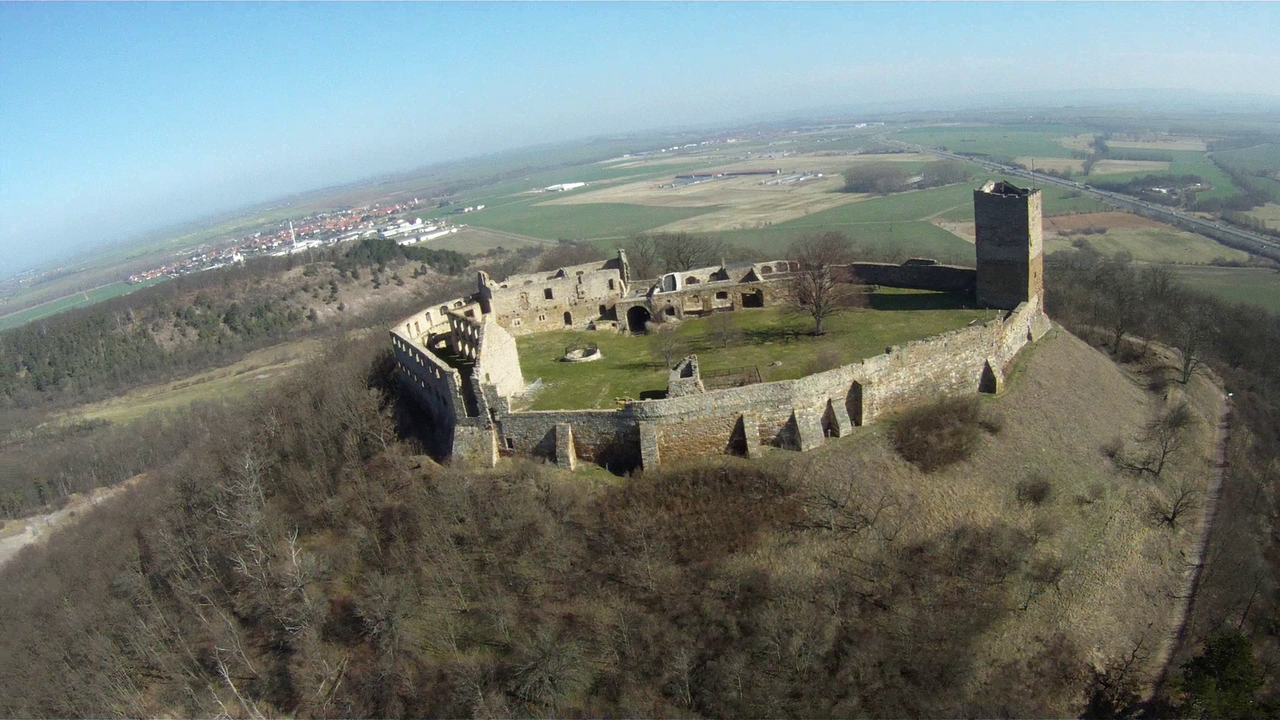
Ehrenburg's layout is characteristic of a hill castle with a compact plan adapted to the natural topography. The castle includes a main tower that served as both a lookout and a last line of defense. Surrounding this are curtain walls equipped with battlements and arrow slits for archers. The entrance was fortified with a gatehouse and possibly a drawbridge over a defensive ditch or moat.
The interior of the castle would have contained residential chambers, a great hall for gatherings and feasts, and storage rooms. Although much of the original internal structure has not survived intact, archaeological studies suggest a typical medieval arrangement focused on defense and lordly residence.
Role in regional history
Throughout its history, Ehrenburg played a role in the defense and administration of the surrounding territory. Its elevated position allowed control over trade routes and local settlements. The castle witnessed various conflicts typical of the late medieval period, including feudal skirmishes and territorial disputes within Thuringia.
Over centuries, the castle's military importance declined with changes in warfare and political structures. It eventually fell into partial ruin but remains an important cultural and historical landmark in the region.
Preservation and current status
Today, Ehrenburg is classified as a partially preserved hill castle. Visitors can explore the ruins, which include sections of the walls, towers, and foundations. The site offers insight into medieval fortification techniques and the lifestyle of the nobility during the late medieval period.
The castle is accessible to the public and attracts history enthusiasts and tourists interested in medieval architecture and German heritage. Efforts to maintain and stabilize the ruins help preserve this important monument for future generations.
Visiting information and cultural significance
Ehrenburg's location near Plaue makes it a notable destination for visitors exploring Thuringia's rich medieval past. The castle's ruins provide a tangible connection to the region's feudal history and architectural traditions.
While the castle does not have extensive visitor facilities, its scenic views and historical ambiance offer an enriching experience. Nearby towns and cultural sites complement a visit to Ehrenburg, making it a valuable part of Thuringia's heritage tourism.
Frequently asked questions (FAQ)
- How do I get to Ehrenburg Castle in Plaue?
- Ehrenburg Castle is located in the picturesque town of Plaue, Germany. You can easily reach it by car, with parking available nearby, or by taking public transportation, as Plaue is well-connected by train and bus services.
- What is the historical significance of Ehrenburg Castle?
- Ehrenburg Castle has a rich history dating back to the 12th century and served as a key defensive stronghold in the region. It is notable for its unique blend of architectural styles that reflect the various periods of its construction and renovation.
- When was Ehrenburg Castle built?
- Ehrenburg Castle was originally constructed in the late 12th century, with significant modifications made in the following centuries. The castle showcases elements from the Romanesque, Gothic, and Renaissance periods, making it a fascinating site for history enthusiasts.
- Can I visit Ehrenburg Castle year-round?
- Yes, Ehrenburg Castle is open to visitors throughout the year, although the opening hours may vary by season. It's advisable to check the official website for the most current visiting hours and any seasonal events or closures.
- Why is Ehrenburg Castle considered an architectural gem?
- Ehrenburg Castle is considered an architectural gem due to its impressive blend of styles and its well-preserved structures. The castle features intricate stonework, grand towers, and stunning views of the surrounding landscape, making it a must-see for architecture lovers.
- Is it possible to take guided tours of Ehrenburg Castle?
- Yes, guided tours are available at Ehrenburg Castle, providing visitors with in-depth knowledge of its history and architecture. Tours are led by knowledgeable guides who can offer insights into the castle's past and its significance in the region.
- What are the ticket prices for visiting Ehrenburg Castle?
- Ticket prices for Ehrenburg Castle are generally affordable, with discounts available for students, seniors, and groups. It's a good idea to check the official website for the latest pricing information and any special offers that may be available.
- What is the best time to visit Ehrenburg Castle?
- The best time to visit Ehrenburg Castle is during the spring and early autumn months when the weather is mild and the surrounding landscapes are at their most beautiful. This timing also allows visitors to enjoy the outdoor areas and take part in seasonal events.
- Are there any nearby attractions to visit while in Plaue?
- Yes, there are several nearby attractions worth exploring, including the scenic riverside parks, historical buildings, and local museums. Visitors can also enjoy hiking trails and natural parks in the surrounding area for a more immersive experience in the beautiful German countryside.
Photo gallery

Information
Loading map...
Visitor reviews
No reviews yet. Been here? Write the first review and help other travelers!
Write the first reviewVisited this castle? Share your experience
Your review helps other travelers and adds first-hand knowledge to our encyclopedia.