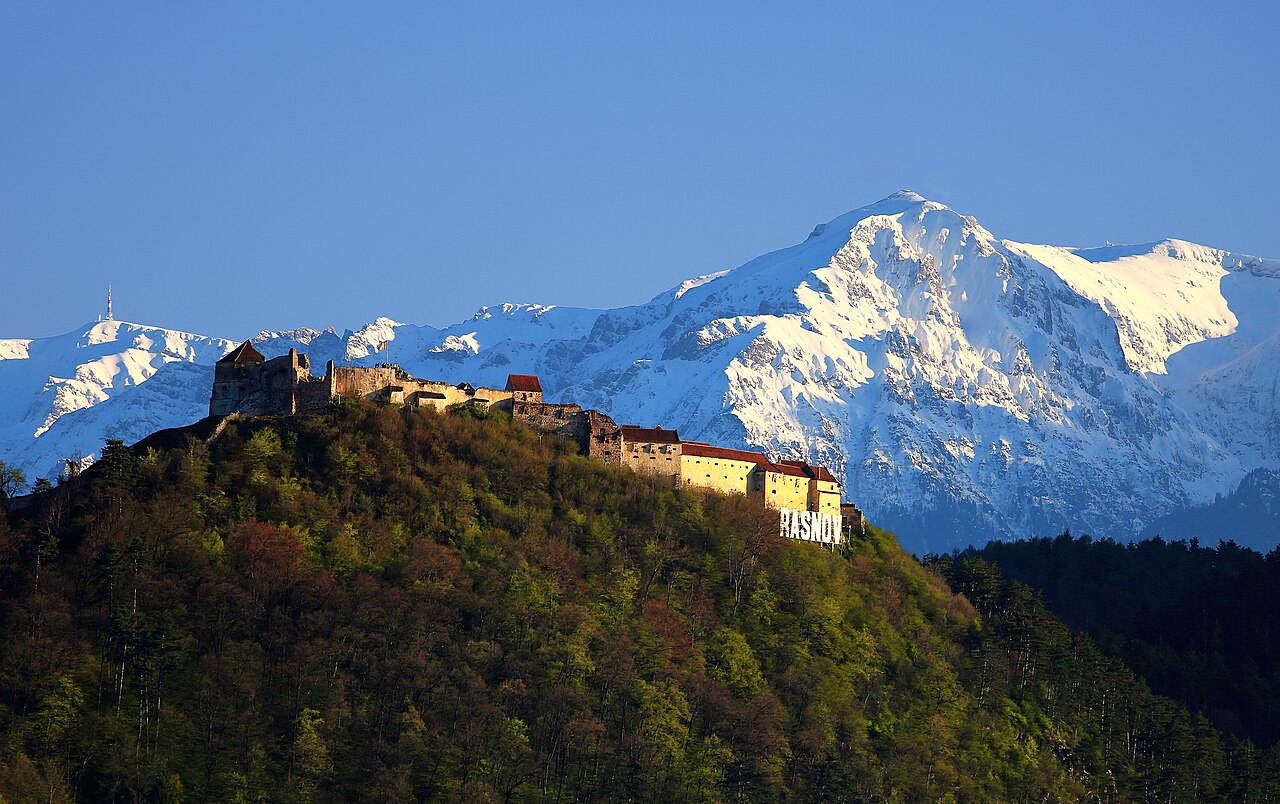
Vulcan
The Vulcan bastioned fortress, located in the village of Vulcan within the Tulcea region of Romania, stands as a remarkable example of medieval defensive architecture with origins dating back to the 13th century. This fortress, originally established by the Saxons, is closely tied to the historical evolution of the village and its turbulent history marked by invasions and reconstructions. It is a significant cultural heritage site that reflects the military, religious, and social aspects of the region's past.
Early history and foundation
The first recorded mention of the village of Vulcan appears in 1377, but the settlement itself was inhabited earlier, as evidenced by the construction of a Romanesque church by the Saxons in the 13th century. This church served as the nucleus for the later fortress complex. The village and its church suffered severe destruction during the Turkish invasion of 1421, which necessitated extensive rebuilding efforts. The devastation was so profound that the Hungarian king, Sigismund of Luxembourg, granted the surviving inhabitants an eleven-year tax exemption to aid in the reconstruction of the settlement.
Architectural evolution and fortification
Gothic reconstruction of the church
In 1432, the original Romanesque church was rebuilt in the Gothic style, reflecting the architectural trends of the period and the community's resilience. This reconstruction marked the beginning of the transformation of the site into a fortified complex.
Construction of defensive walls and towers
Between the late 15th and early 16th centuries, the church was surrounded by a formidable defensive wall approximately 10 meters high. The wall was constructed on a plan that combined a rectangular and a semi-circular layout. The southern and western curtain walls were straight and met at a slightly obtuse angle, while the ends of the walls were connected by a curved section. The walls featured machicolations and arrow slits integrated into their structure for active defense.
Four square towers were incorporated into the wall circuit, each equipped with machicolations and arrow slits. Three of these towers were topped with hipped roofs, while one had a shed roof. The western tower included the main gate, which was secured by a wooden portcullis reinforced with iron and protected by machicolations, enhancing the fortress's defensive capabilities.
Internal structures and storage
Inside the walls, two-story granaries were built against the inner face of the curtain walls. These granaries were crucial for the villagers, allowing them to store harvests and provisions to withstand prolonged sieges. This feature underscores the fortress's dual role as both a place of refuge and a center for sustaining the local population during times of conflict.
Conflicts and destructions
The village and fortress endured several destructive raids, notably by the Wallachian prince Petru Rareș in 1529 and again in 1599 and 1603. However, the most devastating attack occurred on 23 September 1611, when the forces of the Transylvanian prince Gabriel Báthory assaulted the fortress. Despite the villagers taking refuge behind the walls, the attackers breached the defenses, massacring the inhabitants, including women and children. The attackers set fire to the belfry where the last defenders had taken shelter, leaving only five survivors from the massacre.
Following this tragedy, the church remained heavily damaged, and for over fifty years, only a small chapel was usable. Reconstruction efforts resumed in 1632 for the fortress and later in 1665 for the church. A new belfry was added on the western side of the church in 1794, symbolizing the community's recovery and continuity.
Current state and heritage significance
The Saxon fortress at Vulcan has survived to the present day, retaining much of its medieval character. Although the original main gate is now obscured by the town hall building constructed in 1893, access to the fortress is available through a gate in the northern wall. Visitors can observe the well-preserved two-level granaries attached to the defensive walls, which remain a distinctive feature of the site.
The fortress stands as a testament to the High Medieval military architecture in the region, exemplifying the bastioned fortress typology with its combination of robust walls, towers, and internal storage facilities. It offers valuable insights into the defensive strategies and community resilience of the Saxons in medieval Romania.
Architectural features and defensive elements
- Defensive walls: Approximately 10 meters high, combining straight and curved sections.
- Machicolations and arrow slits: Integrated for active defense against attackers.
- Square towers: Four in total, equipped with machicolations and arrow slits, three with hipped roofs, one with a shed roof.
- Main gate: Located in the western tower, secured with a wooden portcullis and machicolations.
- Granaries: Two-story structures built inside the walls for storing provisions during sieges.
Visiting information and accessibility
Today, the Vulcan fortress is accessible to visitors interested in medieval architecture and history. While the main gate is not visible due to the town hall's presence, the northern entrance provides access to the fortress grounds. The site offers a unique opportunity to explore well-preserved defensive structures and understand the historical context of Saxon settlements in Romania.
Visitors should check local resources for opening hours and any guided tours available to enrich their experience of this remarkable bastioned fortress.
Frequently asked questions (FAQ)
- How do I get to Vulcan Castle?
- Vulcan Castle is accessible by car and public transportation from nearby cities in Romania. The closest major city is Brașov, which offers bus and train services to Vulcan. Once in Vulcan, local taxis and rideshare options can take you directly to the castle.
- What is the historical significance of Vulcan Castle?
- Vulcan Castle dates back to the 14th century and was built as a defensive stronghold to protect the region from invasions. It played a crucial role in the history of Transylvania, serving as a military fortress during various conflicts. The castle is a testament to the architectural and cultural heritage of the time.
- When was Vulcan Castle built?
- Construction of Vulcan Castle began in the late 1300s, with significant expansions occurring in the following centuries. The castle reflects the architectural styles of different eras, showcasing its evolution over time. Restoration efforts have preserved its historical features for future generations.
- Can I take guided tours of Vulcan Castle?
- Yes, guided tours are available at Vulcan Castle, providing visitors with in-depth insights into its history and architecture. Tours typically last about an hour and cover key areas of the castle, including the main hall and defensive structures. Audio guides are also available for those who prefer a self-guided experience.
- Why is Vulcan Castle a popular tourist destination?
- Vulcan Castle is popular for its stunning architecture, rich history, and picturesque location in the Carpathian Mountains. Visitors are drawn to its medieval charm and the panoramic views it offers of the surrounding landscape. Additionally, the castle often hosts cultural events and festivals, enhancing its appeal.
- Is it possible to visit Vulcan Castle year-round?
- Yes, Vulcan Castle is open to visitors throughout the year, although opening hours may vary by season. It's advisable to check the official website or local tourism information for current hours and any seasonal events. Winter visits offer a unique charm, while summer is ideal for enjoying the surrounding nature.
- What are the ticket prices for Vulcan Castle?
- Ticket prices for Vulcan Castle are generally affordable, with discounts available for students and seniors. Children under a certain age may enter for free, making it a family-friendly destination. Check the official website for the most up-to-date pricing and any special offers.
- What is the best time to visit Vulcan Castle?
- The best time to visit Vulcan Castle is during the spring and early autumn when the weather is mild, and the surrounding landscapes are in full bloom. These seasons offer pleasant conditions for exploring the castle and its grounds. Summer can be crowded, while winter provides a serene, snowy backdrop for the castle.
- Are there any nearby attractions to Vulcan Castle?
- Yes, there are several nearby attractions, including natural parks and historic towns that showcase the rich culture of Transylvania. The nearby city of Brașov, with its medieval architecture and vibrant atmosphere, is a popular day trip. Additionally, hiking trails in the Carpathian Mountains offer opportunities for outdoor adventures.
Information
Loading map...
Visitor reviews
No reviews yet. Been here? Write the first review and help other travelers!
Write the first reviewVisited this castle? Share your experience
Your review helps other travelers and adds first-hand knowledge to our encyclopedia.