Vizille Castle — France castle

Vizille Castle

Vizille castle and museum of the french revolution
Auvergne-Rhone-Alpes, France
Post-Renaissance (17th–18th c.)

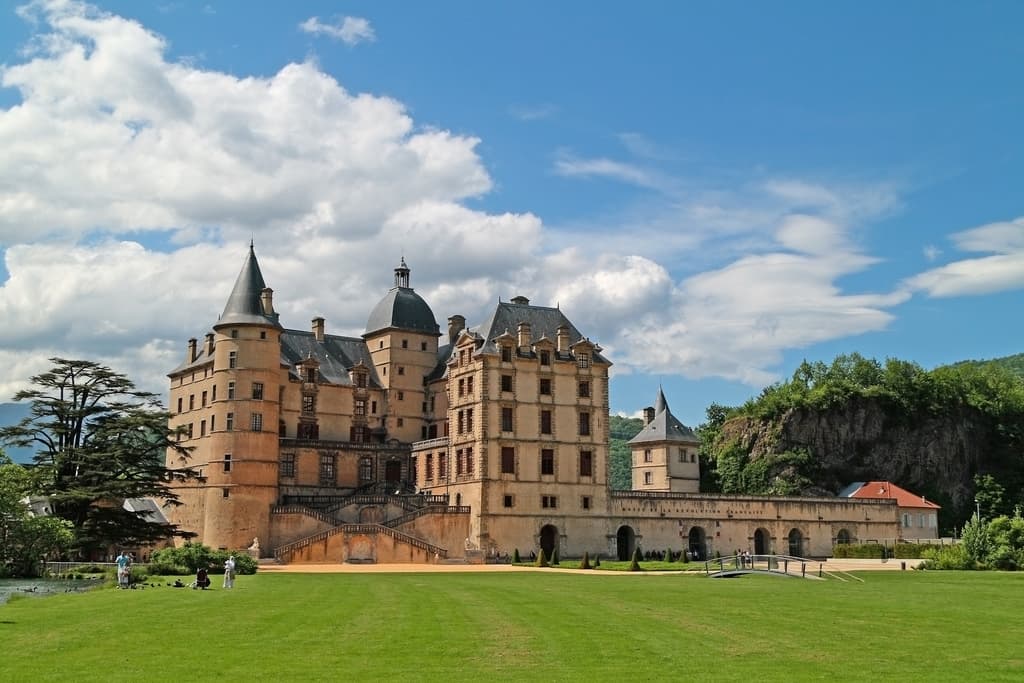
Vizille Castle, located near Grenoble in the Auvergne-Rhone-Alpes region of France, is a landmark of profound historical and cultural significance. Nestled at the gateway to the Oisans massif along the famed Route Napoléon, this castle and its expansive grounds form the Domaine de Vizille-Museum of the French Revolution, a unique site where history, art, and nature converge.

The castle's origins trace back to the 17th century, when it was constructed as the residence of the powerful dukes of Lesdiguières, a noble family influential in the region during the Ancien Régime. Vizille Castle served as a symbol of authority and aristocratic power, with its architecture reflecting the grandeur and defensive features typical of a hill castle of the period.

Historical importance and revolutionary heritage

Vizille Castle is famously known as the "cradle of the French Revolution". This title stems from the pivotal event on July 21, 1788, when the assembly of the three orders of Dauphiné convened in the castle's room of the Game of Palm. This assembly was a critical moment in French history, as the representatives boldly demanded the convocation of the States General, a precursor to the revolutionary upheaval that would transform France and Europe.

This meeting at Vizille marked a significant challenge to royal authority and helped set in motion the events leading to the French Revolution in 1789. The castle thus holds a key place in the narrative of revolutionary France, embodying the tensions between the monarchy and emerging calls for political reform.

Architectural features and estate layout

The castle itself is a fine example of 17th-century architecture, combining elements of a fortified residence with elegant living spaces. Its design includes defensive walls, towers, and a grand courtyard, which historically served both protective and ceremonial functions.

Surrounding the castle is the extensive landscaped park, which has been designated a "Jardin remarquable" for its horticultural excellence. The park features original floral designs and a variety of atmospheres, providing visitors with a serene environment that complements the castle's historical ambiance. The estate also includes a country park that serves as a wildlife refuge, notably housing a deer reserve, enhancing the natural heritage of the site.

Museum of the french revolution

Since its establishment in 1983, the Museum of the French Revolution housed within Vizille Castle has become a premier cultural institution. The museum's collection is unique, continuously evolving, and enriched over time to include a wide array of artworks, historical artifacts, and documents that illuminate the period from the Enlightenment through to Romanticism.

Visitors to the museum can explore the profound cultural transformations that occurred in Europe during this era, gaining insight into the revolutionary ideas and artistic expressions that shaped modern Western society. The museum's exhibitions are designed to engage diverse audiences, making the complex history of the revolution accessible and compelling.

Cultural significance and visitor experience

Vizille Castle and its museum are not only a testament to French history but also a vibrant cultural hub. The site attracts historians, scholars, tourists, and nature lovers alike, offering a multifaceted experience that blends education, heritage, and recreation.

The castle's proximity to Grenoble and its location on the historic Route Napoléon make it an accessible destination for those exploring the Auvergne-Rhone-Alpes region. The combination of architectural grandeur, revolutionary history, and natural beauty ensures that Vizille Castle remains a cherished monument and a must-visit site for anyone interested in France's past and cultural legacy.

Frequently asked questions (FAQ)

What is the historical significance of Vizille Castle?
Vizille Castle is known as the "cradle of the French Revolution" because it hosted the assembly of the three orders of Dauphiné in 1788, which demanded the convocation of the States General, a key event leading to the revolution.
What can visitors see at the Museum of the French Revolution in Vizille Castle?
The museum features a unique and evolving collection of artworks and artifacts from the Enlightenment to Romanticism, illustrating the cultural and political transformations of the revolutionary era.
Is the park at Vizille Castle open to the public?
Yes, the landscaped park at Vizille Castle is open to visitors and is recognized as a Jardin remarquable, offering diverse floral displays and a deer reserve for nature enthusiasts.
Where is Vizille Castle located?
Vizille Castle is located near Grenoble in the Auvergne-Rhone-Alpes region of France, along the historic Route Napoléon, making it easily accessible for visitors exploring the area.
When was the Museum of the French Revolution at Vizille Castle established?
The Museum of the French Revolution was established in 1983 and has since developed a significant collection that educates visitors about the revolutionary period and its cultural impact.

Photo gallery

Vizille Castle
Click to view

Photo by Bogdanmoisuc•CC BY-SA 3.0

1 photo • Click any image to view in full screen

Information

Hill Castle

Loading map...

Visitor reviews

No reviews yet. Been here? Write the first review and help other travelers!

Write the first review

Visited this castle? Share your experience

Your review helps other travelers and adds first-hand knowledge to our encyclopedia.

Write a review

(5/5)

0/2000 characters

Your review will be visible after admin approval

Nearby castles

4.1 km

Château de Bon Repos

Jarrie, France

The Château de Bon Repos stands as a remarkable example of a hill castle with a rich history that bridges the medieval and early Renaissance periods in France. Located in the municipality of Jarrie within the Hauts-de-France region, this château embodies centuries of architectural evolution and noble heritage. Its origins trace back to a fortified site established in the 12th and 13th centuries, evidenced by the surviving enclosure walls, which highlight its strategic importance during the medieval era. Constructed primarily during the early Renaissance around 1470, the château was commissioned by the French noble Guillaume Armuet. The main residence, or logis, is a substantial rectangular building that originally featured a roof and four corner turrets, characteristic of early Renaissance residential and defensive architecture. Although the roof collapsed in 1917, the turrets and much of the masonry remain intact, providing valuable insight into the château's original design and function. Historical context and ownership The history of Château de Bon Repos reflects the broader social and political changes in France from the late medieval period through the modern era. Initially owned by the Armuet family, the château symbolized noble status and the transition from purely defensive fortifications to more comfortable, representative residences during the Renaissance. The estate passed to the d’Auberjon de Murinais family in 1673, who held it until 1811, after which it was acquired by the Costa de Beauregard family. This lineage of ownership illustrates the château’s continued importance as a noble residence over several centuries. In the 19th century, the château changed hands multiple times before coming into the possession of Jules Jouvin in 1874. The Jouvin family retained ownership into the late 20th century, during which time the château experienced significant challenges, including the collapse of its roof during World War I, which marked the beginning of its physical decline. Architectural features and significance The main residence and turrets The logis of Château de Bon Repos is the centerpiece of the estate, featuring a rectangular plan typical of early Renaissance châteaux. The four corner turrets are notable for their defensive function as well as their contribution to the château’s aesthetic. These turrets, along with the thick masonry walls, reflect a blend of medieval fortification techniques and Renaissance residential comfort. The gothic chapel Within the château grounds lies a Gothic-style chapel dating from the 15th century. This chapel is a significant element that contrasts with the Renaissance style of the main residence, illustrating the coexistence of medieval religious architecture alongside early modern secular buildings. The chapel’s architectural details provide insight into the spiritual life of the château’s inhabitants and the importance of religious functions within noble estates of the period. Medieval enclosure walls Surrounding the château are enclosure walls originating from the 12th and 13th centuries. These fortifications predate the Renaissance construction and signify the site's earlier role as a fortified stronghold. The masonry remains of these walls contribute to the château’s historical depth, representing the evolution of military architecture from the medieval to the Renaissance era. Restoration and preservation efforts Following the damage sustained during World War I, particularly the collapse of the roof in 1917, Château de Bon Repos entered a period of decline. However, the local government of Jarrie took ownership in 1976, initiating a renewed focus on preservation. An association formed in 1978 has overseen ongoing restoration efforts aimed at stabilizing the structure and promoting cultural activities at the site. The château and its surrounding enclosure were officially designated as historic monuments on October 8, 1986, recognizing their cultural and architectural significance. Restoration continued into the 21st century, notably supported by funding from the Loto du Patrimoine in 2018, which facilitated repairs to the roof and windows of the main building. Ecological and cultural importance Beyond its architectural and historical value, Château de Bon Repos is also recognized for its ecological significance. The estate has been designated as a bird sanctuary by the Ligue pour la protection des oiseaux (LPO) under an agreement from 2011 to 2014. This designation underscores the château’s integration into the natural heritage of the region, highlighting the coexistence of cultural preservation and environmental stewardship. Today, Château de Bon Repos stands as a testament to the layered history of French noble residences, combining medieval fortifications with early Renaissance architectural innovation. Its ongoing restoration and protection efforts ensure that this historic site remains a valuable cultural landmark within the Hauts-de-France region.

Renaissance (15th–17th c.)
Details
9 km
Château d’Uriage — France castle

Château d’Uriage

Saint-Martin-d'Uriage, France

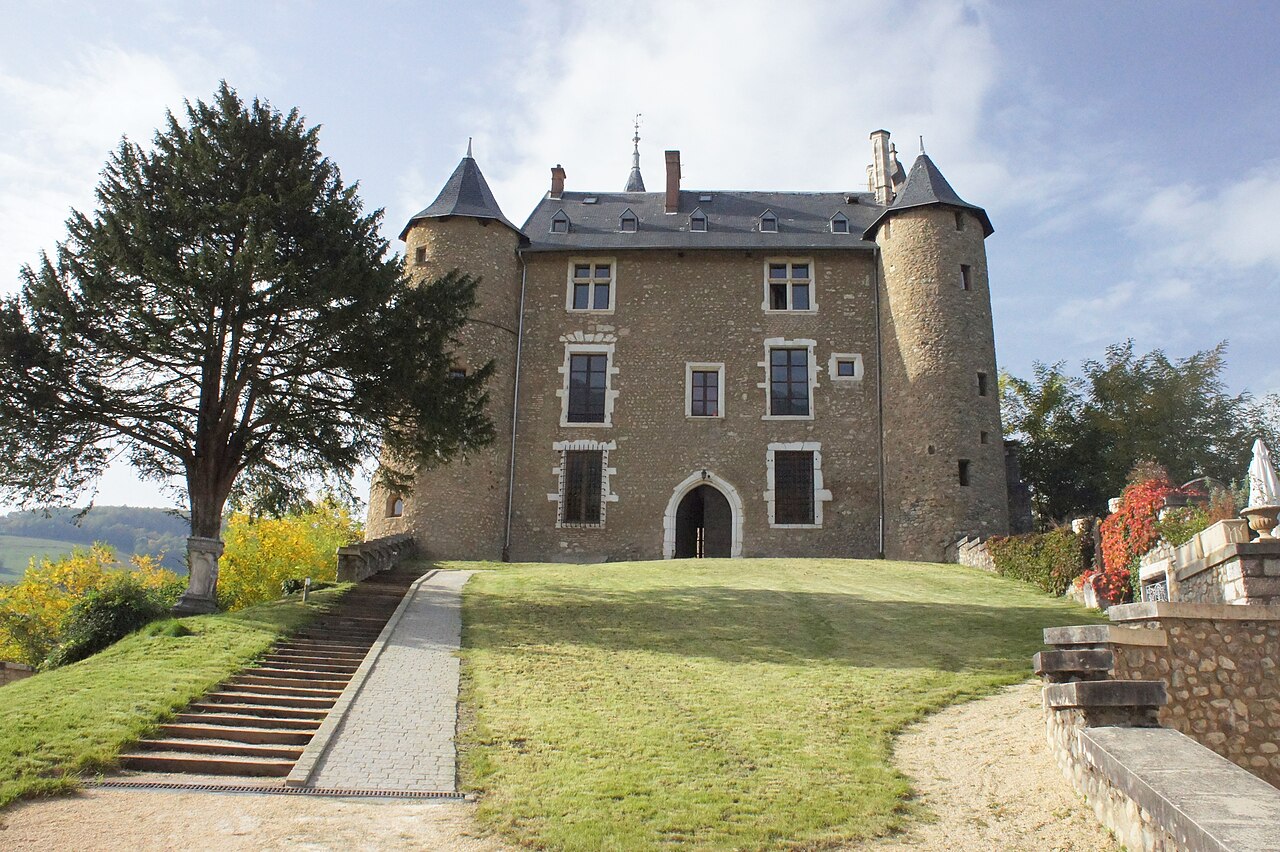
The Château d'Uriage is a remarkable example of medieval fortification located near Grenoble in southeastern France. Perched atop a hill overlooking the Sonnant gorge and the surrounding valley, this hill castle has a rich history dating back to the 11th century. Originally documented in 1085 as a wooden tower or motte castrale, it served as a strategic defensive position for the powerful Alleman family, influential lords in the Dauphiné region. Over the centuries, the castle evolved significantly from its early wooden origins. During the 12th and 13th centuries, the initial timber structure was replaced by a robust stone castle featuring a keep and fortified enclosure. This transformation marked the castle's transition into a permanent stronghold designed to protect the territory and assert the Alleman family's dominance. The western wing of the present complex corresponds to this medieval phase. Medieval origins and architectural evolution The castle's earliest incarnation as a motte and bailey type fortification was typical of the early medieval period, emphasizing rapid construction and defensive capabilities. The replacement of wooden structures with stone during the high medieval period reflects broader trends in castle architecture, aiming for greater durability and resistance to siege warfare. The layout of the Château d'Uriage includes three large main buildings arranged around a roughly square courtyard, each corner fortified by round towers. The largest tower serves as the keep (donjon), a central defensive and residential feature. The complex is divided into two principal sections: Châteauvieux and Châteauneuf. Châteauvieux dates from the 12th or 13th century and is characterized by two circular towers on its western side and a turret with dormer windows added in the 17th century, illustrating the castle's architectural evolution over time. Châteauneuf, constructed in the 15th century, presents a more refined architectural style. It also features two round corner towers and connects to Châteauvieux via the François Ier Gallery, a substantial gallery and terrace built in the 16th century. This gallery links the older medieval structures with Renaissance influences, highlighting the castle's continuous adaptation to changing architectural styles and residential needs. Historical significance and ownership transitions The lordship of Uriage was elevated to a barony in 1496 by King Charles VIII, awarded to Soffrey Alleman, reflecting the castle's importance and the family's loyalty to the French crown. This elevation marked a peak in the castle's political and social status during the late medieval period. Throughout the following centuries, the castle changed hands multiple times, passing to notable families such as the Boffin family in 1630 and later to the Langon family through marriage in 1659. Nicolas-François de Langon, a member of this family, played a significant role as a deputy to the Estates General in 1789, a pivotal moment preceding the French Revolution. By the late 18th century, ownership transferred to the Gauteron family, and in the 19th century, Louis de Saint-Ferriol inherited the castle. Saint-Ferriol transformed the site from a military stronghold into a cultural institution by converting it into a museum, reflecting a broader 19th-century trend of preserving historic castles as heritage sites. Role during the 20th century and military use During World War II, the Château d'Uriage was requisitioned by the French army from 1940 to 1942. Under the Vichy regime, it housed the École Nationale des Cadres, a training school for cadres aligned with the government. Later, between 1943 and 1944, the castle served as a school for the Milice française, the paramilitary force of the regime, marking a controversial chapter in its history. After the war, the military retained ownership until 1968, when the castle was sold to a private individual. Since then, it has remained in private hands and is generally not open to the public, preserving its status as a private residence with limited access for cultural heritage events. Architectural features and preservation The Château d'Uriage's construction primarily utilizes local stone masonry, typical of medieval fortifications in the Dauphiné region. The castle's defensive features include its round towers, thick curtain walls, and the elevated position overlooking the gorge and valley, which provided strategic advantage. Significant remodeling occurred in the 15th and 19th centuries, with additions such as the François Ier Gallery and the turret with dormer windows, blending medieval and Renaissance architectural elements. The presence of an Orangerie within the castle—a large ground-floor room—adds to the site's architectural interest and reflects adaptations for residential comfort and status display. The façades, roofs, and the Orangerie have been officially protected as historic monuments since 1990, underscoring their cultural and architectural significance. The castle remains in well-preserved condition due to ongoing preservation efforts, maintaining the integrity of its medieval and later architectural phases. Location and current status Located in the commune of Saint-Martin-d'Uriage, the castle overlooks not only the Sonnant gorge but also the nearby thermal spa town of Uriage-les-Bains. This scenic setting enhances the castle's historical ambiance and strategic importance. While the Château d'Uriage is private property and not generally accessible to visitors, its historical archives are preserved at the Departmental Archives of Isère. These archives provide valuable resources for researchers and historians studying the castle's extensive history and architectural development. Overall, the Château d'Uriage stands as a significant medieval fortress that has adapted through centuries of political, social, and architectural changes. Its combination of defensive strength, noble residence functions, and later cultural preservation efforts make it a noteworthy example of French castle heritage.

High Medieval (11th–13th c.)
Details
14.2 km
Bastille (Grenoble) — France castle

Bastille (Grenoble)

, France

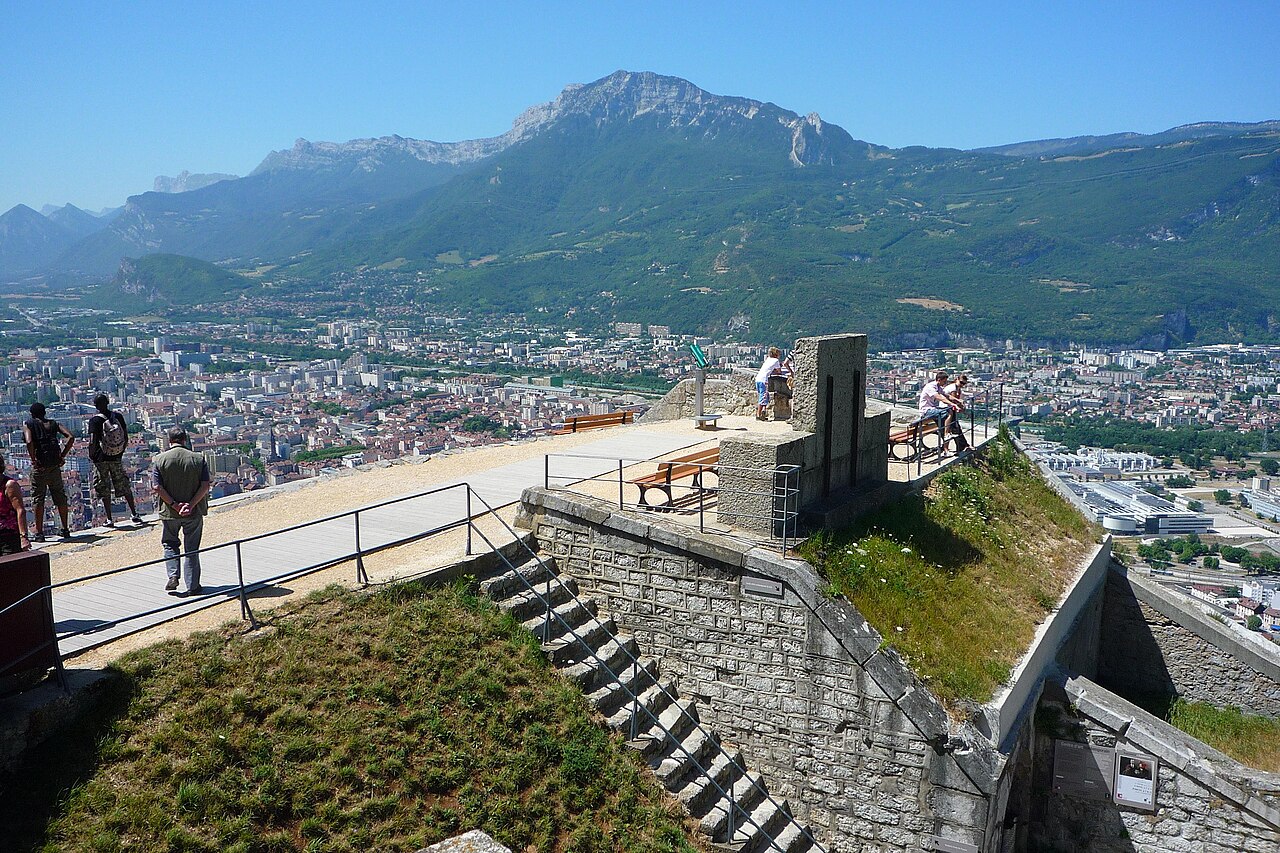
The Bastille fortress stands prominently at 476 meters (1,561 feet) above sea level, perched on a strategic hill at the southern end of the Chartreuse mountain range. Overlooking the city of Grenoble, France, this historic fortification dominates the landscape and serves as a significant cultural and tourist landmark. With an annual footfall of approximately 600,000 visitors, the Bastille remains one of the most visited sites in the Grenoble area, offering a unique blend of military history, panoramic views, and architectural interest. Historical context and strategic importance The Bastille was constructed during the 19th century as a bastioned fortress, a type of fortification designed to withstand artillery attacks characteristic of the modern period. Its location atop a steep hill provided a commanding vantage point over Grenoble and the surrounding valleys, making it a critical defensive position for controlling access to the city and protecting it from potential invaders. The fortress was part of a broader network of military defenses developed in response to evolving warfare technologies and geopolitical tensions in France during the 1800s. Its design reflects the military engineering principles of the time, emphasizing strong defensive walls, bastions for artillery placement, and strategic positioning to maximize defensive coverage. Architectural features and design The Bastille exemplifies the characteristics of bastioned fortresses with its angular bastions projecting outward from the main walls, allowing defenders to cover adjacent walls with crossfire and eliminate blind spots. The fortress walls are robust and thick, constructed to absorb and deflect cannon fire. The layout includes multiple defensive layers, such as moats and ramparts, designed to slow and expose attacking forces. Access to the fortress is controlled through fortified gates and narrow pathways that exploit the natural topography of the hill. The combination of natural elevation and man-made defenses made the Bastille a formidable stronghold. Inside, the fortress contains various military structures, including barracks, armories, and lookout posts. These facilities supported the garrison stationed there and facilitated the fortress's role in regional defense. Modern use and tourism Today, the Bastille serves as a major tourist attraction and cultural site in Grenoble. Visitors can reach the fortress via a scenic cable car ride known as the "Téléphérique de la Bastille," which offers spectacular views of the city and surrounding mountains. The fortress grounds feature walking trails, panoramic viewpoints, and historical exhibits detailing its military past. The site also hosts cultural events and exhibitions, integrating its historical significance with contemporary community life. Its preservation and adaptive reuse highlight the importance of maintaining military heritage sites for educational and recreational purposes. Natural surroundings and panoramic views The Bastille's position within the Chartreuse mountain range provides visitors with stunning vistas of the French Alps and the city of Grenoble below. The natural environment surrounding the fortress includes rugged cliffs, forested slopes, and diverse flora and fauna, contributing to the site's appeal as a destination for both history enthusiasts and nature lovers. Hiking trails connect the Bastille to other parts of the mountain range, offering opportunities for outdoor activities and exploration beyond the fortress itself.

Modern (19th–20th c.)
Details