Villalba Castle
Villalba Castle, also known as Cebolla Castle or Malpica el Viejo Castle (meaning Old Malpica Castle), is a significant high medieval fortress located near the CM-4015 road in the province of Toledo, Spain. Positioned strategically on a hill, the castle overlooks a fertile orchard, likely of olive trees, and sits close to the historic crossroads connecting Toledo to Talavera de la Reina, as well as a smaller route leading north to the village of Domingo Pérez. This location provided both defensive advantages and control over important medieval trade and travel routes.
Historical background and ownership
The earliest known references to Villalba Castle date back to the 10th and 11th centuries, linking it to the Knights Templar, a powerful military and religious order that held several fortifications in the region, including the nearby San Servando and Montalbán castles. The castle is believed to have been constructed on the remains of an earlier Roman structure, indicating the site's long-standing strategic importance.
Throughout its history, Villalba Castle passed through the hands of several notable noble families, including the Lopez de Ayala lineage, the Counts of Oropesa, and the Dukes of Frías. These owners played important roles in the political and military affairs of medieval Spain, and their stewardship reflects the castle's value as a defensive and administrative center.
Architectural features and construction
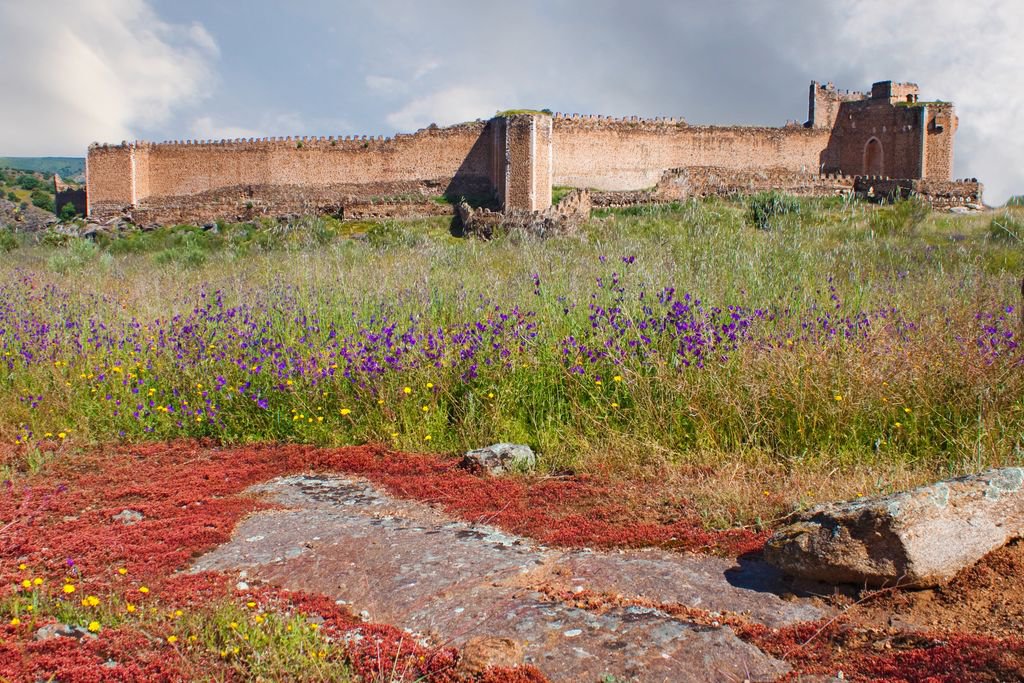
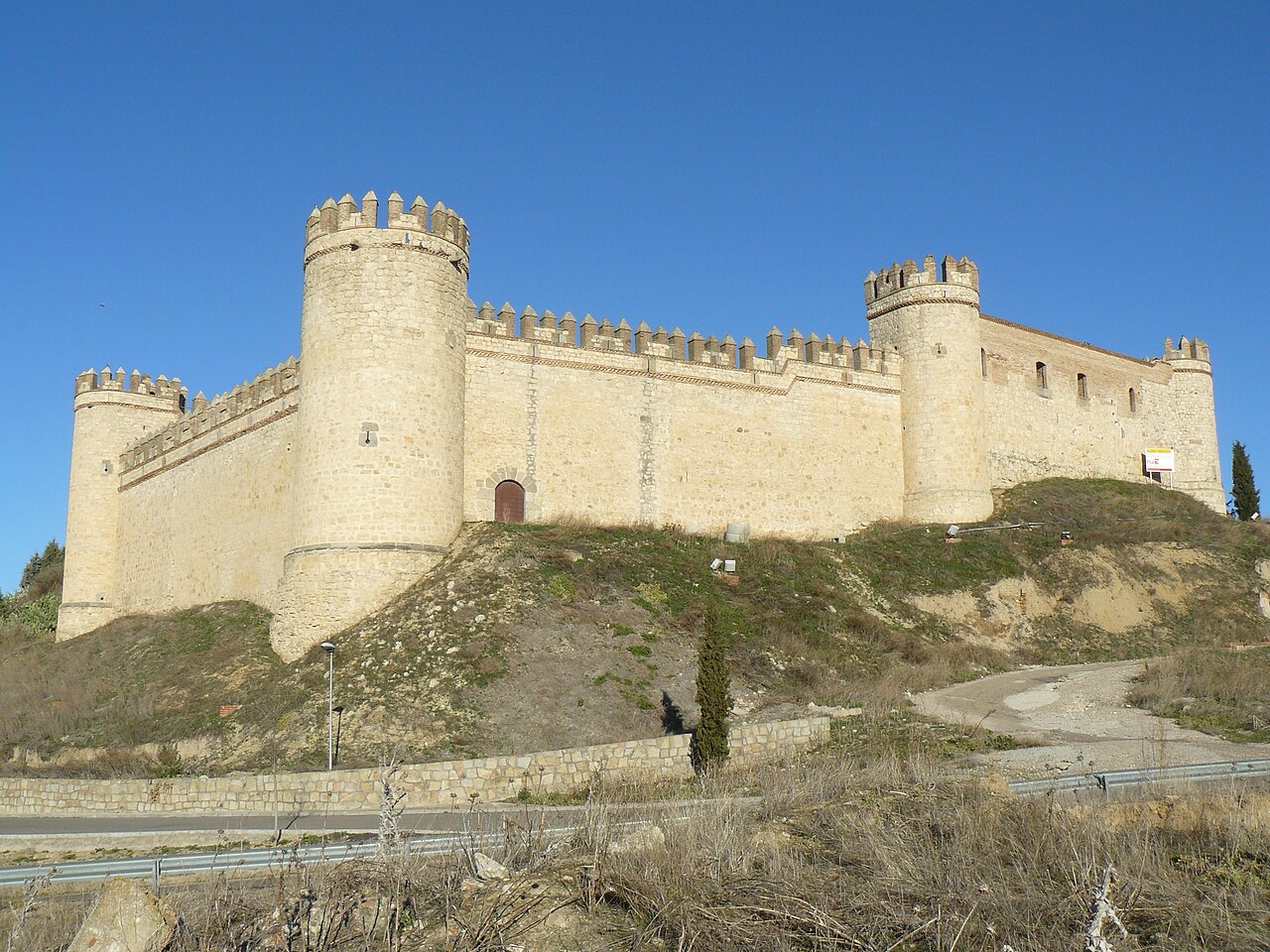
The castle exhibits a rectangular ground plan, a common medieval design that allowed for efficient defense and internal organization. Originally, each corner of the castle was fortified with towers, which have unfortunately not survived to the present day. The remaining curtain walls still stand, featuring several square towers along their lengths. Among these, the largest tower likely served as the keep or main stronghold, a central refuge during sieges.
Villalba Castle's construction utilizes concrete built following Muslim building techniques, which were prevalent in the Iberian Peninsula during the medieval period due to the influence of Islamic architecture and engineering. This method involved the use of a mortar-based concrete core faced with stone or brick, providing both strength and durability.
Inside the castle's enclosure are traces of various internal buildings, though their exact functions are difficult to determine due to the castle's current ruined state. Outside the walls, archaeological evidence suggests the presence of a former moat and an outer enclosure, which would have enhanced the castle's defenses by creating additional barriers to attackers.
Current condition and visitor experience
Today, Villalba Castle exists as a ruined fortress, with much of its original structure heavily deteriorated. The absence of the corner towers and the worn condition of the walls make it challenging to discern detailed architectural features. Despite this, the site remains freely accessible to visitors, offering a quiet and reflective atmosphere.
The castle's elevated position provides panoramic views of the surrounding countryside, allowing visitors to appreciate the landscape that once made the site strategically valuable. Within the castle's interior, a small olive tree has been recently planted, marked by a poignant note explaining it was planted by a widow in memory of her late husband. This personal tribute adds a human dimension to the historic ruins, connecting past and present.
Significance and context
Villalba Castle represents an important example of medieval military architecture in central Spain, illustrating the region's complex history of Christian and Muslim interactions. Its ties to the Knights Templar and successive noble owners highlight its role in the political and military landscape of the high medieval period. The castle’s construction using Muslim techniques reflects the cultural exchange characteristic of the Iberian Peninsula during the Middle Ages.
Although much of the castle has succumbed to time, the remaining walls and towers offer valuable insight into the defensive strategies and architectural practices of the era. The site continues to attract visitors interested in medieval history, architecture, and the evocative atmosphere of historic ruins.
Frequently asked questions (FAQ)
- How do I get to Villalba Castle?
- Villalba Castle is located near the CM-4015 road in the province of Toledo, Spain. It is accessible by car, and visitors can reach it via the road connecting Toledo to Talavera de la Reina, with nearby signage guiding to the castle ruins.
- What is the historical significance of Villalba Castle?
- Villalba Castle dates back to the 11th century and was associated with the Knights Templar. It later belonged to notable noble families such as Lopez de Ayala, the Counts of Oropesa, and the Dukes of Frías, reflecting its role in medieval Spanish history.
- Can I explore the interior of the castle?
- Yes, the castle ruins are freely accessible to the public. Visitors can walk inside the enclosure, although many original structures have deteriorated, limiting detailed architectural exploration.
- What architectural style is Villalba Castle built in?
- Villalba Castle features construction using Muslim techniques common in medieval Spain. It has a rectangular layout with curtain walls and square towers, typical of high medieval fortifications.
- Is there an entrance fee to visit Villalba Castle?
- There is no entrance fee to visit Villalba Castle; access to the ruins is free of charge.
Information
Loading map...
Visitor reviews
No reviews yet. Been here? Write the first review and help other travelers!
Write the first reviewVisited this castle? Share your experience
Your review helps other travelers and adds first-hand knowledge to our encyclopedia.