Vila Nova de Cerveira Castle
The Castle of Vila Nova de Cerveira stands as a significant medieval fortress located in the civil parish of Vila Nova de Cerveira e Lovelhe, within the municipality of Vila Nova de Cerveira in Portugal's Viana do Castelo district. This hill castle traces its origins back to the early 13th century, initially documented as a defensive tower rather than a fully developed fortress. Over the centuries, it evolved into a complex military stronghold with architectural features reflecting the shifting demands of border defense and the advancement of military technology.
The castle's earliest recorded mention dates to 1229, indicating the presence of a tenens, or caretaker, named Pedro Novães. This reference suggests the site functioned primarily as a defensive tower at that time. The 13th century saw the castle integrated into the dowry of D. Mécia, consort to King Sancho II of Portugal, highlighting its strategic and political importance. King D. Denis granted a charter in 1320 to promote the settlement's growth, dedicating a portion of the collected taxes specifically for the castle's maintenance, underscoring its role in regional defense.
Medieval origins and early development
During the 14th century, the castle's military significance increased amid political turmoil. Initially, the town and castle sided with Castile during the 1383-1385 Portuguese succession crisis but later submitted to King João I after the decisive intervention by Constable Nuno Álvares Pereira in 1385. This allegiance shift reaffirmed the castle's position within the Portuguese kingdom.
Under the reigns of Kings Fernando and João I in the 14th and 15th centuries, the castle underwent substantial fortification enhancements. A barbican, an outer defensive gatehouse designed to protect the main entrance, was constructed during this period. In 1476, King Afonso V granted the title of Viscount of Vila Nova de Cerveira to D. Leonel de Lima, who further reinforced the castle's defenses, ensuring its continued strategic relevance along the Portuguese-Spanish border.
17th-century fortifications and military role
The 17th century marked a turning point for the castle amid the Restoration Wars (1640-1668), when Portugal sought to regain independence from Spanish rule. The castle became a vital component of a defensive line along the Minho River and the Atlantic coast, designed to repel Spanish incursions.
In 1643, the fortress successfully resisted an assault by Spanish forces loyal to King Philip IV. Following this, the chapel of Nossa Senhora da Ajuda was built in 1650 atop the barbican, blending religious and military functions. The 7th Viscount of Vila Nova de Cerveira ordered extensive improvements, including the construction of walls, bartizans (overhanging turrets), and four interior bastions named São Miguel, Espírito Santo, Conceição, and Almas. Additionally, a half bastion and three smaller redoubts were established along the riverbank.
These fortifications were completed in 1667 under the direction of Field Marshal Francisco Azevedo, financed by royal taxes imposed on local settlers. The castle's defenses were adapted to withstand artillery attacks, reflecting the evolving nature of warfare in the early modern period.
Role during the peninsular wars and decline
During the Peninsular Wars in 1809, the castle played a defensive role against Napoleon's forces during the Second Invasion of Portugal. Under the command of Colonel Gonçalo Coelho de Araújo, the garrison successfully prevented French troops led by Marshal Soult from crossing the Minho River, maintaining regional control and contributing to the broader resistance effort.
Despite its military successes, the 19th century brought decline as urban expansion and changing military needs led to the partial demolition of key structures. The keep tower was demolished in 1844, followed by partial destruction of the Afonsino tower in 1845. The castle's gates were gradually dismantled starting in 1845, and by 1875, official authorization was given to demolish the fortress, reflecting its diminished strategic importance.
Architectural features and layout
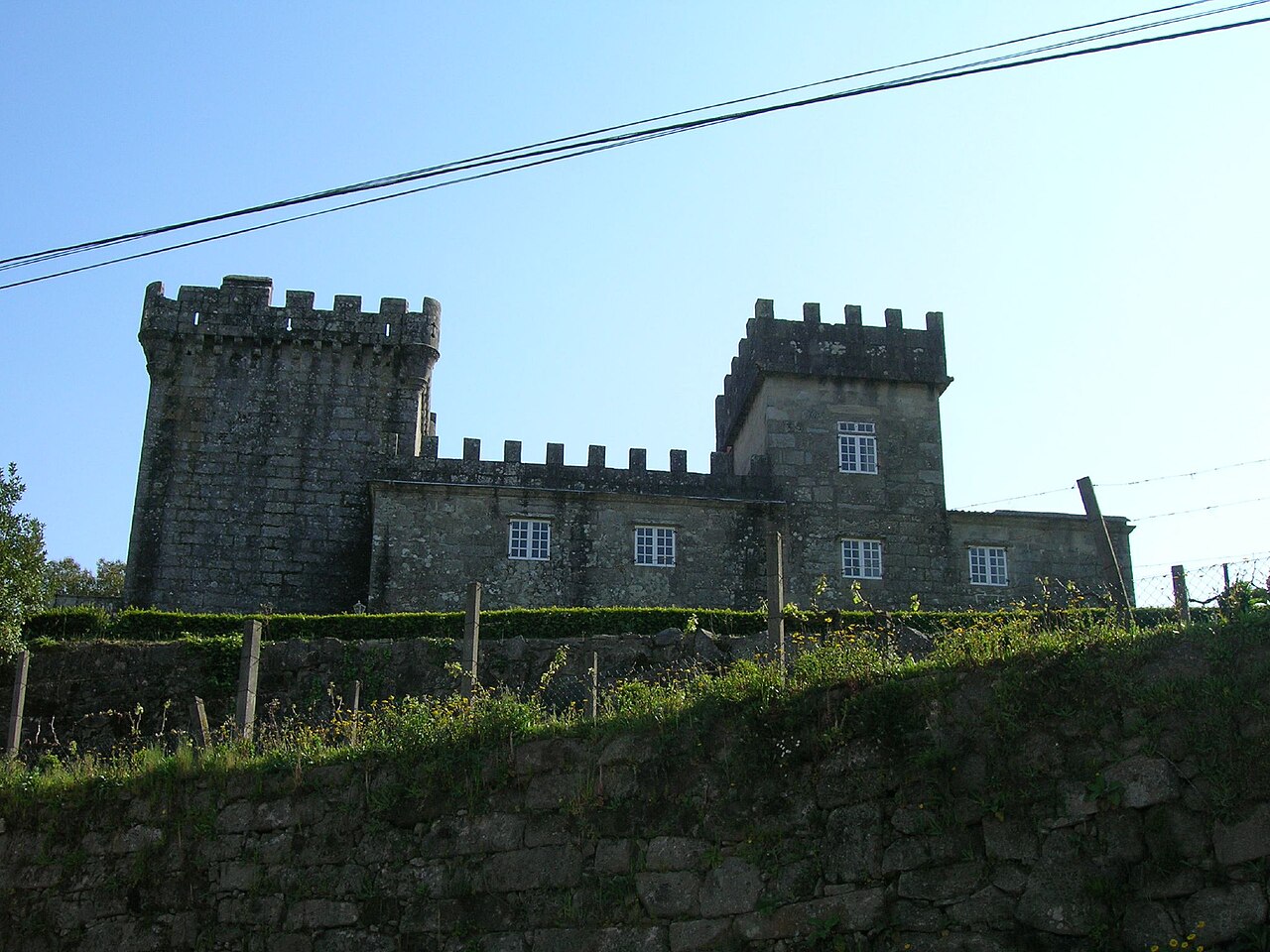
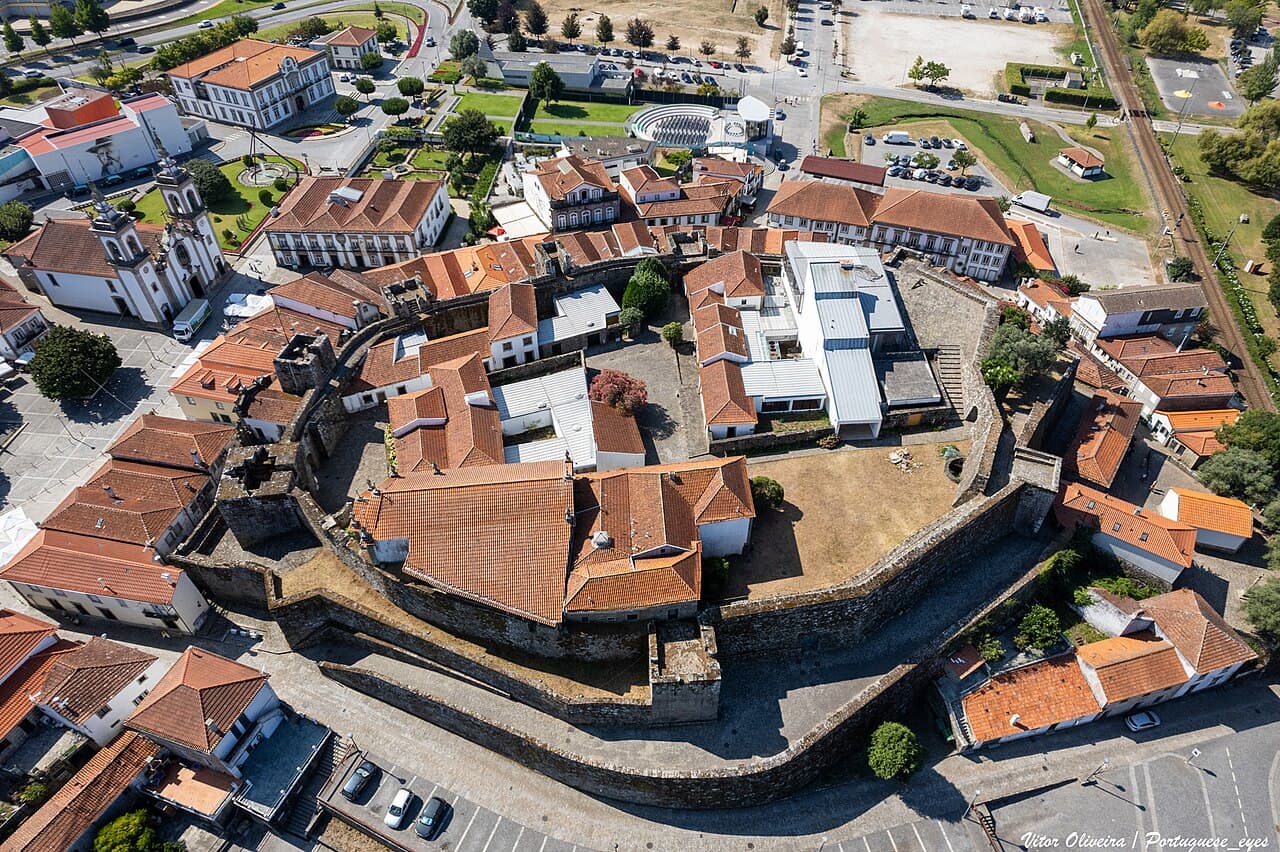
The castle is situated on the right bank of the Minho River, integrated into the urban fabric of Vila Nova de Cerveira. It features an oval plan with eight rectangular towers of varying heights, some crowned with parapets. The walls are topped with battlements and include a continuous walkway known as an adarve, allowing defenders to move along the perimeter.
The São Miguel bastion faces the river, serving as a key defensive bulwark. The castle's entrance includes a double gate system: the outer gate is part of the barbican, known as Porta da Vila, featuring a pointed arch surmounted by the coat of arms of King D. Denis. Beyond this lies a secondary gate above a tower, displaying the Portuguese coat of arms. A smaller postern gate, the Porta da Traição or "traitors' gate," provides discreet access toward the riverbank.
The Chapel of Nossa Senhora da Ajuda, constructed in 1650, is notable for its granite construction with a rectangular pediment and a second-floor doorway topped by an interrupted pediment and veranda. This chapel emphasizes the dual military and religious functions within the fortress.
Inside the walls are several historic buildings including the former governor's residence, municipal seat, pillory, jail, barracks, storerooms, and the Church of the Misericórdia. These structures illustrate the castle's role as an administrative and military center.
The 17th-century modernization introduced artillery-adapted bastions to the fortifications, including four main interior bastions and additional smaller redoubts along the river. Stone staircases provide access to the battlements and roof terraces, while a cistern within the castle ensured water supply during sieges.
Preservation and heritage status
Following a period of neglect and partial demolition in the 19th century, efforts to preserve the castle began in the early 20th century. Repairs to the walls commenced in 1905, and from 1969, the Directorate General for National Buildings and Monuments (DGEMN) undertook consolidation projects.
Between 1977 and 1982, the castle was adapted into the Pousada de D. Dinis, a hotel that integrates modern use with historic preservation. Archaeological excavations conducted in 2002 near Rua Costa Brava have contributed to a better understanding of the castle's medieval construction phases.
The castle was officially classified as a Property of Public Interest in 1974, recognizing its cultural and historical significance. It is also part of the Minho Valley Transborder Fortress Directors Plan of 2004, aimed at protecting and promoting fortifications along the Portuguese-Spanish border.
Plans for further revitalization, including conversion into a boutique hotel, have faced political challenges but reflect ongoing interest in preserving and utilizing this historic fortress.
Historical significance and cultural impact
The Castle of Vila Nova de Cerveira exemplifies the evolution of Portuguese military architecture from the high medieval period through the early modern era. Its layered construction reveals adaptations to changing political landscapes, military technologies, and social functions.
As a border fortress, it played a crucial role in the defense against Spanish incursions and later Napoleonic invasions. Its survival and preservation offer valuable insights into the defensive strategies employed along the Minho River frontier.
Today, the castle remains a prominent landmark within Vila Nova de Cerveira, symbolizing the town's historical resilience and architectural heritage. Its integration into the urban environment and adaptive reuse as a hotel demonstrate the balance between conservation and contemporary utility.
Frequently asked questions (FAQ)
- How do I visit the castle of Vila Nova de Cerveira?
- The castle is open daily from 10:00 to 18:00. Visitors can explore the historic walls, towers, and chapel, with an entrance fee of €5 for adults and €3 for children.
- What is the historical significance of Vila Nova de Cerveira castle?
- This castle played a key role in border defense during the Restoration Wars and the Peninsular Wars, resisting Spanish and Napoleonic invasions.
- Can I stay overnight in the castle?
- Yes, the castle has been adapted into the Pousada de D. Dinis hotel, offering guests a unique experience within historic walls.
- What architectural styles are represented in the castle?
- The castle features Gothic military architecture with later 17th-century artillery fortifications, including bastions and a barbican.
- Is the castle accessible for people with limited mobility?
- While some areas have stone staircases and uneven surfaces, efforts have been made to improve accessibility, but visitors with mobility issues should inquire in advance.
Photo gallery

Information
Opening hours
10:00-18:00, daily
Ticket prices
€5 adult, €3 child
Current owner
Municipality
Website
Visit websiteSources & official resources
Verify the information above using these authoritative references.
Loading map...
Visitor reviews
No reviews yet. Been here? Write the first review and help other travelers!
Write the first reviewVisited this castle? Share your experience
Your review helps other travelers and adds first-hand knowledge to our encyclopedia.