Tebra Castle
Tebra Castle is a significant hill castle located in the picturesque Tomiño valley of Galicia, Spain. It stands overlooking the river Tebra, a tributary of the Miño River, which has shaped the landscape and strategic importance of the site since medieval times. The castle's origins trace back to the 13th century, placing it firmly within the high medieval period of Spanish history, a time marked by feudal conflicts and the consolidation of noble power in the region.
The castle's history is closely tied to notable figures such as Alonso Gómez Churruchao, who owned the castle in 1345, and Pedro Álvarez de Soutomaior, who took possession in 1468. During the turbulent late 15th century, the castle was caught in the conflicts surrounding the Catholic Monarchs, Ferdinand II of Aragon and Isabella I of Castile. Between 1481 and 1486, Don Fernando de Acuña, acting on behalf of the monarchs, ordered the castle's destruction as part of efforts to suppress rebellious noble factions in Galicia. Later, ownership passed to Alvaro Suarez de Deza.
Reconstruction and architectural highlights
Following the destruction, Queen Joanna of Castile (Juana la Loca) authorized the castle's rebuilding, which was completed under the ownership of the Count of Camiña shortly thereafter. The castle was restored with careful attention to both defense and residential comfort, reflecting Renaissance influences alongside its medieval origins.
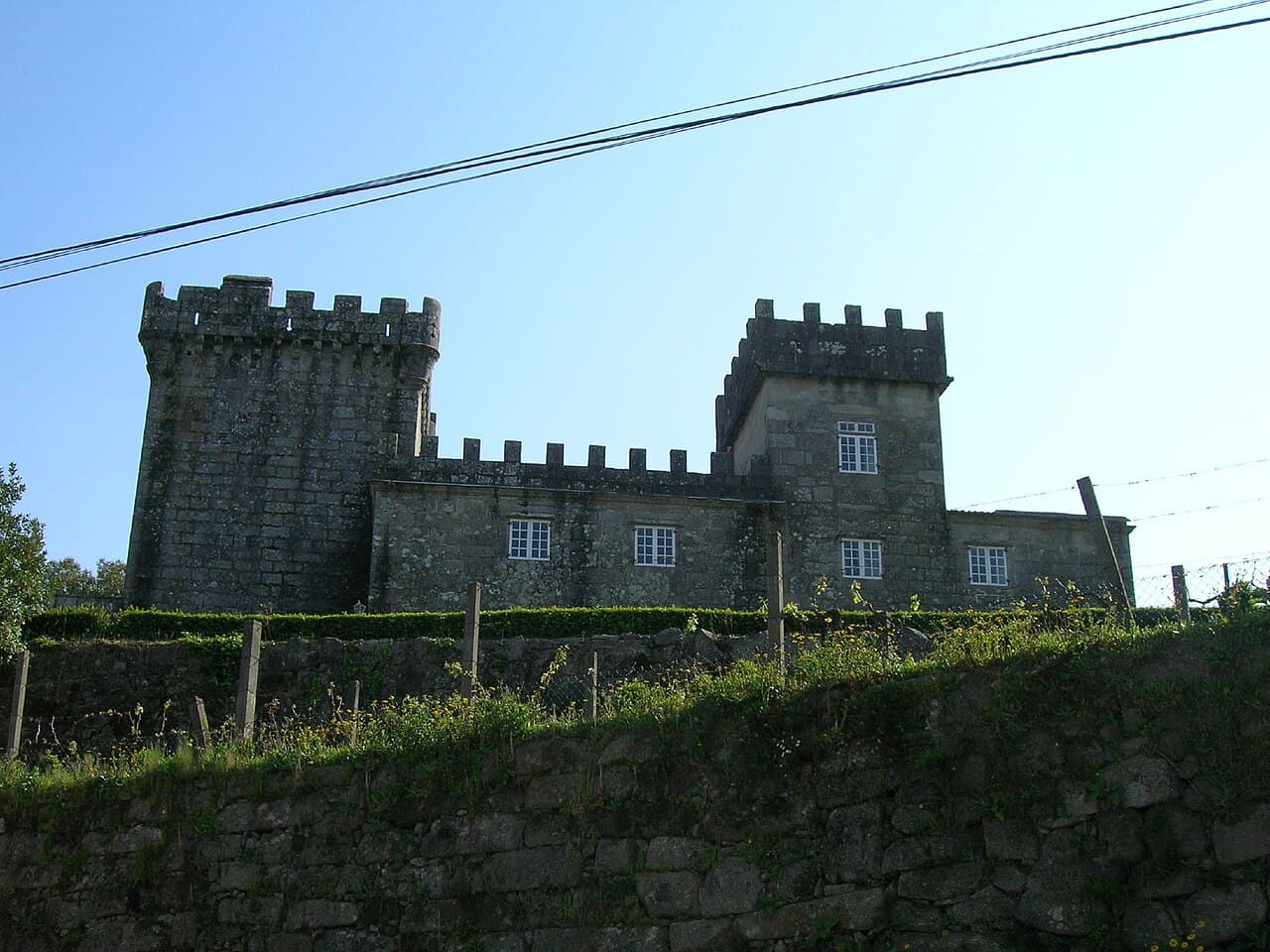
The castle's most striking feature is its Renaissance tower, rebuilt in 1532 by Alvaro Suarez de Deza after it was again ordered destroyed by the Catholic Monarchs. This tower is remarkable for its impressive dimensions, with two sides measuring approximately 8 meters (26 feet) wide. The tower's robust construction and elegant design make it a standout example of Renaissance military architecture in Galicia.
Structural layout and defensive elements
Tebra Castle comprises four floors: a ground floor and three upper levels. The castle includes a wide viewpoint offering commanding views of the surrounding valley, a gallery with semicircular arches that adds both aesthetic appeal and structural support, a large tower serving as a keep and lookout, and a chapel reflecting the religious devotion of its inhabitants.
The castle's battlements and sentry box are particularly noted for their craftsmanship and beauty, while the cornice adds an elegant finishing touch to the defensive walls. These features highlight the castle's dual role as a fortress and noble residence.
Historical significance and ownership
Throughout its history, Tebra Castle has witnessed significant political and military events in Galicia. Its strategic location in the Tomiño valley made it a valuable asset for controlling the region and monitoring river traffic along the Tebra and Miño rivers.
The castle's ownership lineage reflects the shifting power dynamics of medieval and Renaissance Spain, passing from local nobility to influential families connected to the crown. The involvement of the Catholic Monarchs and subsequent royal authorization for reconstruction underscore the castle's importance in regional governance and defense.
Current condition and visitor information
Today, Tebra Castle remains in good condition, preserved as a private residence. Despite its private ownership, visitors are welcome to access the outdoor areas of the castle freely, allowing them to appreciate its architectural features and scenic setting.
The castle lies within the municipality of O Seixo, Tomiño, in the province of Pontevedra. Its accessibility to the public, combined with its rich history and impressive Renaissance tower, makes it a noteworthy destination for those interested in medieval and Renaissance architecture in Galicia.
Architectural style and period
Tebra Castle exhibits characteristics of high medieval military architecture with significant Renaissance modifications, especially evident in its tower and decorative elements. The blend of styles provides insight into the evolution of castle construction in northwestern Spain during the transition from the Middle Ages to the Renaissance.
Legacy and cultural value
The castle stands as a testament to the historical complexities of Galicia during the 13th to 16th centuries, embodying the region's feudal struggles, royal interventions, and architectural advancements. Its preservation offers valuable educational opportunities and contributes to the cultural heritage of the area.
Frequently asked questions (FAQ)
- How do I visit Tebra Castle?
- Tebra Castle is privately owned but visitors can freely access the outdoor areas. It is located in O Seixo, Tomiño, and can be visited any time during daylight hours.
- What is the historical significance of Tebra Castle?
- Tebra Castle played a key role in regional defense and noble power struggles during the high medieval and Renaissance periods in Galicia, witnessing royal interventions and noble ownership changes.
- What architectural styles are present in Tebra Castle?
- The castle combines high medieval military architecture with Renaissance modifications, particularly notable in its large tower and decorative battlements.
- Is Tebra Castle accessible for visitors with mobility issues?
- As the castle is a historic structure with multiple floors and uneven terrain, accessibility may be limited. Visitors with mobility concerns should plan accordingly.
- When was the Renaissance tower of Tebra Castle rebuilt?
- The Renaissance tower was rebuilt in 1532 by Alvaro Suarez de Deza after being ordered destroyed by the Catholic Monarchs.
- Can I visit the interior of Tebra Castle?
- The castle is a private residence, so interior access is generally not available to the public. Visitors can explore the outdoor areas freely.
Photo gallery

Information
Current owner
Private owner
Loading map...
Visitor reviews
No reviews yet. Been here? Write the first review and help other travelers!
Write the first reviewVisited this castle? Share your experience
Your review helps other travelers and adds first-hand knowledge to our encyclopedia.