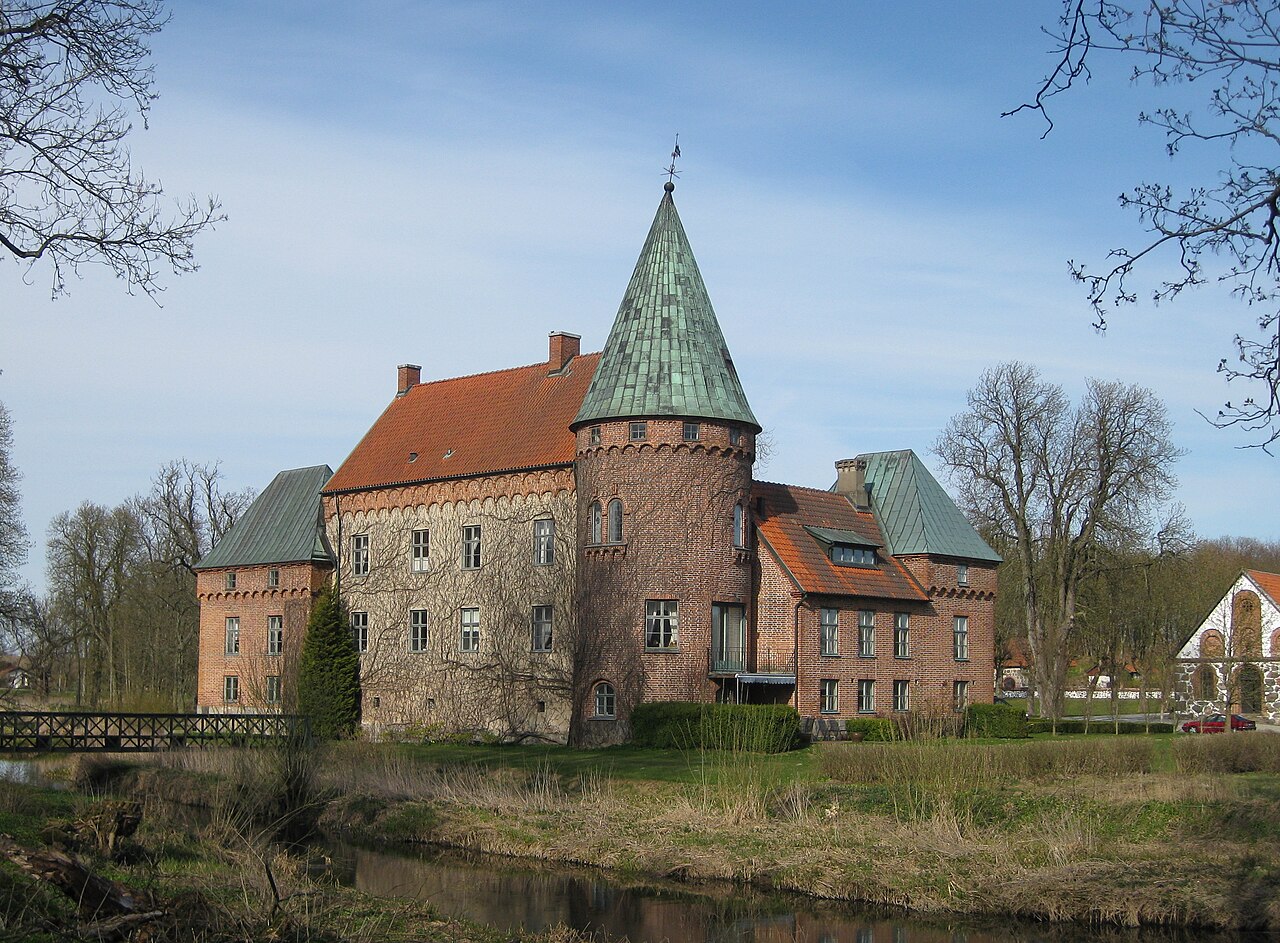
Viderup Castle

Viderup castle: a renaissance manor in eslöv, sweden
Eslöv, Sweden
Renaissance (15th–17th c.)
Well Preserved

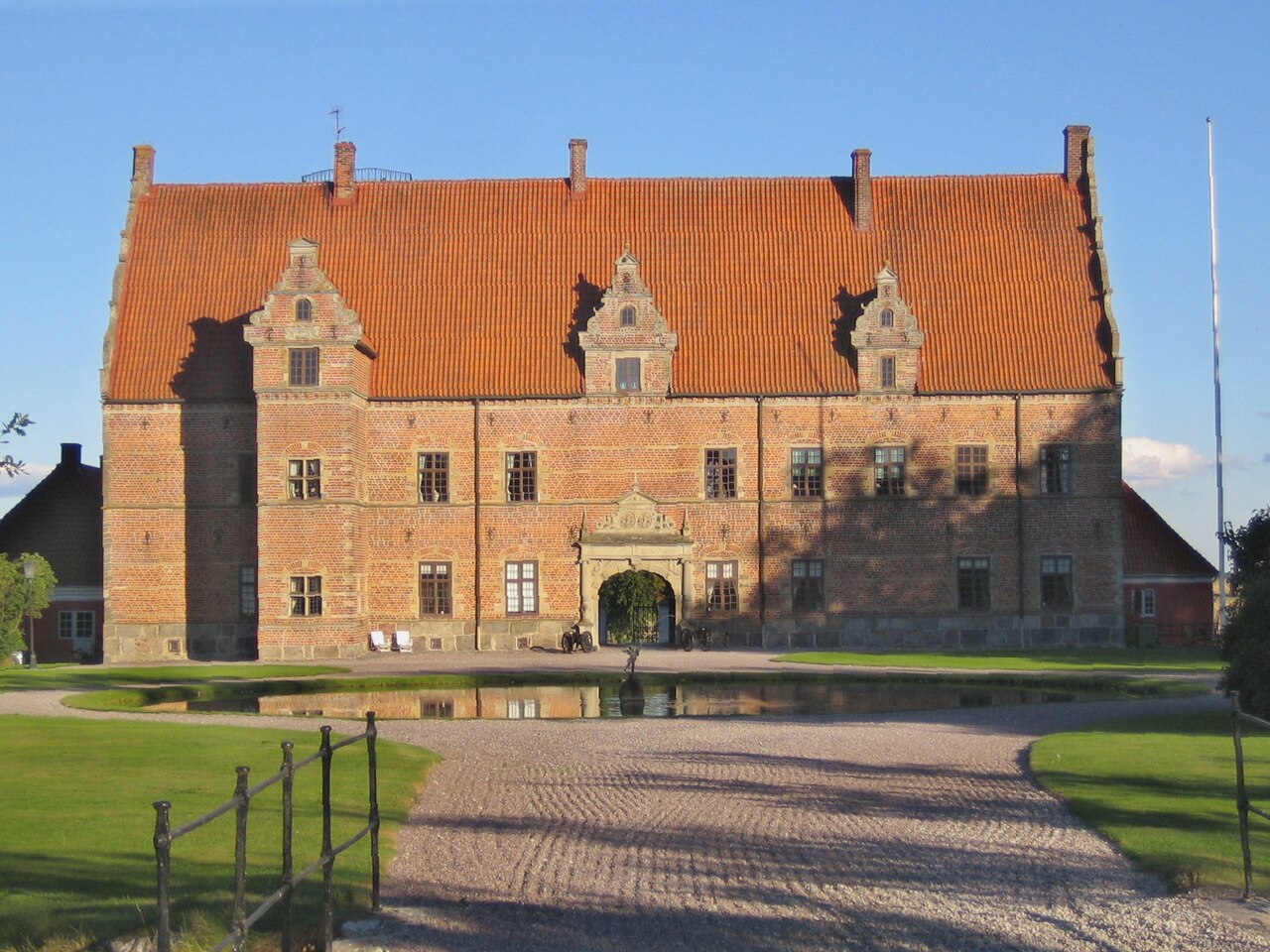
Viderup Castle, located in Eslöv, Sweden, is a notable example of early 17th-century Renaissance architecture in the region. Constructed between 1617 and 1623, the manor was commissioned by Anne Brahe, a member of the distinguished Brahe family, which played a significant role in Swedish nobility and politics during that era. The castle's design reflects the Renaissance ideals of symmetry, proportion, and classical detailing, which were becoming influential across northern Europe during this period.

The main building of Viderup Castle is characterized by its well-preserved Renaissance style, featuring balanced façades and an elegant layout that highlights the architectural transition from medieval fortifications to more comfortable and representative noble residences. A distinctive feature of the manor is its surrounding moat, which, while reminiscent of medieval defensive structures, was largely symbolic by the 17th century, serving more as a status symbol and aesthetic element than a military necessity.

Historical context and ownership

The castle was originally built for Anne Brahe, an influential noblewoman whose family connections and wealth allowed for the construction of such an impressive residence. The Brahe family was prominent in Swedish history, with members serving as statesmen, military leaders, and patrons of the arts. The manor's construction during the early 17th century coincided with a period of consolidation of noble estates and the increasing importance of architectural expression as a demonstration of status and power.

Since the 18th century, Viderup Castle has been owned by the Ramel family, another notable Swedish noble family. The estate has remained in their possession for several centuries, transitioning from a noble residence to a working farm while retaining its architectural heritage. This continuity of ownership has contributed to the preservation of the manor's original features and the surrounding landscape.

Architectural features and layout

Main building and exterior

The manor's main building is a prime example of Renaissance architecture adapted to the Swedish context. The exterior walls are largely original, showcasing the craftsmanship of the early 1600s. The façades are symmetrical, with evenly spaced windows and a balanced arrangement of architectural elements such as pilasters and cornices. The building's roofline and chimneys also reflect period styles, with careful attention to proportion and detail.

Moat and grounds

The moat encircling the manor is a significant feature that enhances the visual impact of the castle. While not intended for serious defense, it evokes the tradition of fortified manors and adds to the estate's grandeur. The grounds around the castle include landscaped areas that complement the Renaissance aesthetic, although the estate functions primarily as a farm today.

Cultural significance and preservation

Viderup Castle holds cultural importance as a well-preserved example of early 17th-century noble architecture in Sweden. Its retention of original exterior elements makes it a valuable resource for understanding regional interpretations of Renaissance style. The manor's continuous ownership by noble families and its adaptation to agricultural use demonstrate the evolution of such estates over time.

Despite its current function as a farm, the castle's architectural integrity remains largely intact, offering insight into the lifestyle and social structures of Swedish nobility during the Renaissance. The preservation of the moat and original façades contributes to the site's historical ambiance and architectural authenticity.

Frequently asked questions (FAQ)

How do I get to Viderup Castle?
Viderup Castle is located in Eslöv, Sweden, and can be easily reached by car or public transport. If you are traveling by train, the nearest station is Eslöv, from where you can take a short taxi ride or enjoy a pleasant walk to the castle.
What is the historical significance of Viderup Castle?
Viderup Castle dates back to the 16th century and is known for its rich history and architectural beauty. It served as a noble residence and has witnessed various historical events that shaped the region, making it an important landmark in Swedish heritage.
When was Viderup Castle built?
Viderup Castle was constructed in the late 1500s, showcasing Renaissance architectural styles. Its design reflects the status and wealth of the nobility during that era, and it has been preserved to maintain its historical integrity.
Can I take guided tours of Viderup Castle?
Yes, guided tours of Viderup Castle are available, providing visitors with in-depth knowledge about its history and architecture. Please check the official website for tour schedules and booking information to ensure availability during your visit.
Why is Viderup Castle popular among tourists?
Viderup Castle is popular due to its stunning architecture, beautiful grounds, and rich history. It's an excellent destination for history enthusiasts, architecture lovers, and anyone looking for a picturesque spot to explore in Sweden.
Is it possible to host events at Viderup Castle?
Yes, Viderup Castle can be rented for various events, including weddings, corporate gatherings, and private functions. For more details on event hosting, including capacity and catering options, it's best to contact the castle administration directly.
What are the opening hours for Viderup Castle?
Viderup Castle typically opens to visitors from May to September, with varying hours depending on the day of the week. It’s advisable to check the official website for the most current opening hours before planning your visit.
What are the ticket prices for visiting Viderup Castle?
Ticket prices for Viderup Castle are generally affordable, with discounts available for children and seniors. Always check the official site for the latest pricing information and any special offers that may be available during your visit.
What is the best time to visit Viderup Castle?
The best time to visit Viderup Castle is during the summer months when the weather is pleasant and the gardens are in full bloom. Additionally, many special events and tours are offered during this season, enhancing your experience at the castle.
Are there any nearby attractions to Viderup Castle?
Yes, there are several attractions near Viderup Castle, including beautiful parks, local museums, and charming villages. Exploring the surrounding area can provide a well-rounded experience of the region’s culture and history.

Information

Water Castle

Loading map...

Visitor reviews

No reviews yet. Been here? Write the first review and help other travelers!

Write the first review

Visited this castle? Share your experience

Your review helps other travelers and adds first-hand knowledge to our encyclopedia.
Write a review

(5/5)

0/2000 characters

Your review will be visible after admin approval

Nearby castles

2.4 km
Svenstorp Castle — Sweden castle

Svenstorp Castle

Lund, Sweden

Svenstorp Castle stands as a notable example of Renaissance architecture in southern Sweden, located in Lund Municipality, Scania. Constructed in 1596 by Beata Hvitfeldt, a distinguished lady-in-waiting to the Danish King Christian IV, the castle reflects the era's architectural and cultural influences during a period when the region was under Danish rule. The castle's design was commissioned to the renowned architect Hans Steenwinkel, who was instrumental in bringing Renaissance stylistic elements to the building, including its balanced proportions and elegant facades. Architectural features and design Svenstorp Castle is classified as a hill castle, situated strategically on elevated ground which provided natural defense advantages. The castle's layout includes a central main building surrounded by ancillary wings and formal gardens, typical of Renaissance noble residences. The use of symmetrical windows, classical pilasters, and ornamental gables illustrates the Renaissance style's emphasis on harmony and order. The castle's robust stone walls and fortified elements also reflect its dual role as a residence and a defensive structure during a turbulent historical period. Historical significance and events The castle's history is closely tied to the complex Danish-Swedish conflicts of the 17th century. In November 1676, Christian V of Denmark used Svenstorp Castle as his headquarters before the Battle of Lund, one of the bloodiest battles fought on Scandinavian soil during the Scanian War. Remarkably, the night following the battle, the victorious Swedish King Charles XI stayed in the same room and bed as his defeated adversary, symbolizing the shifting power dynamics in the region. The battle's impact on the castle The castle's role as a military headquarters during this conflict underscores its strategic importance. Though primarily a noble residence, Svenstorp's fortified position made it suitable for command and control during wartime. The castle's walls and grounds likely witnessed the movements of troops and planning sessions that influenced the outcome of the battle and the subsequent political landscape. Ownership and preservation Since 1723, Svenstorp Castle has been owned by the Gyllenkrok family, who have maintained the property through the centuries. The castle remains a private residence today, inhabited by Nils and Merrill Gyllenkrok and their family. This continuous family ownership has contributed to the preservation of the castle's historical integrity and original features. Preservation efforts and current condition The castle is well preserved, retaining much of its Renaissance character and original architectural details. While it is a private home and not generally open to the public, its exterior and surrounding landscape remain important cultural landmarks in the region. The castle's gardens and grounds are maintained to reflect the historical period, providing a glimpse into the lifestyle of Scandinavian nobility during the Renaissance. Location and cultural context Located in Lund, Sweden, Svenstorp Castle sits within the historical province of Scania, an area with a rich history of Danish and Swedish rule. The castle's construction during Danish sovereignty and its later integration into Swedish territory after the Treaty of Roskilde in 1658 illustrate the shifting political borders in Scandinavia. Svenstorp Castle is part of a broader network of historic castles in the region that reflect the cultural and military history of the area. Nearby historical sites Visitors interested in the history of Svenstorp Castle often explore other nearby sites such as Lund Cathedral, one of northern Europe's most significant Romanesque buildings, and the Battle of Lund battlefield, which is commemorated for its historical importance. These sites together provide a comprehensive understanding of the region's medieval and early modern history.

Renaissance (15th–17th c.)
Details
2.7 km
Örtofta Castle — Sweden castle

Örtofta Castle

Eslöv, Sweden

Örtofta Castle (Swedish: Örtofta slott) is a notable hill castle located in Eslöv Municipality, within the historical province of Scania, Sweden. Its origins trace back to the late medieval period, with the earliest known mention of the estate dating to 1346. Over the centuries, the manor has been under the ownership of several prominent noble families, reflecting its importance in regional history. Medieval origins and architectural features The original castle was constructed in the 15th century, primarily using brick, a common building material in the region during that era. Although much of the medieval structure has not survived intact, parts of the original brick castle remain, offering valuable insights into the defensive and residential architecture of the time. The castle's medieval design would have included typical features such as thick walls, narrow windows for defense, and possibly a moat or other fortifications, characteristic of late medieval hill castles in Scandinavia. 19th-century reconstruction and enlargement Between 1857 and 1861, the castle underwent significant enlargement and reconstruction under the direction of Henry Dücker, a notable figure responsible for adapting the castle to contemporary tastes and needs. This renovation transformed Örtofta Castle into its current form, blending its medieval origins with 19th-century architectural styles and comforts. The reconstruction likely included the addition of new wings, modernization of interiors, and aesthetic enhancements that respected the castle's historical character while making it suitable for modern use. Current use and cultural significance Today, Örtofta Castle serves as a venue for hospitality and events, operating as a hotel and offering facilities for conferences and weddings. This adaptive reuse preserves the castle's historical essence while providing practical functions that engage the public. The castle's setting in Scania places it among a rich tapestry of Swedish castles, contributing to the cultural heritage and tourism appeal of the region. Location and surroundings Situated in the town of Eslöv, the castle benefits from its scenic surroundings typical of southern Sweden's rolling hills and fertile landscapes. Its position as a hill castle would have originally provided strategic advantages, including visibility over the surrounding area and natural defense. The castle remains a landmark within the municipality, accessible to visitors interested in Swedish history and architecture. Architectural style and preservation While the castle's original late medieval brick construction reflects the architectural practices of the time, the 19th-century renovations introduced elements that may include romantic historicism, a common trend in castle restorations during that century. The current condition of the castle is well preserved, maintaining both its historical fabric and the modifications made during the 1800s. This blend of medieval and 19th-century architecture provides a layered narrative of the castle's evolution.

Late Medieval (14th–15th c.)
Details
3.8 km

Ellinge Castle

Eslöv, Sweden

Ellinge Castle is among the oldest country seats in the historical province of Scania, located near Eslöv in southern Sweden. Its origins trace back to the 13th century, making it a site of significant medieval heritage. The current main building predominantly dates from the 15th century, placing it firmly in the late-medieval period. This period was marked by the construction of fortified manors and castles across Scandinavia, reflecting both defensive needs and noble status. Medieval origins and architectural evolution The earliest structure at Ellinge began as a fortified manor, strategically positioned and surrounded by medieval moats that served as defensive barriers. While the original 13th-century buildings no longer survive intact, the moat system remains a prominent feature, although now only partially preserved. The castle's defensive nature is evident in its layout, which originally included thick walls and a compact arrangement typical of Scandinavian fortifications of the time. The main building visible today largely stems from the 15th century, showcasing architectural elements typical of late-medieval manorial residences. This includes sturdy stone construction and a somewhat austere exterior, designed more for defense and practicality than for ornate display. The castle's transformation over centuries reflects changing tastes and functions. Transformation into a swedish manor house In the 18th century, Ellinge Castle underwent significant remodeling when the region was under Danish rule. The fortress was converted into an open mansion reflecting traditional Swedish architectural styles of the time. This transformation involved enlarging windows, adding decorative elements, and modifying the interior to suit residential comfort rather than military defense. The 18th-century renovation softened the castle's medieval fortress character, replacing some defensive features with more elegant and functional living spaces. The grounds were also adapted to include landscaped gardens and a park, which remain accessible to visitors today. 19th-century additions and current condition A notable architectural addition was made in the mid-19th century with the construction of a tower-like structure that enhanced the castle's silhouette and added to its aesthetic appeal. This addition reflects the romantic historicism popular in the 19th century, when many medieval buildings were embellished or expanded with towers and other picturesque elements. Currently, Ellinge Castle is partially preserved. While much of the original fortress and moat system survives only as remnants, the main mansion building remains intact and functional. The castle is privately owned and operates as a venue for conferences, weddings, and events. Its surrounding park is open to the public, offering a glimpse into the estate's historic landscape and providing recreational space. Historical significance and cultural heritage Ellinge Castle holds cultural importance as a representative example of a Scania medieval manor that evolved through centuries of political and architectural change. Its survival through Danish and Swedish rule highlights the complex history of the region. The castle's layered architecture provides insight into the transition from fortified medieval strongholds to more open, residential manors in Scandinavia. Visitors to Ellinge can appreciate the blend of medieval defensive features alongside later stylistic adaptations, illustrating how noble residences adapted to shifting social and political contexts. The estate's continued use as an event venue ensures the preservation and appreciation of this historic site.

Late Medieval (14th–15th c.)
Details