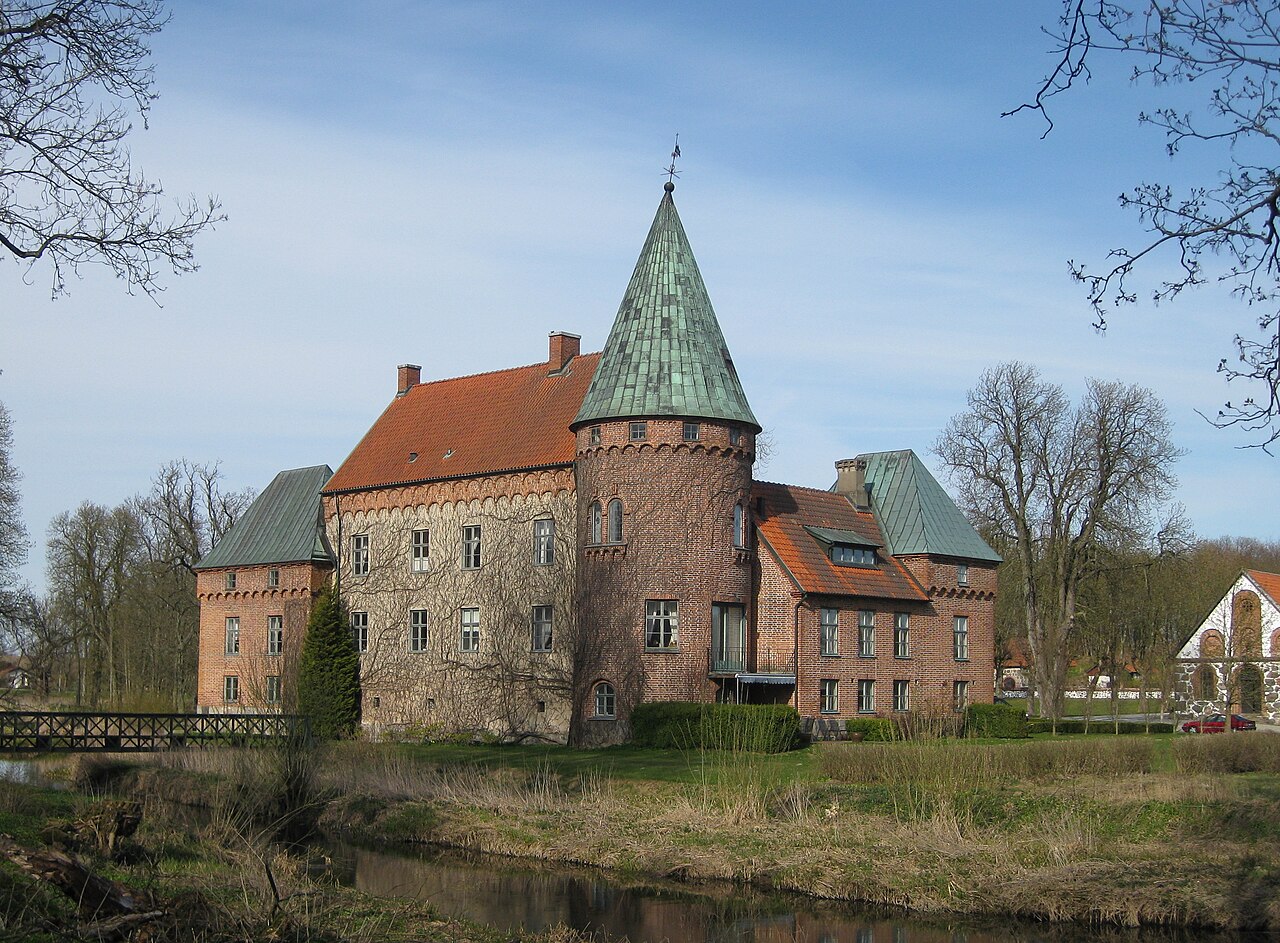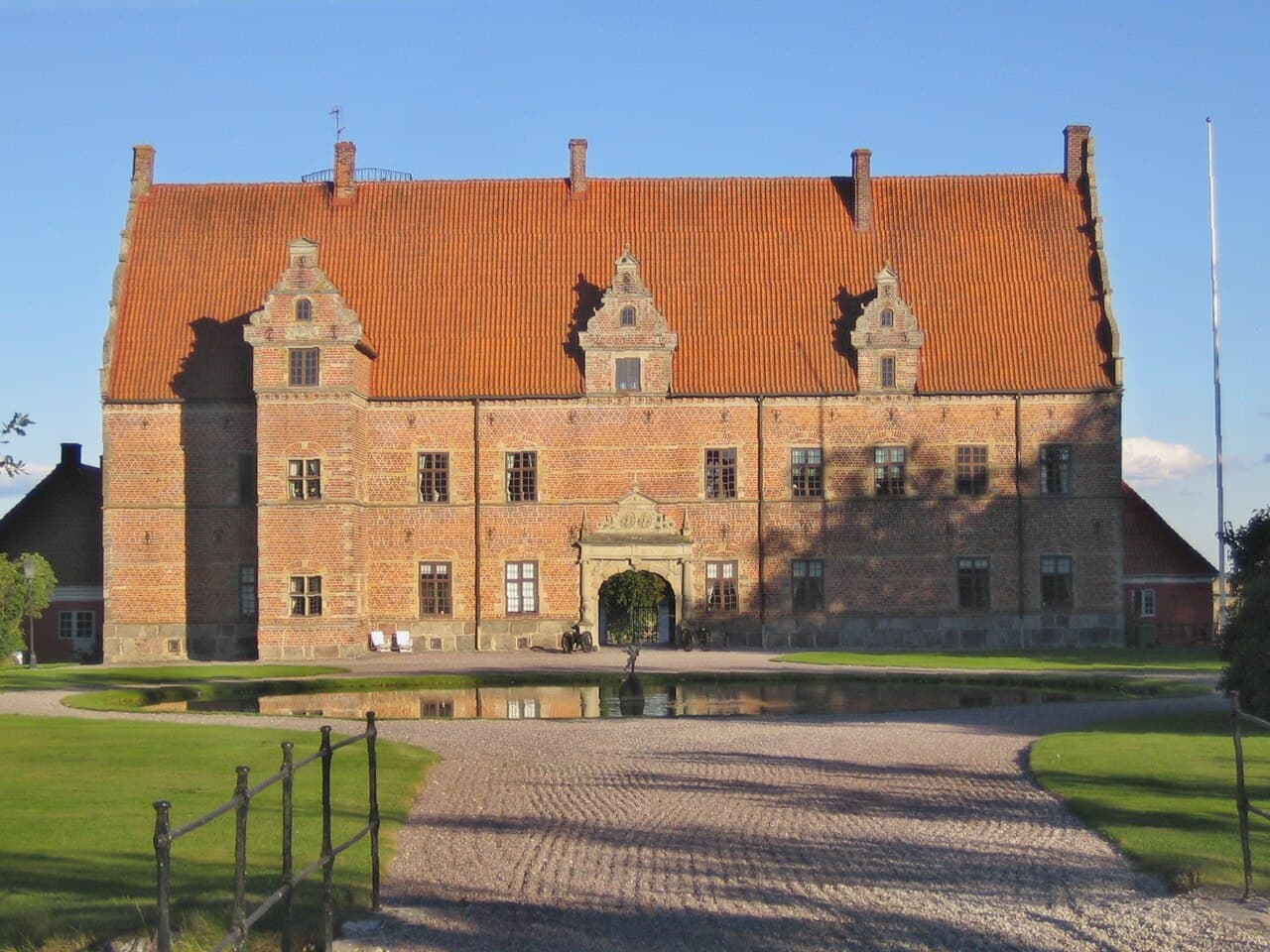
Svenstorp Castle
Svenstorp Castle stands as a notable example of Renaissance architecture in southern Sweden, located in Lund Municipality, Scania. Constructed in 1596 by Beata Hvitfeldt, a distinguished lady-in-waiting to the Danish King Christian IV, the castle reflects the era's architectural and cultural influences during a period when the region was under Danish rule. The castle's design was commissioned to the renowned architect Hans Steenwinkel, who was instrumental in bringing Renaissance stylistic elements to the building, including its balanced proportions and elegant facades.
Architectural features and design
Svenstorp Castle is classified as a hill castle, situated strategically on elevated ground which provided natural defense advantages. The castle's layout includes a central main building surrounded by ancillary wings and formal gardens, typical of Renaissance noble residences. The use of symmetrical windows, classical pilasters, and ornamental gables illustrates the Renaissance style's emphasis on harmony and order. The castle's robust stone walls and fortified elements also reflect its dual role as a residence and a defensive structure during a turbulent historical period.
Historical significance and events
The castle's history is closely tied to the complex Danish-Swedish conflicts of the 17th century. In November 1676, Christian V of Denmark used Svenstorp Castle as his headquarters before the Battle of Lund, one of the bloodiest battles fought on Scandinavian soil during the Scanian War. Remarkably, the night following the battle, the victorious Swedish King Charles XI stayed in the same room and bed as his defeated adversary, symbolizing the shifting power dynamics in the region.
The battle's impact on the castle
The castle's role as a military headquarters during this conflict underscores its strategic importance. Though primarily a noble residence, Svenstorp's fortified position made it suitable for command and control during wartime. The castle's walls and grounds likely witnessed the movements of troops and planning sessions that influenced the outcome of the battle and the subsequent political landscape.
Ownership and preservation
Since 1723, Svenstorp Castle has been owned by the Gyllenkrok family, who have maintained the property through the centuries. The castle remains a private residence today, inhabited by Nils and Merrill Gyllenkrok and their family. This continuous family ownership has contributed to the preservation of the castle's historical integrity and original features.
Preservation efforts and current condition
The castle is well preserved, retaining much of its Renaissance character and original architectural details. While it is a private home and not generally open to the public, its exterior and surrounding landscape remain important cultural landmarks in the region. The castle's gardens and grounds are maintained to reflect the historical period, providing a glimpse into the lifestyle of Scandinavian nobility during the Renaissance.
Location and cultural context
Located in Lund, Sweden, Svenstorp Castle sits within the historical province of Scania, an area with a rich history of Danish and Swedish rule. The castle's construction during Danish sovereignty and its later integration into Swedish territory after the Treaty of Roskilde in 1658 illustrate the shifting political borders in Scandinavia. Svenstorp Castle is part of a broader network of historic castles in the region that reflect the cultural and military history of the area.
Nearby historical sites
Visitors interested in the history of Svenstorp Castle often explore other nearby sites such as Lund Cathedral, one of northern Europe's most significant Romanesque buildings, and the Battle of Lund battlefield, which is commemorated for its historical importance. These sites together provide a comprehensive understanding of the region's medieval and early modern history.
Frequently asked questions (FAQ)
- How do I visit Svenstorp Castle?
- Svenstorp Castle is a private residence and is not generally open to the public. Visitors can view the castle's exterior and gardens from nearby public roads and paths.
- What is the historical significance of Svenstorp Castle?
- Svenstorp Castle played a key role during the Scanian War, notably hosting Danish King Christian V before the Battle of Lund and Swedish King Charles XI after the battle.
- When was Svenstorp Castle built and by whom?
- The castle was built in 1596 by Beata Hvitfeldt, a lady-in-waiting to Danish King Christian IV, with architect Hans Steenwinkel.
- Is Svenstorp Castle accessible for disabled visitors?
- As a private residence, Svenstorp Castle does not offer public access or facilities for visitors, including those with disabilities.
- What architectural style is Svenstorp Castle?
- Svenstorp Castle is designed in the Renaissance architectural style, featuring symmetrical facades, classical details, and a hilltop location for defense.
Photo gallery

Information
Loading map...
Visitor reviews
No reviews yet. Been here? Write the first review and help other travelers!
Write the first reviewVisited this castle? Share your experience
Your review helps other travelers and adds first-hand knowledge to our encyclopedia.