Vianden Castle
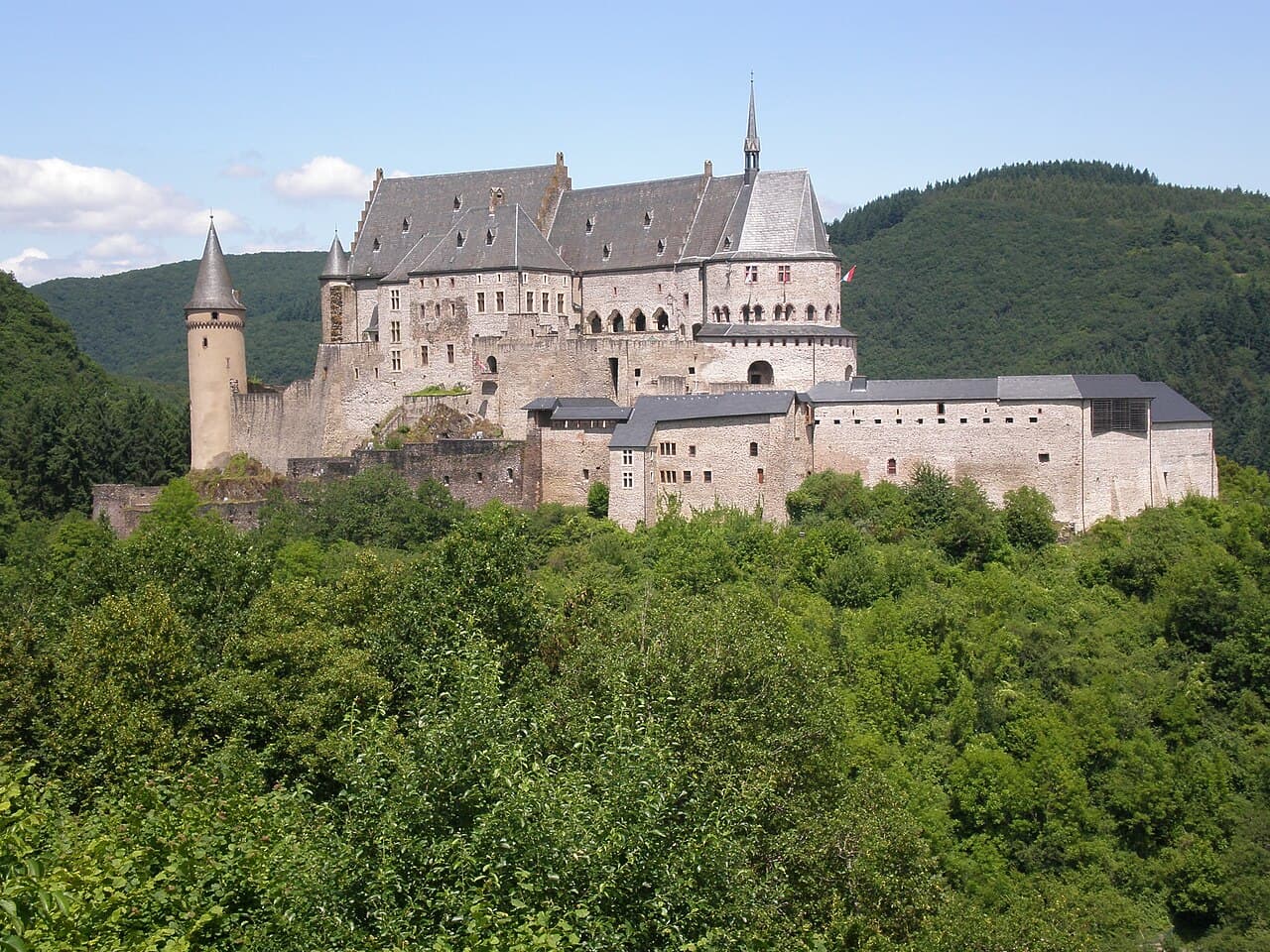
Vianden Castle stands prominently on a rocky promontory overlooking the Our River valley in the town of Vianden, Luxembourg. It is recognized as one of the largest and most architecturally significant fortified castles west of the Rhine. The site’s earliest military use dates to a Roman castellum established in the 4th century, marking its strategic importance through the ages. The castle’s main construction phase spanned from the 11th to the 14th centuries, predominantly in the Romanesque style, with substantial Gothic modifications during the late medieval period and a notable Renaissance mansion addition in the 17th century.
Originally, Vianden Castle was the seat of the Counts of Vianden, a noble family of considerable influence closely related to both the French royal family and the German imperial court. Documented from at least 1090, these counts undertook extensive expansions to the castle, including the construction of a square keep, a prestigious decagonal chapel, multiple residential towers, and a large palace featuring a gallery that connected to the chapel. These architectural developments were intended to assert their status and rival the powerful House of Luxembourg.
Architectural evolution and features
The castle’s architecture is a complex layering of styles reflecting its long history. The Romanesque foundations are characterized by thick defensive walls, vaulted basements carved directly into the rock, and elements dating back to the Carolingian era. The Gothic adaptations of the 13th century introduced soaring vaulted ceilings, pointed arches, and steeply pitched roofs, which enhanced both its defensive capabilities and residential comfort.
A significant Renaissance Nassau Mansion was constructed in 1621 by Prince Maurice of Orange-Nassau-Vianden. This replaced a damaged wing of the original keep and added a banqueting hall and private chambers, reflecting the cultural and architectural shifts of the Renaissance period.
Defensive structures and layout
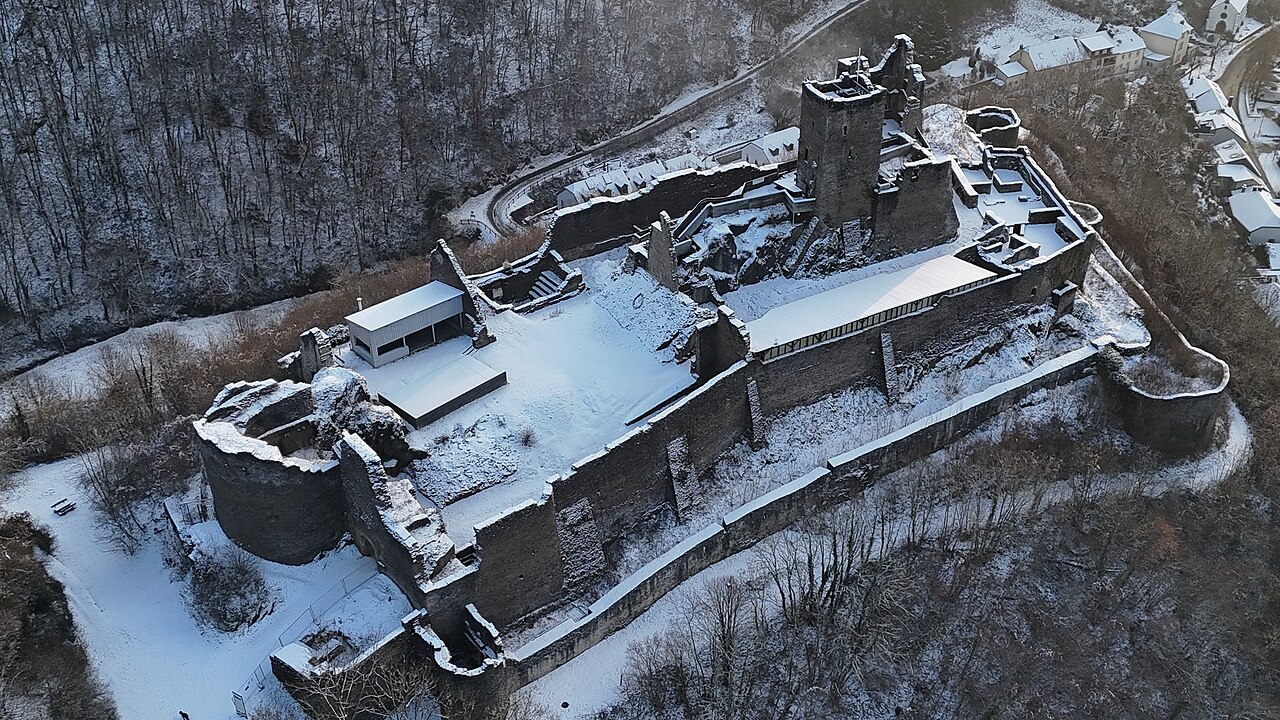
Vianden Castle is a classic example of a hill castle, strategically positioned at approximately 310 meters above the town on a rocky ridge. The castle complex extends about 90 meters along this ridge and is enclosed by a high defensive wall punctuated by multiple fortified towers at its corners. Access to the inner courtyard is controlled through four gates, creating a layered and formidable defense system typical of medieval fortifications.
The main residential building rises four stories and contains a variety of functional spaces, including weapons storage, two kitchens, an integrated chapel, a large living room, a dining hall, and a knights’ hall capable of accommodating up to 500 people. Above this, the citadel houses another chapel, a reception hall, living quarters, and the old ducal residence, underscoring the castle’s dual role as a fortress and a noble residence.
Historical significance and ownership
The castle’s history mirrors the shifting political and dynastic landscapes of medieval and early modern Europe. It served as the seat of the Counts of Vianden until the early 15th century, after which it passed by inheritance in 1417 to the House of Orange-Nassau, ancestors of the modern Dutch royal family. This association lasted until the upheavals of the French Revolution, when the castle was confiscated by revolutionary forces.
In the 16th century, the castle was abandoned by the counts due to dynastic changes. During the Dutch Revolt, King Philip II of Spain confiscated the property and granted it to the governor of Luxembourg. By the 19th century, the castle had fallen into disuse and was sold in 1820 to Wenzel Coster, who dismantled large parts of the structure, selling building materials and furnishings, which reduced the castle to a ruinous state.
Restoration efforts began in the mid-19th century under the patronage of Grand Duke Adolf of Nassau-Weilbourg and architect Bodo Ebhardt, although these were interrupted by World War I. The castle was nationalized in 1977, and a comprehensive restoration was completed by 1990, carefully restoring its medieval and Renaissance features to their historical appearance.
Vianden castle in modern times
Today, Vianden Castle functions as a museum and cultural venue, showcasing exhibitions of ancient weapons, armor, furniture, and genealogical artifacts. It also hosts official state occasions, reflecting its continued symbolic importance to Luxembourg.
The castle’s picturesque setting, well-preserved architecture, and rich history attract visitors year-round, with summer months being particularly popular. Its role in the Battle of Vianden in 1944, when Luxembourgish resistance fighters defended it against the Waffen-SS, highlights its enduring strategic and cultural significance.
Architectural details and restoration
Extensive archaeological and architectural studies have informed the restoration process to ensure historical accuracy. Notable features include the 11th-century decagonal chapel, prestigious diagonal chapels from the 12th century, and the White Tower with its distinctive conical roof, reconstructed to match its original Gothic appearance after damage caused by a lightning strike in 1667.
The castle’s interiors have been refurnished to authentically represent its historical periods, with rooms displaying medieval and Renaissance furnishings, weapons, and artwork. The restoration carefully balances preservation with modern visitor needs, making Vianden Castle a model of successful heritage conservation.
Visitor information and cultural impact
Vianden Castle offers guided tours and educational programs that explore its architectural development, historical context, and the lives of its noble inhabitants. Its location in the scenic Ardennes region enhances its appeal as a cultural and historical landmark.
As a symbol of Luxembourg’s medieval heritage and the legacy of the House of Nassau, Vianden Castle continues to draw interest from historians, architects, and tourists alike, illuminating the complexities of European noble dynasties and medieval fortifications.
Frequently asked questions (FAQ)
- How do I get to Vianden Castle?
- Vianden Castle is easily accessible by public transport or car. If you're taking public transport, you can reach Vianden by train to Ettelbruck and then a bus to Vianden. Parking is available for those arriving by car, and the castle is only a short walk from the town center.
- What are the opening hours of Vianden Castle?
- Vianden Castle is open to visitors from 10 AM to 5 PM during the winter months and extends to 6 PM in the summer. It is advisable to check the official website for any changes in hours, especially around public holidays. Last entry is typically one hour before closing time.
- When was Vianden Castle built?
- Vianden Castle dates back to the Roman era, but significant construction took place between the 11th and 14th centuries. It was expanded and renovated over the years, reflecting various architectural styles. Today, it stands as a prominent example of medieval fortification in Luxembourg.
- Can I take photos inside Vianden Castle?
- Yes, visitors are welcome to take photographs throughout the castle grounds and interiors. However, it is recommended to be respectful of other visitors and avoid using flash in certain areas. Some special exhibitions may have restrictions, so be sure to check signage.
- Why is Vianden Castle historically significant?
- Vianden Castle is one of the largest and most impressive feudal castles in Luxembourg, showcasing the power and influence of the counts of Vianden in the Middle Ages. Its strategic location and architectural grandeur symbolize Luxembourg's rich history and cultural heritage. The castle also played a vital role in the defense of the region.
- Is it possible to access Vianden Castle for visitors with disabilities?
- Vianden Castle strives to be accessible to all visitors; however, due to its historical structure, some areas may pose challenges. The main pathways and grounds are generally accessible, but it is advisable to contact the castle in advance to inquire about specific accessibility options. Staff are available to assist where possible.
- What are the ticket prices for Vianden Castle?
- As of the latest information, adult tickets to Vianden Castle are priced at around €7, while children under 18 can enter for €3. Family tickets and group discounts may also be available, making it affordable for larger parties. Always check the official website for the most current pricing and any special promotions.
- What is the best time to visit Vianden Castle?
- The best time to visit Vianden Castle is during the late spring and early autumn months when the weather is pleasant and the surrounding scenery is at its most beautiful. Visiting during these times also allows you to enjoy the castle's gardens and panoramic views. Additionally, consider visiting on weekdays to avoid larger crowds.
- Are there any nearby attractions to explore after visiting the castle?
- Yes, after exploring Vianden Castle, visitors can enjoy nearby attractions such as the picturesque town of Vianden itself, the Victor Hugo Museum, and the scenic Our River. For those seeking outdoor activities, hiking trails in the surrounding Ardennes region offer stunning views and natural beauty. These attractions make for a perfect day trip in the area.
Photo gallery

Information
Opening hours
9:30-17:00, daily
Ticket prices
€8 adult, €5 child
Current owner
State museum
Website
Visit websiteAddress
Montée du Château, Luxembourg
Sources & official resources
Verify the information above using these authoritative references.
Loading map...
Visitor reviews
No reviews yet. Been here? Write the first review and help other travelers!
Write the first reviewVisited this castle? Share your experience
Your review helps other travelers and adds first-hand knowledge to our encyclopedia.