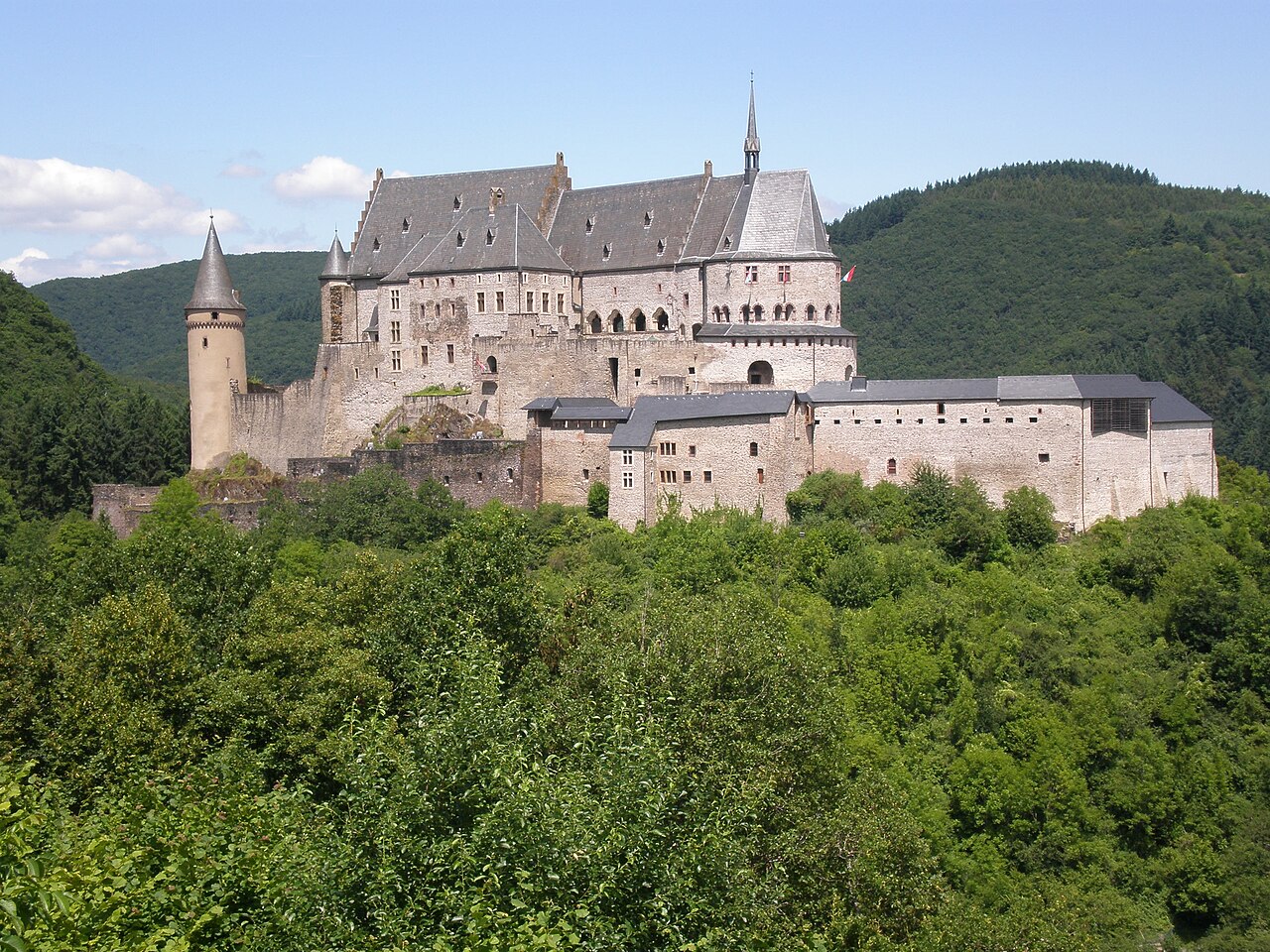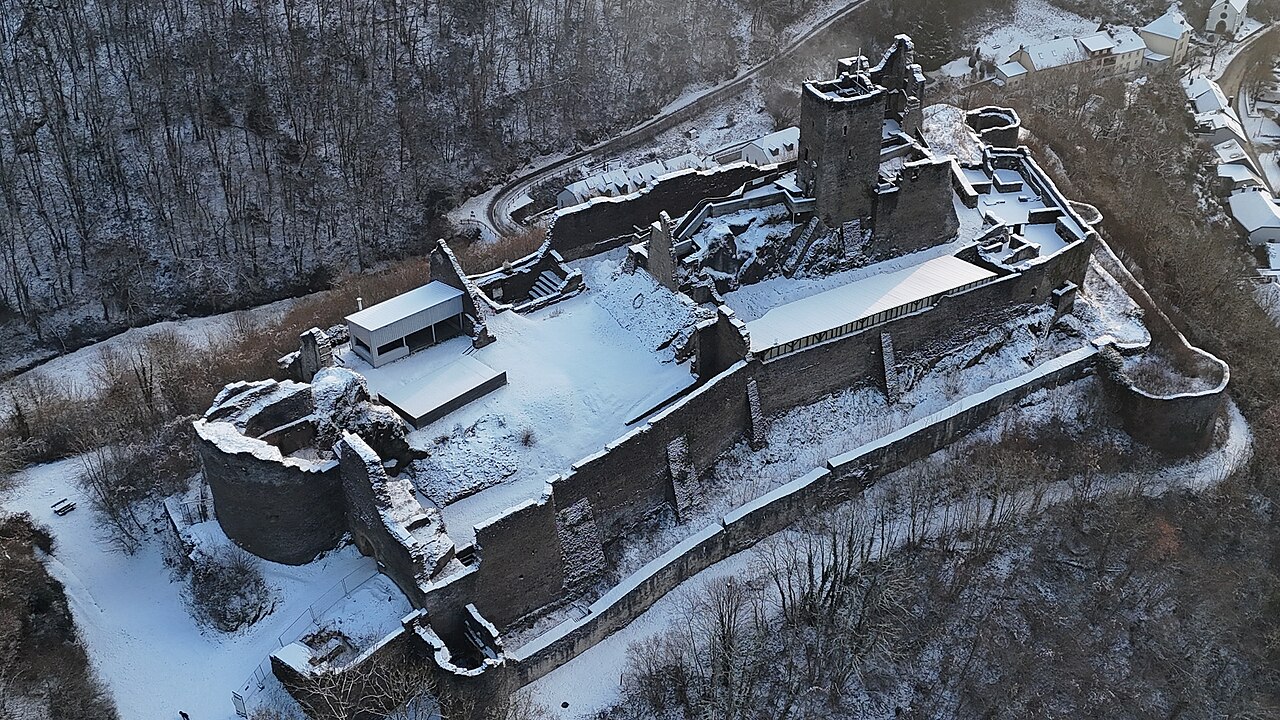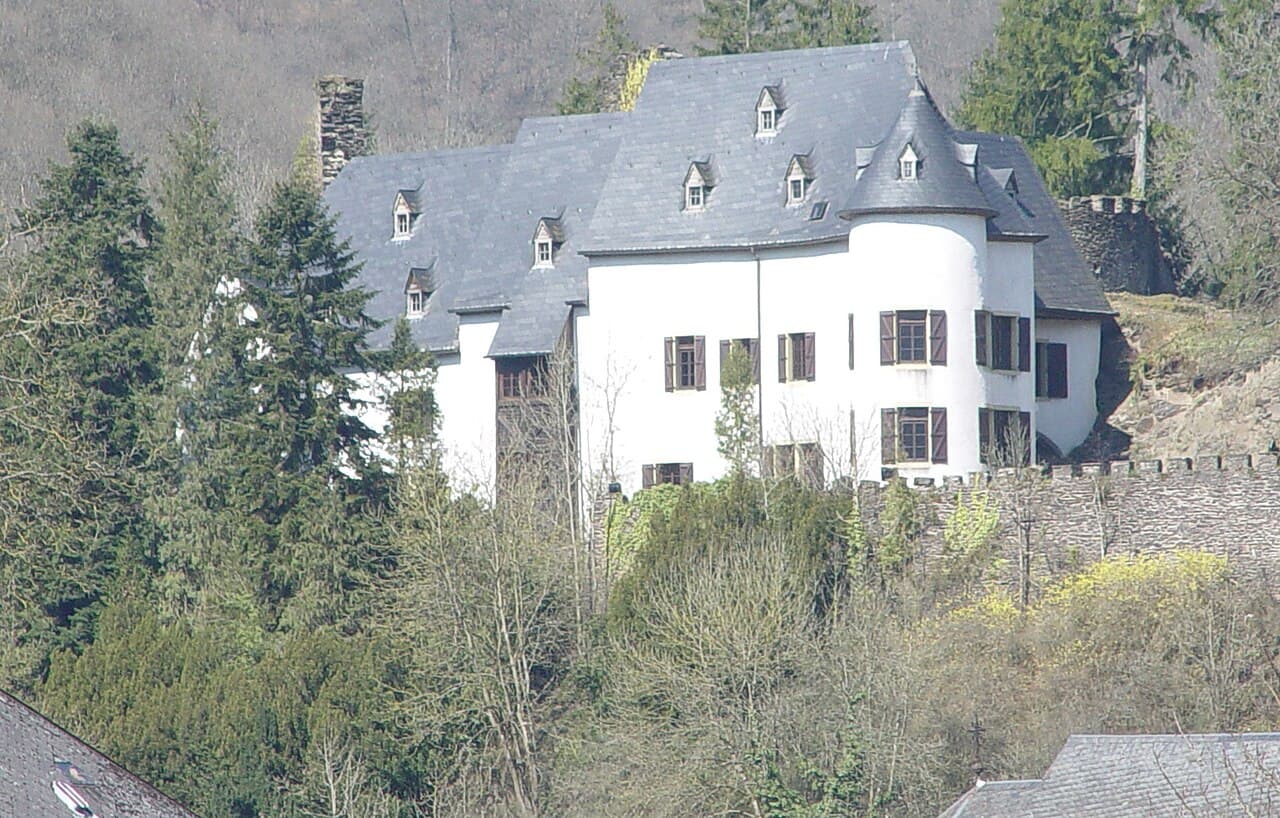
Stolzembourg Castle — Luxembourg castle

Stolzembourg Castle

Stolzembourg castle in luxembourg
Stolzembourg, Luxembourg, Luxembourg
Modern (19th–20th c.)
Well Preserved

Stolzembourg Castle is a striking example of historic transformation, located in the village of Stolzembourg in Luxembourg. The site has a rich history dating back to the 12th century when a tower was originally constructed to monitor the important road running along the River Our. This early fortification was part of the strategic defense system in the region, serving as a watchtower to control movement and protect the surrounding area.

The earliest recorded mention of a fortress at Stolzembourg dates to 1315, indicating the site's longstanding military and regional significance. Over the centuries, the castle underwent various phases of construction, destruction, and rebuilding, reflecting the turbulent history of Luxembourg and its shifting political landscape.

Medieval origins and strategic importance

The original medieval castle was built around the 12th century, featuring a watchtower that overlooked the vital road along the River Our. Its location was chosen for defensive advantages, providing visibility over the valley and control over local transit routes. The castle's design during this period would have included typical medieval fortifications such as thick stone walls, a keep, and possibly a moat or other defensive earthworks.

In 1454, the castle was deliberately pulled down by the governor Antoine de Croÿ. This act was likely part of political maneuvers or military strategy during a period marked by regional conflicts and power struggles. Despite this destruction, the castle was rebuilt, underscoring its continued importance.

Destruction and decline in the 17th century

The castle's medieval incarnation met its final destruction in 1679 when French troops under the reign of Louis XIV destroyed it. This event occurred during the numerous military campaigns associated with the expansionist policies of Louis XIV, which affected many fortifications across Luxembourg and the surrounding regions.

19th-century reconstruction and architectural style

In 1898, the site was revitalized with the construction of a new building in the style of a Scottish country house. This reconstruction was not a restoration of the medieval castle but rather a new residence built on its ruins, reflecting the romantic architectural tastes of the period. The Scottish baronial style is characterized by features such as turrets, battlements, and steep gables, imbuing the building with a picturesque, castle-like appearance that evokes the romanticism of the Scottish Highlands rather than medieval military architecture.

This architectural choice was part of a broader 19th-century trend where historic ruins inspired new constructions that blended historic motifs with modern comforts. The new Stolzembourg Castle thus serves as a private residence and a symbol of architectural eclecticism rather than a fortress.

Current status and accessibility

Today, Stolzembourg Castle remains privately owned and is not open to the public. Its status as a modern period building constructed on medieval ruins makes it a unique example of how historic sites can be repurposed. While visitors cannot tour the interior, the castle's exterior and its scenic location overlooking the River Our continue to attract interest from enthusiasts of history and architecture.

Cultural and historical significance

The castle's layered history from a 12th-century watchtower to a 19th-century Scottish-style country house reflects the complex history of Luxembourg's border regions. It illustrates the evolution of military architecture, the impact of European conflicts, and the romantic revival of historic styles in architecture. Stolzembourg Castle stands as a testament to the enduring legacy of medieval fortifications and their reinterpretation in modern times.

Frequently asked questions (FAQ)

How do I get to Stolzembourg Castle?
Stolzembourg Castle is easily accessible by car, located just off the main roads in Stolzembourg, Luxembourg. Public transportation options are available, with nearby bus stops providing convenient access for visitors. Make sure to check local schedules for the best route to the castle.
What is the historical significance of Stolzembourg Castle?
Stolzembourg Castle dates back to the 11th century and is a remarkable example of medieval architecture in Luxembourg. It has played a crucial role in the region's history, serving as a strategic fortification during various conflicts. Today, the castle stands as a testament to the rich cultural heritage of the area.
When was Stolzembourg Castle built?
The construction of Stolzembourg Castle began in the early 11th century, making it one of the oldest castles in Luxembourg. Over the centuries, it has undergone several renovations and expansions. Its long history reflects the evolution of military architecture in the region.
Can I take guided tours of Stolzembourg Castle?
Yes, guided tours are available at Stolzembourg Castle, providing visitors with an in-depth look at its history and architecture. Tours typically cover the castle's significant features and historical anecdotes. It's recommended to check the castle's official website for tour availability and booking options.
Why is Stolzembourg Castle a popular tourist attraction?
Stolzembourg Castle attracts visitors due to its stunning architecture, picturesque setting, and rich history. The castle offers a unique glimpse into medieval life and the strategic importance of fortifications in Luxembourg. Additionally, its scenic views and tranquil surroundings make it a lovely destination for both history buffs and casual visitors.
Is it possible to hold events at Stolzembourg Castle?
Yes, Stolzembourg Castle is available for hosting various events, including weddings, corporate gatherings, and cultural celebrations. The enchanting atmosphere and historical backdrop provide a unique setting for any occasion. Interested parties should contact the castle administration for details on event planning and availability.
What are the opening hours for Stolzembourg Castle?
Stolzembourg Castle is open to visitors from 10 AM to 6 PM during the peak tourist season, typically from April to October. Off-season hours may vary, so it's advisable to check ahead before planning your visit. Special events and holidays may also affect the regular opening hours.
What are the ticket prices for visiting Stolzembourg Castle?
The ticket prices for Stolzembourg Castle are generally affordable, with discounts available for children, seniors, and groups. Adult tickets typically cost around €5, while children under 12 may enter for free. Keep an eye on the castle's website for any special promotions or family packages.
What nearby attractions can I visit after exploring Stolzembourg Castle?
After visiting Stolzembourg Castle, you can explore the nearby picturesque village of Stolzembourg, known for its charming streets and local shops. Additionally, the scenic hiking trails in the surrounding hills offer great opportunities for outdoor activities. Other historical sites and castles in the region are also worth a visit.

Photo gallery

Stolzembourg Castle
Click to view

Photo by Cornischong•CC BY-SA 3.0

1 photo • Click any image to view in full screen

Information

Hill Castle

Sources & official resources

Verify the information above using these authoritative references.

Loading map...

Visitor reviews

No reviews yet. Been here? Write the first review and help other travelers!

Write the first review

Visited this castle? Share your experience

Your review helps other travelers and adds first-hand knowledge to our encyclopedia.
Write a review

(5/5)

0/2000 characters

Your review will be visible after admin approval

Nearby castles

2 km
Burg Falkenstein (Waldhof) — Germany castle

Burg Falkenstein (Waldhof)

, Germany

Burg Falkenstein (Waldhof) is a medieval hill castle located in Germany, recognized today primarily as archaeological ruins. Its remains offer valuable insights into the medieval fortification architecture and the strategic importance of hill castles during the High to Late Middle Ages. Historical background and location The castle was constructed during the High Medieval period, a time when hill castles were commonly built to oversee and control surrounding territories. While the exact founding date of Burg Falkenstein (Waldhof) is not precisely documented, its architectural remnants and archaeological findings suggest a construction period between the 12th and 14th centuries. The castle's location on elevated terrain provided natural defensive advantages and a commanding view of the surrounding landscape, which was typical for hill castles designed for both defense and territorial control. Architectural features and layout As a hill castle, Burg Falkenstein (Waldhof) was strategically positioned on a rocky outcrop, utilizing the natural topography for defense. The surviving ruins indicate the presence of stone curtain walls that once enclosed the castle's inner ward. Archaeological evidence points to the existence of a keep or donjon, which would have served as the last defensive stronghold and residential quarters for the lord or garrison. The castle's design likely included typical medieval defensive elements such as battlements, arrow slits, and possibly a moat or ditch carved into the rock to impede attackers. The remains of foundations suggest a multi-level structure with residential and service buildings arranged around a central courtyard. Archaeological significance and preservation Today, Burg Falkenstein (Waldhof) is classified as archaeological ruins, reflecting its state of partial preservation. Excavations and studies at the site have revealed details about the construction techniques and living conditions during the castle's active period. The ruins serve as an important cultural heritage site, contributing to the understanding of medieval fortifications in Germany. Preservation efforts focus on maintaining the structural remains and protecting the site from further deterioration. Visitors can explore parts of the ruins, which provide a tangible connection to the region's medieval past. Historical context and legacy Burg Falkenstein (Waldhof) was part of a network of castles that played a role in regional defense and administration during the Middle Ages. Although it never achieved the prominence of larger royal castles, its strategic hilltop position made it significant for local lords and their control over trade routes and surrounding lands. The castle's decline likely began in the Late Medieval period, possibly due to changing military technology, political shifts, or economic factors leading to its abandonment. Its ruins remain an important archaeological and historical resource for scholars and visitors interested in medieval German castles.

High Medieval (11th–13th c.)
Details
4.3 km
Vianden Castle — Luxembourg castle

Vianden Castle

Vianden, Luxembourg

Vianden Castle stands prominently on a rocky promontory overlooking the Our River valley in the town of Vianden, Luxembourg. It is recognized as one of the largest and most architecturally significant fortified castles west of the Rhine. The site’s earliest military use dates to a Roman castellum established in the 4th century, marking its strategic importance through the ages. The castle’s main construction phase spanned from the 11th to the 14th centuries, predominantly in the Romanesque style, with substantial Gothic modifications during the late medieval period and a notable Renaissance mansion addition in the 17th century. Originally, Vianden Castle was the seat of the Counts of Vianden, a noble family of considerable influence closely related to both the French royal family and the German imperial court. Documented from at least 1090, these counts undertook extensive expansions to the castle, including the construction of a square keep, a prestigious decagonal chapel, multiple residential towers, and a large palace featuring a gallery that connected to the chapel. These architectural developments were intended to assert their status and rival the powerful House of Luxembourg. Architectural evolution and features The castle’s architecture is a complex layering of styles reflecting its long history. The Romanesque foundations are characterized by thick defensive walls, vaulted basements carved directly into the rock, and elements dating back to the Carolingian era. The Gothic adaptations of the 13th century introduced soaring vaulted ceilings, pointed arches, and steeply pitched roofs, which enhanced both its defensive capabilities and residential comfort. A significant Renaissance Nassau Mansion was constructed in 1621 by Prince Maurice of Orange-Nassau-Vianden. This replaced a damaged wing of the original keep and added a banqueting hall and private chambers, reflecting the cultural and architectural shifts of the Renaissance period. Defensive structures and layout Vianden Castle is a classic example of a hill castle, strategically positioned at approximately 310 meters above the town on a rocky ridge. The castle complex extends about 90 meters along this ridge and is enclosed by a high defensive wall punctuated by multiple fortified towers at its corners. Access to the inner courtyard is controlled through four gates, creating a layered and formidable defense system typical of medieval fortifications. The main residential building rises four stories and contains a variety of functional spaces, including weapons storage, two kitchens, an integrated chapel, a large living room, a dining hall, and a knights’ hall capable of accommodating up to 500 people. Above this, the citadel houses another chapel, a reception hall, living quarters, and the old ducal residence, underscoring the castle’s dual role as a fortress and a noble residence. Historical significance and ownership The castle’s history mirrors the shifting political and dynastic landscapes of medieval and early modern Europe. It served as the seat of the Counts of Vianden until the early 15th century, after which it passed by inheritance in 1417 to the House of Orange-Nassau, ancestors of the modern Dutch royal family. This association lasted until the upheavals of the French Revolution, when the castle was confiscated by revolutionary forces. In the 16th century, the castle was abandoned by the counts due to dynastic changes. During the Dutch Revolt, King Philip II of Spain confiscated the property and granted it to the governor of Luxembourg. By the 19th century, the castle had fallen into disuse and was sold in 1820 to Wenzel Coster, who dismantled large parts of the structure, selling building materials and furnishings, which reduced the castle to a ruinous state. Restoration efforts began in the mid-19th century under the patronage of Grand Duke Adolf of Nassau-Weilbourg and architect Bodo Ebhardt, although these were interrupted by World War I. The castle was nationalized in 1977, and a comprehensive restoration was completed by 1990, carefully restoring its medieval and Renaissance features to their historical appearance. Vianden castle in modern times Today, Vianden Castle functions as a museum and cultural venue, showcasing exhibitions of ancient weapons, armor, furniture, and genealogical artifacts. It also hosts official state occasions, reflecting its continued symbolic importance to Luxembourg. The castle’s picturesque setting, well-preserved architecture, and rich history attract visitors year-round, with summer months being particularly popular. Its role in the Battle of Vianden in 1944, when Luxembourgish resistance fighters defended it against the Waffen-SS, highlights its enduring strategic and cultural significance. Architectural details and restoration Extensive archaeological and architectural studies have informed the restoration process to ensure historical accuracy. Notable features include the 11th-century decagonal chapel, prestigious diagonal chapels from the 12th century, and the White Tower with its distinctive conical roof, reconstructed to match its original Gothic appearance after damage caused by a lightning strike in 1667. The castle’s interiors have been refurnished to authentically represent its historical periods, with rooms displaying medieval and Renaissance furnishings, weapons, and artwork. The restoration carefully balances preservation with modern visitor needs, making Vianden Castle a model of successful heritage conservation. Visitor information and cultural impact Vianden Castle offers guided tours and educational programs that explore its architectural development, historical context, and the lives of its noble inhabitants. Its location in the scenic Ardennes region enhances its appeal as a cultural and historical landmark. As a symbol of Luxembourg’s medieval heritage and the legacy of the House of Nassau, Vianden Castle continues to draw interest from historians, architects, and tourists alike, illuminating the complexities of European noble dynasties and medieval fortifications.

Late Medieval (14th–15th c.)
Details
6.2 km
Brandenbourg Castle — Luxembourg castle

Brandenbourg Castle

Ieweschtgaass, Luxembourg

Brandenbourg Castle stands prominently on a wooded hilltop overlooking the tranquil valley of the river Blees in Luxembourg. This early medieval hill castle commands a strategic position above the hamlet sharing its name, situated on an ancient trade route connecting Vianden and Bourscheid. Its location atop steep cliffs on three sides provided formidable natural defenses, making it a significant military and administrative site throughout the Middle Ages. The origins of Brandenbourg Castle trace back to the 10th century, with archaeological evidence indicating that the site was initially fortified by a wooden structure during the 9th and 10th centuries. The first written record of the castle dates from 1244, mentioning Gottfried von Brandenbourg as the lord of the fortress. Originally, the castle consisted of a central defensive tower, or bergfried, rising to nearly 12 meters and originally comprising four floors, of which three remain today. This tower was accompanied by residential buildings and surrounded by an earthen rampart, emphasizing its early defensive purpose. Medieval expansion and architectural evolution During the 14th century, Brandenbourg Castle underwent significant expansion and transformation. A chapel was added, reflecting the castle's religious and social functions. The fortifications were enhanced with the construction of a northern forecourt built on a raised foundation, enclosed by a stone ring wall fortified with three towers. On the southern side, three half-towers were integrated into the curtain walls, increasing the castle's defensive capabilities. In addition to above-ground structures, the castle features two-story vaulted cellars carved directly into the eastern and southern rock faces. These subterranean chambers provided secure storage and shelter, demonstrating the sophisticated use of the natural landscape in the castle's design. 15th and 16th-century artillery adaptations The advent of gunpowder weaponry in the late Middle Ages prompted further modifications. In the 15th and 16th centuries, the castle was expanded to include a bailey, two additional towers, and curtain walls adapted to withstand artillery attacks. A large round artillery tower was constructed on the northern side to mount cannons and resist enemy fire. Four other towers were reinforced, moats deepened, and a drawbridge installed to control access. These enhancements illustrate the castle's adaptation to evolving military technology during the late medieval period. Historical significance and ownership Brandenbourg Castle played a strategic role in controlling the crossroads of important medieval routes: one from the River Sûre up into the Ardennes and another linking Bourscheid to Vianden. Its position allowed oversight of commerce and travel, contributing to its military and economic importance. The castle changed hands multiple times after the original Brandenbourg dynasty ended in the late 13th century. It passed to Thierry von Neuerbourg, connected to the Counts of Vianden, and later to noble families including the Lords of Haraucourt, Salm, Kitzingen, Stassin, and Blochausen. Ownership eventually transferred to the du Fays – van Delft family, who leased the ruins to the state in 1997, facilitating preservation efforts. In 1668, the castle was attacked by French forces but surrendered without significant resistance, marking the decline of its military relevance. It remained inhabited until the mid-18th century before being abandoned and left to decay. By the early 19th century, neglect led to its ruinous state. Restoration and current condition Conservation efforts began in the 20th century with basic consolidation work in 1936 and the 1950s. Since the 1980s, extensive restoration and archaeological excavations have been conducted to stabilize the ruins and uncover the castle's layered history. Discoveries include a well, a cannon, and evidence of earlier Roman wooden fortifications beneath the stone structures, highlighting the site's long-standing strategic importance. Today, Brandenbourg Castle is a well-preserved ruin accessible to visitors during daytime hours. Restoration has respected the site's romantic and historic character, allowing exploration of the keep, subterranean chambers, curtain walls, and towers. The castle's evocative setting and architectural features make it a favored destination for those interested in medieval military architecture and Luxembourg's heritage. Architectural features and layout The castle complex spans approximately 35 by 95 meters, comprising the main castle and a lower courtyard or bailey. The bergfried remains a dominant feature, offering panoramic views and serving as a testament to medieval defensive design. The curtain walls, reinforced with multiple towers and half-towers, create a layered defense system typical of hill castles adapted to the topography. The vaulted cellars carved into the rock are notable for their craftsmanship and functional design, providing cool storage spaces and secure refuge. The Gothic chapel ruins attest to the castle's role as a noble residence with religious functions. The presence of a drawbridge and deepened moats reflects the evolution of fortifications in response to artillery threats. Cultural and cinematic significance Brandenbourg Castle has captured the imagination of visitors and filmmakers alike. In 2004, it served as a filming location for the Hollywood movie George and the Dragon, showcasing its dramatic ruins and atmospheric setting. The castle's romantic allure, enhanced by its natural surroundings and historic ambiance, continues to attract tourists and history enthusiasts. Its accessibility and ongoing preservation efforts ensure that Brandenbourg Castle remains a vital cultural landmark, offering insights into medieval fortification strategies and the historical narrative of Luxembourg.

Early Medieval (5th–10th c.)
Details