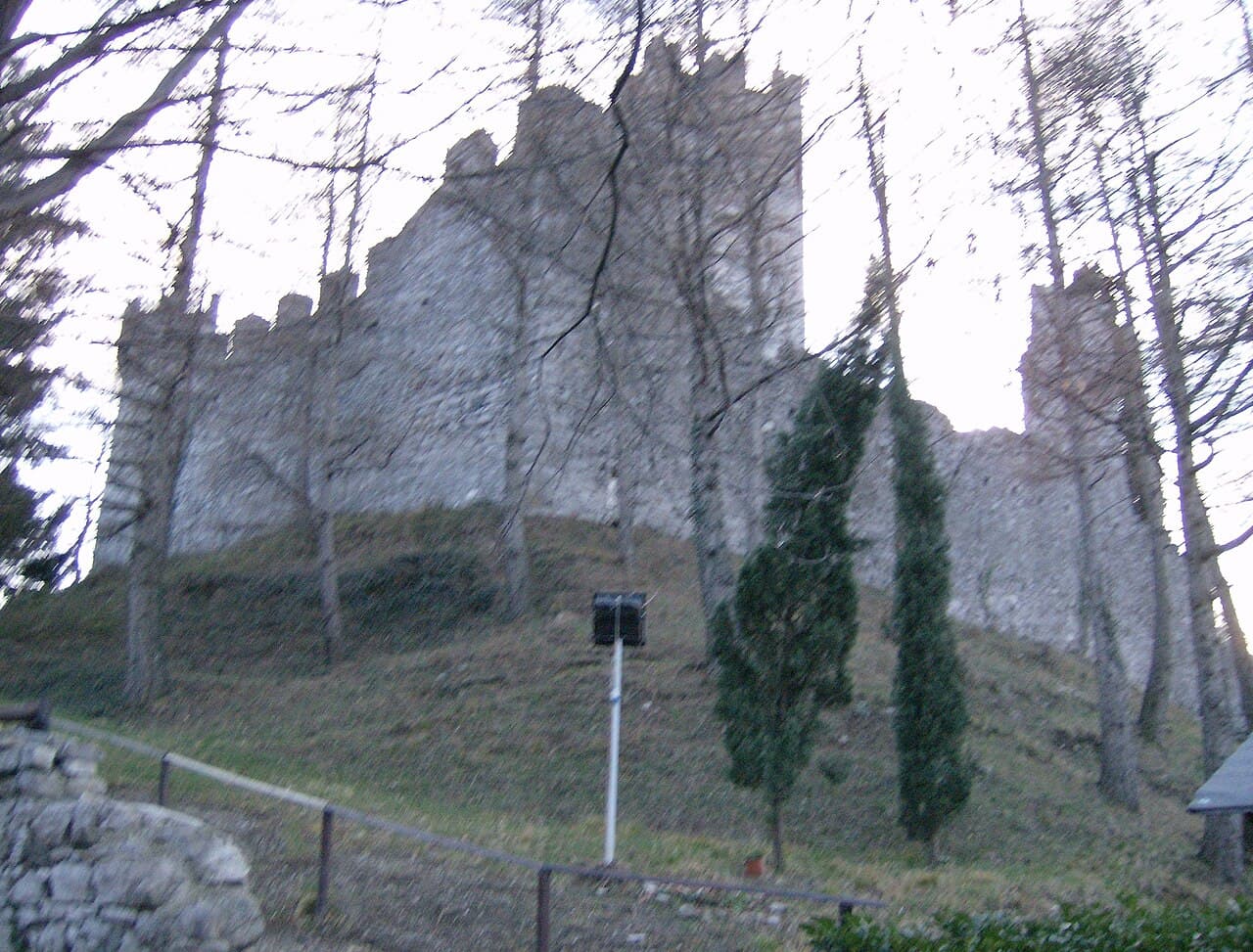
Vezio Castle — Italy castle

Vezio Castle

Vezio castle in varenna, italy
Varenna, Lombardia, Italy
High Medieval (11th–13th c.)
Well Preserved

Vezio Castle, perched on a promontory above the picturesque village of Varenna in Lombardia, Italy, stands as a remarkable example of a high medieval hill castle with a rich history spanning nearly a millennium. Constructed in the 11th century, this fortress commands breathtaking views over Lake Como and the surrounding valleys, embodying both strategic military importance and cultural heritage.

Historical background and strategic importance

The origins of Castello di Vezio date back to the late 11th and early 12th centuries, when local inhabitants built it as a defensive stronghold to protect the village of Varenna and the vital lakefront from incursions. Its elevated position on Monte Fopp allowed it to serve as a lookout and refuge during the turbulent communal period in northern Italy, when city-states and territories frequently clashed.

During this era, the castle was part of a network of fortifications that included walls connecting it to the village below, creating a fortified refuge for residents and for those fleeing from nearby areas such as Comacina Island. The castle played a pivotal role in defending against repeated assaults from the rival city of Como, which eventually led to the destruction of Comacina Island itself.

Following the medieval period, ownership of the castle transitioned to ecclesiastical authorities, becoming property of the local bishopric. Subsequently, it passed into the hands of prominent noble families, including the Lattuada family of nearby Lierna, and later the Sfondrati and Greppi families, the latter being the current owners.

Architectural features and defensive structures

The castle's most distinctive architectural element is its square-based watchtower, featuring square merlons atop battlements, reminiscent of the main tower of the Castle of Cly in the Aosta Valley. Access to the tower is gained via a stone staircase after crossing a small drawbridge, a classic medieval defensive feature designed to control entry.

Surrounding the tower is a quadrangular curtain wall with a partially completed corner turret, indicating phases of construction and repair over centuries. From this elevated vantage point, visitors can enjoy a panoramic 360-degree view of Lake Como, including notable landmarks such as the Bellagio peninsula, Villa Carlotta, and the towns of Cadenabbia and Menaggio.

Extending from the castle walls are defensive masonry walls that descend toward the lake shore, historically protecting the village and its waterfront approaches from attack. These walls formed an integral part of the medieval fortifications that safeguarded the settlement during the frequent conflicts of the communal era.

The linea cadorna and world war defenses

In the 20th century, Castello di Vezio gained renewed military significance during both World Wars. During World War I, the castle's basement and surrounding area were adapted as an outpost for the Cadorna Defense Line, a system designed to defend northern Italy from potential invasions.

Later, during World War II, underground tunnels were constructed beneath the castle gardens as part of the Linea Cadorna defensive network. These tunnels housed artillery pieces such as 75 mm howitzers intended to protect the valley from incursions through neutral Switzerland. Portions of these tunnels remain accessible today, serving as a tangible link to the castle's modern military history.

Archaeological discoveries and paleontological significance

The site around Vezio Castle has yielded significant archaeological finds that attest to a long history of human occupation. In the late 19th and mid-20th centuries, excavations uncovered Iron Age tombs along with weapons including swords, helmets, and distinctive arrows, underscoring the area's strategic importance well before the medieval period.

Additionally, a late Roman gladius helmet was discovered nearby, highlighting the continuity of military presence in the region. The castle also houses a permanent exhibition dedicated to the Lariosaurus, an extinct aquatic reptile from the Middle Triassic period named after Lake Como following its discovery in Perledo in 1830. This exhibition celebrates the region's rich paleontological heritage and draws attention to the prehistoric life that once thrived here.

Gardens, falconry, and cultural activities

The castle grounds feature extensive gardens that benefit from the unique microclimate of Lake Como. The northern slopes support vegetation typical of continental and alpine regions, including chestnuts, hazelnuts, pines, and larches. In contrast, the lake-facing side hosts Mediterranean species such as olive trees, agave, rosemary, and various succulents.

Notably, the olive grove at Vezio Castle is among the northernmost in the world, producing high-quality extra virgin olive oil with a protected designation of origin known as "Laghi Lombardi Lario." This blend of flora reflects the castle's position at the crossroads of climatic zones and enriches its cultural landscape.

A unique feature of the castle is its falconry center, where birds of prey such as barn owls, buzzards, and hawks are bred and trained. Visitors can witness spectacular flight demonstrations and even offer their arm for a bird's soft landing, continuing a centuries-old tradition of falconry in the region.

Visiting experience and public access

Though privately owned, Castello di Vezio has been open to the public since 1999. The Associazione Turistica Castello di Vezio, a nonprofit organization, manages the castle's preservation and organizes various cultural events throughout the year.

The castle is accessible daily from April to October, from 10 a.m. until sunset, while in the winter months it opens on weekends during the same hours. Visitors can explore the castle's interior rooms, climb the main tower for panoramic views, stroll through the gardens, and enjoy falconry demonstrations.

The combination of historical architecture, archaeological significance, natural beauty, and cultural programming makes Vezio Castle a captivating destination for visitors interested in medieval history, military architecture, and the natural heritage of Lake Como.

Frequently asked questions (FAQ)

How do I visit Vezio Castle and what are the opening hours?
Vezio Castle is open to the public from April to October daily from 10 a.m. until sunset, and in the winter months on Saturdays and Sundays during the same hours. Visitors can explore the castle grounds, gardens, and exhibitions during these times.
What is the historical significance of Vezio Castle?
Vezio Castle played a key role in medieval defense of the Lake Como region, serving as a refuge during conflicts with Como and later as part of the Linea Cadorna defenses in the World Wars. Its strategic hilltop location made it vital for military and communal protection.
What architectural features make Vezio Castle unique?
The castle's square-based watchtower with square merlons, its drawbridge, and quadrangular curtain walls are distinctive medieval defensive elements. The underground tunnels from the Linea Cadorna add a unique 20th-century military dimension.
Can I see birds of prey at Vezio Castle?
Yes, the castle hosts a falconry center where visitors can see barn owls, buzzards, hawks, and other birds of prey. Flight demonstrations are offered seasonally, allowing visitors to engage with these majestic birds.
Are there any archaeological exhibits at Vezio Castle?
Yes, the castle features a permanent exhibition dedicated to the Lariosaurus, an extinct aquatic reptile from the Middle Triassic period discovered locally. Archaeological finds from the Iron Age and Roman times have also been uncovered nearby.

Photo gallery

Vezio Castle
Click to view

Photo by Swiss79•Public domain

1 photo • Click any image to view in full screen

Information

Hill Castle

Opening hours

April to October daily 10:00 to sunset; November to March weekends 10:00 to sunset

Current owner

Private owner

Loading map...

Visitor reviews

No reviews yet. Been here? Write the first review and help other travelers!

Write the first review

Visited this castle? Share your experience

Your review helps other travelers and adds first-hand knowledge to our encyclopedia.
Write a review

(5/5)

0/2000 characters

Your review will be visible after admin approval

Nearby castles

5.1 km
Lierna Castle — Italy castle

Lierna Castle

Lierna, Italy

Lierna Castle is a remarkable example of a Romanesque hill castle situated on a strategic peninsula that extends into Lake Como in the northern Italian region of Lombardy. Its unique location on this natural promontory provided a defensible position that shaped its military and residential history from the early medieval period through the Renaissance and beyond. The castle complex today consists of a series of interconnected buildings rather than a single monolithic structure, reflecting centuries of architectural evolution and adaptation. The origins and early history of Lierna Castle The site of Lierna Castle has a deep historical lineage dating back to Roman times, as it was originally built upon the foundations of earlier Roman ruins. The main phase of construction that defines the castle’s current form began in the 10th century, during the early medieval period, when the Romanesque architectural style was prevalent. This era saw the establishment of the castle as a fortified settlement designed to control the vital waterways and land routes along Lake Como. One of the earliest notable historical associations of the castle is with Queen Theodolinda, the Lombard queen who ruled from 589 to 616. Tradition holds that she resided at the site, underscoring the castle’s significance during the Lombard kingdom in northern Italy. This connection situates Lierna Castle within the broader narrative of early medieval power struggles and territorial control in the region. Architectural features and layout The castle’s architecture is characterized by its Romanesque style, evident in the robust masonry, rounded arches, and thick defensive walls that form the core of the surviving structures. The complex is not a single fortress but rather a cluster of buildings linked together, which includes residential quarters, defensive walls, and religious structures, all integrated into the natural topography of the peninsula. The church of Saints Maurice and Lazarus A central feature of the castle complex is the 11th-century church of Saints Maurice and Lazarus (Chiesa dei Santi Maurizio e Lazzaro), which holds both religious and military significance. This church was constructed during the Romanesque period atop Roman foundations and was designed to serve as a sanctuary during sieges. Its apse faces the lake, providing a protective bastion, while the entrance is secured within the castle walls. The interior contains 15th-century frescoes that add artistic and cultural value to the site. The church is also historically linked to the Order of Saints Maurice and Lazarus, a chivalric order founded in the 16th century. A bronze bell within the church bears the emblem of this order, symbolizing the castle’s ongoing religious and dynastic importance during the Renaissance. Military history and strategic importance Lierna Castle’s location on Lake Como made it a key military asset throughout its history. In the 12th century, the castle was embroiled in the conflicts between the rival city-states of Milan and Como. Its position allowed control over naval traffic and land access, making it a valuable stronghold in regional power struggles. During the mid-16th century, the castle was a military base for the mercenary leader Gian Giacomo Medici, known as "Medeghino." His use of the castle marked a period of intense martial activity, culminating in its capture in 1532 by forces from the Grisons after heavy fighting. This event effectively ended the castle’s role as a military fortress and initiated its transition toward a residential and commercial settlement. The cultural and religious significance On January 22, 1573, Lierna Castle’s church was the site where Emmanuel Philibert of Savoy established the Order of Saints Maurice and Lazarus, following papal approval by Pope Gregory XIII. This event underscores the castle’s enduring religious and cultural role beyond its military functions. The order combined the traditions of two older chivalric groups and became an important dynastic institution in the House of Savoy. The presence of the bronze bell with the order’s emblem within the church remains a tangible link to this 16th-century foundation, highlighting the castle’s layered historical identity. Preservation and current status Today, Lierna Castle is not a ruin but a well-preserved and inhabited site. It forms part of the local frazione called Castello, which is the northwesternmost of Lierna’s eleven subdivisions. The castle’s buildings have been continuously adapted over the centuries, incorporating Roman foundations into medieval and later structures. This continuous occupation has helped preserve the castle’s architectural integrity and historical ambiance. The castle’s integration into the modern community reflects its evolution from a strategic military fortress to a residential and cultural landmark. Visitors can observe the blend of ancient Roman elements, Romanesque architecture, and Renaissance religious art within the castle complex, providing a rich historical experience. Architectural details and notable features The castle’s defensive structures include thick stone walls that capitalize on the peninsula’s natural defensibility. The layout includes interconnected buildings forming a compact fortified settlement rather than an isolated keep. The use of Roman masonry techniques in the foundations is visible in parts of the complex, demonstrating the continuity of building traditions. The church of Saints Maurice and Lazarus stands out for its dual function as a place of worship and a defensive bastion. Its apse facing the lake was strategically designed to resist attacks from the water, while the entrance’s location within the castle walls ensured protection. The frescoes inside add a layer of artistic heritage, dating from the 15th century, illustrating religious themes and enhancing the cultural value of the site. The bronze bell bearing the emblem of the Order of Saints Maurice and Lazarus is a rare surviving artifact that connects the castle to its Renaissance-era religious significance. Visiting Lierna Castle and its surroundings Lierna Castle is accessible to visitors who wish to explore its historical and architectural heritage. The castle’s location on Lake Como offers picturesque views and a unique setting for understanding medieval fortifications in northern Italy. Visitors can appreciate the castle’s layered history, from Roman origins through medieval military use to Renaissance cultural importance. The nearby town of Lierna and the broader Lake Como area provide additional attractions, including natural landscapes, historic churches, and charming villages. Exploring Lierna Castle offers insights into the complex history of Lombardy and the strategic significance of Lake Como in Italy’s past.

Early Medieval (5th–10th c.)
Details
6.7 km

Rezzonico Castle

Santa Maria Rezzonico, Italy

Rezzonico Castle stands as a significant medieval fortress located in the village of Santa Maria Rezzonico, overlooking the serene waters of Lake Como in Lombardia, Italy. Constructed in 1363 by the noble Della Torre family, this hill castle was primarily designed for fortification and protection of the local community rather than royal residence. Its strategic position atop a hill provided commanding views of the surrounding landscape, crucial for defense during the turbulent Late Medieval period. Historical context and origins The castle was built on the foundations of an earlier fortification, remnants of which survive in the form of two fortified gates that once controlled access to the village of Rezzonico. The Della Torre family, prominent in regional politics and culture, established the castle as a fortified enclosure or "castello-recinto," a type common in northern Italy during the 14th century. This design integrated residential buildings and a central tower within defensive walls, creating a protected community hub. The Della Torre lineage included notable figures such as Pope John XIII (also known as Papa Rezzonico) from the Venetian branch and the dialect poet Giovanni Rezzonico from the Como branch, highlighting the family's cultural and political influence in the region. Architectural features and layout The castle covers an area of approximately 2,000 square meters, enclosed by robust defensive walls forming a roughly trapezoidal perimeter. Within these walls lie the remains of residential houses and a prominent medieval tower, which served both defensive and lookout functions. The tower is distinguished by its Ghibelline-style battlements, featuring the characteristic swallowtail crenellations typical of northern Italian military architecture during the Middle Ages. The walls incorporate sections of earlier curtain walls, connecting to the fortified gates that historically controlled entry to the village. These fortifications exemplify traditional medieval masonry techniques prevalent in the region, constructed primarily from local stone materials. The main tower and defensive structures The tall medieval tower remains the castle's centerpiece, symbolizing its military and administrative role. Its battlements provided defenders with strategic vantage points to observe and repel attackers. Additional towers and battlemented walls contribute to the castle's formidable defensive capabilities, reflecting the military architectural style of the late 14th century. Historical significance and usage Throughout its history, Rezzonico Castle functioned as a vital fortification for the village and surrounding area. In the 16th century, it occasionally housed soldiers loyal to Gian Giacomo Medici, a renowned condottiero, indicating its continued strategic importance during regional conflicts. Unlike royal castles, Rezzonico Castle was primarily a noble residence and community stronghold, emphasizing protection and local governance rather than serving as a seat of sovereign power. 19th-century restoration and current status The castle underwent significant restoration in the 19th century, which aimed to preserve its medieval character while stabilizing the structure. These efforts ensured the survival of key architectural elements, including the main tower, defensive walls, and gates. Today, Rezzonico Castle remains privately owned by a French family, who have held the property for over a century. As a result, public access inside the castle is not available. However, the site is occasionally used for private events such as weddings, allowing limited appreciation of its historic ambiance. Cultural and heritage importance Rezzonico Castle is an emblematic example of a fortified village castle typical of Lake Como's medieval heritage. Its preservation offers valuable insights into the defensive strategies and domestic arrangements of northern Italian noble families during the Late Medieval period. The castle's integration with the village and its enduring architectural features highlight its role as both a military stronghold and a community center. Visitors and scholars interested in medieval military architecture and Italian noble history regard the castle as a significant cultural landmark, despite its current private status. Its distinctive Ghibelline battlements and well-preserved walls contribute to the rich tapestry of Italy's fortified heritage.

Late Medieval (14th–15th c.)
Details
7.6 km

Castle of Orezia

Dervio, Italy

The Castle of Orezia is a notable medieval hill castle located in the Castello area of Dervio, Italy. Established by local builders of the Lombard region, its primary function was to secure critical mountain routes, especially the road ascending into the Valvarrone valley, an important alpine passage for movement and communication. The castle's elevated position provided a commanding view over the surrounding plain, reinforcing its defensive capabilities against potential attackers. Historical background and strategic importance The earliest documented mention of the castle dates back to 1341, by which time its defensive tower was already constructed. Known initially as Castrum de Orethia or castrum goleza in the medieval "Liber notitiae Sanctorum Mediolani", the site’s name evolved over the centuries, appearing later as Olethio in historical records. Throughout the Middle Ages, the castle functioned as a vital military stronghold, guarding the alpine passage and the road network that connected the region. During the intermittent wars between the Duchy of Milan and the Republic of Venice, two dominant powers competing for control of northern Italy, the castle's fortifications were likely reinforced. These enhancements aimed to bolster its defensive capacity amid the turbulent political and military landscape of the time. Architectural features and construction The Castle of Orezia primarily consists of medieval stone structures, prominently featuring a square-plan defensive tower at its core. This tower was built using masonry techniques involving the careful laying of small stones in orderly horizontal rows, a common method in medieval fortifications. The tower's external walls exhibit round-arched openings, typical of the period's defensive architecture, which would have served both as lookout points and for archers to defend the castle. Surrounding the tower are the remains of the defensive walls that once enclosed a small fortified complex. This complex included several houses and a central square, which was the origin point for the road the castle was built to protect. The layout reflects a coordinated defensive and residential system, integrating military and civilian functions within the fortification. There is also evidence suggesting the presence of a moat that enhanced the castle's defenses by creating an additional barrier against attackers. Although now mostly in ruins, the moat's traces contribute to understanding the castle's comprehensive security design. Preservation and restoration efforts Despite being partially ruined, the castle's remains are well-preserved enough to allow detailed study and public appreciation. The 2016 restoration project focused on stabilizing the defensive tower and the nearby church of San Leonardo, highlighting ongoing efforts to protect and maintain the site's medieval heritage. This restoration has helped preserve key architectural features and allowed visitors to experience the castle's historical ambiance. Today, the castle stands as a significant cultural landmark in the region, offering insights into medieval military architecture and the historical conflicts that shaped northern Italy. The site continues to attract scholars and tourists interested in medieval fortifications and Lombard history. The castle's role in regional history Throughout its existence, the Castle of Orezia played a crucial role in controlling access to the alpine valleys and the surrounding territories. Its strategic position allowed it to monitor and regulate movement along important trade and military routes, contributing to the security and economic stability of the region. The castle's involvement in the power struggles between the Duchy of Milan and the Republic of Venice underscores its military significance. The enhancements made during these conflicts reflect the evolving nature of medieval warfare and the importance of fortified sites in territorial defense. Visitor experience and cultural significance Visitors to the castle can explore the remains of the defensive tower and the surrounding walls, gaining a tangible sense of medieval fortification techniques. The site's elevated location offers scenic views of the plain of Dervio and the nearby alpine landscape, enhancing its appeal as a historical and natural destination. The castle's proximity to the church of San Leonardo adds to the cultural context, linking religious and military aspects of medieval life in the region. Together, these sites provide a comprehensive glimpse into the past, illustrating the interconnectedness of defense, settlement, and spirituality.

Late Medieval (14th–15th c.)
Details

