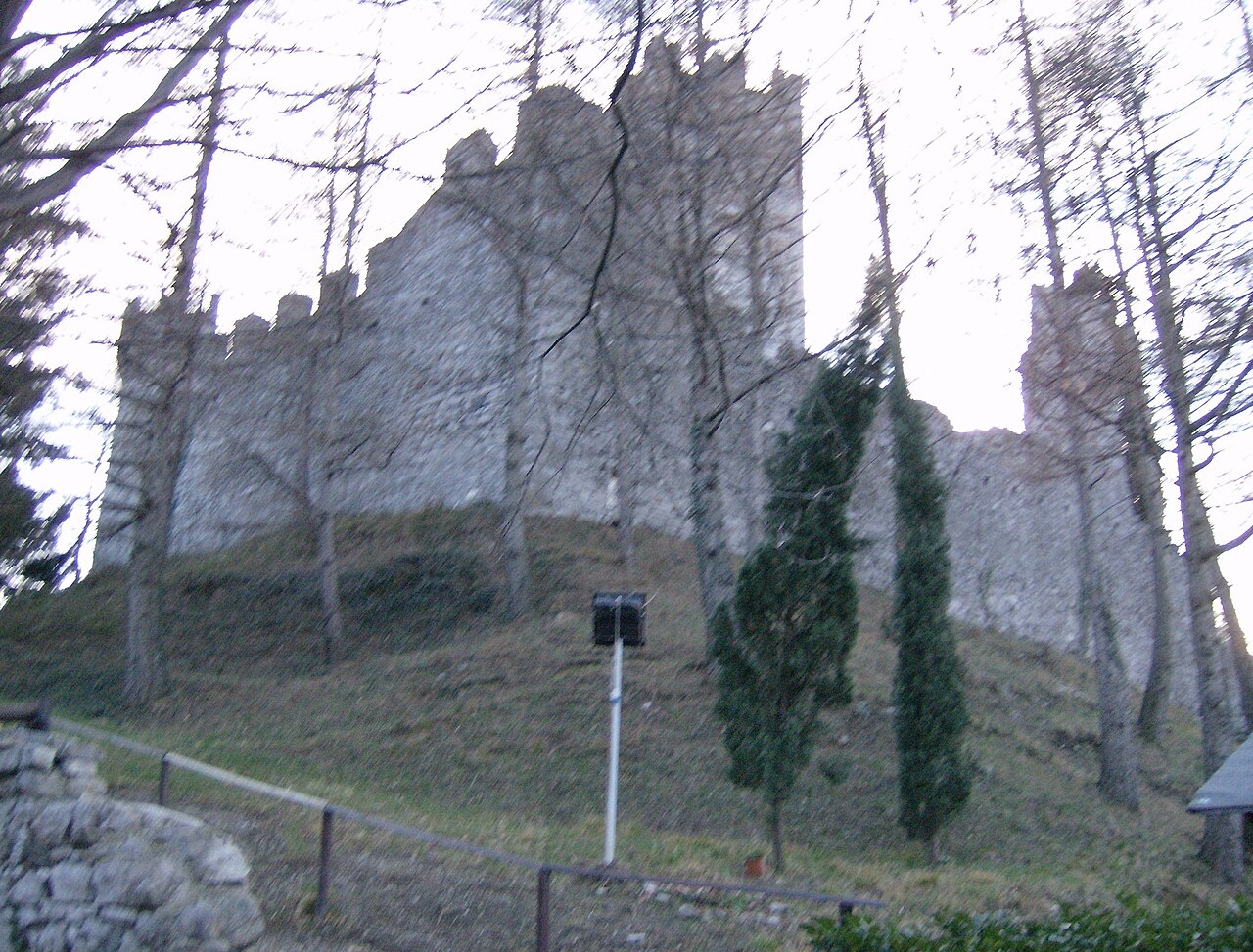
Castle of Orezia
The Castle of Orezia is a notable medieval hill castle located in the Castello area of Dervio, Italy. Established by local builders of the Lombard region, its primary function was to secure critical mountain routes, especially the road ascending into the Valvarrone valley, an important alpine passage for movement and communication. The castle's elevated position provided a commanding view over the surrounding plain, reinforcing its defensive capabilities against potential attackers.
Historical background and strategic importance
The earliest documented mention of the castle dates back to 1341, by which time its defensive tower was already constructed. Known initially as Castrum de Orethia or castrum goleza in the medieval "Liber notitiae Sanctorum Mediolani", the site’s name evolved over the centuries, appearing later as Olethio in historical records. Throughout the Middle Ages, the castle functioned as a vital military stronghold, guarding the alpine passage and the road network that connected the region.
During the intermittent wars between the Duchy of Milan and the Republic of Venice, two dominant powers competing for control of northern Italy, the castle's fortifications were likely reinforced. These enhancements aimed to bolster its defensive capacity amid the turbulent political and military landscape of the time.
Architectural features and construction
The Castle of Orezia primarily consists of medieval stone structures, prominently featuring a square-plan defensive tower at its core. This tower was built using masonry techniques involving the careful laying of small stones in orderly horizontal rows, a common method in medieval fortifications. The tower's external walls exhibit round-arched openings, typical of the period's defensive architecture, which would have served both as lookout points and for archers to defend the castle.
Surrounding the tower are the remains of the defensive walls that once enclosed a small fortified complex. This complex included several houses and a central square, which was the origin point for the road the castle was built to protect. The layout reflects a coordinated defensive and residential system, integrating military and civilian functions within the fortification.
There is also evidence suggesting the presence of a moat that enhanced the castle's defenses by creating an additional barrier against attackers. Although now mostly in ruins, the moat's traces contribute to understanding the castle's comprehensive security design.
Preservation and restoration efforts
Despite being partially ruined, the castle's remains are well-preserved enough to allow detailed study and public appreciation. The 2016 restoration project focused on stabilizing the defensive tower and the nearby church of San Leonardo, highlighting ongoing efforts to protect and maintain the site's medieval heritage. This restoration has helped preserve key architectural features and allowed visitors to experience the castle's historical ambiance.
Today, the castle stands as a significant cultural landmark in the region, offering insights into medieval military architecture and the historical conflicts that shaped northern Italy. The site continues to attract scholars and tourists interested in medieval fortifications and Lombard history.
The castle's role in regional history
Throughout its existence, the Castle of Orezia played a crucial role in controlling access to the alpine valleys and the surrounding territories. Its strategic position allowed it to monitor and regulate movement along important trade and military routes, contributing to the security and economic stability of the region.
The castle's involvement in the power struggles between the Duchy of Milan and the Republic of Venice underscores its military significance. The enhancements made during these conflicts reflect the evolving nature of medieval warfare and the importance of fortified sites in territorial defense.
Visitor experience and cultural significance
Visitors to the castle can explore the remains of the defensive tower and the surrounding walls, gaining a tangible sense of medieval fortification techniques. The site's elevated location offers scenic views of the plain of Dervio and the nearby alpine landscape, enhancing its appeal as a historical and natural destination.
The castle's proximity to the church of San Leonardo adds to the cultural context, linking religious and military aspects of medieval life in the region. Together, these sites provide a comprehensive glimpse into the past, illustrating the interconnectedness of defense, settlement, and spirituality.
Frequently asked questions (FAQ)
- How do I get to the Castle of Orezia?
- The Castle of Orezia is located in the Castello area of Dervio, Lombardy, Italy. It is accessible by local roads from the town center, with signs directing visitors to the historic site.
- What is the best time to visit the castle?
- The best time to visit the Castle of Orezia is during the warmer months from spring to early autumn, when the weather is favorable for exploring the outdoor ruins and enjoying panoramic views.
- Is there an entrance fee to visit the castle?
- Visiting the Castle of Orezia is free of charge, allowing visitors to explore the medieval ruins and surrounding areas without any ticket cost.
- What architectural style characterizes the Castle of Orezia?
- The castle exhibits Gothic architectural features, particularly evident in the design of its defensive tower with round-arched openings typical of the period.
- Can I visit the nearby church of San Leonardo?
- Yes, the church of San Leonardo, which underwent restoration alongside the castle's tower in 2016, is open to visitors and offers additional historical and architectural interest.
Information
Opening hours
9:00-18:00, daily
Ticket prices
Free
Current owner
Municipality
Loading map...
Visitor reviews
No reviews yet. Been here? Write the first review and help other travelers!
Write the first reviewVisited this castle? Share your experience
Your review helps other travelers and adds first-hand knowledge to our encyclopedia.