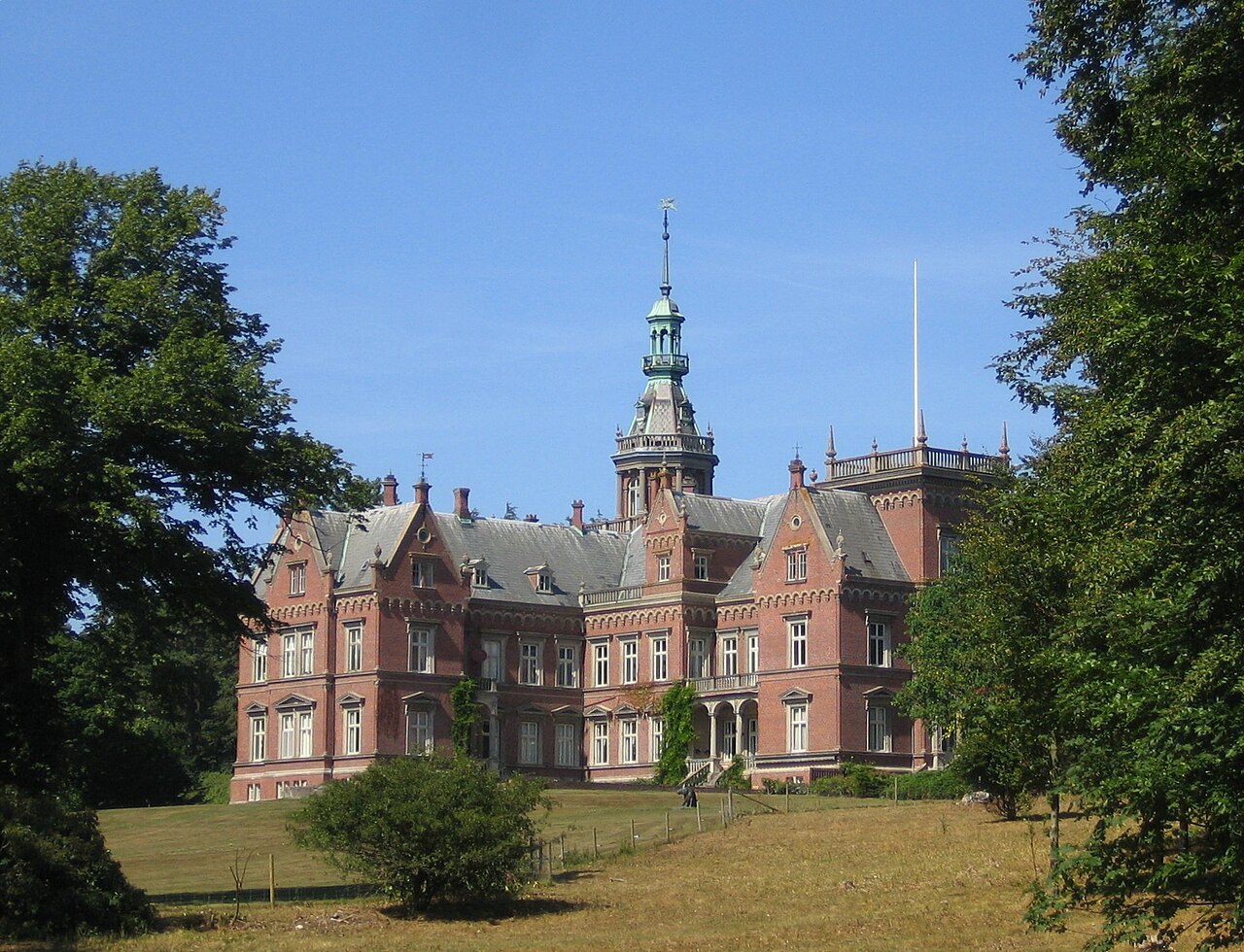
Vegeholm Castle is a significant Renaissance-era castle located in Ängelholm, Sweden. Originally constructed in the early 16th century as a Danish fortress, the castle has experienced a complex history of destruction, rebuilding, and ownership changes that reflect the turbulent regional politics and noble lineages of Scandinavia. The castle's architectural evolution and its enduring presence make it an important cultural landmark in the region.
Early history and construction
The first iteration of Vegeholm Castle was established in the early 1500s during a period when the region was under Danish control. This initial structure served defensive and residential purposes typical of Danish castles of the time. However, the castle was destroyed by fire in 1525, a fate not uncommon for wooden and early stone fortifications of the era.
After lying in ruins for some years, the castle was rebuilt in 1630 by Tyge Krabbe, a Danish nobleman and military officer. This reconstruction marked the transition of Vegeholm from a medieval fortress to a more refined Renaissance manor house, reflecting the architectural and stylistic changes of the period.
Ownership and renovations through the centuries
The castle remained in the possession of the Krabbe family until 1663, when it was acquired by Gustaf Otto Stenbock, a notable Swedish statesman and military leader. Following Stenbock's death, the castle changed hands several times, passing to Olof Nilsson Engelholm and later to Johan Cedercrantz. The Cedercrantz family maintained ownership until 1814, when the castle underwent a thorough renovation, which likely updated its interiors and structural elements to the standards of the early 19th century.
Throughout the 19th century, Vegeholm Castle changed ownership multiple times, including notable families such as the Ehrenborg and Sjöcrona families. These transitions reflect the shifting social and economic landscape of Swedish nobility during this period.
20th century restoration and current status
In the early 20th century, the castle was purchased by Wilhelmina and Walther von Hallwyl, prominent figures in Swedish society. They gifted the estate to their daughter Irma von Geijer and her husband Wilhelm von Geijer, who undertook significant restoration and renovation efforts to preserve the castle's historic character while adapting it for modern habitation.
Today, Vegeholm Castle remains privately owned and inhabited by the von Geijer family, maintaining its status as a well-preserved example of Renaissance architecture and noble residence in southern Sweden.
Architectural features and layout
The castle is a three-story stone structure characterized by a high, split roof that encloses an almost square courtyard. This layout is typical of Renaissance manor houses, combining defensive elements with residential comfort and aesthetic considerations.
Two large, square towers anchor the corners of the castle, providing both fortification and visual prominence. These towers would have served as lookout points and strongholds in times of conflict.
Flanking the north facade are two long, freestanding buildings that contribute to the castle's complex, likely serving as auxiliary residential or service wings. The arrangement of these buildings around the courtyard creates a cohesive and functional estate layout.
Construction materials and style
The castle's stone construction and Renaissance style reflect the architectural trends of the 16th and 17th centuries in Scandinavia, emphasizing symmetry, proportion, and the integration of defensive and domestic features. The high, split roof is a distinctive element that adds to the castle's silhouette and protects the structure from harsh weather.
Defensive elements
While Vegeholm Castle's primary function evolved from military defense to noble residence, its design retains features such as thick walls and towers that would have been effective against siege tactics of the period. The courtyard layout also allowed for controlled access and internal security.
Cultural and historical significance
Vegeholm Castle embodies the transition from medieval fortifications to Renaissance manor houses in Scandinavia. Its history is intertwined with prominent noble families and reflects the political shifts between Danish and Swedish control in the region.
The castle's preservation and continuous habitation by the von Geijer family contribute to its status as a living heritage site, offering insights into aristocratic life and architectural evolution over several centuries.
Visitor information and accessibility
As a private residence, Vegeholm Castle is not regularly open to the public, but it remains an important subject of study for historians and architectural enthusiasts interested in Renaissance castles in Sweden.
Frequently asked questions (FAQ)
- What is the historical significance of Vegeholm Castle?
- Vegeholm Castle, built in the late 16th century, is an important historical landmark in Sweden, showcasing Renaissance architecture. It has served various purposes throughout its history, including being a noble residence and a military stronghold, reflecting the rich heritage of the region.
- When was Vegeholm Castle constructed?
- Vegeholm Castle was constructed in 1560 by the noble family of Ryning. Its design and structure represent the architectural style of the Renaissance period, making it a significant example of that era in Sweden.
- Can I visit Vegeholm Castle?
- Yes, Vegeholm Castle is open to visitors, allowing them to explore its fascinating history and beautiful surroundings. Guided tours are available, providing insights into the castle's architecture and its historical significance.
- What are the opening hours of Vegeholm Castle?
- Vegeholm Castle typically opens its doors to visitors from May to September, with specific hours varying by day. It’s advisable to check the official website or contact the castle directly for the most current opening hours before planning your visit.
- Is it possible to access Vegeholm Castle by public transport?
- Yes, Vegeholm Castle is accessible by public transport from Ängelholm city center. Buses run regularly to the area, making it convenient for visitors who do not have a car.
- What are the ticket prices for visiting Vegeholm Castle?
- Tickets for Vegeholm Castle are generally affordable, with discounts available for children, students, and seniors. It's best to check the official website for the latest pricing and any special offers before your visit.
- When is the best time to visit Vegeholm Castle?
- The best time to visit Vegeholm Castle is during the summer months, from June to August, when the weather is generally pleasant and the castle hosts various events. Visiting during this time allows you to enjoy the lush gardens and outdoor activities available in the surrounding area.
- Are there any nearby attractions to explore while visiting Vegeholm Castle?
- Yes, nearby attractions include beautiful nature reserves and beaches along the coast, offering visitors a chance to explore the stunning scenery of Skåne. Additionally, the charming town of Ängelholm features shops, cafes, and historical sites worth visiting.
Loading map...
Visitor reviews
No reviews yet. Been here? Write the first review and help other travelers!
Write the first reviewVisited this castle? Share your experience
Your review helps other travelers and adds first-hand knowledge to our encyclopedia.