Vanbrugh Castle — United Kingdom castle

Vanbrugh Castle

Vanbrugh Castle: John Vanbrugh's baroque hilltop residence in Greenwich
Post-Renaissance (17th–18th c.)
Well Preserved

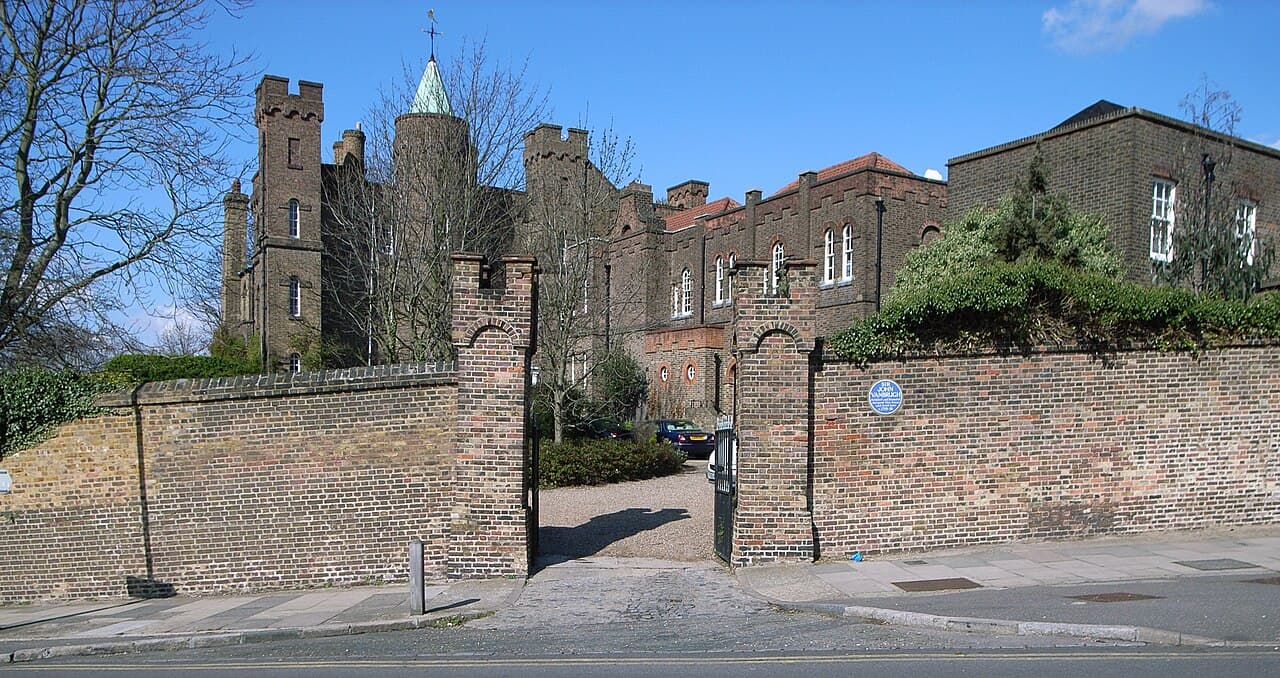
Vanbrugh Castle is a distinctive baroque hill castle designed and built by the architect and dramatist John Vanbrugh around 1719. Situated on Maze Hill on the eastern edge of Greenwich Park in London, it offers commanding views westward over the Old Royal Naval College and down the River Thames as far as the Houses of Parliament. This location on a natural hillock contributes to its classification as a hill castle, a somewhat unusual designation for a residence of this period and style.

Architectural design and style

The castle was conceived as a personal residence for Vanbrugh and his family, reflecting his bold and theatrical architectural style. The building exhibits key elements of the post-Renaissance baroque movement in England, characterized by dramatic massing, robust stonework, and a fortress-like appearance that blends residential comfort with defensive motifs. The castle’s irregular plan includes prominent turrets and battlemented parapets, which evoke the imagery of a medieval fortress, though its purpose was primarily domestic.

Vanbrugh’s design integrates a mix of classical and baroque elements, with an emphasis on grandeur and picturesque silhouette. The castle’s stone façade is punctuated by large sash windows and a central entrance framed by classical columns, balancing the fortress-like aspects with refined architectural details.

Historical context and significance

Constructed during the early 18th century, Vanbrugh Castle stands as an example of the architect’s personal taste and his contribution to English baroque architecture. John Vanbrugh, also known for designing the famous Castle Howard and Bladon House, was a prominent figure in the architectural scene of his time. The castle reflects his interest in combining theatricality with architectural innovation.

Use as a school in the 20th century

Between 1920 and 1976, the castle served as a school funded by the RAF Benevolent Fund. This institution was dedicated to educating the sons of RAF officers who had died in service, providing a supportive environment for these families. The school attracted notable staff, including several distinguished musicians during the 1950s, contributing to its cultural heritage.

Location and surroundings

Vanbrugh Castle’s position on Maze Hill places it within the historic and scenic Greenwich Park, one of London’s oldest royal parks. The site offers panoramic views across the Thames and significant landmarks such as the Old Royal Naval College and the Houses of Parliament. This elevated location not only enhances the castle’s visual prominence but also aligns with traditional hill castle siting for strategic vantage points.

Greenwich Park and nearby landmarks

Greenwich Park is renowned for its extensive green spaces, historic buildings, and its role in maritime history. The proximity of Vanbrugh Castle to the park and other heritage sites enriches its cultural context and makes it a notable feature in the landscape of historic London.

Current status and preservation

Today, Vanbrugh Castle remains a well-preserved example of early 18th-century architecture. Its unique combination of fortress-like features and baroque elegance continues to attract interest from architectural historians and visitors alike. The castle's condition reflects careful maintenance, preserving its distinctive character and historical significance within London’s architectural heritage.

Frequently asked questions (FAQ)

What is the historical significance of Vanbrugh Castle?
Vanbrugh Castle is an important example of early 18th-century architecture, designed by the renowned architect Sir John Vanbrugh. It reflects the Baroque style that was prominent during that period and serves as a testament to the artistic and cultural movements of the time.
When was Vanbrugh Castle built?
Construction of Vanbrugh Castle began in 1717 and was completed in 1726. The castle was originally commissioned by Vanbrugh himself as a residence, showcasing his innovative design and architectural skills.
What are the opening hours for Vanbrugh Castle?
Vanbrugh Castle is open to visitors from 10 AM to 5 PM, Wednesday through Sunday. It is advisable to check the official website for any seasonal changes in hours or special events that may affect accessibility.
Can I buy tickets in advance for Vanbrugh Castle?
Yes, tickets for Vanbrugh Castle can be purchased in advance through the castle's official website. Buying tickets online helps ensure your entry and may provide discounts or special offers for early bookings.
Is it possible to access Vanbrugh Castle with a wheelchair?
Vanbrugh Castle has made efforts to improve accessibility for all visitors. However, given its historic nature, some areas may have limited access; it is recommended to contact the castle in advance for specific accessibility information.
When is the best time to visit Vanbrugh Castle?
The best time to visit Vanbrugh Castle is during the spring and early autumn when the weather is mild and the gardens are in full bloom. Visiting during weekdays is also recommended to avoid larger crowds typically seen on weekends.
What nearby attractions can I explore when visiting Vanbrugh Castle?
Visitors to Vanbrugh Castle can also explore nearby attractions such as Greenwich Park and the Royal Observatory. Additionally, the vibrant market at Greenwich offers a variety of shops and dining options, making it a perfect day out.
What are the ticket prices for Vanbrugh Castle?
Ticket prices for Vanbrugh Castle vary depending on the age of the visitor and any special exhibitions. Generally, adult tickets are priced around £10, while children and concession tickets are available at a reduced rate, with family packages often offered as well.

Photo gallery

Vanbrugh Castle
Click to view

Photo by Steve Cadman from London, U.K.•CC BY-SA 2.0

1 photo • Click any image to view in full screen

Information

Hill Castle

Loading map...

Visitor reviews

No reviews yet. Been here? Write the first review and help other travelers!

Write the first review

Visited this castle? Share your experience

Your review helps other travelers and adds first-hand knowledge to our encyclopedia.
Write a review

(5/5)

0/2000 characters

Your review will be visible after admin approval

Nearby castles

0.8 km
Palace of Placentia — United Kingdom castle

Palace of Placentia

, United Kingdom

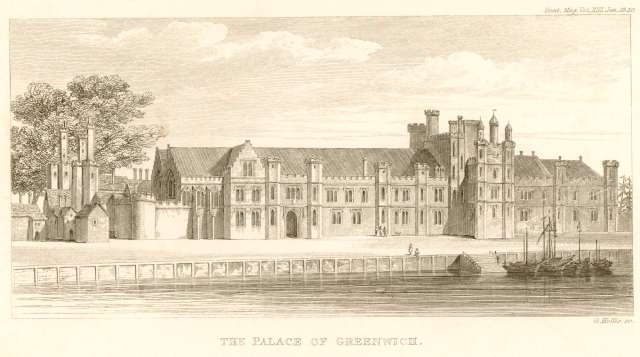
The Palace of Placentia, commonly referred to as Greenwich Palace, was a significant English royal residence located in Greenwich on the south bank of the River Thames, downstream from London. Established in the 15th century by Prince Humphrey, Duke of Gloucester in 1443, it served as a favored retreat for pleasure, entertainment, and escape from the bustling city life of London. The palace originally began as a riverside residence, but over the centuries it underwent multiple transformations reflecting the tastes and needs of successive monarchs. The site was notable not only for the main palace buildings but also for the surrounding estate, which included the Duke Humphrey's Tower, later known as Greenwich Castle. This tower was situated on a hill behind the palace, providing a commanding view of the Thames. Although the castle was demolished in the late 17th century to make way for the Royal Observatory, Greenwich, it remains an important part of the site's layered history. Historical development and royal significance The palace saw its most significant architectural development during the reign of King Henry VII around 1500, who extensively rebuilt the original riverside residence. This reconstruction reflected the late medieval style transitioning into early Renaissance influences, emphasizing grandeur and comfort suitable for a royal court. The palace became a favored residence for Tudor monarchs, including Henry VIII, who was born there and used it as a principal royal home. In the early 17th century, a detached residence known as the Queen's House was constructed on the palace estate. This building, which still survives today, was designed in the classical style and marked a shift towards Renaissance architectural ideals in England. The Queen's House is notable for its elegant proportions and was one of the first classical buildings in the country, designed by the architect Inigo Jones. Demolition and transformation into Greenwich Hospital Following the English Civil War and the Restoration of the monarchy, the original palace fell into disrepair. In 1660, King Charles II ordered the demolition of the old main palace to make way for a new royal palace. However, this ambitious project was never fully realized, with only the east wing partially constructed. Nearly four decades later, under the reign of Queen Mary II, the site underwent a dramatic transformation. The partially built east wing was remodeled and expanded to become the Greenwich Hospital, a charitable institution for retired sailors. This redevelopment, completed in the late 17th and early 18th centuries, was designed by prominent architects including Christopher Wren and Nicholas Hawksmoor. The hospital buildings, now known as the Old Royal Naval College, stand as an architectural masterpiece of the Baroque style and are a major historic landmark on the Greenwich riverside. Architectural features and site layout The original Palace of Placentia featured a complex layout typical of late medieval royal residences, including multiple courtyards, halls, chambers, and service buildings. The riverside location was strategically chosen for both defense and leisure, with gardens and promenades along the Thames. Duke Humphrey's Tower was a distinctive feature of the estate, serving as a fortified lookout and symbol of the duke's status. The palace's architectural style was predominantly late medieval with some early Renaissance elements introduced during Henry VII's reconstruction. The surviving Queen's House contrasts with the medieval palace ruins by showcasing clean classical lines, symmetry, and proportion, highlighting the evolution of royal architecture in England. Current condition and heritage status Today, the Palace of Placentia exists primarily as archaeological ruins. The site is of great historical and cultural importance, reflecting the layered history of English royal residences and architectural development from the late medieval period through to the Baroque era. The Old Royal Naval College, built on the palace grounds, continues to be a major tourist attraction and heritage site, preserving the legacy of the palace and its transformation over centuries. Legacy and cultural impact The Palace of Placentia played a pivotal role in the Tudor dynasty, being the birthplace of monarchs and a center of court life. Its ruins and surviving structures like the Queen's House offer valuable insights into royal life, architectural trends, and urban development along the Thames. Greenwich itself remains a key historic area, with the palace site contributing to the rich tapestry of England's royal and maritime heritage. Visiting the site The archaeological remains of the palace are accessible as part of the Greenwich area, with nearby attractions including the Royal Observatory, the Queen's House, and the Old Royal Naval College. Visitors can explore the layers of history visible in the architecture and landscape, gaining a deeper understanding of England's royal past.

Late Medieval (14th–15th c.)
Details
4.1 km

Severndroog Castle

London, United Kingdom

Severndroog Castle stands prominently on Shooter's Hill, the highest point in the Royal Borough of Greenwich, Greater London. This distinctive Gothic-style folly was constructed in 1784 as a memorial to Commodore Sir William James, 1st Baronet, a notable commander of the East India Company navy. The castle's design was the work of architect Richard Jupp, commissioned by Lady Anne James, Sir William's widow, who sought to commemorate her husband's military achievements and legacy. Historical background and commemorative purpose Despite its medieval appearance, Severndroog Castle is not a defensive fortress but a folly, a decorative building meant to resemble a castle tower. Its name honors the island fortress of Suvarnadurg on the western coast of India, which Sir William James successfully attacked and destroyed in 1755 during his naval career. The castle was built shortly after Sir William's death in 1783, with construction completed in the following year. Lady Anne James commissioned the castle not only as a personal tribute but also as a symbol of British naval power and colonial expansion during the post-Renaissance period. The castle's elevated location on the 132-meter-high hill provided commanding views over the surrounding landscape, reflecting the strategic importance of Sir William's naval exploits. Architectural features and style Severndroog Castle is a remarkable example of Gothic revival architecture characteristic of the late 18th century. The building is a three-story tower featuring battlements, turrets, and pointed arch windows that evoke medieval castle motifs. Its construction primarily used brick and stone, materials typical of the period and region. The castle's design emphasizes verticality and ornamental detailing rather than fortification. The interior originally included a series of rooms intended for leisure and observation, with large windows allowing panoramic views of London, the River Thames, and the Kent countryside. Later history and uses Following Lady Anne James' death in 1798, Severndroog Castle changed ownership several times. Due to its prominent position, it was used in the 19th century for geographical surveys and as a landmark for cartographers and surveyors mapping the London area. In 1922, the castle was acquired by London authorities and converted into a tearoom, making it accessible to the public and preserving its cultural significance. However, by the late 20th century, the building fell into disrepair, leading to its closure in 1988. After a period of neglect, a comprehensive restoration project was completed in 2014, restoring the castle's structural integrity and historical character. Today, Severndroog Castle operates as a museum and tearoom, offering visitors insight into its unique history and architectural charm. Visitor experience and cultural significance Visitors to Severndroog Castle can explore the restored interiors, which include exhibitions detailing Sir William James' naval career and the castle's construction. The tower's upper floors provide sweeping views across London, making it a popular spot for sightseeing and photography. The castle's status as a folly distinguishes it from traditional medieval castles, highlighting the 18th-century fascination with romanticized medieval architecture and landscape ornamentation. Its preservation contributes to the cultural heritage of Greenwich and serves as a reminder of Britain's naval history and colonial past.

Post-Renaissance (17th–18th c.)
Details
6.5 km
Two Princes Staircase — United Kingdom castle

Two Princes Staircase

London, United Kingdom

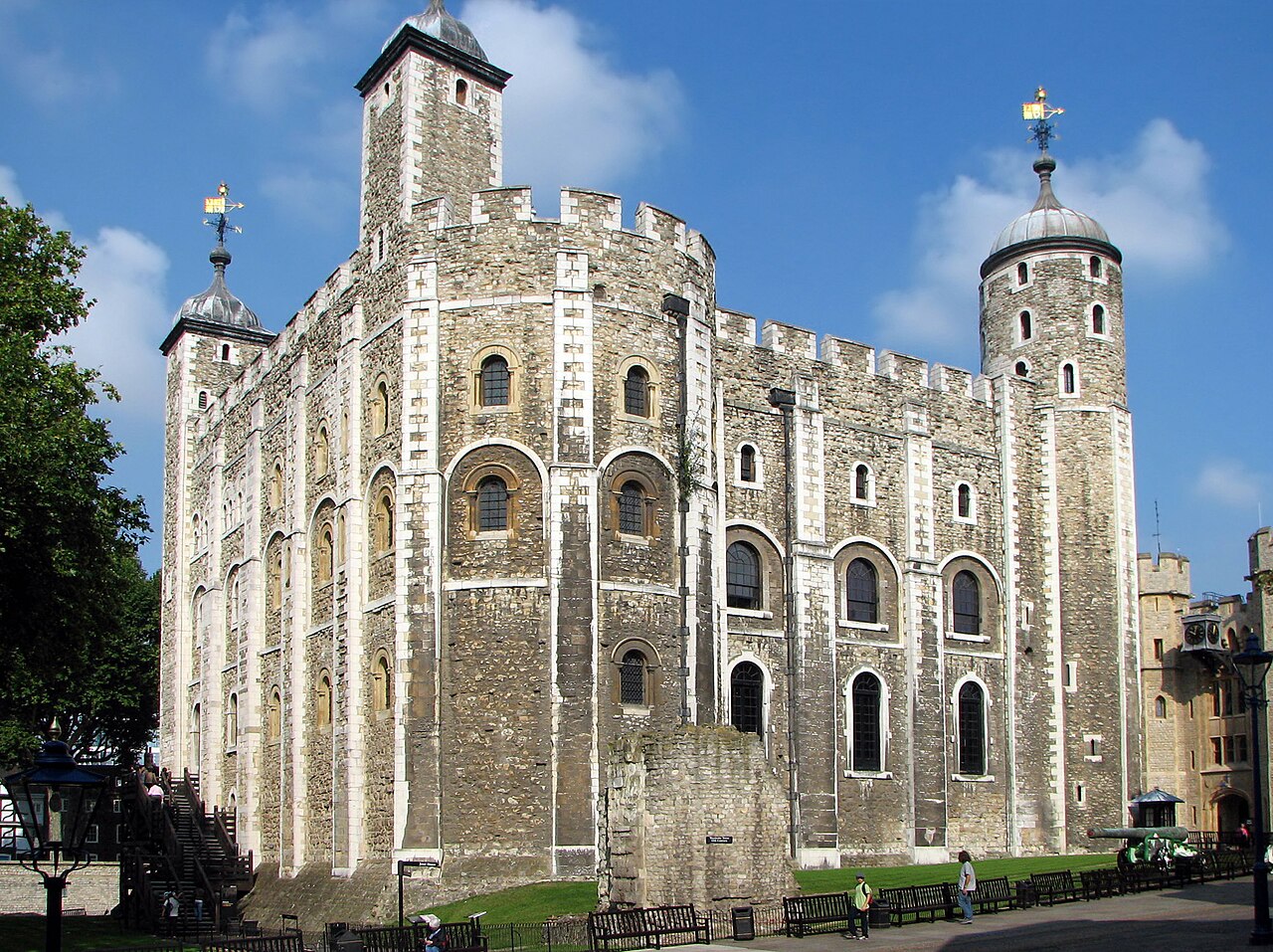
The Two Princes Staircase is a small, historically significant staircase located within the White Tower, the oldest part of the Tower of London in London, England. This staircase is famously associated with the mysterious disappearance of the two young princes, Edward V and Richard, Duke of York, sons of King Edward IV, who vanished in the late 15th century. The intrigue surrounding the staircase stems from the discovery of two child skeletons during renovations in 1674, found concealed near the entrance of the staircase. These remains have long been believed to belong to the missing princes, although no definitive scientific proof has confirmed this identification. Historical context of the two princes The disappearance of Edward V and his younger brother Richard is one of England's most enduring royal mysteries. After the death of their father, King Edward IV, in April 1483, the princes were placed in the custody of their uncle, Richard, Duke of Gloucester, who was later crowned King Richard III. The boys were housed in the Tower of London, traditionally a royal residence and fortress, but also a place of imprisonment. Following the summer of 1483, there are no further recorded sightings of the princes. Their fate remains unknown, sparking centuries of speculation and historical debate. Tudor historians accused Richard III of orchestrating their murder to secure his claim to the throne, though there is no contemporary evidence to confirm this. The Titulus Regius, a parliamentary act passed shortly after Richard's accession, declared the princes illegitimate based on Edward IV's alleged pre-contract, thus legitimizing Richard's claim and casting doubt on the princes' rights. Architectural significance of the staircase The Two Princes Staircase is a narrow spiral staircase tucked away near the entrance of the White Tower. The White Tower itself is a prime example of Norman military architecture, constructed in the late 11th century under William the Conqueror. The staircase's discreet location and design reflect the defensive and residential functions of the keep, providing access between floors while remaining easily defensible. Its historical importance is heightened by the association with the princes, making it a poignant symbol of the Tudor-Stuart period's turbulent dynastic struggles. While the staircase is modest architecturally, its cultural resonance as a site linked to royal intrigue and mystery is immense. Discoveries and investigations The discovery of two child skeletons near the staircase in 1674 during renovation works added a tangible element to the legend of the princes. The bones were interred in Westminster Abbey, but modern forensic analysis has not been possible due to the remains' loss or deterioration. Despite the lack of scientific evidence, the staircase remains a focal point for historians and visitors intrigued by the mystery of the princes. It embodies the unresolved questions about the fate of Edward V and Richard, preserving the legacy of one of England's most famous royal enigmas. Visiting the two princes staircase today Today, the Two Princes Staircase is part of the Tower of London complex, a UNESCO World Heritage Site and one of England's most visited historic landmarks. Visitors can explore the White Tower and see the staircase as part of their tour, gaining insight into the castle's layered history. The Tower of London offers guided tours and exhibitions that contextualize the story of the princes alongside the broader history of the fortress, including its roles as a royal palace, prison, and armory. The staircase remains a subtle yet powerful reminder of the personal tragedies intertwined with England's medieval power struggles.

High Medieval (11th–13th c.)
Details