Valmiera Castle
Valmiera Castle stands as a significant medieval fortress located in the municipality of Valmiera, Latvia. Constructed by the Livonian Order, this castle occupies a strategic hilltop position between the Raatesi stream and the Koiva (Gauja) river, overseeing the historical lands of the Latgalians, an ancient Baltic tribe. The site’s commanding location exemplifies typical hill castle characteristics, leveraging natural topography for defense and control.
The origins of Valmiera Castle date back to shortly after 1224, following the Livonian Order’s acquisition of Latgalian territories previously under the Bishop of Riga. Archaeological evidence confirms that the castle was built upon the remains of an earlier wooden Latgalian fortress, highlighting a continuity of settlement and military importance at this site. The castle is first mentioned in historical records in 1323, coinciding with the granting of town rights to the adjacent settlement, marking the beginning of Valmiera’s urban development under the Order’s influence.
Construction and architectural evolution
Significant construction efforts took place during the late 13th century under the leadership of Order Master Wilhelm von Schauerburg. Around 1283, the castle began transitioning from wooden structures to more durable stone buildings. This period also saw the establishment of St. Simeon’s Church within the castle precincts, reinforcing the site’s dual military and religious functions. The castle’s layout consisted of a main castle area, called the pealinnus, and two outer court enclosures known as eeslinnused, forming an irregular rectangular plan approximately 100 meters long and 30 to 50 meters wide.
The fortress was enclosed by thick curtain walls, or mantelringmür, about 2.25 meters thick, which followed the natural contours of the elevated promontory. Defensive features included a triple-layered gate system with a deep moat approximately six meters deep and thirty meters wide, crossed by a drawbridge. Two round towers once protected the western approach near the castle church, though these have not survived. The eastern and northern flanks were protected by a mill pond created by damming the Raatesi stream, integrating natural water defenses.
Defensive features and military history
Valmiera Castle played a pivotal role during the Livonian War in the 16th century, enduring sieges by Russian forces in 1560 and 1562. Despite its resilience, the castle fell to the troops of Tsar Ivan IV (Ivan the Terrible) in 1577, marking a significant moment in the region’s turbulent history. The fortress subsequently became a contested site amid conflicts between Polish and Swedish powers vying for control of the Baltics.
The castle’s military significance ended during the Great Northern War when it was destroyed by Russian forces under Peter I in 1702. Unlike many other castles, it was never rebuilt, leading to its gradual decline into ruin. Over the centuries, the castle has been known by various names, including Volmari ordulinnus, Schloß Wolmar, and Castrum de Woldemer. The name "Valmiera" is believed to derive either from the Pskov prince Vsevolod Mstislavich ("Woldemar" to German chroniclers) or from Danish King Valdemar II, reflecting the castle’s layered cultural heritage.
Architectural remains and archaeological findings
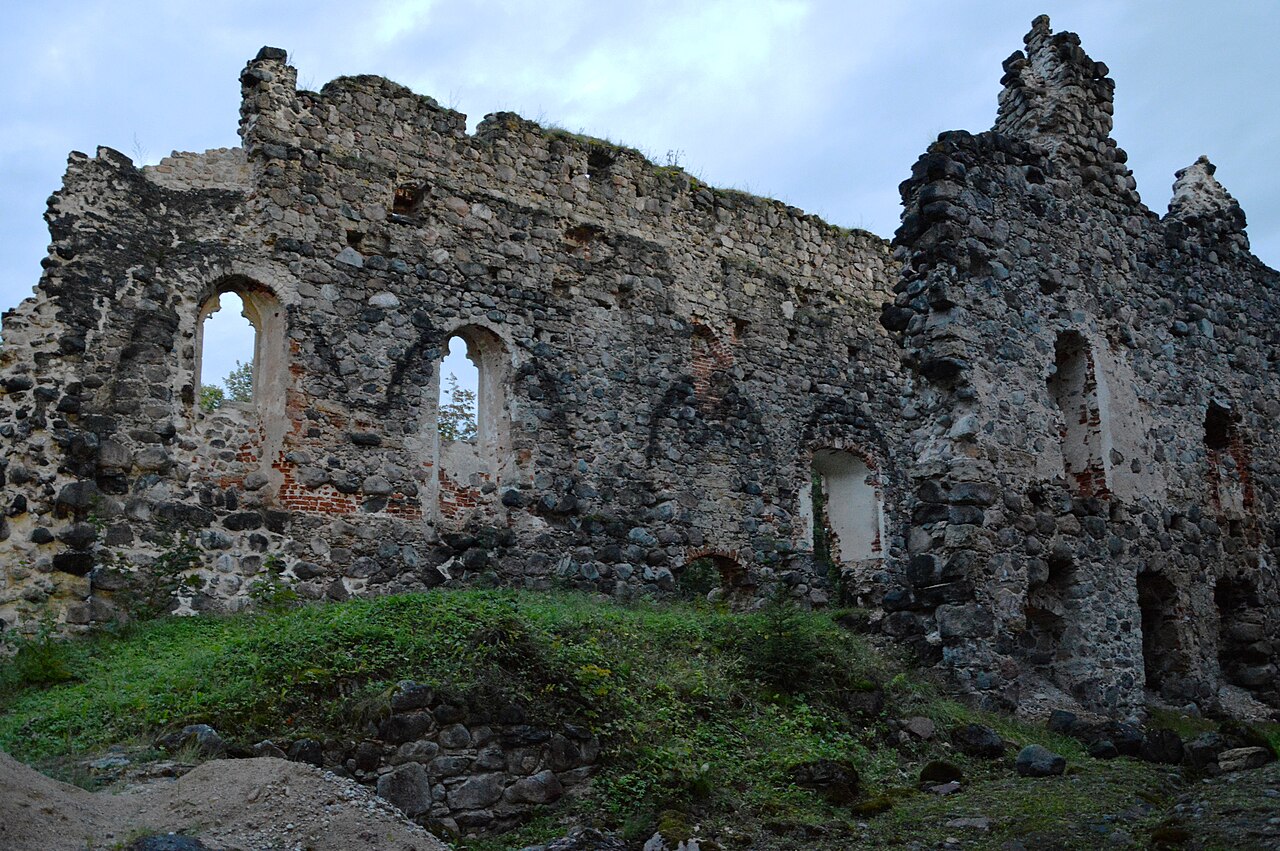
The surviving remains of Valmiera Castle reveal a complex stone fortress with a main castle area and two outer baileys. The walls and fortifications, including the curtain walls and remnants of the outer bailey, illustrate the castle’s original defensive strength. The outer bailey contained vaulted chambers with brick vaulting on upper floors and wooden ceilings below, arranged in a semicircular pattern as documented in a detailed 1634 plan.
Within the castle, a large vaulted hall dating from the 14th century stands out as a key architectural feature. Supported by central pillars, this hall likely served communal or administrative purposes, typical of Livonian Order castles. The castle’s defenses were further enhanced by medieval town walls with bastions constructed in the late 17th century, although plans to expand these defenses were halted by the Great Northern War.
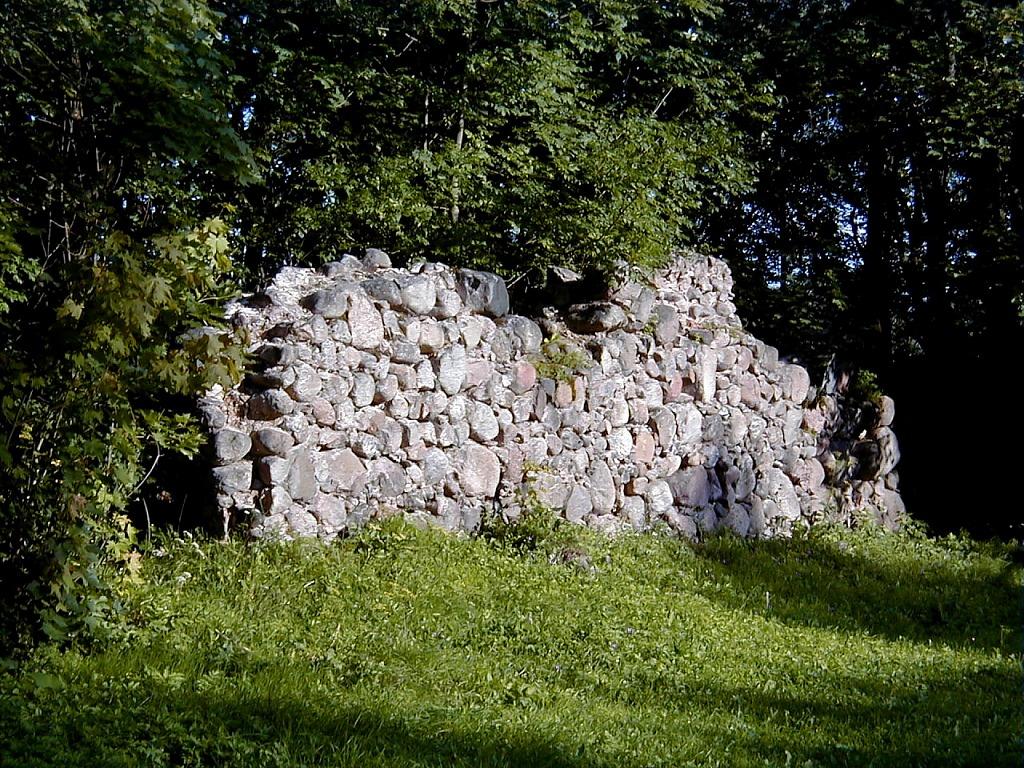
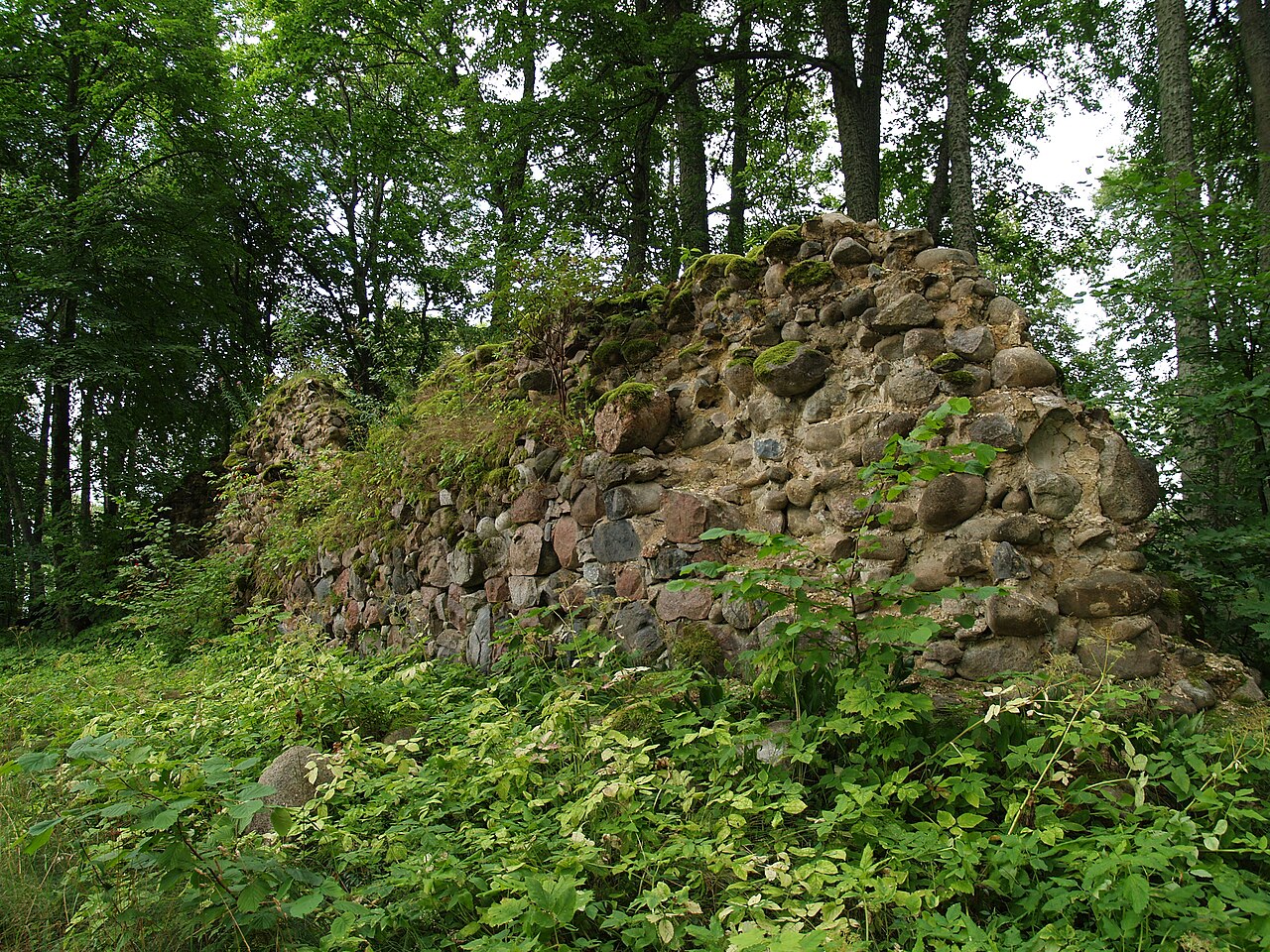
Today, fragments of the outer bailey walls survive up to two stories high, with building foundations visible, offering insight into the castle’s footprint. The main castle walls may survive underground or have been incorporated into later structures like the Volmari manor house (Wolmarshof), now the Valmiera city museum. Conservation efforts have focused on stabilizing the remaining walls using authentic medieval mortar formulas and removing incongruous modern additions.
Valteri hill and landscape defenses
Nearby Valteri Hill, named after a Lutheran bishop, features visible earthworks and bastions that contribute to understanding the castle’s outer defensive landscape. The strategic use of natural water bodies like the Raatesi stream and the Koiva river, combined with man-made defenses such as moats and ponds, demonstrates sophisticated medieval military engineering.
Cultural significance and legends
Local tradition holds that stones for the castle were sourced from ancient pagan sacred sites, and that lime mortar was mixed with milk, a practice believed to have enhanced the masonry’s durability. These legends emphasize the cultural and spiritual layers embedded within Valmiera Castle’s history.
Archaeological excavations, particularly those led by Tatjana Berga in the 20th and 21st centuries, have unearthed artifacts including weapons, jewelry, and building materials. These finds enrich the narrative of medieval life at the castle and its surrounding settlement, providing valuable context for historians and visitors alike.
Today, Valmiera Castle is preserved as a national monument and hosts a museum dedicated to its complex past, offering visitors a tangible connection to Latvia’s medieval heritage and the legacy of the Livonian Order.
Frequently asked questions (FAQ)
- How do I get to Valmiera Castle?
- Valmiera Castle is located in the heart of Valmiera, Latvia, easily accessible by car or public transport. If you are traveling by train, the Valmiera train station is a short walk from the castle, making it convenient for visitors.
- What is the historical significance of Valmiera Castle?
- Valmiera Castle dates back to the 13th century and played a crucial role in the region's defense against invaders. It is one of the few surviving medieval castles in Latvia and offers insights into the country's historical architecture and cultural heritage.
- When was Valmiera Castle built?
- Construction of Valmiera Castle began in 1283, and it was completed in the following decades. The castle has undergone various renovations over the centuries, reflecting the architectural styles and historical events that shaped its development.
- Can I visit Valmiera Castle year-round?
- Yes, Valmiera Castle is open to visitors throughout the year, although opening hours may vary by season. It is advisable to check the official website for the most up-to-date information on visiting hours and any special events.
- Why is Valmiera Castle a popular tourist attraction?
- Valmiera Castle attracts visitors due to its rich history, stunning architecture, and picturesque surroundings. The castle often hosts cultural events and exhibitions, making it a vibrant part of the local community and an engaging destination for tourists.
- Is it possible to take guided tours of Valmiera Castle?
- Yes, guided tours are available at Valmiera Castle, offering visitors in-depth knowledge about its history and architecture. These tours are conducted in several languages and provide a unique perspective on the castle's significance.
- What are the ticket prices for Valmiera Castle?
- Ticket prices for Valmiera Castle are generally affordable, with discounts available for students and seniors. It is recommended to check the official website for the latest pricing information and any special promotions.
- What is the best time to visit Valmiera Castle?
- The best time to visit Valmiera Castle is during the warmer months, from late spring to early autumn, when the weather is pleasant for outdoor exploration. However, visiting during the winter can also be magical, as the castle is often surrounded by snow, creating a picturesque winter scene.
- Are there any nearby attractions to visit after Valmiera Castle?
- Yes, there are several attractions near Valmiera Castle, including the Valmiera Museum and the scenic Gauja National Park. These sites offer additional opportunities to explore the rich culture and natural beauty of the region.
Information
Website
Visit websiteSources & official resources
Verify the information above using these authoritative references.
Loading map...
Visitor reviews
No reviews yet. Been here? Write the first review and help other travelers!
Write the first reviewVisited this castle? Share your experience
Your review helps other travelers and adds first-hand knowledge to our encyclopedia.