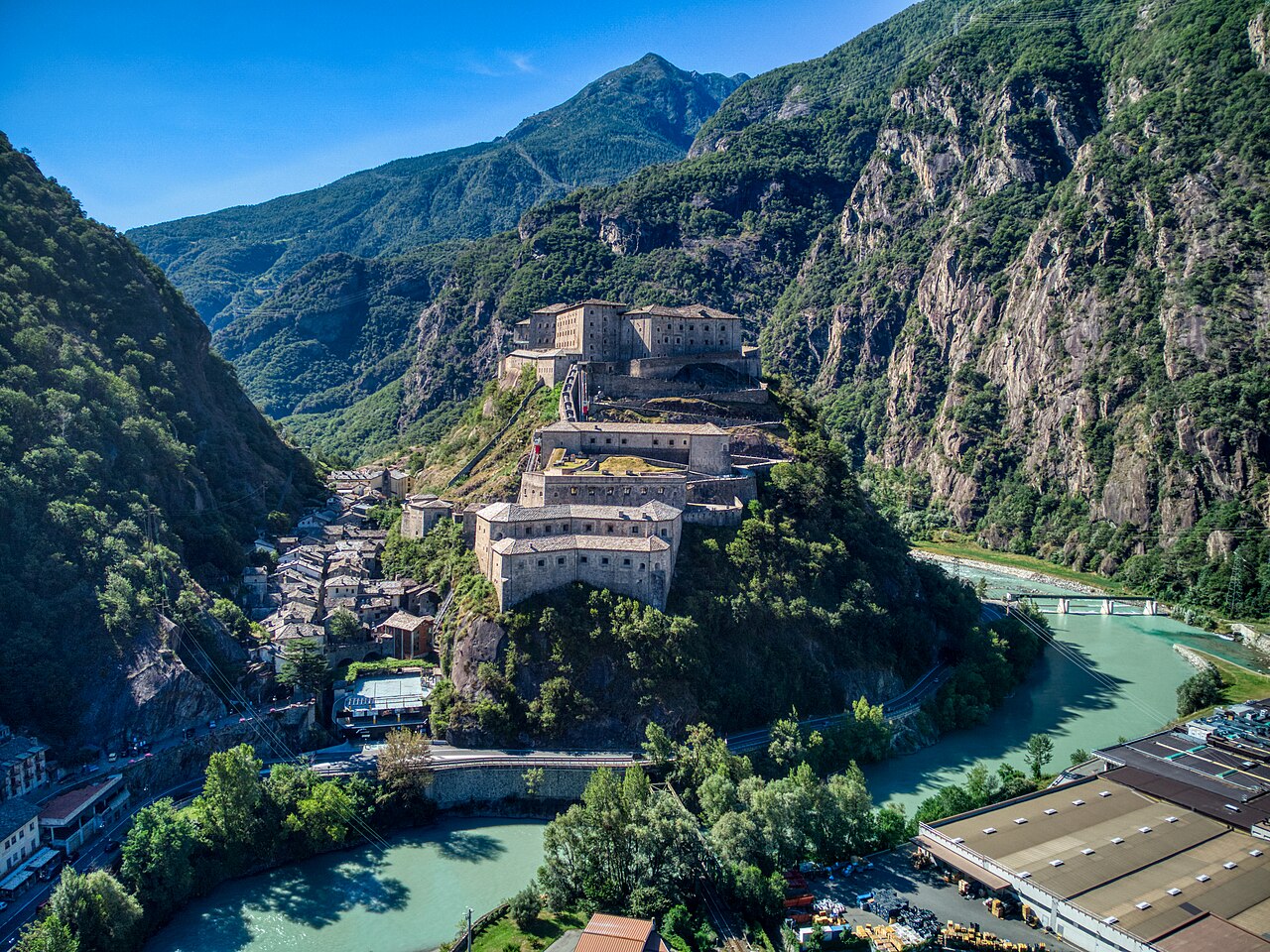
Vallaise Castle
Vallaise Castle stands as a prominent medieval fortress located in the municipality of Perloz, Italy, overlooking the strategic Lys Valley. This hill castle was established by the noble family of Vallaise, whose influence shaped the region's history and architecture. Its commanding position provided both defense and oversight of the valley, reflecting the military and political importance of the site during the Middle Ages.
Historical background and noble lineage
The castle first emerges in historical records dating back to 1195, where a "sala domini" or lord's hall is mentioned in Perloz, confirming the presence of a significant noble residence. The Vallaise family, deriving their name from the nearby Lys River (known as Hellex in Latin), were the lords of Vallis Hellesii. Their holdings extended beyond Perloz to include lands in Fontainemore and Lillianes, as well as influence over neighboring fortifications such as the lower castle at Arnad.
The Vallaise family's prominence is further illustrated by their alliance with the powerful Challant family through the marriage of Pietro Vallaise de la Côte and Antonia Challant shortly before 1477. This union is commemorated architecturally in the castle by a distinctive cross-shaped window bearing the combined coats of arms of both families, symbolizing political alliances and noble lineage.
Architectural evolution and features
Significant architectural modifications to Vallaise Castle likely occurred between the late 14th and early 15th centuries. These enhancements reflect the evolving defensive needs and aesthetic preferences of the period. The castle's substantial four-story structure, although now largely in ruins, reveals a complex history of construction phases and repairs.
The castle's layout is characteristic of medieval hill castles, with thick perimeter walls designed for defense. The façade facing the valley, originally the rear of the castle, measures approximately 16 meters wide and 15 meters high. This façade features a variety of finely crafted stone windows, including a round-arched bifora, a trilobed window, and several cross-shaped windows. These elements showcase the castle's architectural sophistication and the integration of both functional and decorative features.
Inside the castle, although no interior rooms remain intact, two monumental open fireplaces survive. One fireplace prominently displays the Vallaise coat of arms, serving as a lasting emblem of the family's identity and status. Additionally, a well within the castle walls provided essential water supply, a critical feature for sustaining the inhabitants during sieges or isolation.
Destruction and restoration in the 20th century
On June 30, 1944, during World War II, Vallaise Castle suffered devastating damage when Nazi-fascist forces burned the castle along with about one hundred surrounding houses. This raid resulted in the loss of all wooden floors and interior furnishings, severely impacting the castle's structural integrity and historical interiors.
Following the war, restoration efforts focused on preserving the remaining stone structures. The castle's roof was reconstructed in the 20th century to protect the surviving walls and maintain the castle's recognizable silhouette on the ridge above Perloz village. These restoration works have been crucial in safeguarding the castle as a cultural and historical landmark.
Heritage significance and current state
Today, Vallaise Castle stands as a testament to the medieval nobility of the region and their architectural legacy. Despite its ruined condition, the castle's perimeter walls and surviving architectural details provide valuable insights into medieval defensive design and noble residence aesthetics.
The removal of the cross-shaped window bearing the Vallaise and Challant coats of arms to the nearby Castello Charles preserves an important link between noble families and their fortifications. This act of preservation highlights the interconnected history of regional castles and noble lineages.
Visitors to the site can appreciate the castle's imposing presence, its historical significance, and the narrative of resilience through restoration after wartime destruction. The castle remains a prominent feature of Perloz's cultural heritage and offers a tangible connection to the medieval past of the Lys Valley.
Architectural details and defensive features
The castle's four-story structure was strategically designed to maximize defense and surveillance. The thick stone walls, now partially preserved, bear marks of multiple construction phases, indicating ongoing maintenance and adaptation to evolving military technologies.
The variety of window styles, including the bifora and trilobed windows, reflect a blend of functional and ornamental Gothic architectural elements. These windows allowed light into the interior while maintaining defensive strength.
The presence of a well within the castle courtyard was vital for sustaining the garrison during prolonged sieges, demonstrating the castle's preparedness for conflict. The large open fireplaces served both practical heating purposes and as symbols of noble prestige, with heraldic decorations reinforcing family identity.
Frequently asked questions (FAQ)
- When was Vallaise Castle originally built?
- Vallaise Castle first appears in records from 1195, indicating its origins in the High Medieval period as a noble residence.
- What architectural styles are featured at Vallaise Castle?
- The castle features Gothic architectural elements, including bifora and trilobed windows, reflecting its construction and modifications during the late 14th and early 15th centuries.
- What happened to Vallaise Castle during World War II?
- In 1944, Nazi-fascist forces burned Vallaise Castle and surrounding houses, destroying wooden floors and interiors, but the stone walls survived and were later restored.
- Can visitors see the original cross-shaped window with coats of arms at Vallaise Castle?
- The original cross-shaped window bearing the Vallaise and Challant coats of arms was removed and reinstalled on the façade of nearby Castello Charles for preservation.
- Is the castle accessible to visitors today?
- While the castle remains partially preserved and structurally stable, visitor access may be limited due to its ruinous condition; checking with local tourism offices is recommended.
Information
Loading map...
Visitor reviews
No reviews yet. Been here? Write the first review and help other travelers!
Write the first reviewVisited this castle? Share your experience
Your review helps other travelers and adds first-hand knowledge to our encyclopedia.