Valdštejn Castle — Czech Republic castle

Valdštejn Castle

Valdštejn Castle near Turnov: gothic fortress and pilgrimage site
High Medieval (11th–13th c.)
Ruins

Valdštejn Castle, also known as Waldstein Castle, is a remarkable early Gothic fortress situated near Turnov in the Czech Republic. Built in the second half of the 13th century, this hill castle occupies a strategic position atop three sandstone cliffs, offering commanding views over the surrounding Bohemian landscape. Its foundation between 1260 and 1280 marks it as a significant medieval stronghold established by the noble Waldstein family, descendants of the influential Markvartic lineage. Over centuries, the castle witnessed pivotal historical events, transformations, and a unique evolution from a military fortress to a Baroque pilgrimage site.

Founding and medieval significance

The origins of Valdštejn Castle trace back to the late High Medieval period, when Jaroslav of Hruštice or his son Zdeněk likely initiated its construction. The castle's name derives from the Germanized form of the family name Waldstein, reflecting the cultural intermingling in Bohemia during the Middle Ages. For roughly a century, the castle served as the ancestral seat of the Waldstein family, who played prominent roles in the political and military affairs of the region. Notable figures include Zdeněk, a courtier to King John of Bohemia, Hynek, who participated in a military expedition to Lithuania in 1336, and Jan, a financier who supported the future King Charles IV.

Ownership transitions and military role

By the late 14th century, around 1380, the castle came under the ownership of the Vartenberk family, also descendants of the Markvartic line. During the Hussite Wars in the early 15th century, Valdštejn Castle became a focal point of military activity. It was seized in 1424 by the renowned Hussite leader Jan Žižka, who entrusted it to an ally based at nearby Valečov. The castle also functioned as a prison, notably holding Prince Sigismund Korybutovič for a year starting in 1427. Subsequently, it served as a refuge for Hussite supporters and later fell into the hands of robber knights until royal forces expelled them.

Decline and ruin after the 16th century fire

Around 1550, a catastrophic fire devastated Valdštejn Castle, leaving it largely in ruins by 1582. Despite the estate's reacquisition in 1620 by Albrecht von Wallenstein, a prominent figure of the Thirty Years' War and a member of the Waldstein family, no efforts were made to restore the fortress. Consequently, the castle remained abandoned and fell into further decay over the following centuries.

Baroque pilgrimage transformation

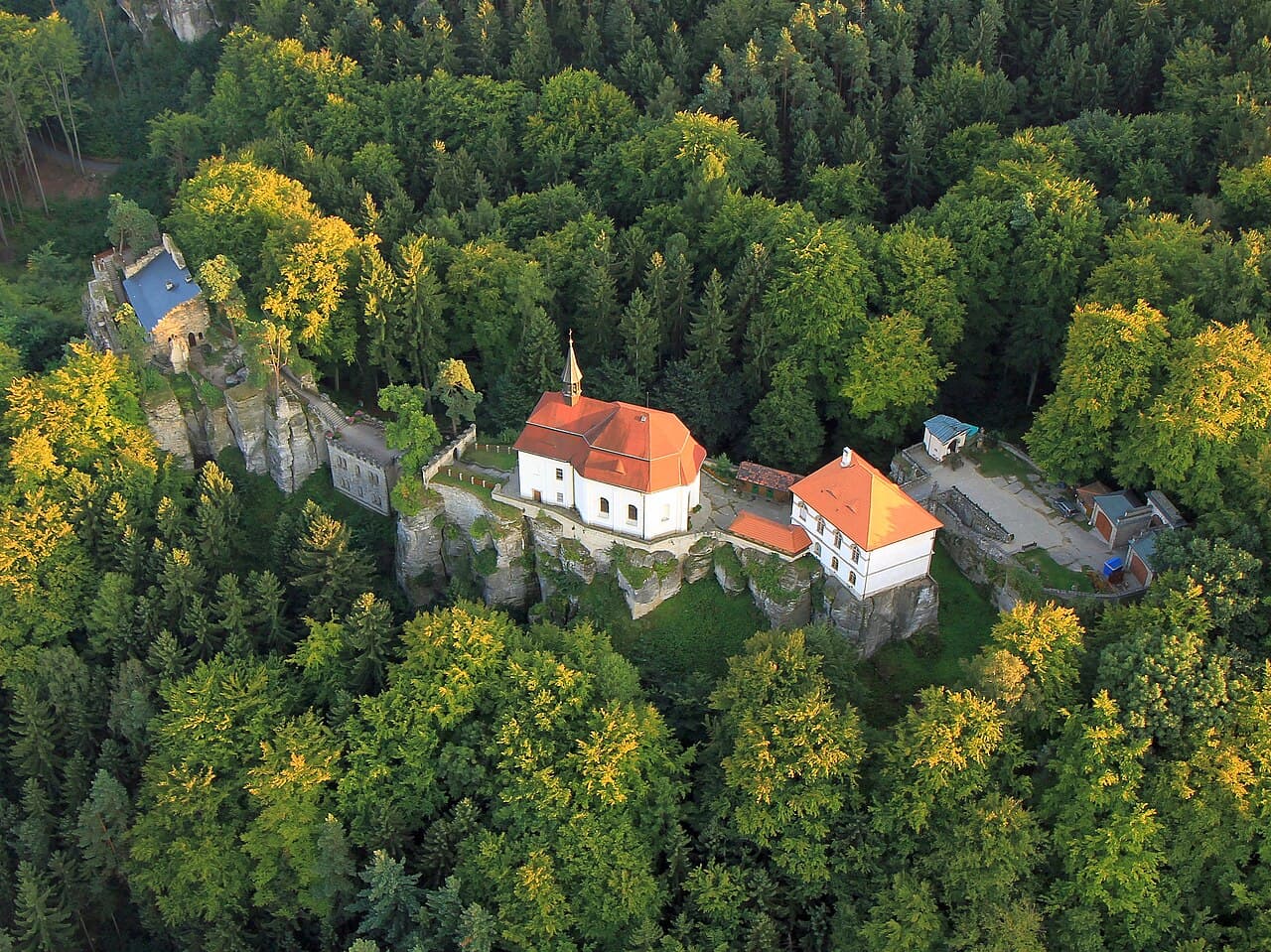
In the late 17th century, the castle's ruins gained new spiritual significance. Starting in 1694, Václav Karel Holan Rovenský, a Baroque composer and former organist from Prague, lived as a hermit within the ruins. His presence attracted pilgrims, transforming the site into a religious destination. In 1722, the Waldstein family constructed a pilgrimage church dedicated to St. John of Nepomuk on the castle's first courtyard, marking a shift from military to religious use.

Baroque chapels and statuary

The Baroque period saw the addition of several religious structures and artistic elements. Two stone bridges adorned with sandstone statues of Bohemian saints connected key parts of the site. A chapel dedicated to St. John the Baptist was erected in 1817, further enriching the sacred atmosphere. The original Baroque statues, crafted by the Jelínek brothers between 1725 and 1735, are preserved inside the chapel, with faithful copies displayed outdoors to maintain historical authenticity.

19th-century neo-gothic restoration and architectural layering

Between 1824 and 1843, the Aehrenthal family undertook a significant restoration project in the neo-Gothic style, characteristic of 19th-century historicism. This effort integrated the medieval ruins with newly built structures, blending Gothic revival elements with the existing Baroque chapels. A stone entrance gate featuring statues was constructed in 1836, enhancing the castle's monumental presence. The restoration included a main residential building designed in a classical style and preserved palace remnants, creating a complex architectural narrative that reflects centuries of evolving tastes and functions.

Architectural features and natural setting

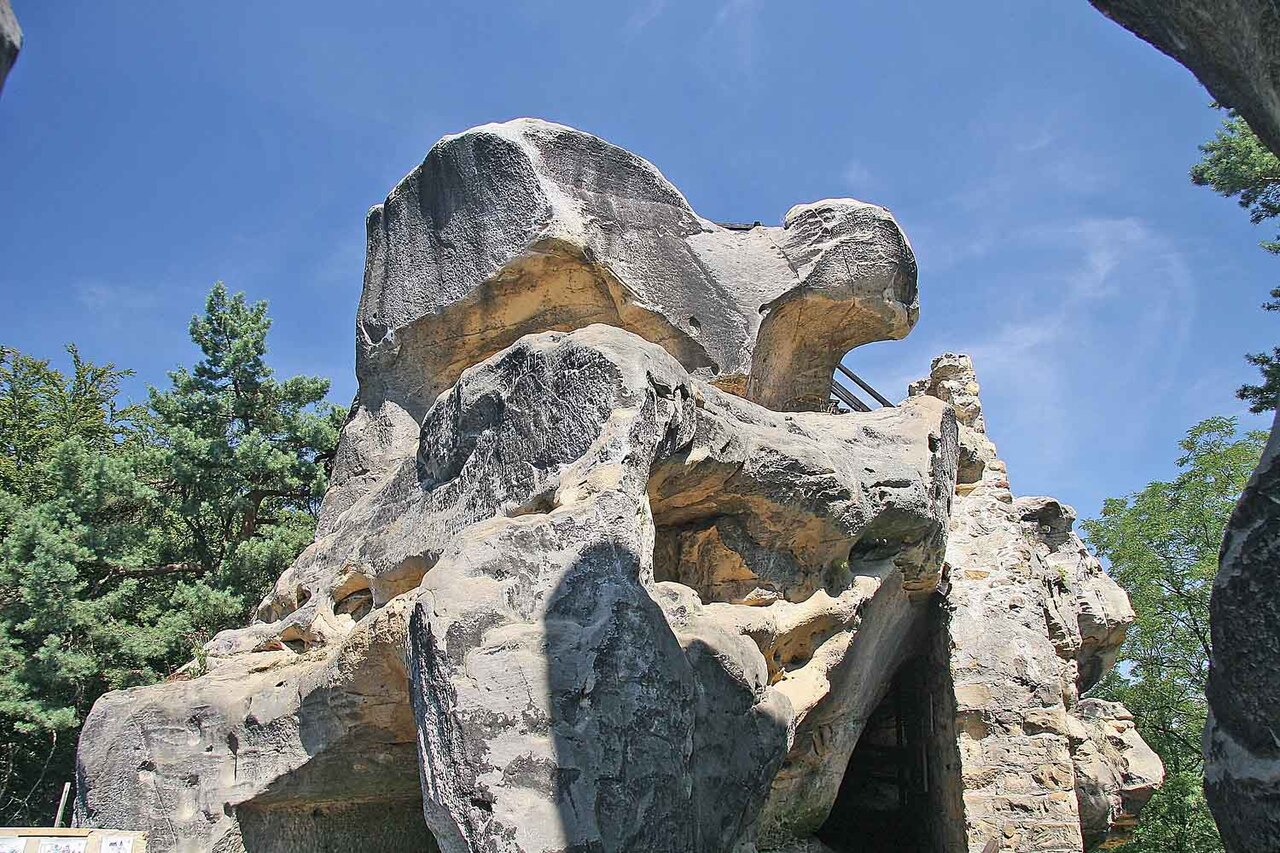
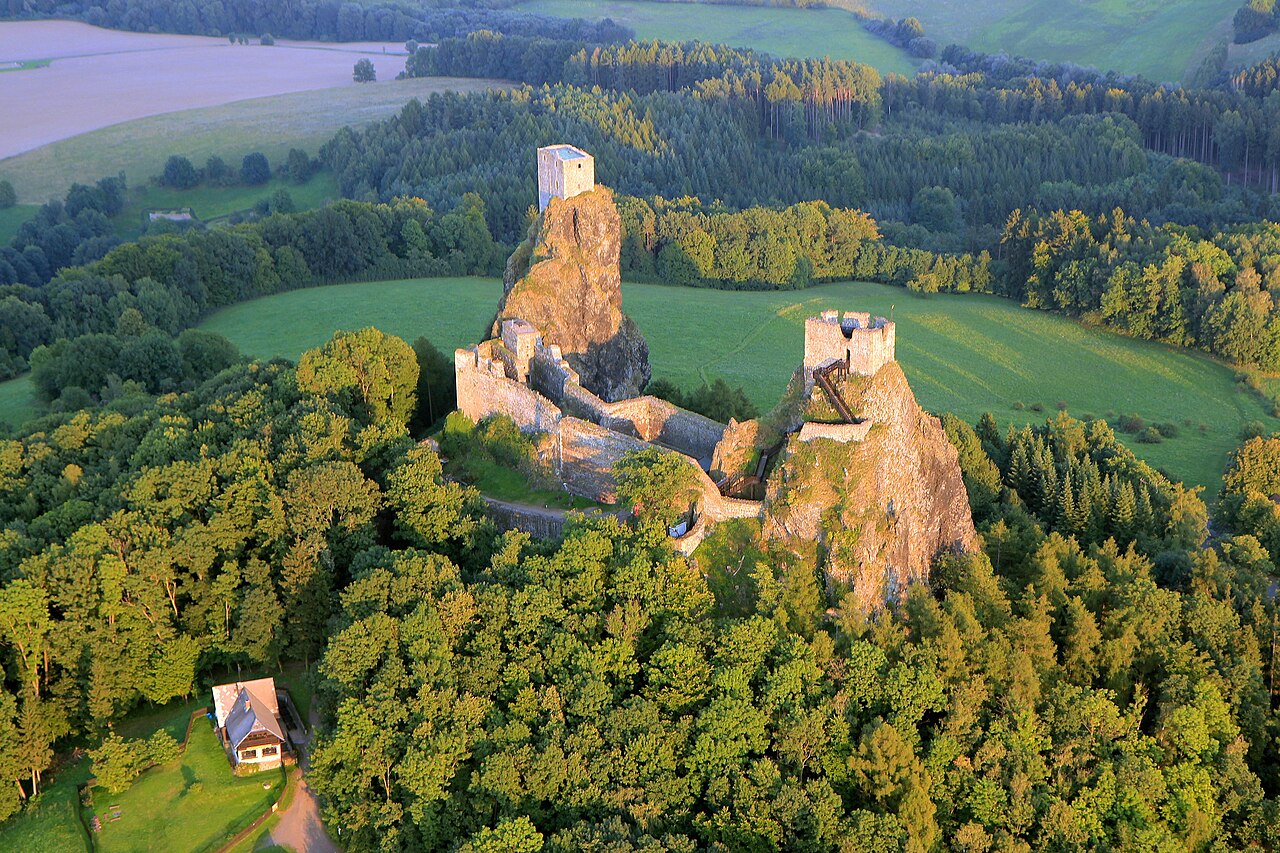
Valdštejn Castle is uniquely situated on three sandstone rock formations connected by wooden bridges. This layout maximizes natural defenses by utilizing the vertical cliffs and a deep ditch carved into the terrain. The castle's original Gothic features included a donjon, serving as the strongest defensive tower, and a wooden watchtower for surveillance. Vaulted cellars carved into the living rock beneath the fortress provided secure storage and shelter.

The castle ruins are surrounded by a wooded area on three sides and stand approximately 389 meters above sea level, with a dramatic vertical drop of about 90 meters. Its proximity to the Hruboskalsko nature reserve makes it accessible via hiking trails from Turnov, linking historical exploration with natural beauty.

Cultural heritage and current status

Since 1945, the ruins of Valdštejn Castle have been owned by the town of Turnov. Today, they represent an important cultural and historical landmark in the region, attracting visitors interested in medieval architecture, Baroque religious art, and Bohemian history. The site offers a rich tapestry of architectural styles, from Gothic fortifications to Baroque chapels and 19th-century neo-Gothic restorations, embodying the layered history of Central Europe.

Visitors can explore the castle's remains, including the donjon, vaulted cellars, chapels, and statues, while enjoying panoramic views of the surrounding landscape. The castle's transformation from a medieval fortress to a spiritual pilgrimage site and later a historic monument reflects broader historical currents in Czechia and the Bohemian region.

Frequently asked questions (FAQ)

How do I get to Valdštejn Castle from Turnov?
Valdštejn Castle is accessible by several hiking trails starting from Turnov, offering scenic routes through the surrounding forests and natural reserves. The hike is moderately challenging and well-marked, making it a popular day trip for visitors.
What is the historical significance of Valdštejn Castle?
Valdštejn Castle was a key medieval fortress established by the Waldstein family in the 13th century and played an important role during the Hussite Wars. Its later transformation into a Baroque pilgrimage site adds to its cultural and historical importance.
Can I visit the interior of Valdštejn Castle?
The castle is mostly in ruins, but visitors can explore the remains of the donjon, vaulted cellars, and Baroque chapels. There are no fully restored interiors, but the site offers informative signage and panoramic views.
When is the best time to visit Valdštejn Castle?
The best time to visit is during late spring to early autumn when the weather is favorable for hiking and outdoor exploration. The surrounding nature reserve is especially beautiful during these months.
Is there an entrance fee to Valdštejn Castle?
No, visiting Valdštejn Castle is free of charge. The site is open year-round and accessible to the public without an entrance fee.

Photo gallery

Valdštejn Castle
Click to view

Photo by Zdeněk Fiedler•CC BY-SA 3.0

1 photo • Click any image to view in full screen

Information

Hill Castle

Opening hours

Open year-round, accessible via hiking trails

Ticket prices

Free

Current owner

Town of Turnov

Sources & official resources

Verify the information above using these authoritative references.

Loading map...

Visitor reviews

No reviews yet. Been here? Write the first review and help other travelers!

Write the first review

Visited this castle? Share your experience

Your review helps other travelers and adds first-hand knowledge to our encyclopedia.
Write a review

(5/5)

0/2000 characters

Your review will be visible after admin approval

Nearby castles

4.1 km
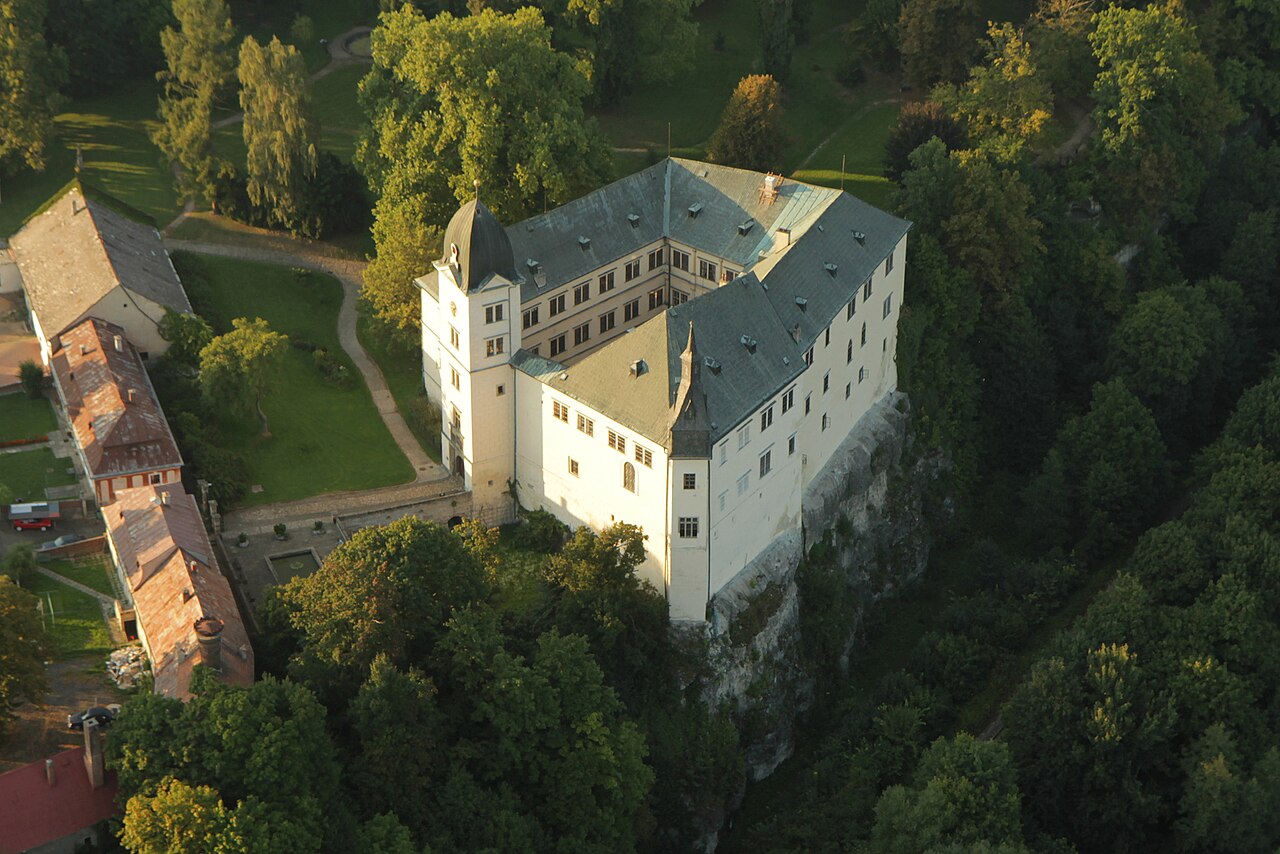
Hrubý Rohozec Castle — Czech Republic castle

Hrubý Rohozec Castle

Turnov, Czech Republic

Hrubý Rohozec castle is a striking historic fortress located in Turnov, Czechia, perched prominently on a rocky outcrop overlooking the Jizera River valley. Founded around 1280 by the noble Markvartic family, this hill castle has evolved over centuries, reflecting the architectural and cultural shifts of Bohemia from the High Medieval period through the Renaissance and Baroque eras to the 19th century. Its commanding position was originally chosen to monitor an important trade route below, underscoring its strategic military and economic significance. The castle's initial construction centered around a polygonal defensive tower connected by robust walls, forming a fortified complex typical of High Medieval fortresses. Over time, Gothic palaces were added by owners such as Jan von Šelmberk and Konrad Kraiger Kraigk in the 14th century, expanding the castle’s residential and administrative functions. The Renaissance transformation under the Wartenberg family introduced chateau-style elements, including open arcades and decorative sgraffito facades, blending defense with noble comfort. Ownership changes throughout its history mirror the turbulent political landscape of Bohemia. After being seized by King Wenceslaus IV in the late 14th century due to regional conflicts, it later became royal property before passing to the Michalovice lords during the Hussite Wars. The castle survived this era without recorded damage, a testament to its fortifications and strategic importance. In the 16th century, significant rebuilding under Jan of Šelmberk, Kunrát Krajíř of Krajk, and later Karel of Vartenberk raised the castle's stature both physically and architecturally, shaping much of the present-day layout. Architectural evolution and features Medieval foundations and gothic additions The original medieval core included two main towers: a square northern tower likely serving as a bergfried for defense and observation, and a southeastern residential donjon with multiple rooms. These towers were integral to the castle's defense system and were later lowered but preserved within the structure during renovations. The polygonal tower and connecting walls formed a strong defensive perimeter. During the late 15th and early 16th centuries, the castle underwent a significant late Gothic reconstruction. This included the addition of the eastern palace wing and relocation of the main gate from the northern tower to the southern side, improving access and security. The courtyard was expanded and leveled, with a western palace wing added. A slender square tower above the entrance gate bears a heraldic plaque featuring the coats of arms of the Krajíř and Šelmberk families, dated 1516, marking this phase of development. Renaissance and baroque transformations In the 16th century, the Vartenberk family’s influence brought Renaissance architectural elements, notably raising the castle’s height and integrating the original Gothic tower into a new eastern palace. Open arcades and sgraffito decorations adorned the facades, blending aesthetic refinement with functional design. The early Baroque period saw further additions under the Desfours family, who acquired the castle after the Battle of White Mountain in 1620. Albrecht Maximilian Desfours initiated the construction of a two-story Baroque chapel dedicated to the Holy Trinity in 1675 within the southern palace. This chapel features a richly decorated altar depicting the Coronation of the Virgin Mary, a vaulted oriel window, and a two-story gallery housing mid-18th-century organs, maintaining its ceremonial and musical functions to this day. 19th-century renovations and interior design The 19th century brought Classicist and Romantic influences, particularly after 1822 when architect Jan Filip Joendl contributed to the castle’s interior design. Wooden galleries were replaced with interior corridors, some arcades were bricked up, and the eastern tower’s top floor was lowered. The dining room was furnished with neo-Gothic decorations, adding a historicist flair that complemented the castle’s layered architectural narrative. Historical significance and ownership Medieval and early modern history Hrubý Rohozec’s history is deeply intertwined with Bohemia’s noble families and political upheavals. Founded by the Markvartic family, it later passed to Markvart of Vartenberk, whose conflicts with Lusatian neighbors led to royal confiscation by King Wenceslaus IV. The castle then became royal property until granted to the lords of Michalovice amid the Hussite Wars. Its survival through this period without damage is notable given the widespread destruction in the region. Ownership by Jan Tovačovský of Cimburk and his widow Johanka of Krajk brought Protestant influences, with Johanka supporting the Unity of the Brethren. The Vartenberk family's 16th-century renovations reflected their status and the era’s architectural trends. Desfours family era and modern history Following the Battle of White Mountain, the castle was awarded to Mikuláš Desfours, a soldier of Albrecht von Wallenstein, marking the start of over three centuries of Desfours family stewardship. They enhanced the castle’s Baroque character and maintained it until 1945. Post-World War II confiscation under the Beneš decrees ended private ownership, with restitution claims continuing into the 21st century. Castle grounds and surroundings The castle is surrounded by a small naturalistic park designed in the Romantic style, featuring stonework typical of the period and a castle trail leading to an ancient moat. Walls and fences enclose the grounds, with a western gate near a statue of Saint Barbara providing access. An artificial grotto carved into the eastern rocky promontory offers panoramic views of the valley and the town of Turnov. The castle complex itself consists of three wings enclosing a central courtyard that contains richly decorated rooms such as the chapel, two libraries, a dining hall, the Green Salon, noble apartments, a trophy hall, and a game room. Adjacent agricultural buildings include a former granary and barns, reflecting the castle’s role as a noble estate beyond its military origins. Visiting hrubý rohozec today Today, Hrubý Rohozec castle is open to the public, with several rooms preserved in their original historic condition. Visitors can explore the castle’s library, dining room, bedroom, and the blue room, all furnished with period-appropriate decorations. The chapel remains an active venue for musical performances and ceremonies, enhancing the cultural experience. The castle’s layered history, architectural diversity, and scenic location make it a significant cultural and historical landmark in the Liberec Region. Its preservation offers a window into the noble life of Bohemia across centuries, from medieval fortifications to Renaissance elegance and Baroque grandeur.

High Medieval (11th–13th c.)
Details
5.4 km
Rotštejn Castle — Czech Republic castle

Rotštejn Castle

Turnov, Czech Republic

Rotštejn Castle stands as a remarkable example of a medieval rock castle in the Czech Republic, located near the village of Rotštejn-Turnov. Established in the mid-13th century, this fortress uniquely blends natural sandstone formations with traditional masonry, reflecting the architectural ingenuity of Bohemian noble families during the High Medieval period. Founded by Jaroslav of Hrutwice for his son Vok of Rotštejn shortly after 1250, the castle exemplifies the strategic use of the region's distinctive geology to create defensible living spaces. The origins and historical significance of Rotštejn Castle The castle's foundation by the Markvartic family situates it within the broader context of Bohemian noble power structures in the 13th century. Jaroslav's role as a prominent nobleman and the construction of Rotštejn for his son highlight the familial strategies of territorial control and defense. The connection to the nearby Valdštejn Castle, established by Jaroslav's other son Zdeněk, underscores the intertwined heritage of these fortresses and their importance in regional governance. Throughout the early 14th century, Rotštejn remained under the stewardship of the Rotštejn family, notably under Vok II. This era was characterized by frequent local conflicts, with the castle and its estates enduring raids by neighboring nobles. The significant assault in 1318 by a coalition of 152 nobles marks a turbulent chapter in the castle's history, evidencing its strategic and symbolic importance. Despite such attacks, the Rotštejn family maintained possession well into the mid-14th century, with Ješek of Rotštejn securing imperial privileges from Emperor Charles IV in 1360, including the right to hold weekly markets in Klokočí, which enhanced the castle's economic and administrative role. Rotštejn Castle during the Hussite Wars and decline The early 15th century brought profound changes as ownership shifted to Ondřej or Vaněk Paldra of Vařin around 1415, coinciding with the Hussite Wars. Conflicting accounts suggest the castle may have been captured or damaged by Hussite forces circa 1426, but evidence indicates it remained partially intact, with Vaněk residing nearby in Klokočí after 1430. This resilience amid conflict illustrates the castle's enduring strategic value despite the era's upheavals. Following the wars, natural erosion of the sandstone formations began to undermine the castle's structural integrity. By 1514, contemporary records describe Rotštejn as deserted and dilapidated, with walls collapsed and stones scattered, a state confirmed in 1540. The castle ceased to function as a noble residence or military stronghold, transitioning from a center of feudal power to a ruin shaped by natural forces. Architectural features and the unique rock castle design Rotštejn Castle's construction typifies the rock castle style prevalent in Bohemia, where builders integrated natural sandstone outcrops into the defensive and residential structures. The castle's layout combined carved rock chambers and stone masonry, with defensive elements such as gates, bridges, and bastions harmoniously incorporated into the landscape. Although no complete buildings survive, the remaining fragments of walls and sandstone formations reveal the castle's original spatial configuration. One prominent sandstone rock opposite the accessible area once supported the castle's tower, a critical feature for defense and observation. Nearby, a rock with a natural window formed by erosion likely served as a vantage point or provided light and ventilation to adjacent structures. The presence of a half-timbered guardhouse is inferred from the site layout, though wooden elements have long since disappeared. Preservation efforts and current status Since 1988, a voluntary group named Protection of Klokočské Rocks, led by castellan H. T. Hlubučková, has spearheaded preservation activities to protect the castle ruins and the surrounding natural environment. Wooden walkways and paths have been sensitively installed to allow visitors safe access to the castle summit without damaging the fragile sandstone formations or remaining masonry. Today, Rotštejn Castle serves not only as a historical monument but also as an educational site within the Klokočské Rocks nature reserve. Its evocative ruins and rock formations offer insight into medieval Bohemian fortification techniques and the interplay between human construction and natural geology. Despite the absence of significant archaeological artifacts, the site remains a compelling testament to the region's medieval heritage and architectural adaptation. The castle’s role in local history and economy The castle's historical role extended beyond military defense to include administrative and economic functions. The market rights granted by Emperor Charles IV in 1360 to Ješek of Rotštejn emphasized the castle's importance in local governance and commerce. The nearby village of Klokočí, benefiting from these market privileges, likely grew in tandem with the castle’s influence. During the 17th century and the Thirty Years’ War, the castle's ruins and exposed rock cavities became shelters for local inhabitants, marking a shift from feudal fortress to community refuge. This adaptive reuse illustrates the dynamic relationship between the castle site and the surrounding population over centuries. Exploring the site today Visitors to Rotštejn Castle can explore the rugged sandstone formations and partial ruins that define the site. The wooden walkways facilitate safe passage through the rocky terrain, allowing close observation of the castle's unique integration with its natural environment. Interpretive signage and educational programs provide context about the castle’s history, architecture, and the ecological significance of the Klokočské Rocks. While the castle no longer stands as a complete structure, its remains offer a vivid glimpse into medieval castle construction adapted to challenging geological conditions. The site attracts historians, architects, and nature enthusiasts interested in the intersection of cultural heritage and natural landscapes.

High Medieval (11th–13th c.)
Details
6.8 km
Trosky Castle — Czech Republic castle

Trosky Castle

Troskovice, Czech Republic

Trosky Castle is an extraordinary medieval fortress uniquely perched atop two prominent basalt volcanic plugs in the Bohemian Paradise region of Czechia. Constructed in the 14th century, this hill castle is renowned for its striking silhouette formed by twin towers named Baba (Crone) and Panna (Maiden), which rise dramatically from the rugged volcanic rock formations. The castle’s dramatic location and distinctive architecture have made it a symbol of the region and a popular destination for visitors interested in medieval history and castle architecture. The castle was founded by Čeněk of Wartenberg in the latter half of the 14th century. Its construction capitalized on the natural defensive advantages of the volcanic plugs, with two major towers built atop separate peaks—Baba on the lower 47-meter outcrop and Panna on the higher 57-meter peak. Between these towers, a complex of residential buildings, palaces, and defensive structures was erected, all enclosed within three concentric rings of fortified walls. This strategic design provided formidable defense and residential functionality, making Trosky a stronghold of significant military and noble importance during the Late Medieval period. Historical significance and ownership through the centuries After its establishment, Trosky Castle passed through various hands, reflecting the turbulent political landscape of medieval Bohemia. Initially owned by Čeněk of Wartenberg, the castle became royal property under King Wenceslaus IV in the early 1390s. It was then acquired by Otto III of Bergau and later passed to his son Otto IV of Bergau, who is infamous for raiding the nearby Opatovice monastery and hiding its treasures within the castle’s underground chambers. During the Hussite Wars in the 15th century, Trosky served as a staunch pro-Catholic fortress and resisted multiple sieges, including attacks in 1424, 1428, and 1469. Despite its resilience, the castle was eventually captured in 1469 by forces loyal to King George of Poděbrady. Following this period, the castle’s role as a noble residence diminished, and it was managed more as an administrative estate. The Thirty Years’ War brought further destruction when the castle was burned down by the Imperial Army in 1648. This event marked the beginning of its decline into ruin. Ownership passed through notable noble families, including the Wallenstein family, before being sold in the early 19th century to Jan Lexa of Aehrenthal, who initiated romantic-era restoration efforts, such as the unfinished staircase to the Panna tower. Today, Trosky Castle is a protected national cultural monument of the Czech Republic, reflecting its importance as a historical, architectural, and geological landmark. It also features in popular culture, notably in the video game Kingdom Come: Deliverance II, set during the early 15th century. Architectural features and layout The twin towers: baba and panna The castle’s most distinctive features are its two towers, each perched on separate volcanic plugs. The Baba tower is a hexagonal, two-storey structure standing 47 meters above the surrounding terrain. Inside, it is divided into four chambers with large windows that maximize natural light. The entrance on the northern side leads into an antechamber, connecting the internal rooms. The Panna tower, located on the higher 57-meter peak, is a roughly square, four-sided tower. It originally featured a pointed arch entrance on the western side at the first-floor level. The tower was extended eastward over time, with residential quarters on the first floor. Many of the current window shapes are results of 20th-century restoration efforts aimed at stabilizing the structure. Castle core and fortifications Between the two towers lies the castle core, which housed two palaces and various residential buildings. The eastern entrance led into this core area, which included a large two-room palace with living quarters on the upper floors. The central courtyard was the highest point of the core, while on the western side, a smaller wooden palace contained rooms including a smithy that remained operational until the 17th century. The entire complex was protected by three rings of curtain walls, measuring 1.5 to 2 meters thick and up to 15 meters high. The northern forecourt contained economic buildings and a furnace, indicating metallurgical activities close to the main gate. Notably, the castle’s gatehouses were not supplemented by moats or ditches, relying instead on the natural defensive advantage of the volcanic rock formations. Geological and preservation aspects The castle’s foundation on two volcanic plugs is a rare geological feature that contributes to its dramatic appearance and defensive strength. The basalt rocks exhibit characteristic columnar jointing, a pattern of vertical cracks formed by cooling lava, and have endured centuries of weathering, including frost damage and erosion. Restoration efforts in the 20th and 21st centuries have focused on stabilizing the volcanic rock bases and the masonry remains. These efforts have included the installation of staircases and observation platforms, improving visitor access to the Baba and Panna towers. The preservation work ensures that the castle’s ruins remain safe and accessible while maintaining their historical and geological integrity. Cultural importance and tourism Trosky Castle is a symbol of the Bohemian Paradise and features prominently in Czech cultural heritage. Its distinctive silhouette is often used in regional branding and tourism promotion. The castle attracts visitors interested in medieval architecture, history, and natural landscapes. Visitors can explore the ruins, climb the towers, and enjoy panoramic views of the surrounding countryside. The site is equipped with interpretive signage and pathways to enhance the visitor experience. Seasonal events and guided tours further enrich understanding of the castle’s historical context and architectural features. As a national cultural monument, Trosky Castle is protected under Czech law, ensuring ongoing conservation and responsible tourism management. Its combination of historical significance, unique geology, and scenic beauty make it a must-visit destination for castle enthusiasts and travelers to Czechia.

Late Medieval (14th–15th c.)
Details