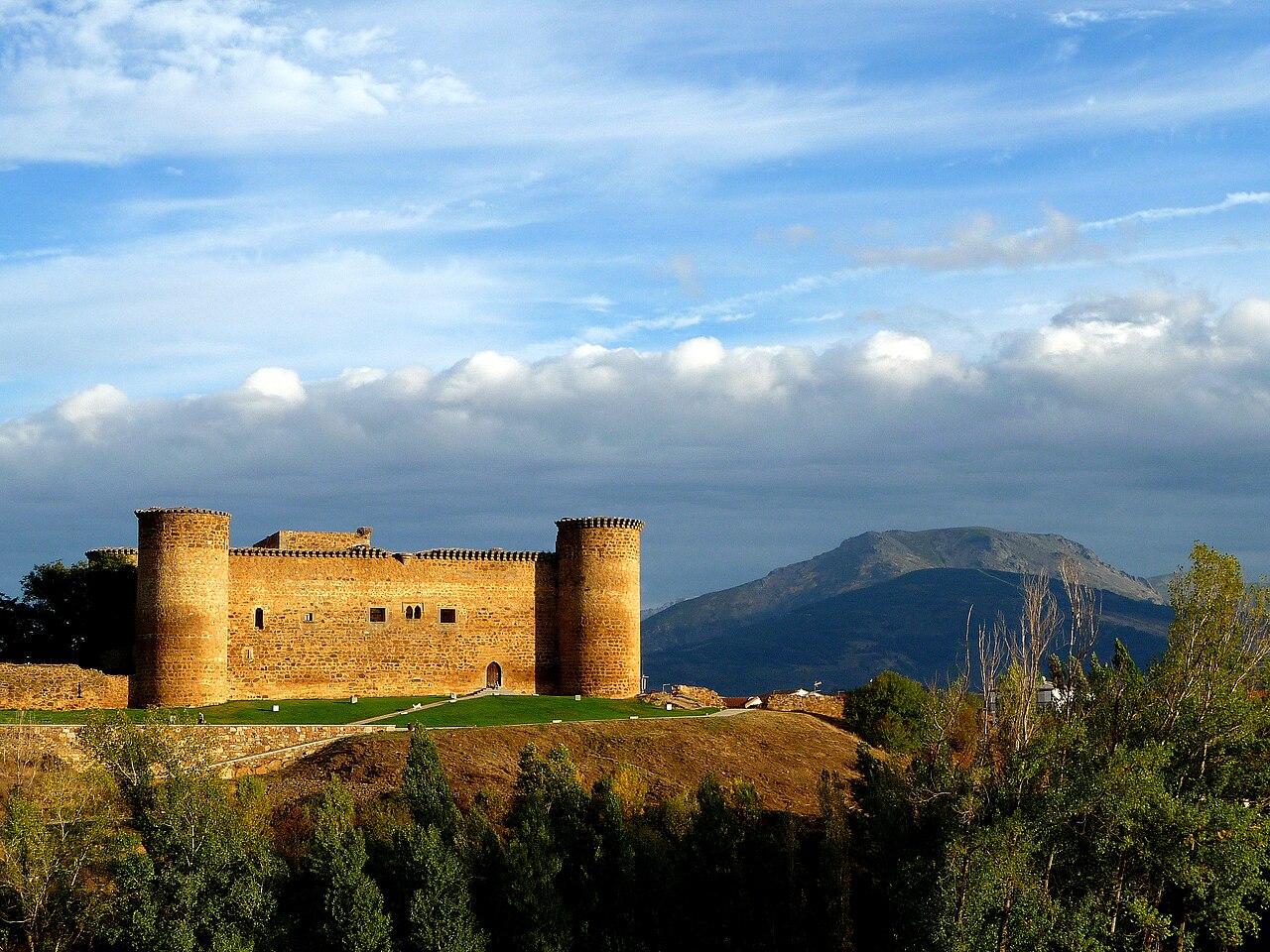
Puente del Congosto Castle
Puente del Congosto Castle is a notable medieval fortress located in the village of Puente del Congosto, within the province of Salamanca, Spain. This castle occupies a strategic position on the western bank of the Tormes river, commanding the historic bridge that crosses the river—an important crossing point that gave the castle its name, as "puente" means "bridge" in Spanish. The bridge was a vital link on a medieval cattle trade route connecting southern Salamanca with western Ávila, making the castle a key defensive and economic stronghold during the High Medieval period.
The castle's location allowed its owners to control and collect tolls from those crossing the bridge, providing a significant source of income. This economic importance contributed to the castle's development and fortification over time, reflecting the changing needs of defense and administration in the region.
Architectural features and layout
Puente del Congosto Castle consists of two main components: an outer enclosure and an inner fortification dominated by a large rectangular keep with a secondary tower attached to it. The outer enclosure is an irregular hexagonal shape, constructed primarily of rubblework and reinforced at its corners with granite ashlars, a typical defensive technique to strengthen vulnerable points.
The western curtain wall of this outer enclosure was considered particularly vulnerable and was therefore reinforced with a small central tower. The castle's main entrance is located on the northern wall, protected by an additional defensive wall, while a postern gate on the eastern wall at a higher elevation provided a secondary exit or access point.
The keep is architecturally significant, composed of two large halls featuring brick vaults supported by arches made of ashlar masonry. The lower hall includes the entrance to a spiral staircase embedded in the western wall, which leads to the upper hall. A small window in the eastern wall allows light into the space. Originally, the top of the keep was crenelated, providing battlements for defenders.
The attached second tower has ground floor access from the courtyard, but the upper floors are only reachable via a wall staircase from the keep, indicating a design focused on controlled movement and defense within the castle complex.
Historical context and ownership
The origins of Puente del Congosto Castle date back to the 12th and 13th centuries, built primarily for defensive purposes to control the route connecting Ciudad Rodrigo with Ávila. The castle's strategic importance is underscored by its mention in 1212 as "Las Torres del Congosto" (The Towers of the Congosto), although it is unclear whether this referred specifically to the castle or to the medieval bridge's watchtowers.
In 1393, King Enrique III granted the manor of Puente del Congosto to Gil González Dávila, who undertook significant rebuilding of the castle, transforming it into a Posada Real (royal inn or lodging). Later, in 1456, the powerful Alba family acquired the castle from Doña Aldonza de Guzmán, widow of Gil González Dávila, likely adding the outer enclosure to protect the existing keep and solidify their control over the bridge and surrounding territory.
Further enhancements occurred in 1539 when the Duke of Alba purchased the castle from Emperor Carlos. The addition of a large cubic tower to the rectangular keep is a distinctive feature from this period, adding uniqueness to the castle's silhouette and defensive capabilities.
Strategic importance and economic role
The castle's position overlooking the Tormes river gorge was critical for controlling movement along the trade route and for military defense. The bridge it guarded was a key crossing for cattle drives and other commerce between Salamanca and Ávila provinces. Collecting tolls on this bridge was a lucrative activity for the castle's owners, making it a focal point of regional power and wealth.
Its fortifications, including the outer enclosure and keep, were designed to withstand attacks and protect the bridge from hostile forces, ensuring the safety of trade and travel in the area.
Current condition and accessibility
Puente del Congosto Castle remains in a good state of conservation, retaining much of its medieval structure and defensive features. The outer enclosure and inner keep are largely intact, allowing visitors to appreciate the castle's original defensive design and architectural details such as the brick vaults and granite reinforcements.
The castle's setting next to the dramatic gorge of the Tormes river adds to its visual appeal and historical atmosphere. However, the castle is currently not accessible to the public, and part of the castle grounds has been repurposed as a graveyard, which limits visitor access and exploration.
Architectural significance and style
The castle exemplifies High Medieval military architecture with its combination of a strong keep and an outer defensive wall. The use of rubblework with granite ashlars for reinforcement is typical of the region and period, providing both strength and durability. The brick vaulted halls supported by ashlar arches inside the keep demonstrate advanced masonry techniques of the time.
The castle's design reflects the evolution of fortifications during the Middle Ages, adapting to the needs of controlling strategic routes and economic resources. The addition of the secondary tower and reinforced curtain walls highlights the emphasis on layered defense.
Legacy and cultural importance
While Puente del Congosto Castle may not be as widely known as some larger Spanish fortresses, it holds significant historical and architectural value. Its connection to prominent noble families such as the Alba family and its role in controlling a key trade route underscore its importance in the medieval history of Salamanca and Castile.
The castle’s preservation offers insight into the military strategies and architectural practices of the 12th to 16th centuries in Spain. Its dramatic location beside the Tormes river gorge continues to draw interest from historians and castle enthusiasts alike.
Frequently asked questions (FAQ)
- When was Puente del Congosto Castle originally built?
- Puente del Congosto Castle was originally constructed in the 12th century during the High Medieval period to control an important trade route.
- What architectural features distinguish Puente del Congosto Castle?
- The castle features a large rectangular keep with brick vaulted halls, an irregular hexagonal outer enclosure reinforced with granite ashlars, and a secondary tower attached to the keep.
- Is Puente del Congosto Castle open to visitors?
- Currently, Puente del Congosto Castle is not accessible to the public, and part of its grounds is used as a graveyard, limiting visitor access.
- What was the strategic importance of Puente del Congosto Castle?
- The castle controlled a crucial bridge over the Tormes river on a medieval cattle trade route, allowing its owners to collect tolls and defend the region.
- Which noble family owned Puente del Congosto Castle in the 15th century?
- The Alba family acquired the castle in 1456 and likely added the outer enclosure to protect the keep and assert control over the bridge.
Information
Address
Calle Castillo, Puente del Congosto, Salamanca, Spain
Loading map...
Visitor reviews
No reviews yet. Been here? Write the first review and help other travelers!
Write the first reviewVisited this castle? Share your experience
Your review helps other travelers and adds first-hand knowledge to our encyclopedia.