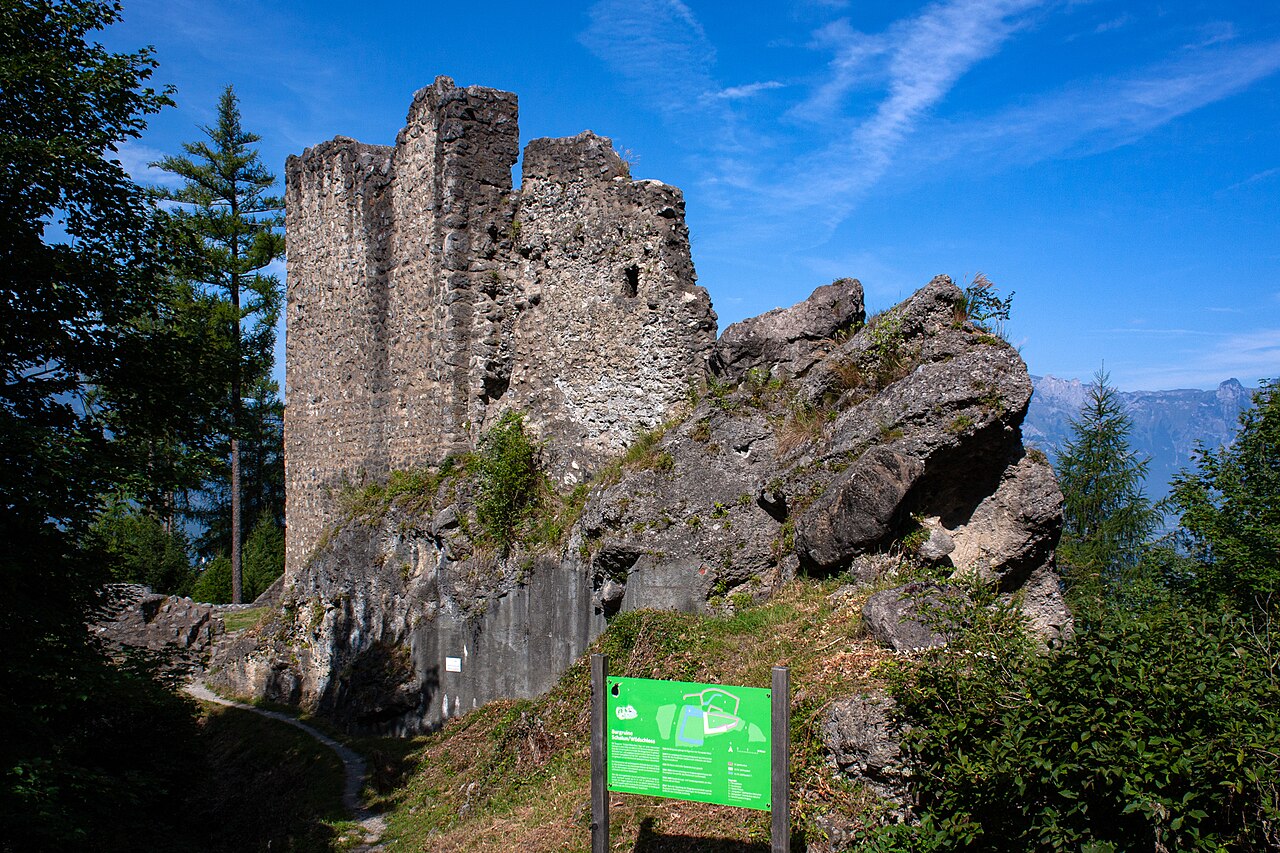
Vaduz Castle
Vaduz Castle stands prominently as the emblematic fortress of the Principality of Liechtenstein, perched on a rocky terrace approximately 570 meters above sea level, overlooking the capital city of Vaduz. Dating back to the 12th century, it is one of the oldest and most historically significant structures in the country. The castle's commanding presence and rich heritage symbolize the sovereignty and cultural identity of Liechtenstein, serving as the official residence of the ruling princely family since 1938.
Early origins and medieval architecture
The foundation of Vaduz Castle is the bergfried or keep, a massive tower constructed in the 12th century. This central tower, measuring approximately 12 by 13 meters with walls up to 4 meters thick at the base, reflects the defensive priorities of medieval fortifications. Its original entrance, positioned 11 meters above the courtyard, was designed to hinder direct assaults. The oldest surviving sections of the castle are mainly located on the eastern side of the complex.
Initially built and owned by the Counts of Werdenberg-Sargans, the castle was first documented in 1322 when Court Rudolf von Werdenberg-Sargans pledged it to Ulrich von Matsch. Over the following centuries, the castle underwent expansions and fortifications, particularly under the ownership of the Barons of Brandis (1416–1507) and the Counts of Sulz (1507–1613).
Significant historical events and expansions
The castle suffered significant damage during the Swabian War of 1499 when it was burned by the Swiss Confederacy. This event prompted restoration and strengthening efforts. Between 1529 and 1532, the Round Tower, one of the castle's two rondelles, was constructed to improve artillery defenses. In the early 17th century, Count Kaspar von Hohenems expanded the western side of the castle (1613–1640), adding both residential and defensive features that shaped much of the castle's present-day appearance.
In 1712, the castle became part of the holdings of the Princes of Liechtenstein following their acquisition of the countship of Vaduz. This acquisition was a strategic move during the reign of Charles VI, Holy Roman Emperor, who united the countship with the Lordship of Schellenberg to establish the modern Principality of Liechtenstein. The castle served as the administrative center for the local vogtei (bailiwick) until it gradually fell into disrepair in subsequent centuries.
Restoration and modern use
Extensive restoration took place from 1905 to 1912 under Prince Johann II, guided by architectural plans from Egon Rheinberger and supervision by conservator Franz von Wieser and architect Alois Gstrein. Further renovations in the 1920s and early 1930s under Prince Franz Joseph II transformed the castle into a comfortable princely residence. Since 1938, Vaduz Castle has been the permanent home of the Princely Family and remains a private residence.
Though not open to the public, the castle's exterior can be admired from Vaduz, offering panoramic views of the town and the surrounding Alpine landscape. A short film narrated by the reigning prince is shown at the Princely Theatre in Vaduz, providing visitors a glimpse inside the castle's interior.
Architectural features and layout
The castle complex includes a central keep, curtain walls with battlements, two round bastions known as rondelles, an outer ward or zwinger, a drawbridge, and a defensive neck ditch. Positioned on a steep hillside, the western slope provides natural defense, while the eastern side's flatter terrain allowed for expansions and residential buildings.
The chapel of St. Anne, located on the ground floor of the south wing, dates from the Middle Ages and contains a late Gothic winged altar depicting saints and martyrdom scenes. This chapel remains a private place of worship for the princely family. The castle's interiors feature restorations in Gothic and Renaissance styles, reflecting the periods of its significant renovations.
The rondelles, with walls up to five meters thick, served as artillery bastions and living quarters. The grounds also include a courtyard, gardens, and a former orchard or baumgarten, contributing to the estate’s historic ambiance.
Cultural significance and contemporary role
Vaduz Castle is among the few European castles still serving as the residence of a reigning head of state. Its ongoing role as the princely home symbolizes the continuity of Liechtenstein's monarchy and national identity. The castle also hosts ceremonial functions during national events, such as the annual national holiday on August 15, when state celebrations take place on its grounds.
Though inaccessible to visitors, the castle’s silhouette dominates the Vaduz skyline and attracts tourists. Its preservation and current use illustrate the unique blend of medieval heritage and modern sovereignty in this small Alpine principality.
Frequently asked questions (FAQ)
- What is Vaduz Castle?
- Vaduz Castle is the official residence of the Prince of Liechtenstein and a prominent historical landmark in the capital city of Vaduz. It was first mentioned in historical records in 1322 and has undergone several renovations over the centuries, showcasing a blend of architectural styles.
- When was Vaduz Castle built?
- The origins of Vaduz Castle date back to the early 13th century, with construction believed to have started around 1200. The castle has been expanded and modified over the years, reflecting the evolving architectural trends of each era.
- Can I visit Vaduz Castle?
- While Vaduz Castle itself is not open to the public for tours, visitors can explore the castle grounds and enjoy panoramic views of Vaduz and the surrounding areas. The castle is often photographed and admired from various points in the city.
- What are the opening hours of Vaduz Castle?
- Vaduz Castle can be viewed from the outside at any time, as the grounds are accessible year-round. However, specific events and the interior may occasionally be open to visitors during special occasions or guided tours, so it's best to check in advance.
- Is it possible to take photographs at Vaduz Castle?
- Yes, visitors are welcome to take photographs of Vaduz Castle from the surrounding areas. The castle's stunning architecture and picturesque setting make it a popular subject for both amateur and professional photographers.
- What is the best time to visit Vaduz Castle?
- The best time to visit Vaduz Castle is during the spring and fall months when the weather is mild and the scenery is particularly beautiful. Summer can be crowded with tourists, while winter offers a serene, snowy backdrop for the castle.
- Are there any nearby attractions to visit?
- Yes, nearby attractions include the Liechtenstein National Museum and the Vaduz Cathedral, both of which are within walking distance. Additionally, you can explore the scenic hiking trails that offer stunning views of the castle and the surrounding countryside.
- What are the ticket prices for visiting Vaduz Castle?
- There are no ticket prices for visiting Vaduz Castle, as the grounds are free to access. However, if you plan to attend special events or guided tours, there may be associated costs, so it's advisable to check the official website for details.
- How do I get to Vaduz Castle?
- Vaduz Castle is easily accessible by foot from the center of Vaduz, with well-marked walking paths leading up to the castle. Public transportation is also available, with buses connecting the castle to nearby towns and cities in Liechtenstein.
Information
Sources & official resources
Verify the information above using these authoritative references.
Loading map...
Visitor reviews
No reviews yet. Been here? Write the first review and help other travelers!
Write the first reviewVisited this castle? Share your experience
Your review helps other travelers and adds first-hand knowledge to our encyclopedia.