Schalun Castle Ruins
Schalun Castle, also known as Wildschloss, is a significant medieval ruin located near Vaduz, the capital of Liechtenstein. Constructed probably during the second half of the 12th century or around the turn of the century, this high medieval fortress stands as a testament to the region's feudal history and architectural heritage. The castle's first documented mention dates back to 1237, when it was referred to by the name "Schalun". Its strategic location on a hillside provided defensive advantages typical of hill castles of that era.
Historical background and significance
The origins of Schalun Castle lie in the turbulent medieval period when local lords constructed fortifications to assert control over their territories. The castle likely served as a residence and stronghold for noble families overseeing the surrounding lands. Over time, it played a role in regional defense and administration. Archaeological excavations conducted in recent decades have uncovered limited medieval and early modern artifacts, suggesting that the castle was probably cleared and deliberately burned down at some point, a fate not uncommon for castles caught in conflicts or abandoned due to changing political circumstances.
By the 18th century, the castle was no longer inhabited but came into the possession of the Prince Regnant of Liechtenstein, reflecting its continued symbolic importance. In 1933, ownership of the ruins was transferred to the Municipality of Vaduz, ensuring its preservation as a cultural heritage site.
Architectural features and layout
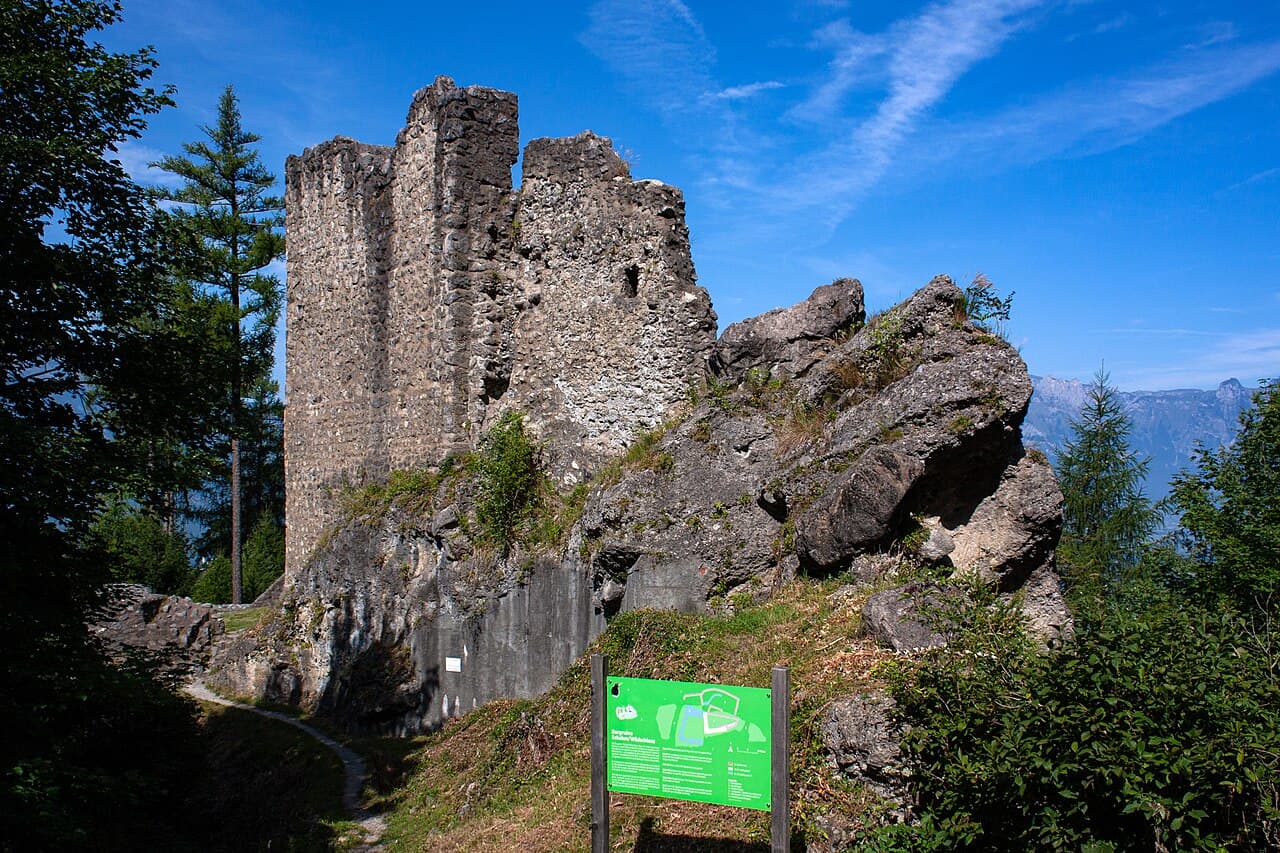
The remaining structures of Schalun Castle provide valuable insights into high medieval castle architecture. Among the best-preserved parts are the grand hall and a substantial section of the keep, which would have served as the fortified residence and last line of defense. The castle's design reflects typical hill castle characteristics, including thick defensive walls, limited access points, and a commanding view over the surrounding landscape.
While much of the castle is now in ruins, the surviving masonry and layout reveal the strategic considerations of medieval builders. The grand hall was likely the center of social and administrative activity, while the keep provided protection during sieges. The castle's elevated position would have allowed defenders to monitor approaching threats and control local trade routes.
Defensive structures
Although detailed records of the castle's full defensive system are scarce, typical features would have included battlements, arrow slits, and possibly a moat or ditch to hinder attackers. The remaining walls suggest a robust fortification designed to withstand assaults common in the high medieval period.
Archaeological investigations and preservation
Excavations at Schalun Castle have been limited but revealing. The small number of artifacts recovered points to a sudden abandonment or destruction, consistent with historical patterns of conflict or strategic demolition. The site has been stabilized to prevent further decay, with efforts focused on preserving the grand hall and keep remains.
The castle's transfer to the Municipality of Vaduz in 1933 marked a turning point in its conservation. Since then, it has been maintained as a protected ruin, accessible to visitors interested in medieval history and castle architecture. Its status as a cultural landmark contributes to Liechtenstein's rich heritage tourism.
Visiting Schalun Castle ruins
Today, visitors to Schalun Castle ruins can explore the evocative remains set against the backdrop of the scenic Vaduz hills. The site offers a glimpse into medieval fortification techniques and the lifestyle of the nobility in the region. While the ruins are partially preserved, they allow for an immersive historical experience.
Access to the ruins is typically via hiking trails from Vaduz, making it a popular destination for tourists and locals alike who appreciate history and nature. Informational signage at the site provides context about the castle's history and architecture, enhancing the visitor experience.
Nearby attractions
Visitors often combine a trip to Schalun Castle with visits to other notable sites in Vaduz, such as Vaduz Castle, the official residence of the Prince of Liechtenstein, and the Liechtenstein National Museum. This makes the area a rich cultural hub for those interested in the principality's history.
Frequently asked questions (FAQ)
- How do I get to Schalun Castle Ruins?
- Schalun Castle Ruins is located just a short hike from Vaduz, the capital of Liechtenstein. You can reach the castle by following marked trails starting from the center of Vaduz, which take about 30 to 40 minutes on foot. Public transportation options are available to get you to Vaduz, making it accessible for visitors.
- What is the historical significance of Schalun Castle Ruins?
- Schalun Castle, built in the 13th century, holds great historical significance as it was once a fortress for the Counts of Vaduz. It played a key role in the region's defense and governance until it fell into disrepair in the 18th century. Today, the ruins offer insights into medieval architecture and the history of Liechtenstein.
- When was Schalun Castle built?
- Schalun Castle was constructed in the early 13th century, around the year 1250. It served as a strategic military site and residence for noble families in the region. The castle's ruins today provide a glimpse into the architectural styles and construction techniques of the medieval period.
- Can I explore Schalun Castle Ruins on my own?
- Yes, visitors are welcome to explore the Schalun Castle Ruins independently. There are no entrance fees or guided tours, allowing you the freedom to discover the site at your own pace. However, it is advisable to wear appropriate footwear for the hike and navigation around the ruins.
- Why is Schalun Castle Ruins a popular tourist attraction?
- Schalun Castle Ruins is popular among tourists due to its stunning panoramic views of the Rhine Valley and the surrounding mountains. The historical significance and the picturesque hiking trails that lead to the castle add to its allure. Additionally, it offers a peaceful escape from the hustle and bustle of city life.
- Is it possible to visit Schalun Castle Ruins year-round?
- Yes, Schalun Castle Ruins can be visited year-round, although accessibility may vary depending on weather conditions. The hiking trails are generally open throughout the year, but winter snow can make the paths more challenging. It’s best to check local weather forecasts before planning your visit.
- What are the opening hours for Schalun Castle Ruins?
- There are no specific opening hours for Schalun Castle Ruins, as it is an outdoor site accessible at any time. However, visiting during daylight hours is recommended for safety and to fully enjoy the views. Early morning or late afternoon visits can provide a more serene experience.
- Are there any nearby attractions to visit while in Vaduz?
- Yes, while in Vaduz, you can visit the Liechtenstein National Museum, which offers insights into the country's culture and history. The Vaduz Castle, the official residence of the Prince of Liechtenstein, is also nearby and provides additional historical context. These attractions can easily complement your visit to Schalun Castle Ruins.
- What are the ticket prices for Schalun Castle Ruins?
- There are no ticket prices for visiting Schalun Castle Ruins, as it is a free outdoor historical site. Visitors can enjoy the ruins without any admission fees. This makes it an excellent option for budget-conscious travelers looking to explore the history of Liechtenstein.
Photo gallery

Loading map...
Visitor reviews
No reviews yet. Been here? Write the first review and help other travelers!
Write the first reviewVisited this castle? Share your experience
Your review helps other travelers and adds first-hand knowledge to our encyclopedia.