Vadstena Castle
Vadstena Castle stands as a remarkable example of Renaissance architecture in Sweden, located on the serene shores of Lake Vättern in the town of Vadstena. Originally constructed in 1545 under the reign of King Gustav I (Gustav Vasa), the castle was initially designed as a fortress to protect the Swedish heartland and the capital, Stockholm, from southern threats, particularly from Danish forces and unrest in the Småland region. This strategic military installation was part of Gustav Vasa's broader efforts to consolidate power and secure his kingdom following the suppression of the Dacke War, a significant peasant uprising.
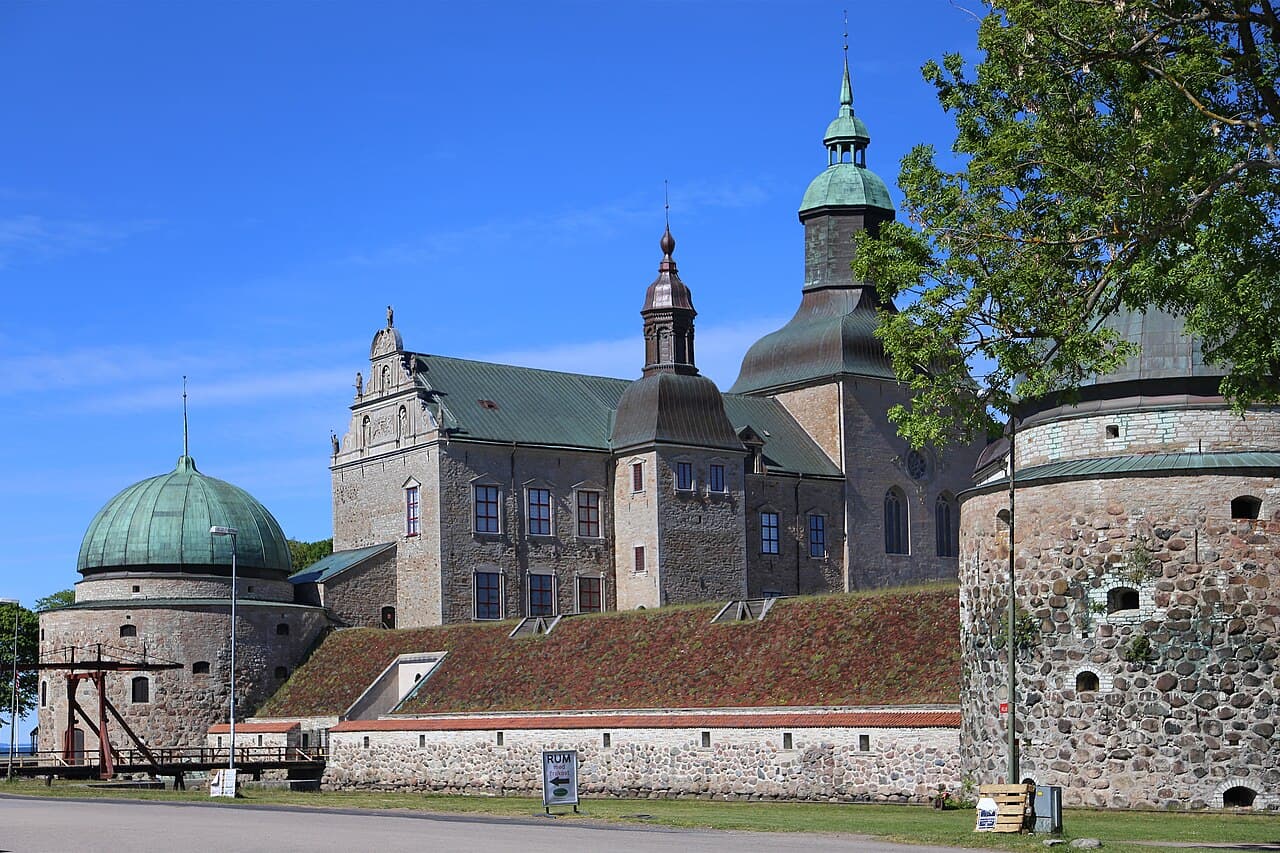
The fortress was built on a naturally defensible site known as Sanden, characterized by surrounding water and marshland, which added to its protective advantages. The original complex consisted of three smaller stone buildings facing the lake, encircled by three wide ramparts approximately 31 meters thick, a moat filled with water from Lake Vättern, and four circular cannon towers at the corners. These fortifications embodied mid-16th-century military architectural principles, blending defensive strength with the emerging Renaissance aesthetic. Over time, the fortress evolved into a more refined royal palace, reflecting the changing political and cultural landscape of Sweden.
Construction and transformation into a renaissance palace
Construction began in 1545, spearheaded by King Gustav I, who envisioned the fortress as a bastion against external threats. The initial phase focused on robust defensive features, including thick stone walls and artillery towers, designed to withstand contemporary siege warfare. By the 1550s, the fortress's military role began to shift as Gustav I's son, Prince Magnus, was granted the duchy of Östergötland and took residence in Vadstena. Magnus's tenure marked the transition from fortress to palace, with significant additions and modifications to accommodate ducal court life.
Prince Magnus, who suffered from mental illness and was the only son of Gustav I not to ascend to the Swedish throne, oversaw the early Renaissance-style enhancements. These included the construction of elegant residential wings and the introduction of decorative elements that softened the fortress's martial character. The castle's layout was adapted to include spacious halls and chambers suitable for noble living and ceremonial functions. Magnus died in 1595 and was buried in the nearby Abbey Church, underscoring the castle's close ties to the religious and cultural institutions of the region.
Completion under the house of vasa
The castle's construction and refinement continued under the reign of Magnus's elder brother, King Johan III. Around the early 1600s, Johan III added a third floor featuring large ceremonial halls and a chapel, completing the castle's transformation into a Renaissance palace. Despite setbacks such as a fire in 1598, the enhancements were finalized by 1620, making Vadstena Castle one of the best-preserved examples of Renaissance architecture in Sweden.
Architectural features and layout
Vadstena Castle exhibits a near-rectangular plan formed by three stone residential wings surrounding a central courtyard. The fortress is anchored by four round bastion towers at each corner, which served as artillery platforms and observation points. The walls, approximately 30 meters long and 3 meters thick, were constructed of durable stone to resist attacks. A moat filled with lake water encircles the castle, enhancing its defensive capabilities. Access was originally controlled by a drawbridge, which has been reconstructed in modern times to protect the historic entrance portals adorned with ducal coats of arms.
The castle's interior reveals a complex arrangement of functional and ceremonial spaces. The ground floor includes the Herreköket (main kitchen) and Borgstugan (soldiers' quarters). The second floor houses the Drabantsalen and the Bröllopssalen (Wedding Hall), the latter named for King Gustav I's wedding to Catherine Stenbock in 1552, though the hall itself was completed later. The third floor contains the Great and Small Rikssalen (state halls) and a chapel, furnished with period-appropriate pieces loaned from Sweden's Nationalmuseum, offering visitors an authentic glimpse into aristocratic life during the Renaissance.
Defensive elements and restoration
The four circular cannon towers each have distinct current uses and accessibility. The northwest tower is open to visitors, while the southwest tower is accessible only during guided tours or special exhibitions. The northeast tower has been adapted for modern archival use, and the southeast tower remains closed to preserve its original condition. The castle's defensive earthworks and outer ramparts were dismantled in the 19th century to accommodate harbor expansion but were carefully reconstructed between 1994 and 1999 using archaeological evidence and historical measurements. These restorations aimed to balance historical accuracy with structural longevity, resulting in ramparts that appear naturally aged rather than exact replicas.
Historical significance and later uses
Vadstena Castle served as a royal residence and administrative center until 1716, when the royal family lost interest, and the castle's function shifted to more utilitarian purposes such as grain storage and textile production. Despite this decline, the castle's historical and cultural significance was recognized, leading to its designation as a state building monument in 1935. Since 1899, the castle has housed the Provincial Archives, preserving important regional documents and history.
Today, Vadstena Castle also operates as a museum showcasing 16th and 17th-century furniture, portraits, and paintings, enriching visitors' understanding of Sweden's Renaissance period. The castle's courtyard hosts summer concerts featuring classical and popular music, continuing its tradition as a cultural hub. The castle garden, one of Sweden's oldest, combines Renaissance ornamental and practical plantings with later English-style park elements, serving as a historic and recreational area of national interest.
Archaeological discoveries
Excavations during the late 20th-century restorations uncovered remnants of the medieval Sanden district beneath the castle's ramparts. Archaeologists discovered wooden and clay floors, postholes, ovens, foundations, and various artifacts such as metal objects, animal bones, and ceramics. These findings provide valuable insights into the domestic and craft activities predating the fortress, enriching the historical narrative of Vadstena and its surroundings.
Art and furnishings
The castle chapel contains significant historical furnishings and artworks, including a red limestone baptismal font sculpted by Johannes Andersson in 1660, a wooden altar reconstructed from its original 1709 design, and a 17th-century pulpit incorporating figures from a 15th-century altarpiece. The chapel walls are adorned with paintings by renowned artists such as Anthonis van Dyck and Andrea Schiavone. A historic organ built in 1736 and originally from Gistad Church was restored and installed in the chapel in 2013, maintaining the castle's musical heritage.
Visitor experience and cultural heritage
Visitors to Vadstena Castle can explore its well-preserved Renaissance architecture, historic interiors, and extensive collections of period furnishings and artworks. The castle's location on Lake Vättern offers picturesque views and a serene atmosphere. The reconstructed drawbridge and ramparts provide tangible connections to the castle's defensive past, while the museum exhibits and guided tours enrich understanding of its multifaceted history.
The castle is a protected state monument under Swedish heritage laws, ensuring its preservation for future generations. Its dual role as an archival center and cultural venue highlights its ongoing importance in Sweden's historical landscape. Seasonal events, including concerts and exhibitions, animate the castle grounds and courtyard, inviting visitors to experience a vibrant blend of history and contemporary culture.
Frequently asked questions (FAQ)
- What is the historical significance of Vadstena Castle?
- Vadstena Castle is a prominent example of Renaissance architecture in Sweden and served as a royal residence in the 16th century. It was built by King Gustav Vasa and played a crucial role in Sweden's history, particularly during the Reformation. The castle is now a symbol of Sweden's cultural heritage and attracts many visitors interested in its rich past.
- When was Vadstena Castle constructed?
- Construction of Vadstena Castle began in 1545 and continued for several decades, with significant modifications made in the 17th century. The castle's design reflects the transition from medieval fortifications to Renaissance aesthetics, showcasing the evolution of architectural styles during that period. Today, it stands as a testament to Sweden's architectural history.
- Can I visit Vadstena Castle year-round?
- Yes, Vadstena Castle is open to visitors year-round, although specific opening hours may vary by season. During the summer months, the castle typically has extended hours and offers guided tours. It's advisable to check the castle's official website for the most current visiting information before planning your trip.
- What are the opening hours for Vadstena Castle?
- Vadstena Castle generally opens at 10 AM and closes at 5 PM during the peak tourist season, while winter hours may differ. Guided tours are also available at specific times throughout the day. Always confirm the latest hours on the official website or at the ticket office upon arrival.
- Is it possible to access Vadstena Castle with a wheelchair?
- Yes, Vadstena Castle is committed to accessibility and offers facilities for visitors with mobility challenges. Ramps and elevators are available to ensure everyone can enjoy the castle's historical interiors. It is recommended to contact the staff in advance if you have specific accessibility needs.
- What are the ticket prices for Vadstena Castle?
- Ticket prices for Vadstena Castle vary depending on the age of the visitor and whether one chooses a guided tour. Generally, adults can expect to pay a modest fee, while reduced prices are available for children and seniors. Group rates may also apply, so it's beneficial to check the pricing details before your visit.
- When is the best time to visit Vadstena Castle?
- The best time to visit Vadstena Castle is during the summer months, from June to August, when the weather is pleasant, and the castle hosts various events and activities. Spring and early autumn can also be lovely, offering fewer crowds and beautiful scenery. If you prefer a quieter experience, visiting during weekday mornings in the off-season is ideal.
- What nearby attractions can I explore while visiting Vadstena Castle?
- While visiting Vadstena Castle, you can also explore the picturesque town of Vadstena, which is home to charming streets, shops, and cafes. The Vadstena Abbey, a historic site with beautiful architecture, is another must-see nearby attraction. Additionally, the scenic Lake Vättern offers opportunities for outdoor activities and stunning views.
Photo gallery

Information
Website
Visit websiteSources & official resources
Verify the information above using these authoritative references.
Loading map...
Visitor reviews
No reviews yet. Been here? Write the first review and help other travelers!
Write the first reviewVisited this castle? Share your experience
Your review helps other travelers and adds first-hand knowledge to our encyclopedia.