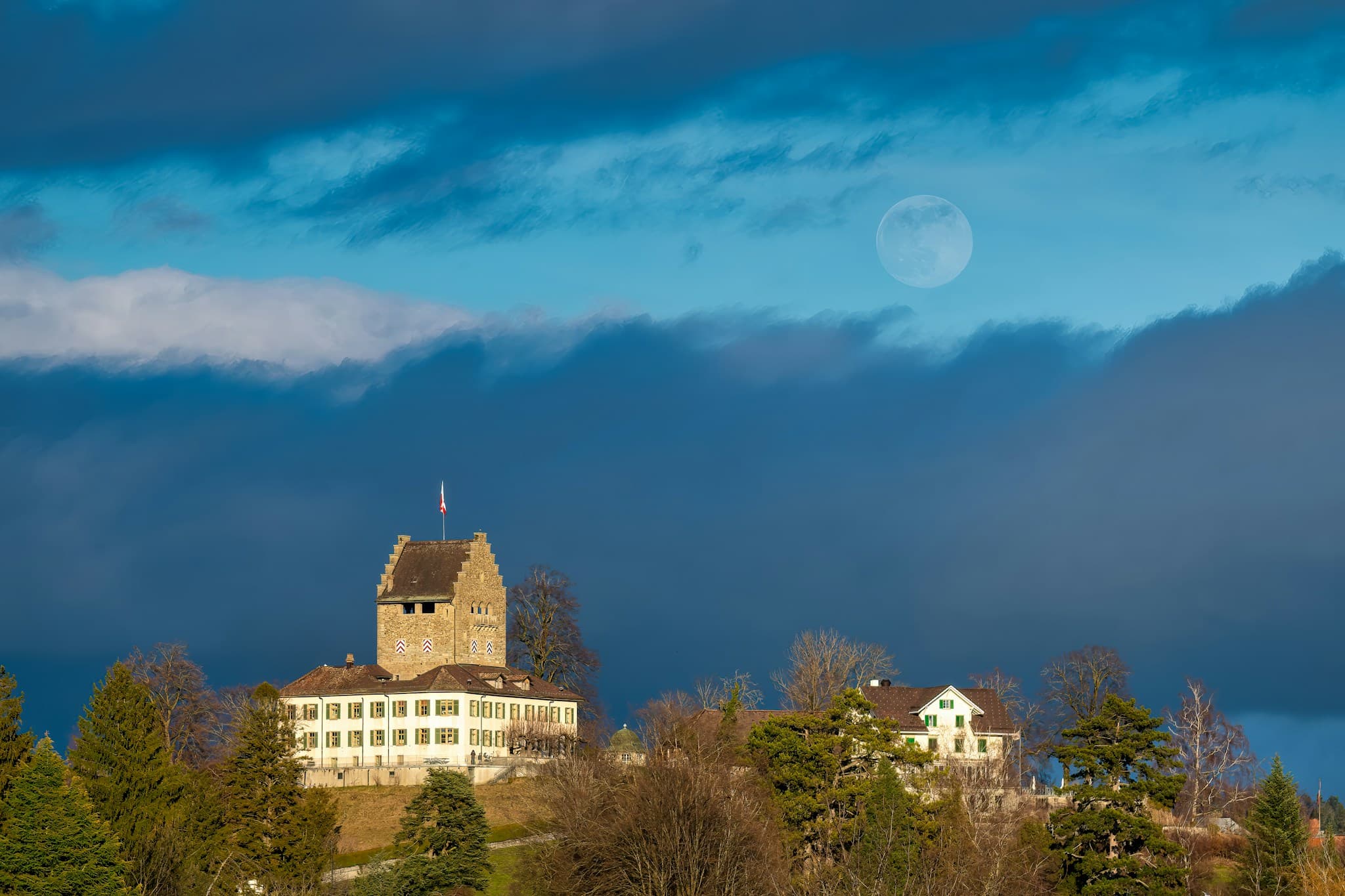
Uster Castle
Uster Castle stands prominently on a long moraine hill in the municipality of Uster, Switzerland, rising about 30 meters above the surrounding landscape at an altitude of 496 meters. This hill castle was originally constructed around the 13th century, likely circa 1200, by the influential House of Rapperswil. Its strategic location overlooking the Glatt Valley and the Greifensee lake shore provided both defense and oversight of important regional routes. The castle's origins may trace even earlier, connected to a fief granted by the Abbey of Saint Gall to the lords of Winterthur around 1027, with subsequent control contested by noble families including the Kyburgs before passing to the Bonstetten family in the late 13th century.
Throughout the High Medieval period, Uster Castle served as a fortified residence and administrative center for the ruling families who held jurisdiction over surrounding villages such as Nossikon, Kirchuster, and Wermatswil. The castle's defensive features, including a massive sandstone tower with walls approximately 3.4 meters thick, formed the core of its fortifications. The tower's lower section, preserved to this day, reflects medieval military architecture designed to withstand sieges and protect its inhabitants.
Medieval origins and strategic importance
The castle's initial construction phase centered on a robust tower, which likely included a small ring wall encircling the plateau to enhance defense. Although the full extent of the medieval fortifications remains partially unexplored archaeologically, historical records and depictions suggest a compact but formidable castle complex. The House of Rapperswil established the castle as a symbol of their regional power, leveraging its vantage point to control trade and military movements.
In the early 15th century, the Bonstetten family solidified their position by aligning with the nearby city of Zürich. In 1407, a formal Burgrecht agreement granted Zürich the right to station troops at Uster Castle during wartime, reflecting the castle's ongoing military significance. This alliance proved crucial during the Appenzell Wars (1401–1429), when the castle was briefly occupied by forces from the canton of Schwyz. The castle also played a role in the Old Zürich War, with the neighboring town of Greifensee besieged and destroyed, while Uster Castle remained a strategic stronghold.
Fires, rebuilding, and architectural evolution
A devastating fire in 1492 destroyed much of Uster Castle, including its main residential tower. Reconstruction efforts included replacing the upper portion of the tower with a half-timbered structure, a common architectural style featuring wooden framing filled with plaster or brick. A wooden house was also built beside the tower but was lost to fire in 1526. By 1529, the tower was rebuilt with distinctive stepped gables, characteristic of the late medieval period, enhancing both its defensive and aesthetic qualities.
Further modifications in the 17th and 18th centuries included the addition of a narrow staircase on the tower's south side and a battlemented curtain wall separated by a defensive trench, improving the castle's fortifications. Residential wings were added in the mid-18th century by Captain Wilhelm Schärer, expanding the castle's living quarters. In the 19th century, the stepped gables were removed and replaced by a belvedere atop the battlements, while a two-story building adjoining the tower housed district administrative offices. The tower also served as a prison during this period, reflecting the castle's evolving civic functions.
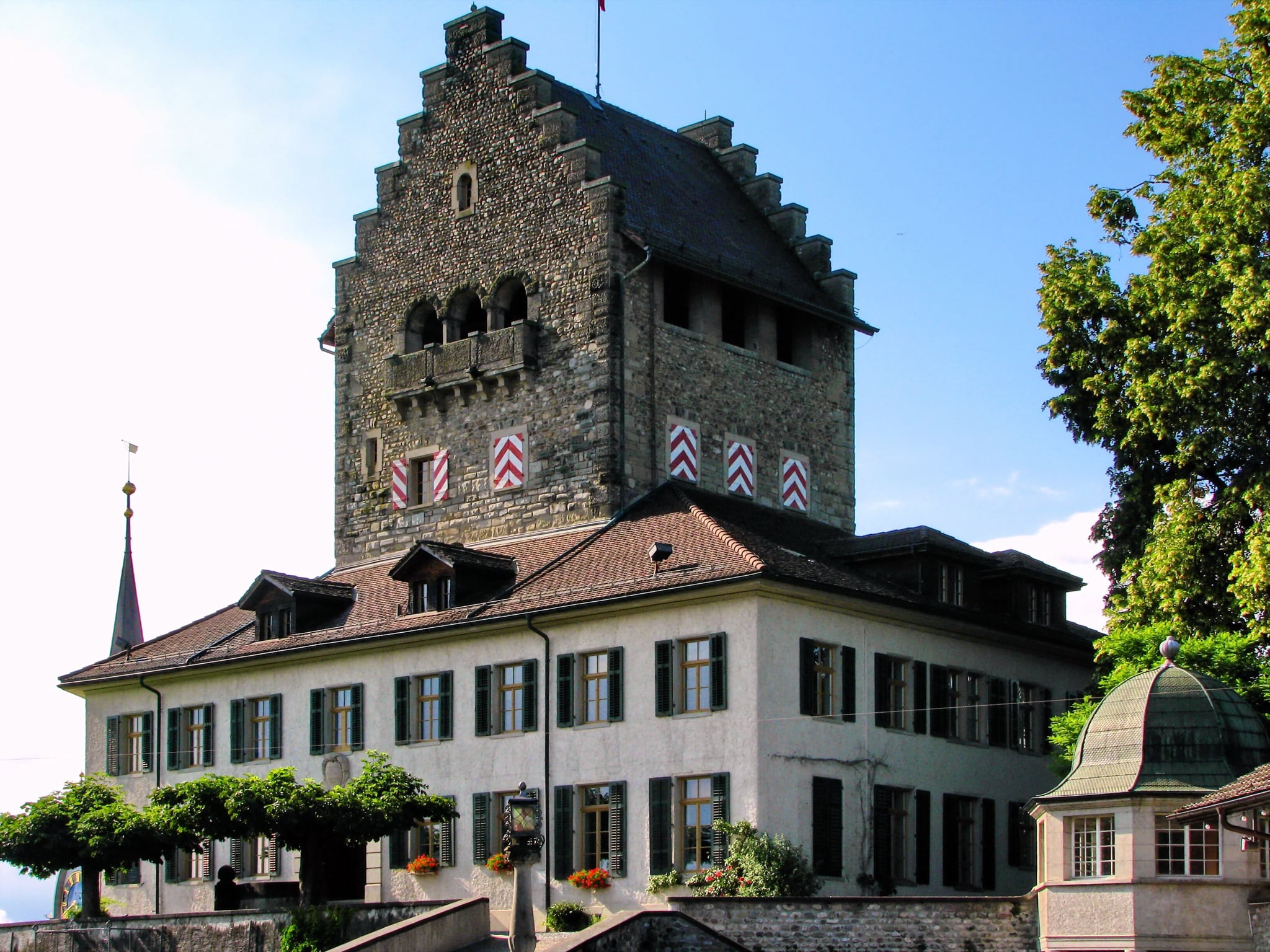
Photo by Roland zh, upload on 25. Juni 2009 • CC BY-SA 3.0
Modern restoration and current use
By the early 20th century, Uster Castle had fallen into disrepair until Jakob Heusser-Staub purchased and funded extensive restoration between 1916 and 1917. Architect Johannes Meier led the restoration, removing 19th-century additions such as the belvedere and battlements and reconstructing the upper floors with a historicist design inspired by the 1529 rebuilding phase. The restoration standardized window openings and revitalized the castle's medieval character while adapting it for contemporary use.
Following restoration, the castle was gifted to the city of Uster and served as a cantonal agricultural and home economics school for several decades. Since 1995, it has housed a private boarding school, continuing its educational legacy. The castle grounds also include a restaurant, previously known as Burg and later rebuilt as a steakhouse in 2009, integrating hospitality with heritage tourism.
Architectural features and preservation
The castle's core is dominated by the preserved medieval tower, measuring approximately 11 meters across. Its thick sandstone walls form a formidable defensive structure that has withstood centuries of conflict and environmental challenges. Portions of a circular wall, possibly dating from the 17th century or earlier, survive north of the tower, along with historic buildings such as a barn of uncertain origin.
Inside, the castle retains significant medieval spaces including the Knights' Hall and the weapon chamber, which offer insights into the castle's military and social functions. Stained glass windows commemorate the Heusser-Staub family, recognizing their role in preserving the castle's heritage.
Natural heritage and access limitations
Uster Castle's tower is home to a colony of western jackdaws, an endangered bird species in Switzerland that regularly breeds within the structure. This ecological significance has led to restricted public access to the tower to protect the birds' habitat. From July to October, visitors can access the tower as a vantage point overlooking the Glatt Valley and Greifensee lake, with guided tours of the weapon chamber and Knights' Hall available. Separate entrances serve the boarding school and the castle tower, balancing preservation with public engagement.
The castle hill's southwestern slope also features a historic vineyard dating back to at least the early 16th century, with records from 1532 documenting viticulture on the site. This tradition has seen a revival in recent decades, maintaining the agricultural heritage alongside the castle's architectural legacy.
Historical significance and cultural legacy
Uster Castle embodies the layered history of medieval and early modern Switzerland, reflecting shifts in feudal power, urban alliances, and regional conflicts. Its association with prominent noble families such as the Rapperswils and Bonstettens, its strategic military role during the Appenzell and Old Zürich Wars, and its adaptation to civic and educational functions illustrate the dynamic evolution of Swiss castles.
Today, Uster Castle stands as a well-preserved monument combining medieval architecture, natural conservation, and modern educational use. Its ongoing preservation efforts and controlled public access ensure that both its cultural and ecological values are respected, making it a unique heritage site within the canton of Zürich.
Frequently asked questions (FAQ)
- How do I visit Uster Castle and its tower?
- Uster Castle is open to visitors from July to October, with guided tours available for the tower, weapon chamber, and Knights' Hall. Access to the tower is limited to protect the nesting jackdaws, so it is recommended to check tour schedules in advance.
- What is the historical significance of Uster Castle?
- Built around the 13th century by the House of Rapperswil, Uster Castle played a strategic role in regional conflicts such as the Appenzell Wars and the Old Zürich War. It also served as a residence for noble families and later as a district administration center.
- Can I see the medieval architectural features inside the castle?
- Yes, visitors can explore historic spaces such as the Knights' Hall and the weapon chamber, which showcase the castle's medieval military and social functions.
- Why is access to the castle tower limited?
- The tower houses a colony of endangered western jackdaws that breed there regularly. To protect this species, public access to the tower is restricted, especially outside the July to October visiting season.
- Is it possible to visit the castle with children or school groups?
- Yes, Uster Castle currently operates as a private boarding school and accommodates educational visits. However, access to certain areas like the tower may be limited to protect wildlife and ensure safety.
Photo gallery

Photo by Robert Hrovat

Information
Opening hours
July to October, limited access to tower
Ticket prices
Varies; guided tours available
Current owner
Private owner
Website
Visit websiteSources & official resources
Verify the information above using these authoritative references.
Loading map...
Visitor reviews
No reviews yet. Been here? Write the first review and help other travelers!
Write the first reviewVisited this castle? Share your experience
Your review helps other travelers and adds first-hand knowledge to our encyclopedia.


