Umm Al Quwain Fort
Umm Al Quwain Fort, also known as Fort Al Ali, stands prominently in the heart of Umm Al Quwain city, within the emirate of the same name in the United Arab Emirates. Constructed in 1786 by Sheikh Rashid I bin Majid Mu'alla, the fort was originally designed to protect the town and its harbor, serving simultaneously as the ruler's residence and the administrative center of government.
Architectural features and design
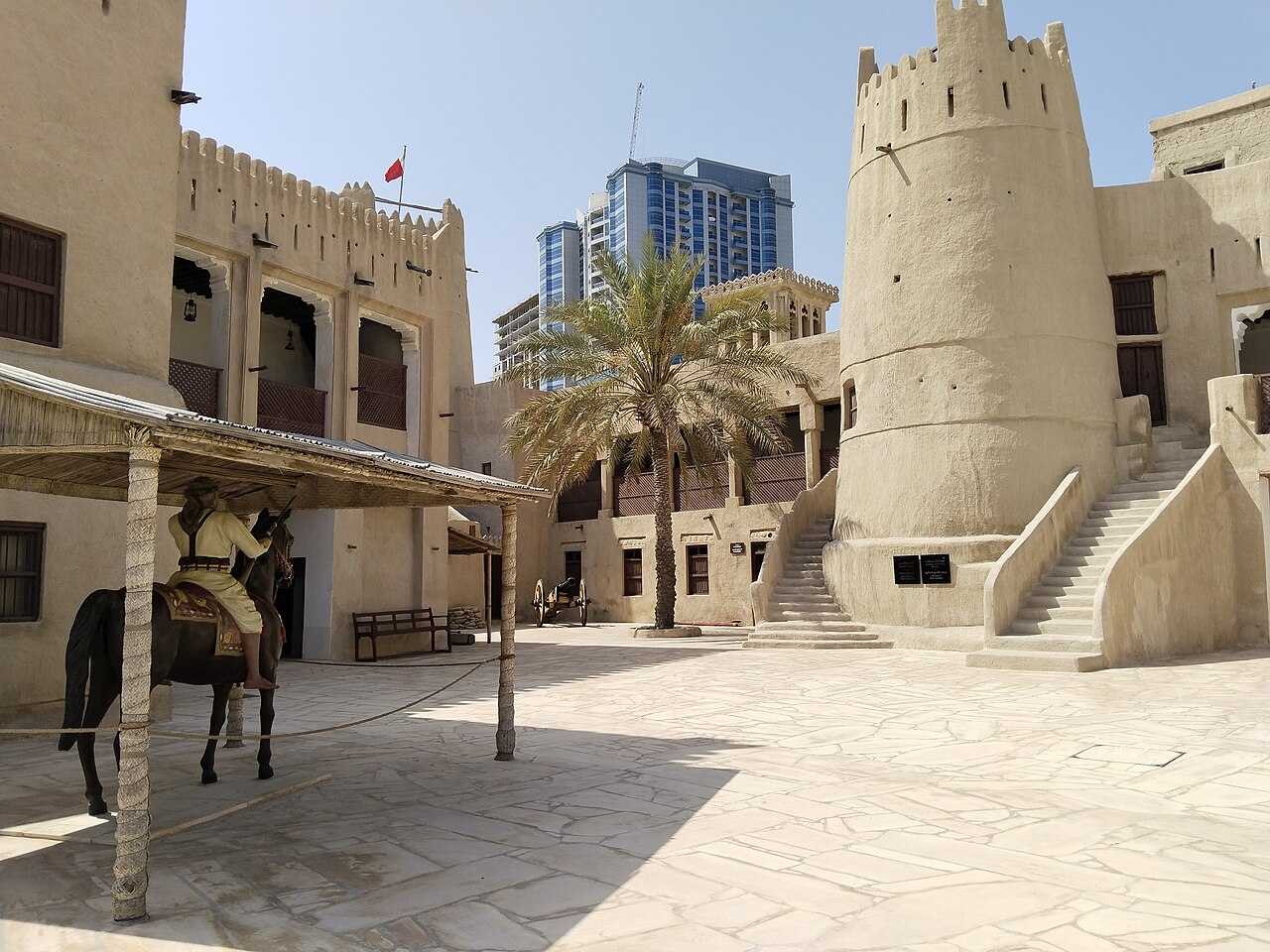
The fort exhibits a rectangular ground plan characteristic of defensive structures in the region during the late 18th century. Its walls are punctuated by two prominent round towers: a smaller one on a corner and a larger, more imposing tower on the western wall. These towers were strategically placed to provide vantage points for surveillance and defense against potential attackers approaching from land or sea.
The fort's walls are thick and constructed from traditional materials such as coral stone and mudbrick, common in Gulf architecture of the period. The design reflects a blend of practical military architecture adapted to the local environment and available resources.
Historical significance and events
The 1929 assassination and siege
In 1929, Sheikh Hamad bin Ibrahim Al Mu'alla, the ruling Sheikh at the time, was assassinated inside the fort by two of his cousins, who sought to seize power. The cousins took refuge within the fort's western tower, prompting a tense standoff with the local population. The citizens of Umm Al Quwain, outraged by the assassination, attempted to dislodge the rebels by bringing a cannon to bombard the fort. However, the cousins successfully repelled this assault by shooting those towing the cannon.
Subsequently, the defenders of the city resorted to digging a moat around the fort, which they filled with palm leaves. By setting these ablaze, they effectively set fire to the fort, leading to the demise of the rebellious cousins. This event remains a pivotal moment in the fort's history, illustrating the intense local resistance to internal power struggles.
Role through the 20th century and transformation
Umm Al Quwain Fort continued its function as the residence of the ruling Sheikh and the seat of government until 1969. Following this period, the fort was repurposed as a police station, reflecting changing administrative needs in the emirate as it modernized.
In the year 2000, after careful restoration, the fort was reopened as the Umm Al Quwain National Museum. The museum now houses a collection of artifacts and exhibits that explore the emirate's cultural heritage, maritime history, and archaeological finds, providing visitors with insights into the region's past.
Surrounding features and visitor information
Near the fort, visitors can explore the remains of the 1820 city wall, remnants of the historic defensive perimeter that once protected Umm Al Quwain. The fort and these ruins together offer a glimpse into the emirate's historical urban fabric and defense strategies.
The fort is open to the public for a modest fee, welcoming visitors interested in the architectural and historical legacy of the UAE. Its location in the city center makes it accessible and a notable cultural landmark.
Architectural style and preservation
The fort's style is representative of post-Renaissance military architecture adapted to the Arabian Gulf context, with functional design elements suited to both defense and residence. The use of round towers and thick walls is typical of fortifications in the region during the 18th century.
Today, the fort is restored and well-preserved, maintaining much of its original structure and layout. Restoration efforts have ensured the conservation of its architectural integrity while adapting the interior for museum use.
Frequently asked questions (FAQ)
- What is Umm Al Quwain Fort?
- Umm Al Quwain Fort is a historic fortress located in Umm Al Quwain, United Arab Emirates. Built in the 18th century, it served as a royal palace and a defense structure, showcasing traditional Emirati architecture.
- When was Umm Al Quwain Fort built?
- Umm Al Quwain Fort was constructed in the early 18th century, around 1768. It played a significant role in the defense of the region and has been beautifully preserved to reflect its historical importance.
- What are the opening hours of Umm Al Quwain Fort?
- Umm Al Quwain Fort is typically open to visitors from 9 AM to 5 PM, Saturday through Thursday. It is closed on Fridays, so plan your visit accordingly to make the most of your experience.
- Can I enter the fort and explore its interior?
- Yes, visitors can enter Umm Al Quwain Fort and explore its well-preserved interior. The fort features various exhibits that provide insight into the history and culture of the region, enhancing your visit.
- Is it possible to take guided tours of Umm Al Quwain Fort?
- Yes, guided tours are available at Umm Al Quwain Fort. These tours are led by knowledgeable guides who provide valuable information about the fort's history and significance, making your visit more enriching.
- What is the best time to visit Umm Al Quwain Fort?
- The best time to visit Umm Al Quwain Fort is during the cooler months, from November to March. During this period, the weather is more pleasant, allowing for a comfortable exploration of the fort and its surroundings.
- Are there any nearby attractions to visit?
- Yes, there are several nearby attractions, including the Umm Al Quwain Museum and the beautiful beaches of the emirate. Visitors can easily combine their trip to the fort with a visit to these nearby sites for a full day of exploration.
- What are the ticket prices for Umm Al Quwain Fort?
- Entry to Umm Al Quwain Fort is usually free, making it an accessible destination for all visitors. However, it’s advisable to check for any special exhibitions that may require a nominal fee.
- How do I get to Umm Al Quwain Fort?
- Umm Al Quwain Fort is conveniently located in the heart of Umm Al Quwain city, easily accessible by car or public transportation. There are signboards directing visitors to the fort, making navigation straightforward.
Information
Loading map...
Visitor reviews
No reviews yet. Been here? Write the first review and help other travelers!
Write the first reviewVisited this castle? Share your experience
Your review helps other travelers and adds first-hand knowledge to our encyclopedia.