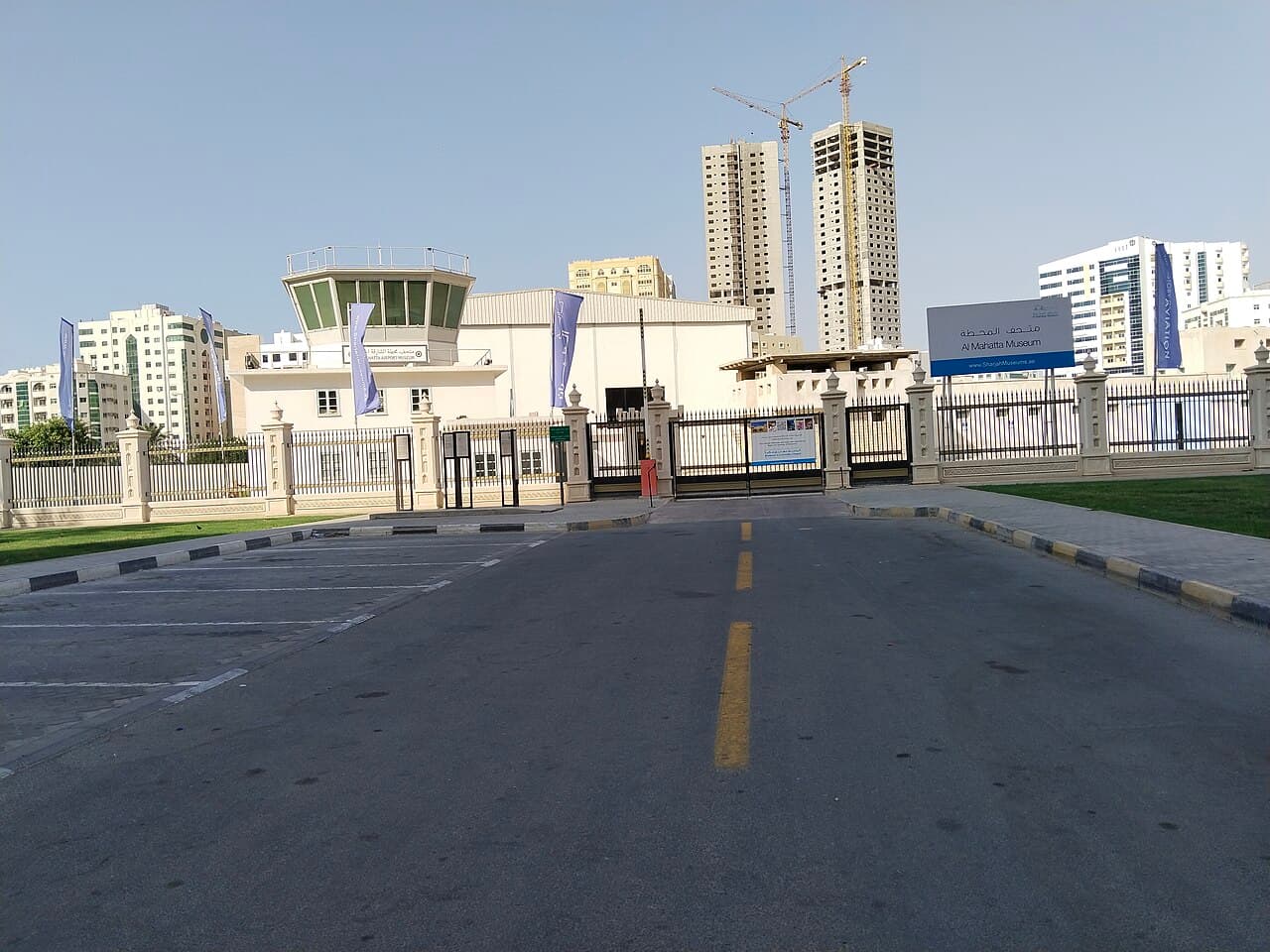
Al Mahatta Fort — United Arab Emirates castle

Al Mahatta Fort

Al Mahatta Fort in Sharjah, United Arab Emirates
Contemporary (20th–21st c.)
Well Preserved

Al Mahatta Fort, meaning "the station" in Arabic, is a historically significant bastioned fortress located in central Sharjah, one of the emirates of the United Arab Emirates. Constructed in 1932 under the directive of the Ruler of Sharjah, the fort was designed to provide security and protection for the passengers and staff of Imperial Airways, marking the first British establishment on the Trucial Coast. This strategic location was chosen following a formal agreement between the British government and the ruler of Sharjah in June 1932, reflecting the geopolitical importance of the area during the early 20th century.

Historical context and strategic importance

The establishment of Al Mahatta Fort came at a time when air travel was expanding rapidly, and the British Empire sought to secure its air routes to India and beyond. The fort's construction was part of a broader network of airfields and stations that facilitated long-distance flights across the Middle East. Its role was not only to protect the Imperial Airways operations but also to serve as a critical military and logistical outpost.

During World War II, the fort was utilized by the Royal Air Force, underscoring its military significance. Later, it served as a base for the Trucial Oman Scouts, a paramilitary force established to maintain order in the Trucial States before the formation of the UAE. These uses highlight the fort's adaptability and importance through different historical phases.

Architectural features and design

Al Mahatta Fort exemplifies the characteristics of a bastioned fortress, a style that incorporates projecting bastions at the corners to allow defensive fire along the walls. The fort's robust construction features thick walls made from local materials, designed to withstand attacks and provide a secure refuge. Its layout includes a central courtyard, surrounded by high walls with crenellations and watchtowers that offered vantage points for surveillance.

The architectural design reflects a blend of traditional Arabian fortification techniques with adaptations for modern military needs of the early 20th century. The fort's position in an urban setting in Sharjah also influenced its design, balancing defensive requirements with accessibility for its varied uses over time.

Evolution of uses and preservation

Following its military use, Al Mahatta Fort underwent several functional transformations. It briefly operated as a hotel, providing accommodation in the growing city of Sharjah. Subsequently, it served as a police station and later as a school, demonstrating its integration into the civic fabric of the emirate.

Today, the fort has been preserved and repurposed as the Al Mahatta Museum, an aviation museum that commemorates the site's pioneering role in the history of air travel in the region. The museum houses exhibits on early aviation, the history of Imperial Airways, and the development of the UAE's aviation industry. This adaptive reuse has ensured the fort's conservation and continued relevance as a cultural and educational landmark.

Cultural significance and visitor experience

Al Mahatta Fort stands as a symbol of Sharjah's historical connection to early aviation and British influence in the Gulf region. Visitors to the fort can explore its well-preserved bastioned walls, the central courtyard, and the museum's extensive collections. The site offers insights into the technological and geopolitical developments of the early 20th century, as well as the local history of Sharjah and the Trucial States.

The museum provides educational programs and guided tours that highlight the fort's architectural features and historical narratives. Its location in central Sharjah makes it accessible to tourists and residents alike, contributing to the emirate's cultural tourism offerings.

Frequently asked questions (FAQ)

What is Al Mahatta Fort?
Al Mahatta Fort is a historic fort located in Sharjah, United Arab Emirates, originally built in 1932 to serve as a royal residence and a defense structure. It is significant for its role in the aviation history of the UAE, as it was the first airport in the country. The fort now houses a museum that showcases the history of aviation in the region.
When was Al Mahatta Fort built?
Al Mahatta Fort was constructed in 1932, making it one of the oldest historical buildings in Sharjah. Its establishment marked a significant development in the region's infrastructure and played a crucial role in the early days of aviation in the UAE.
What are the opening hours for Al Mahatta Fort?
Al Mahatta Fort is typically open to visitors from 8:00 AM to 8:00 PM, Saturday to Thursday, and 4:00 PM to 8:00 PM on Fridays. It is advisable to check in advance for any changes in operating hours, especially during public holidays or special events.
Can I visit Al Mahatta Fort with my family?
Yes, Al Mahatta Fort is family-friendly and welcomes visitors of all ages. The site offers educational exhibits and interactive displays about aviation history, making it an enjoyable experience for both children and adults.
Is it possible to take photographs inside Al Mahatta Fort?
Yes, visitors are generally allowed to take photographs inside Al Mahatta Fort, but it is recommended to check for any specific rules or restrictions upon entry. The fort's architecture and exhibits provide excellent opportunities for capturing memorable moments.
What are the ticket prices for Al Mahatta Fort?
The entry to Al Mahatta Fort is typically free, making it an accessible destination for everyone. However, it is advisable to confirm if there are any special exhibitions or events that may require a ticket purchase.
When is the best time to visit Al Mahatta Fort?
The best time to visit Al Mahatta Fort is during the cooler months from October to April, when temperatures are more pleasant for outdoor exploration. Early mornings or late afternoons are ideal for avoiding the midday heat and enjoying a more comfortable experience.
What nearby attractions should I visit when at Al Mahatta Fort?
When visiting Al Mahatta Fort, you can also explore the Sharjah Aviation Museum, which is located nearby and complements the historical significance of the fort. Additionally, the Sharjah Heritage Area offers a rich cultural experience with traditional markets and museums that showcase the region's history.
How do I get to Al Mahatta Fort?
Al Mahatta Fort is easily accessible by car or public transportation within Sharjah. It is located near major roads and is well-signposted, making it straightforward for visitors to find and reach the site without difficulty.

Photo gallery

Al Mahatta Fort
Click to view

Photo by ZI Jony•CC BY-SA 4.0

1 photo • Click any image to view in full screen

Information

Bastioned Fortress

Loading map...

Visitor reviews

No reviews yet. Been here? Write the first review and help other travelers!

Write the first review

Visited this castle? Share your experience

Your review helps other travelers and adds first-hand knowledge to our encyclopedia.

Write a review

(5/5)

0/2000 characters

Your review will be visible after admin approval

Nearby castles

8.2 km

Umm Al Quwain Fort

Umm Al Quwain, United Arab Emirates

Umm Al Quwain Fort, also known as Fort Al Ali, stands prominently in the heart of Umm Al Quwain city, within the emirate of the same name in the United Arab Emirates. Constructed in 1786 by Sheikh Rashid I bin Majid Mu'alla, the fort was originally designed to protect the town and its harbor, serving simultaneously as the ruler's residence and the administrative center of government. Architectural features and design The fort exhibits a rectangular ground plan characteristic of defensive structures in the region during the late 18th century. Its walls are punctuated by two prominent round towers: a smaller one on a corner and a larger, more imposing tower on the western wall. These towers were strategically placed to provide vantage points for surveillance and defense against potential attackers approaching from land or sea. The fort's walls are thick and constructed from traditional materials such as coral stone and mudbrick, common in Gulf architecture of the period. The design reflects a blend of practical military architecture adapted to the local environment and available resources. Historical significance and events The 1929 assassination and siege In 1929, Sheikh Hamad bin Ibrahim Al Mu'alla, the ruling Sheikh at the time, was assassinated inside the fort by two of his cousins, who sought to seize power. The cousins took refuge within the fort's western tower, prompting a tense standoff with the local population. The citizens of Umm Al Quwain, outraged by the assassination, attempted to dislodge the rebels by bringing a cannon to bombard the fort. However, the cousins successfully repelled this assault by shooting those towing the cannon. Subsequently, the defenders of the city resorted to digging a moat around the fort, which they filled with palm leaves. By setting these ablaze, they effectively set fire to the fort, leading to the demise of the rebellious cousins. This event remains a pivotal moment in the fort's history, illustrating the intense local resistance to internal power struggles. Role through the 20th century and transformation Umm Al Quwain Fort continued its function as the residence of the ruling Sheikh and the seat of government until 1969. Following this period, the fort was repurposed as a police station, reflecting changing administrative needs in the emirate as it modernized. In the year 2000, after careful restoration, the fort was reopened as the Umm Al Quwain National Museum. The museum now houses a collection of artifacts and exhibits that explore the emirate's cultural heritage, maritime history, and archaeological finds, providing visitors with insights into the region's past. Surrounding features and visitor information Near the fort, visitors can explore the remains of the 1820 city wall, remnants of the historic defensive perimeter that once protected Umm Al Quwain. The fort and these ruins together offer a glimpse into the emirate's historical urban fabric and defense strategies. The fort is open to the public for a modest fee, welcoming visitors interested in the architectural and historical legacy of the UAE. Its location in the city center makes it accessible and a notable cultural landmark. Architectural style and preservation The fort's style is representative of post-Renaissance military architecture adapted to the Arabian Gulf context, with functional design elements suited to both defense and residence. The use of round towers and thick walls is typical of fortifications in the region during the 18th century. Today, the fort is restored and well-preserved, maintaining much of its original structure and layout. Restoration efforts have ensured the conservation of its architectural integrity while adapting the interior for museum use.

Post-Renaissance (17th–18th c.)
Details
20.4 km

Al Hamra Towers

Al Hamra, United Arab Emirates

The Al Hamra Towers are prominent contemporary structures located on a dune ridge east of the town of Al Hamra, within the emirate of Ras Al Khaimah in the United Arab Emirates. These towers are notable for their distinct modern architectural design, which contrasts with the traditional fortifications commonly found in the region. Situated near the Persian Gulf coastline, the towers occupy a strategic position overlooking the sea, historically significant for maritime activity. Historical context and purpose Despite some local speculation suggesting an early 20th-century origin related to protection against piracy and oversight of pearl divers, there is no documented evidence supporting such historical functions for the Al Hamra Towers. Instead, these structures are contemporary and were constructed in the late 20th or early 21st century, reflecting modern architectural trends rather than traditional defensive purposes. The towers do not appear in historical records as defensive fortifications or watchtowers, nor are they linked to any known battles or military engagements. Their construction aligns more closely with the rapid urban and infrastructural development characteristic of the UAE in recent decades. Architectural features and design The Al Hamra Towers exhibit a sleek, modernist style typical of contemporary architecture in the Gulf region. Their design incorporates clean lines and a minimalist aesthetic, emphasizing verticality and integration with the surrounding desert and coastal landscape. Unlike traditional hill castles or fortified towers, these towers lack defensive elements such as battlements, moats, or arrow slits. Instead, they serve as landmarks and possibly as functional buildings for commercial or residential use, although public access is limited to the exterior grounds. The towers' position on a dune ridge enhances their visibility and prominence in the landscape, making them significant visual markers for the town of Al Hamra and the wider Ras Al Khaimah region. Visiting and current status Visitors can freely access the area surrounding the Al Hamra Towers, enjoying views of the towers and the adjacent coastal environment. However, entry to the interior of the towers is restricted, limiting exploration to their exteriors. The towers stand as examples of the contemporary architectural development in the UAE, illustrating the country's blend of modernity with its natural desert and coastal settings. Significance in regional architecture The Al Hamra Towers represent a departure from the traditional castle and fort designs of the Arabian Peninsula. They embody the UAE's rapid modernization and urban growth, showcasing how architectural priorities have shifted from defense and settlement protection to commercial and aesthetic considerations. While not castles in the medieval sense, their designation as towers highlights their vertical prominence and role as landmarks within the urban fabric of Ras Al Khaimah.

Contemporary (20th–21st c.)
Details
21.6 km

Al Jazirah Al Hamra Fort

Al Jazirah Al Hamra, United Arab Emirates

Al Jazirah Al Hamra Fort is located in the town of Al Jazirah Al Hamra within the emirate of Ras Al Khaimah in the United Arab Emirates. This fort stands at the edge of the old abandoned fishing village, serving historically as a protective stronghold guarding the landward approach against raids from rival tribes. The fort's strategic position highlights its role in the local defense system during the late 19th and early 20th centuries. Historical context and significance The fort is part of a larger settlement that includes both the present-day modern village and the older, deserted fishing village. The old village was abandoned during the 1960s, and its reasons remain unclear, adding an aura of mystery to the site. The abandonment left behind a collection of coral brick buildings, including traditional houses and mosques, which are now in a state of gradual decay. Local folklore suggests that the empty village is haunted, contributing to its cultural intrigue. Architectural features Al Jazirah Al Hamra Fort exhibits a square ground plan with distinctive defensive elements. It features one square corner tower and a projecting round tower positioned halfway along its western wall. These towers would have provided vantage points for surveillance and defense, typical of forts designed to protect coastal and inland settlements in the Arabian Peninsula. The fort’s construction reflects traditional building methods using local materials like coral stone, which was commonly used in the region for its availability and insulating properties. However, recent rebuilding efforts have introduced modern concrete, which has altered the fort’s exterior appearance and detracted from its historical authenticity. The abandoned village and its environment The old village surrounding the fort offers a rare glimpse into the lifestyle of a traditional fishing community in the UAE before urban development transformed the region. Visitors can freely explore the narrow streets, courtyards, and interiors of the coral brick houses and mosques. The site’s atmospheric ruins provide insight into the vernacular architecture and community organization of the time. The abandonment of the village in the 1960s has left it largely untouched by modern restoration, making it a valuable archaeological and cultural heritage site. Despite the fort itself being currently under reconstruction and not open to visitors, the village remains accessible and continues to draw interest from historians, architects, and tourists intrigued by its evocative ruins. Current condition and preservation efforts At present, the fort is undergoing rebuilding, which has led to a controversial transformation of its exterior. The use of new concrete materials has been criticized for compromising the fort’s traditional aesthetic and historical integrity. Preservationists emphasize the importance of maintaining authentic materials and techniques to retain the fort’s cultural value. While the fort itself is temporarily closed to the public during restoration, the surrounding abandoned village remains open for exploration. The site’s condition highlights the challenges faced in preserving vernacular architecture in rapidly modernizing regions. Visiting Al Jazirah Al Hamra Fort and village Visitors interested in the history of the UAE and traditional coastal settlements will find the abandoned village of Al Jazirah Al Hamra a compelling destination. Although the fort is currently inaccessible, the village’s ruins offer a unique experience of wandering through a once-thriving community frozen in time. The site provides opportunities for photography, historical study, and cultural tourism. Visitors should be prepared for limited facilities and exercise caution when exploring the fragile structures.

Contemporary (20th–21st c.)
Details
