Ajman Fort
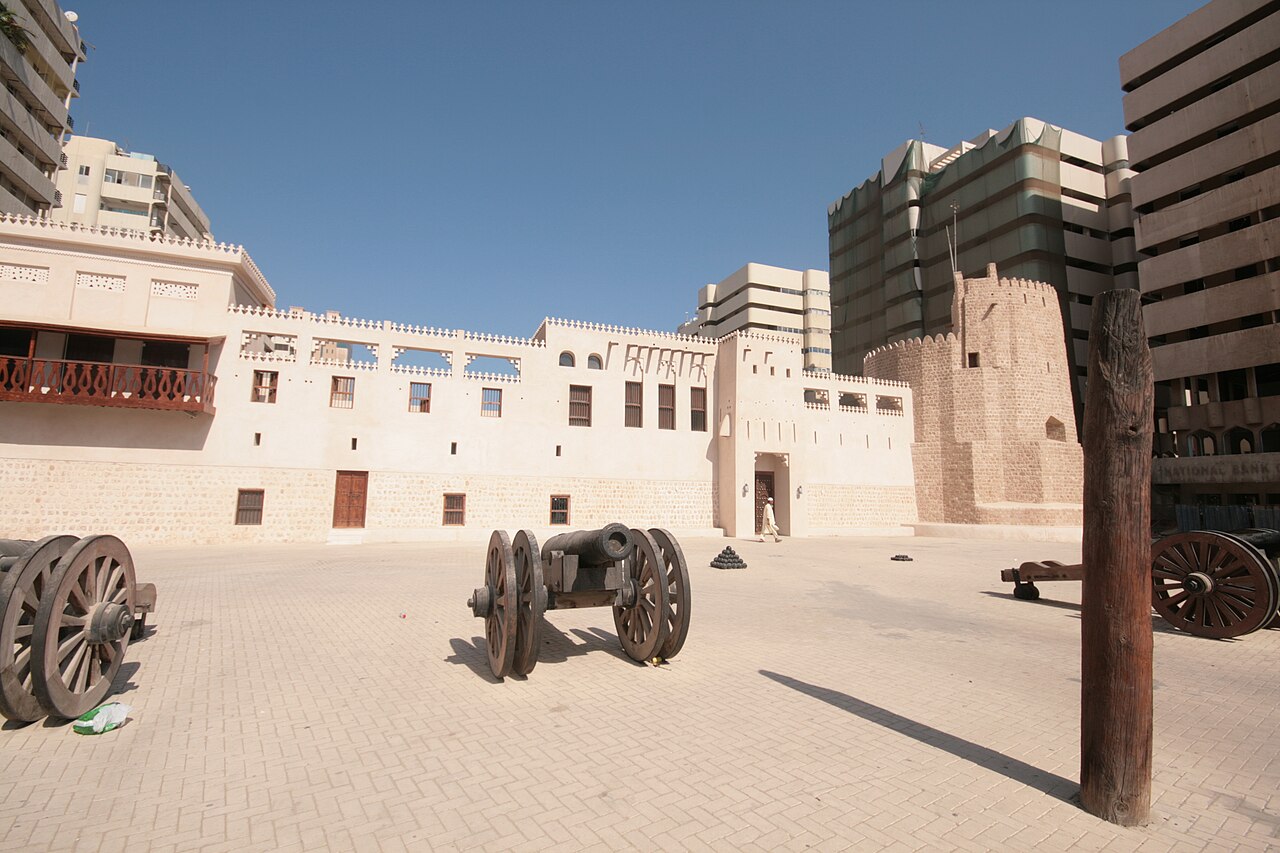
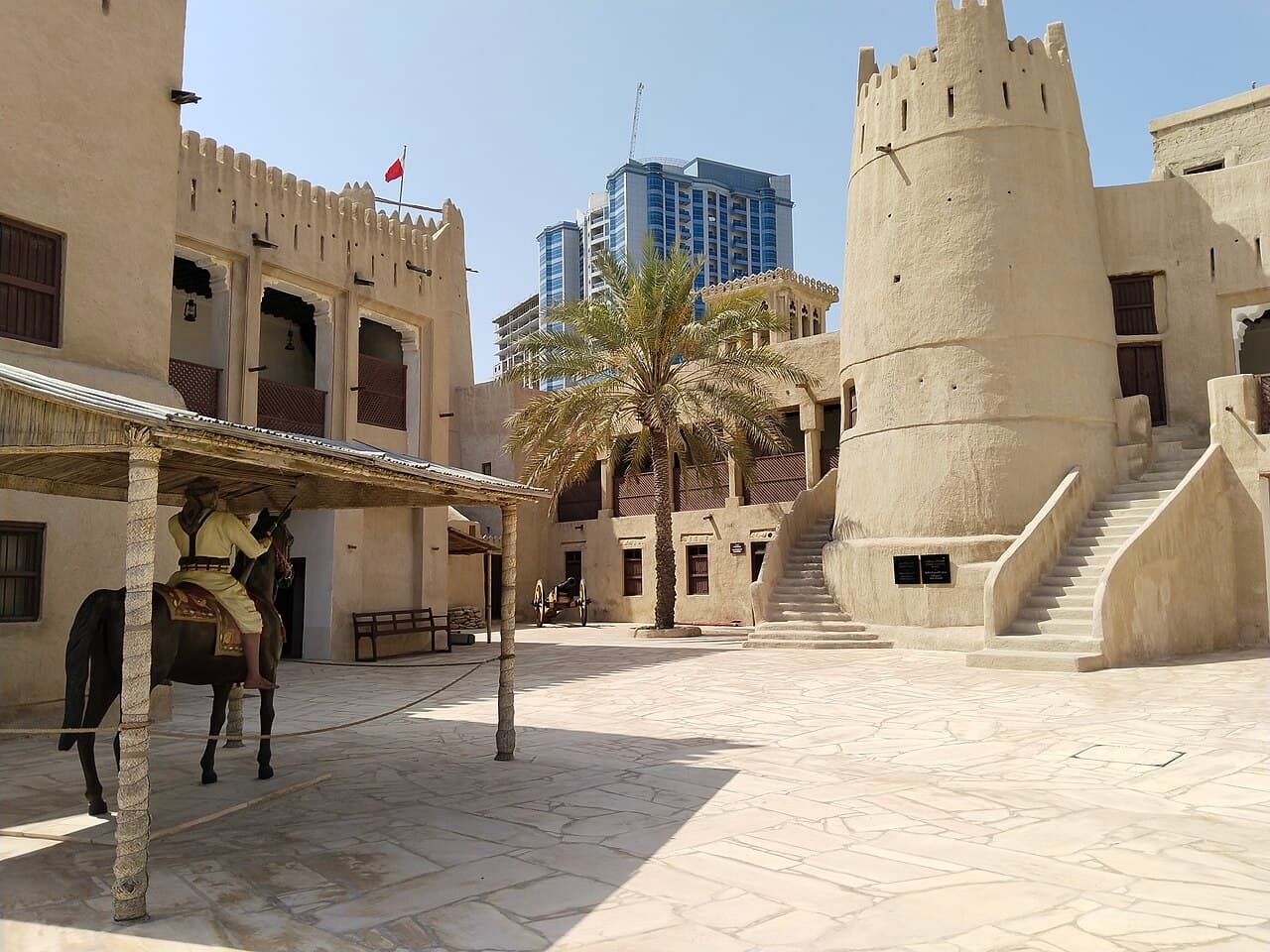
Ajman Fort stands prominently in the heart of the city of Ajman, within the emirate of Ajman in the United Arab Emirates. This bastioned fortress is a significant historical landmark that reflects the region's defensive architecture and the evolution of local governance through the centuries.
Historical background and construction
The origins of Ajman Fort trace back to the late 18th century, a period marked by regional conflicts and the need for fortified structures to protect ruling families and their territories. The fort was initially constructed using traditional materials such as rock, coral, and mudbrick, which were locally sourced and suited to the coastal environment of the Arabian Gulf.
In 1820, the fort suffered significant damage when it was shelled by British warships during military actions aimed at curbing piracy and securing maritime routes. Following this destruction, the fort was rebuilt under the direction of Sheikh Humaid bin Rashid Al Nuaimi, who ruled Ajman from 1838 to 1841. This reconstruction restored the fort's defensive capabilities and reinforced its role as a symbol of local authority.
Architectural features and design
Ajman Fort is characterized by its double-storey layout and traditional construction techniques. The use of coral stone and mudbrick walls provided both insulation and strength, essential for the harsh desert climate. The fort's design includes bastions at key points, which allowed defenders to monitor and repel potential attackers effectively.
One of the fort's most notable architectural elements is its barjeel, or wind tower, which is considered one of the oldest examples of this feature in the UAE. The wind tower was an ingenious traditional cooling system that captured and directed breezes into the interior spaces, providing natural ventilation long before modern air conditioning.
The fort also includes typical defensive features such as thick perimeter walls, narrow arrow slits, and a strategically placed main gate designed to control access. The interior spaces were arranged to serve both residential and military functions, with rooms for the ruling family, guards, and storage.
Role and evolution through the 19th and 20th centuries
After its reconstruction, Ajman Fort served as the royal residence of the ruling family until 1970. During this period, the fort underwent several restorations and additions to accommodate changing needs and to maintain its structural integrity.
Following the relocation of the ruler to a new palace, the fort was repurposed as the headquarters of the Ajman Police. This change in function led to adaptations of the original structure to suit administrative and operational requirements. In 1981, the police moved to a new facility, and the fort was partially dismantled.
Recognizing its cultural and historical value, the fort was fully rebuilt in the late 1980s and converted into the Ajman Museum. This transformation preserved the fort's architectural heritage while opening it to the public as a center for education and cultural tourism.
Ajman museum and cultural significance
Today, Ajman Fort operates as the Ajman Museum, showcasing the emirate's history, traditional lifestyles, and maritime heritage. The museum's exhibits include artifacts related to local crafts, fishing, pearl diving, and the fort's own military past.
The museum provides visitors with insight into the social and cultural development of Ajman and the broader region. Its location in a restored bastioned fortress adds authenticity and context to the displays, making it a valuable destination for those interested in the history of the UAE.
While the fort's newer additions have been met with mixed opinions, the core structure remains an important example of post-Renaissance military architecture adapted to the Arabian Gulf environment. The preservation of the barjeel wind tower remains a highlight, illustrating the ingenuity of traditional architectural solutions to climate challenges.
Visiting information and practical details
Ajman Fort is accessible to visitors for a modest fee as part of the museum experience. It is located east of Sheikh Rashid bin Humeed Street, in the center of Ajman city, making it easy to reach for tourists and residents alike.
The museum's opening hours and ticket prices vary, so prospective visitors should check current details before planning their visit. The fort's central location also places it near other cultural and commercial attractions in Ajman.
Visitors interested in traditional Emirati architecture and the history of the northern emirates will find Ajman Fort a compelling site. The combination of historical significance, architectural features, and museum exhibits provides a comprehensive look at the region's past.
Frequently asked questions (FAQ)
- How do I get to Ajman Fort?
- Ajman Fort is easily accessible by car or taxi, located in the heart of Ajman city. Public transportation options are also available, making it convenient for visitors to reach the fort from nearby areas.
- What is the historical significance of Ajman Fort?
- Ajman Fort, built in the late 18th century, served as a defensive structure and royal residence for the ruling family of Ajman. It is a key landmark that represents the heritage and history of the Emirate, showcasing the region's past and traditional architecture.
- When was Ajman Fort renovated?
- Ajman Fort underwent significant renovations in 1980 to preserve its structure and enhance its role as a museum. The restoration efforts have allowed the fort to serve as a cultural site, showcasing artifacts and exhibitions related to the local history.
- Can I take photographs inside Ajman Fort?
- Yes, visitors are welcome to take photographs inside Ajman Fort, allowing you to capture the stunning architecture and exhibits. However, it’s advisable to respect any signs or guidelines regarding photography in specific areas.
- Why is Ajman Fort an important architectural site?
- Ajman Fort features traditional Emirati architecture, characterized by its use of coral stone and mud bricks, which reflects the building techniques of the region. Its design and structure are significant as they illustrate the cultural identity and historical development of Ajman.
- Is it possible to visit Ajman Fort with children?
- Absolutely, Ajman Fort is family-friendly and offers a great educational experience for children. The exhibits are engaging and provide insight into the history and culture of the UAE, making it a perfect outing for families.
- What are the opening hours of Ajman Fort?
- Ajman Fort is open to visitors from 8:00 AM to 8:00 PM, Saturday to Thursday, and from 4:00 PM to 8:00 PM on Fridays. It is advisable to check for any special holiday hours before planning your visit.
- What are the ticket prices for Ajman Fort?
- Entry to Ajman Fort is generally free, allowing visitors to explore the historic site without any cost. However, special exhibitions or guided tours may have a fee, which is usually nominal.
- What is the best time to visit Ajman Fort?
- The best time to visit Ajman Fort is during the cooler months, from October to April, when the weather is pleasant for outdoor exploration. Early mornings or late afternoons are ideal for enjoying the fort without the midday heat.
- Are there any nearby attractions to Ajman Fort?
- Yes, Ajman Fort is conveniently located near other attractions such as the Ajman Museum and the Ajman Corniche. Visitors can easily explore these sites to enrich their experience of Ajman's culture and scenery.
Photo gallery

Information
Address
East of Sheikh Rashid bin Humeed Street, Ajman, United Arab Emirates
Loading map...
Visitor reviews
No reviews yet. Been here? Write the first review and help other travelers!
Write the first reviewVisited this castle? Share your experience
Your review helps other travelers and adds first-hand knowledge to our encyclopedia.