Udine Castle
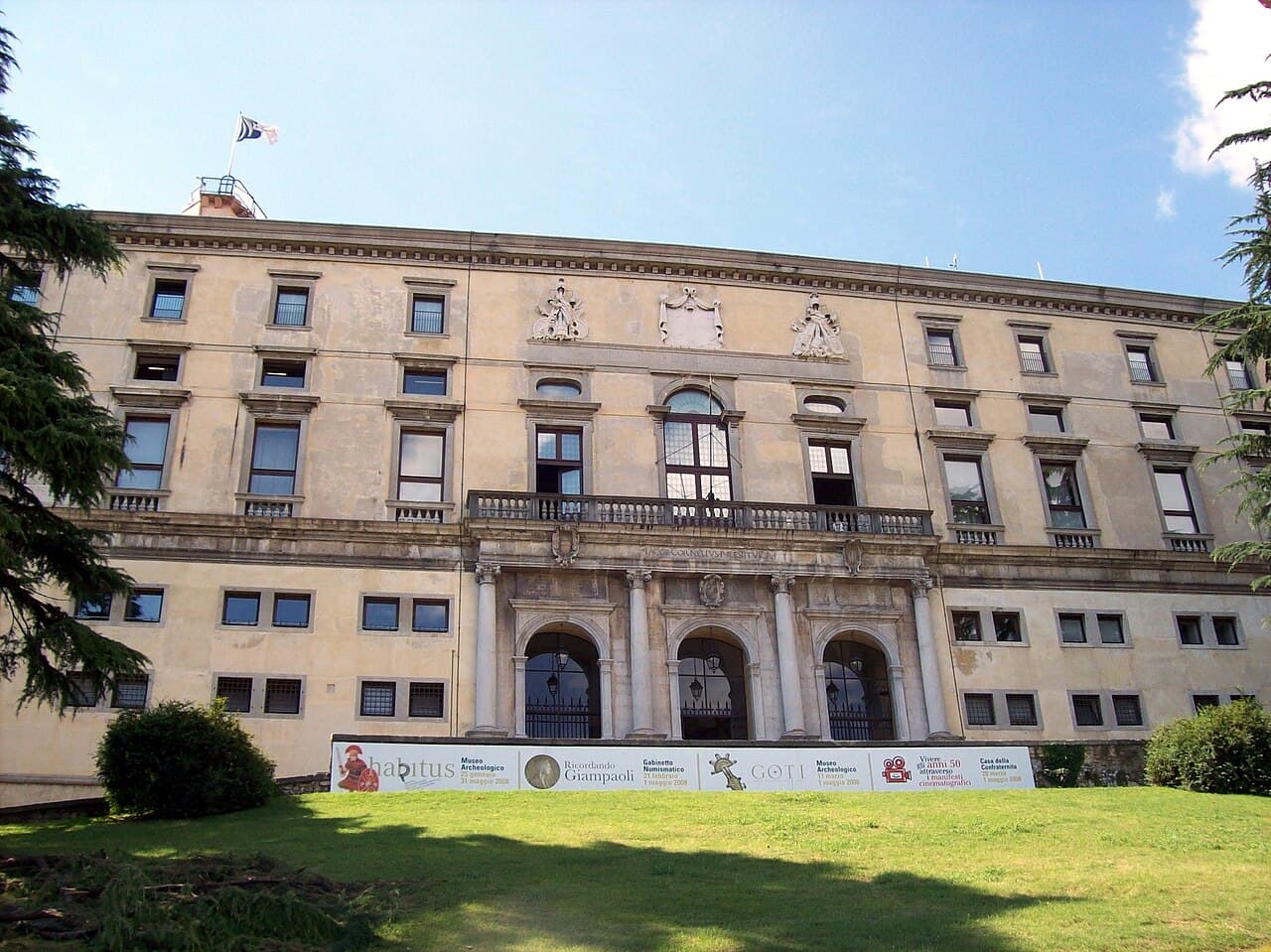
Udine Castle stands as a remarkable example of Renaissance architecture perched atop a unique and historically significant artificial mound in the city of Udine, Italy. This castle is not only a symbol of regional power but also a cultural beacon that reflects centuries of architectural evolution and political history. The mound itself, created during the Bronze Age between 3500 and 3000 years ago, is the largest known prehistoric artificial hill in Europe by volume, making the site an extraordinary archaeological and historical landmark.
The origins of the hill are enveloped in legend, with tales attributing its creation to the soldiers of Attila the Hun following his devastating raid on Aquileia in 452 AD. While this story adds a mythical dimension, archaeological evidence confirms the mound's prehistoric construction, underscoring the long-standing human presence and strategic importance of the location.
The medieval fortress and early history
The first documented mention of a fortification on this hill dates back to 983 AD, when Holy Roman Emperor Otto II granted a military stronghold to Rodoaldo, Patriarch of Aquileia. This fortress served as a defensive bastion and a symbol of the patriarchal authority in the region during the Middle Ages. The castrum was integral to the protection and administration of the surrounding territories, reflecting the intertwined nature of religious and political power at the time.
Destruction and renaissance rebuilding
The fortress suffered significant damage during the 1511 Idrija earthquake, which necessitated extensive reconstruction. Beginning in 1517, the castle was rebuilt in the Renaissance style, a process that spanned approximately fifty years. This rebuilding phase transformed the medieval fortress into a palace-like structure that combined defensive features with the elegance and artistic sensibilities of the Renaissance period.
Architectural contributions
The castle's external decoration and interior embellishments are notable for their artistic quality. Giovanni da Udine, a distinguished pupil of the Renaissance master Raphael, was responsible for much of the castle’s decorative plasterwork and paintings, particularly in the Parliament Hall. After Giovanni’s death, Francesco Floreani completed the interior decorations, ensuring a cohesive artistic vision throughout the castle.
The parliament hall and political significance
The Parliament Hall within Udine Castle holds considerable historical importance as the meeting place of the council of the Patria del Friuli. This council was one of the earliest parliamentary bodies in Europe, underscoring the castle’s role not only as a military and residential site but also as a center of governance and legislative activity. The council operated here until the French occupation in 1797 led to its dissolution.
Architectural features and preservation
Udine Castle is constructed atop a substantial artificial mound rising about 30 meters above the surrounding landscape, providing a commanding vantage point over Udine and the Friuli region. The castle’s Renaissance masonry exhibits robust construction techniques characteristic of the early 16th century, blending defensive functionality with refined aesthetic elements.
The exterior features detailed plasterwork and ornamental motifs that highlight the influence of Renaissance artistic movements. Inside, the Parliament Hall’s frescoes and decorative elements reveal the skill of Giovanni da Udine and Francesco Floreani, offering visitors insight into the artistic heritage of the period.
Current function and cultural role
Today, Udine Castle serves as a vibrant cultural hub, housing the History and Art Museum of the City of Udine. The museum’s collections span archaeology, art, numismatics, photography, and regional history, making it a comprehensive center for cultural preservation and education.
The castle complex includes exhibition spaces, a library with tens of thousands of volumes, and a phototheque rich in historical images. Its courtyard and adjacent square continue to host concerts, exhibitions, and public events, maintaining the castle’s centuries-old tradition as a communal gathering place.
Udine Castle also inspired literary works, notably by Italian writer Carlo Emilio Gadda, who named a collection of short stories after the site, further cementing its place in Italy’s cultural landscape.
Frequently asked questions (FAQ)
- What is the historical significance of Udine Castle?
- Udine Castle is historically significant as it was built on a prehistoric mound and served as the seat of the council of the Patria del Friuli, one of Europe's earliest parliaments.
- When was Udine Castle rebuilt in the Renaissance style?
- The castle was rebuilt starting in 1517 after the 1511 earthquake, with construction lasting about fifty years, incorporating Renaissance architectural elements.
- Who contributed to the artistic decoration of Udine Castle?
- Giovanni da Udine, a pupil of Raphael, and Francesco Floreani were responsible for the castle's external decoration and interior paintings, especially in the Parliament Hall.
- Can visitors tour the History and Art Museum inside Udine Castle?
- Yes, the castle houses the History and Art Museum of Udine, featuring exhibitions on archaeology, art, numismatics, and regional history, open to the public.
- What makes the mound beneath Udine Castle unique?
- The mound is the largest known prehistoric artificial hill in Europe by volume, dating back to the Bronze Age, highlighting the site's ancient human activity.
Photo gallery

Photo by Sebi1•Public domain
Information
Sources & official resources
Verify the information above using these authoritative references.
Loading map...
Visitor reviews
No reviews yet. Been here? Write the first review and help other travelers!
Write the first reviewVisited this castle? Share your experience
Your review helps other travelers and adds first-hand knowledge to our encyclopedia.