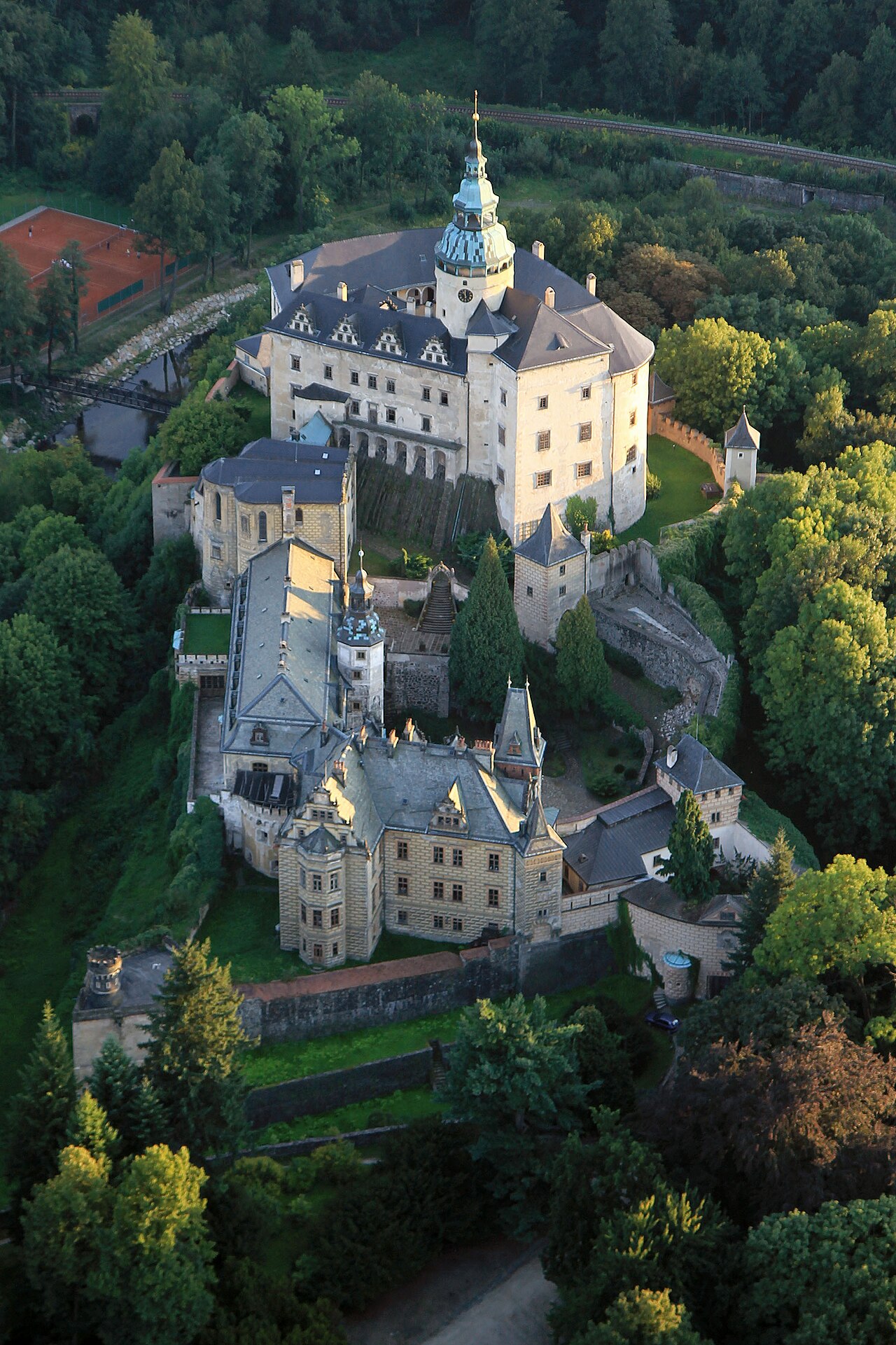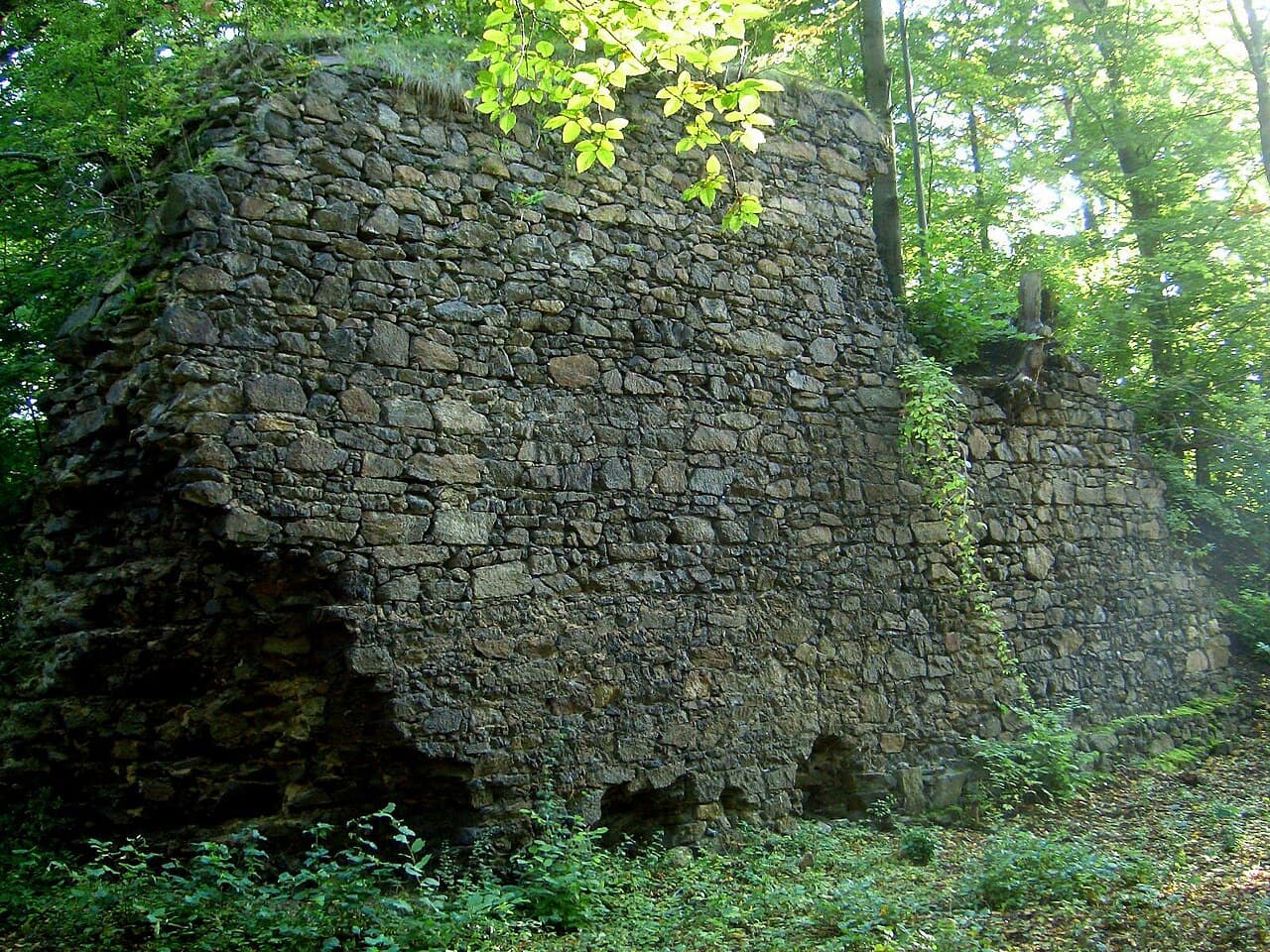
The Castle of Ronow, located near the village of Trzciniec in Poland, stands as a significant medieval fortress with a rich and turbulent history dating back to the 13th century. First mentioned in 1262, this castle was originally built by a branch of the Hronovice family, an influential noble lineage connected to the royal courts of Bohemia. Strategically positioned on a rocky hilltop overlooking the Lusatian Neisse River, the fortress played a crucial role in guarding vital trade routes linking towns such as Görlitz, Zittau, and Friedland.
Early history and ownership
The earliest records identify the castle's governor, or burgrave, as Conrad of Rhonawe, highlighting the site's administrative importance. Throughout the late 13th century and into the 14th century, ownership of the castle shifted among prominent noble families and royal authorities. Notably, the castle was held by the Leipa family before reverting to the Bohemian crown. In 1319, it became part of the dowry of Heinrich I of Jauer, a Silesian duke, marking a period of regional political significance. Following his death in 1346 without heirs, the castle returned to direct royal control.
Architecture and layout
Although extensive damage over the centuries has obscured many details, the castle's original design reveals a rectangular courtyard approximately 125 meters long and 55 meters wide, surrounded by formidable defensive walls and once encircled by a moat. The fortress was divided internally by a defensive wall into two main sections: the northern area housed the primary residential and administrative buildings, while the southern section connected to a lower bailey used for auxiliary functions.
A prominent architectural feature was the deep well, carved directly into the rock to a depth of about 45 meters, ensuring a reliable water supply during sieges. Additionally, a vaulted cellar measuring roughly 7 by 6 meters has been identified as a probable dungeon, reflecting the castle's defensive and judicial roles.
The castle's entrance was situated on the southeast side, accessed via a drawbridge, which further enhanced its defensive capabilities. In the northwest corner stood a square residential tower, a common feature in medieval fortifications, providing both living quarters and a vantage point.
The robber baron era and destruction
In the late 14th century, the castle became infamous as a stronghold for robber barons under the ownership of Hinko Berka von Dubá. From this base, raids were launched against merchants and neighboring settlements, disrupting trade and security in the region. This lawlessness prompted the Union of Six Towns to seek permission for a military campaign against the fortress.
In 1399, forces from nearby towns including Zittau and Zgorzelec successfully besieged and captured the castle. The fortress was systematically destroyed, leaving it in ruins and ending its role as a military and administrative center.
Archaeological discoveries and modern conservation
Interest in the site revived in the late 18th century with excavations uncovering significant artifacts such as sandstone window sills, weapons, and human remains, providing insight into the castle's medieval life and violent history. A forester's lodge was constructed within the ruins during this period, later serving as a guesthouse until its destruction by fire around 1980.
Since Poland's accession to the European Union in 2004, efforts have been made to preserve and interpret the ruins. Partial restoration work and the installation of bilingual informational panels have enhanced public understanding of the castle's heritage. Despite these measures, the site remains vulnerable to natural decay and vandalism.
Visitor experience and significance
Today, the ruins of the Castle of Ronow offer visitors a glimpse into medieval fortification architecture and the complex history of the borderlands between Poland and Bohemia. The panoramic views from the hilltop encompass the Iser Mountains, Lusatian Mountains, and the Zittau Mountains, as well as the scenic valley of the Neisse River.
The castle's legacy as a royal stronghold, a robber baron lair, and a historical monument contributes to its cultural significance in the region. Visitors can explore the remaining stone walls, the deep well, and the vaulted cellar, gaining insight into the defensive strategies and daily life of medieval nobility.
Frequently asked questions (FAQ)
- When was the castle of Ronow built?
- The castle was first mentioned in 1262 and was likely constructed in the early 13th century by the Hronovice family.
- What architectural features are notable at the castle?
- Notable features include a rectangular courtyard, defensive walls with a moat, a deep rock-hewn well about 45 meters deep, a vaulted cellar likely used as a dungeon, and a square residential tower.
- Why was the castle destroyed?
- The castle was destroyed in 1399 after it became a robber baron stronghold, disrupting regional trade and security. A coalition of towns besieged and demolished it to end the lawlessness.
- Can visitors access the castle ruins today?
- Yes, visitors can explore the ruins, including the remaining walls, the deep well, and the vaulted cellar. Informational panels provide historical context, though the site is exposed to natural wear.
- What views can be seen from the castle?
- From the castle ruins, visitors can enjoy panoramic views of the Iser, Lusatian, and Zittau Mountains, as well as the Neisse River valley.
Photo gallery

Information
Sources & official resources
Verify the information above using these authoritative references.
Loading map...
Visitor reviews
No reviews yet. Been here? Write the first review and help other travelers!
Write the first reviewVisited this castle? Share your experience
Your review helps other travelers and adds first-hand knowledge to our encyclopedia.