Trongzund Fort
Trongzund Fortress, also known as Trångsund Fortress (Russian: крепость Тронгзунд, Finnish: Uuraan linnoitus), is a bastioned fortress located on the islands of Vysotsky and Maly Vysotsky, near the town of Vysotsk in the Leningrad Oblast of the Russian Federation. Constructed around 1710 by the order of Peter the Great, the fortress was part of Russia's strategic efforts during the Great Northern War to secure the newly captured town of Vyborg from Sweden. Its name, derived from the Swedish word "Trångsund," means "narrow strait," reflecting its position guarding a crucial maritime passage in the Vyborg Bay.
Historical context and strategic importance
The fortress was established in the aftermath of Russia's successful siege of Vyborg in 1710, a pivotal event that shifted regional power from Sweden to Russia. Peter the Great recognized the necessity of fortifying this maritime gateway to protect the newly acquired territories and to assert Russian naval dominance in the Baltic Sea. The location on the islands allowed control over naval traffic entering and exiting the bay, making it a critical point for defense and military operations.
In the early 19th century, specifically in 1812, the fortress and surrounding region were incorporated into the Grand Duchy of Finland by Alexander I, reflecting the changing political landscape of the Russian Empire. This period saw the fortress maintained as part of the defensive network protecting the empire's northwestern borders.
Architectural evolution and military role
Originally constructed in the post-Renaissance period, the fortress was designed as a bastioned fortress, a style characterized by angular bastions projecting outward from the main walls to allow defensive fire in multiple directions and eliminate blind spots. This design was typical of early 18th-century military architecture, influenced by the principles of the Italian military engineer Vauban.
However, the fortress did not retain its original 18th-century structures. After the Crimean War in the 1860s, Trongzund Fortress underwent significant reconstruction and modernization. The fortifications were adapted to meet new military technologies and threats, resulting in the current layout and structures visible today. The early 18th-century elements have largely disappeared, replaced by fortifications better suited to the era's artillery and naval warfare.
In the early 20th century, Trongzund was intended to be integrated into the extensive Peter the Great's Naval Fortress system, a network of coastal defenses designed to protect the Gulf of Finland and St. Petersburg. However, the fortress was disarmed during World War I, reflecting shifts in military strategy and the changing nature of warfare.
Role during conflicts
During the 1918 Finnish Civil War, the fortress was occupied by the local Women's Red Guard, highlighting its continued military relevance even in the 20th century. Its strategic location made it a valuable asset for controlling naval access and regional security during turbulent times.
Geographical and structural features
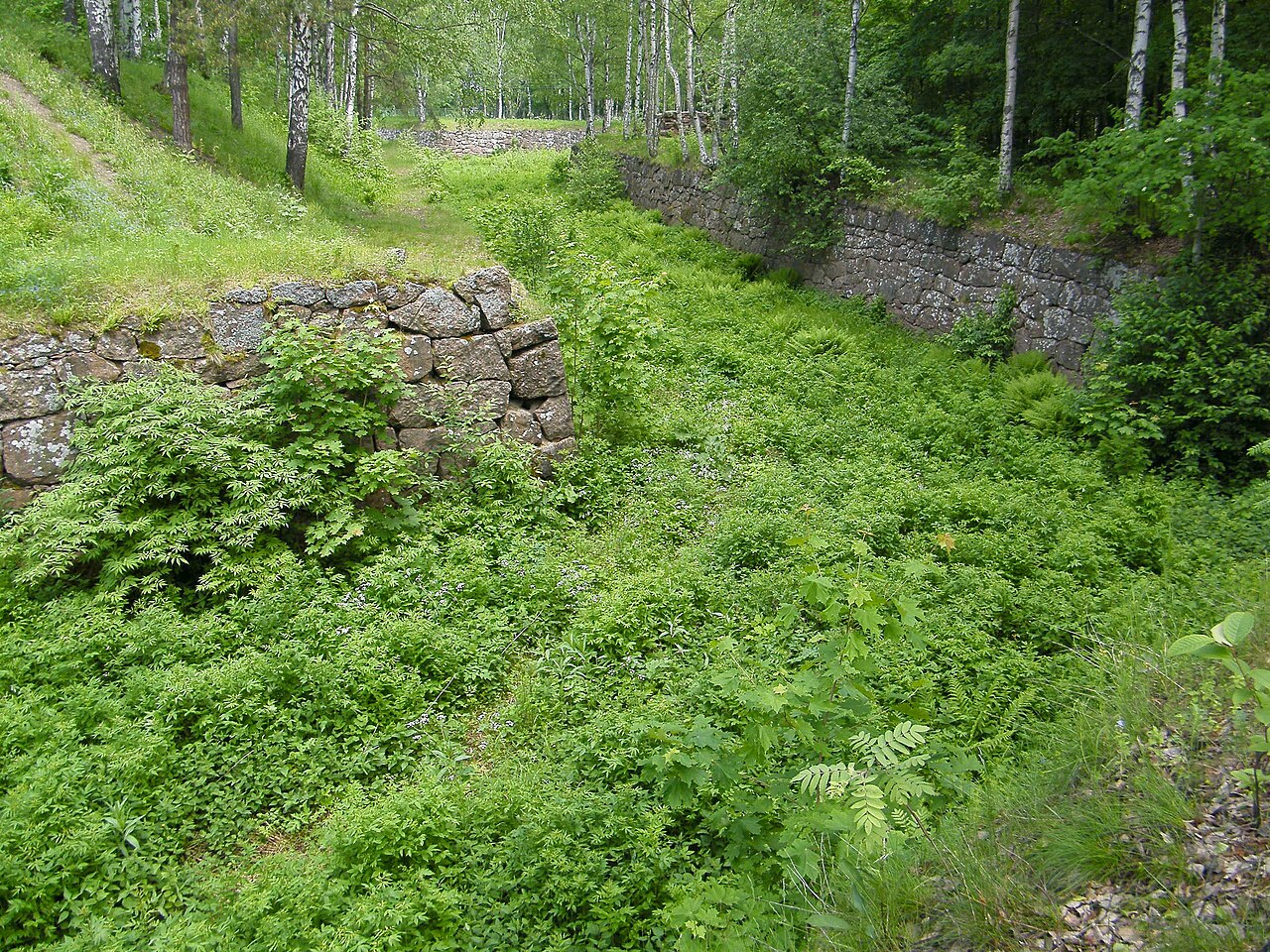
Situated approximately 12 kilometers south of Vyborg, the fortress spans the islands of Vysotsky and Maly Vysotsky in the Vyborg Bay. Its position on these islands allowed it to command the narrow straits and maritime routes essential for controlling naval passage in the region. The fortress's bastioned design includes ramparts, bastions, and moats adapted over time to evolving military needs.
The fortress's layout reflects the typical bastioned fortress principles, with angular bastions providing overlapping fields of fire and thick defensive walls designed to withstand artillery bombardment. The modernization efforts in the 1860s introduced reinforced structures suitable for newer artillery pieces, enhancing its defensive capabilities.
Preservation and current status
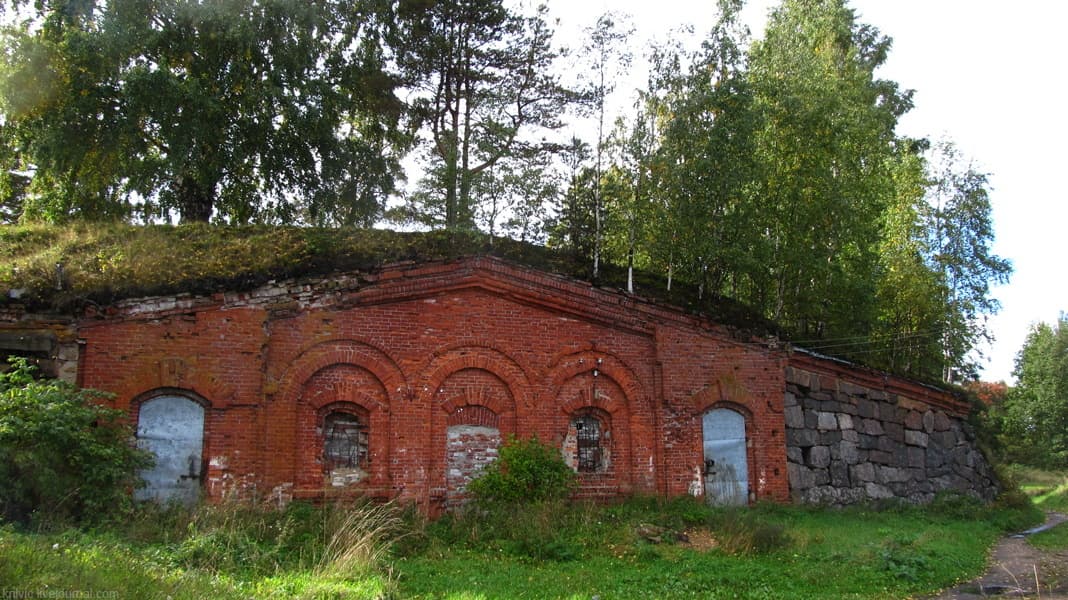
Today, Trongzund Fortress remains a significant historical and architectural monument. While the original early 18th-century structures are no longer visible, the fortress's 19th-century modifications survive, offering insights into the evolution of military architecture over two centuries. Its condition can be described as partially preserved, with many fortifications intact but some areas showing signs of decay.
The fortress is accessible for visitors interested in military history and coastal fortifications. It stands as a testament to the strategic military planning of the Russian Empire and the ongoing importance of the Baltic region in European history.
Visiting information and cultural significance
Located near the town of Vysotsk, Trongzund Fortress attracts history enthusiasts and scholars studying the Great Northern War and Russian military architecture. The site offers a tangible connection to the era of Peter the Great and the imperial ambitions that shaped Northern Europe in the 18th century.
The fortress also forms part of the broader historical narrative of the Baltic Sea region, illustrating the shifting control among Sweden, Russia, and Finland over centuries. Its inclusion in the Grand Duchy of Finland and later military engagements reflect the complex geopolitical history of the area.
Frequently asked questions (FAQ)
- How do I get to Trongzund Fortress from Vysotsk?
- Trongzund Fortress is located about 12 kilometers south of Vysotsk on the islands of Vysotsky and Maly Vysotsky. Visitors can reach the fortress by boat or local transport services that connect the mainland to these islands.
- What is the historical significance of Trongzund Fortress?
- Built by Peter the Great around 1710, Trongzund Fortress played a key role in securing the Baltic region after Russia captured Vyborg from Sweden during the Great Northern War. It later served as part of the Grand Duchy of Finland's defenses and was involved in several 20th-century conflicts.
- Can I visit the original 18th-century structures of the fortress?
- The original early 18th-century structures of Trongzund Fortress are no longer visible due to extensive reconstruction after the Crimean War. Visitors can see the 19th-century fortifications that reflect the later military adaptations.
- Why is Trongzund Fortress called a bastioned fortress?
- Trongzund Fortress is classified as a bastioned fortress because of its angular bastions projecting from the walls, designed to provide overlapping fields of fire and eliminate blind spots, a common military architectural style in the post-Renaissance period.
- Is Trongzund Fortress open year-round?
- Visiting hours for Trongzund Fortress may vary seasonally, and it is advisable to check local information before planning a visit. The fortress is generally accessible during warmer months when transport to the islands is available.
Photo gallery

Information
Loading map...
Visitor reviews
No reviews yet. Been here? Write the first review and help other travelers!
Write the first reviewVisited this castle? Share your experience
Your review helps other travelers and adds first-hand knowledge to our encyclopedia.