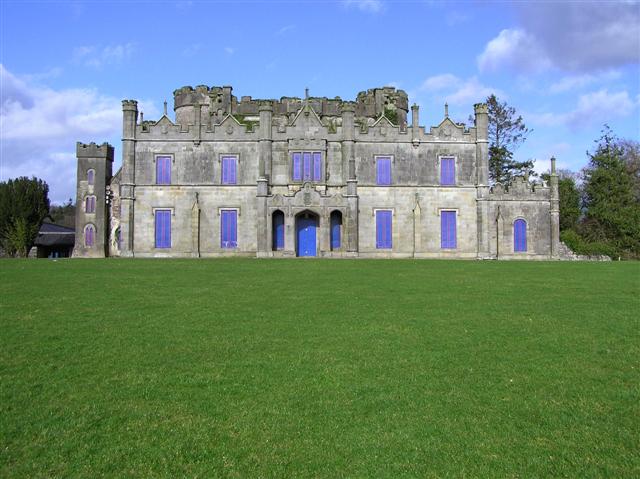
Trillick Castle
Trillick Castle, also known as Mervyn Castle, is a historic 17th-century fortified residence located north of the village of Trillick, situated between the towns of Omagh and Enniskillen in County Tyrone, Northern Ireland. This castle represents an example of the fortified houses built during the early 1600s in Ulster, reflecting the architectural and defensive needs of the period.
Historical background and construction
The castle was constructed by Captain James Mervyn between 1620 and 1628, during a time of significant political and social change in Ireland following the Plantation of Ulster. The Mervyn family was part of the English settler community, and the castle served both as a residence and a defensive structure. It was described in historical records as "one of the best of its kind," indicating its prominence among contemporary fortified houses.
Trillick Castle remained occupied until the 19th century. By 1814, it was reported vacant and had passed into the ownership of General Mervyn Archdale, a descendant of the Mervyn family line. The castle's decline in use corresponds with broader changes in military architecture and the reduced need for fortified dwellings in the region.
Architectural features and layout
Trillick Castle was built as a defended house with a bawn—a defensive enclosure typical of Irish fortified houses. The surviving remains form a rectangular block measuring approximately 6.5 meters wide by 14 meters long. The structure originally rose two to three stories high, with the west gable and chimney stack still standing prominently.
The castle's ground floor includes a large fireplace and a bread oven set into the west gable, indicating domestic use alongside its defensive role. The first floor featured large windows and another fireplace, suggesting a combination of comfort and security for its inhabitants.
The presence of a bawn would have provided a fortified courtyard space, allowing for protection of livestock and additional defense against attackers. This combination of residential and defensive architecture is characteristic of early 17th-century Ulster plantation houses.
Location and current condition
Trillick Castle is situated in a small wooded area on private land along Castlehill Road. Its position away from public roads and partial concealment by woodland make it difficult to locate and view from public access points. The castle survives as partially preserved ruins, with only fragments of the north, east, and south walls remaining alongside the more intact west gable.
Due to its location on private property, the castle is not open to public visitation. Preservation efforts are limited, and the site remains a quiet historical landmark rather than a tourist destination.
Significance in Ulster plantation architecture
Trillick Castle exemplifies the early 17th-century trend of constructing defended houses with bawns in Ulster, reflecting the turbulent times during the Plantation period. These structures were designed to provide security for settlers while also serving as comfortable residences. The castle's architectural features, such as the large fireplaces, bread oven, and substantial stone walls, illustrate the blend of domestic needs and military preparedness.
The castle's association with the Mervyn family, prominent settlers in the region, highlights the social and political dynamics of the time. Though now in ruins, Trillick Castle remains an important piece of Northern Ireland's built heritage, offering insight into the early colonial architecture and settlement patterns of the 1600s.
Frequently asked questions (FAQ)
- How do I get to Trillick Castle?
- Trillick Castle is located in Trillick, Northern Ireland, and can be easily accessed by car or public transport. If you're driving, follow the A4 road and look for signs directing you to the village of Trillick. Public buses are available from nearby towns, and the nearest train station is approximately 15 miles away.
- What is the historical significance of Trillick Castle?
- Trillick Castle dates back to the 17th century and is a significant landmark in the region, reflecting the architectural styles of its time. It was originally built as a defensive structure during a period of conflict in Ireland. The castle has witnessed various historical events, contributing to its rich heritage.
- When was Trillick Castle last renovated?
- The most recent renovations of Trillick Castle took place in the early 2000s, focusing on preserving its historical features while making it more accessible to visitors. Restoration efforts have aimed to maintain the castle's integrity and enhance its appeal as a tourist attraction. Ongoing maintenance ensures that the castle remains a significant part of the local landscape.
- Can I visit Trillick Castle year-round?
- Yes, Trillick Castle is open to visitors year-round, but it is advisable to check ahead for specific opening hours and any seasonal closures. The castle offers guided tours and self-exploration options, which may vary depending on the time of year. Group bookings are also available for a more personalized experience.
- Why is Trillick Castle considered an architectural gem?
- Trillick Castle is admired for its unique blend of medieval and modern architectural elements, showcasing the evolution of castle design over the centuries. Its imposing stone structure, intricate carvings, and historical features make it a fascinating site for architecture enthusiasts. The castle's design reflects both its defensive purpose and its role as a residence.
- Is it possible to host events at Trillick Castle?
- Yes, Trillick Castle offers event hosting services for various occasions, including weddings, corporate gatherings, and private parties. The picturesque setting and historical ambiance provide a memorable backdrop for any event. It is recommended to contact the castle administration for specific details and availability.
- What are the ticket prices for visiting Trillick Castle?
- Ticket prices for Trillick Castle are quite reasonable, with discounts available for children, seniors, and groups. Adult tickets typically cost around £10, while children under 12 can enter for half price. Special family packages are also available, ensuring an affordable outing for all.
- What is the best time to visit Trillick Castle?
- The best time to visit Trillick Castle is during the spring and summer months, from April to September, when the weather is generally mild and pleasant. During this period, you can enjoy guided tours and outdoor activities in the surrounding gardens. Autumn also offers beautiful scenery, but be prepared for cooler temperatures.
- Are there any nearby attractions to visit along with Trillick Castle?
- Yes, there are several nearby attractions to explore, including the beautiful countryside of County Tyrone and other historical sites such as the Ulster American Folk Park. Visitors can also enjoy local shops, cafes, and scenic walks in the area. Combining your trip with a visit to these attractions can enhance your overall experience.
Information
Address
Castlehill Road, Trillick, County Tyrone, Northern Ireland
Loading map...
Visitor reviews
No reviews yet. Been here? Write the first review and help other travelers!
Write the first reviewVisited this castle? Share your experience
Your review helps other travelers and adds first-hand knowledge to our encyclopedia.