Necarne Castle
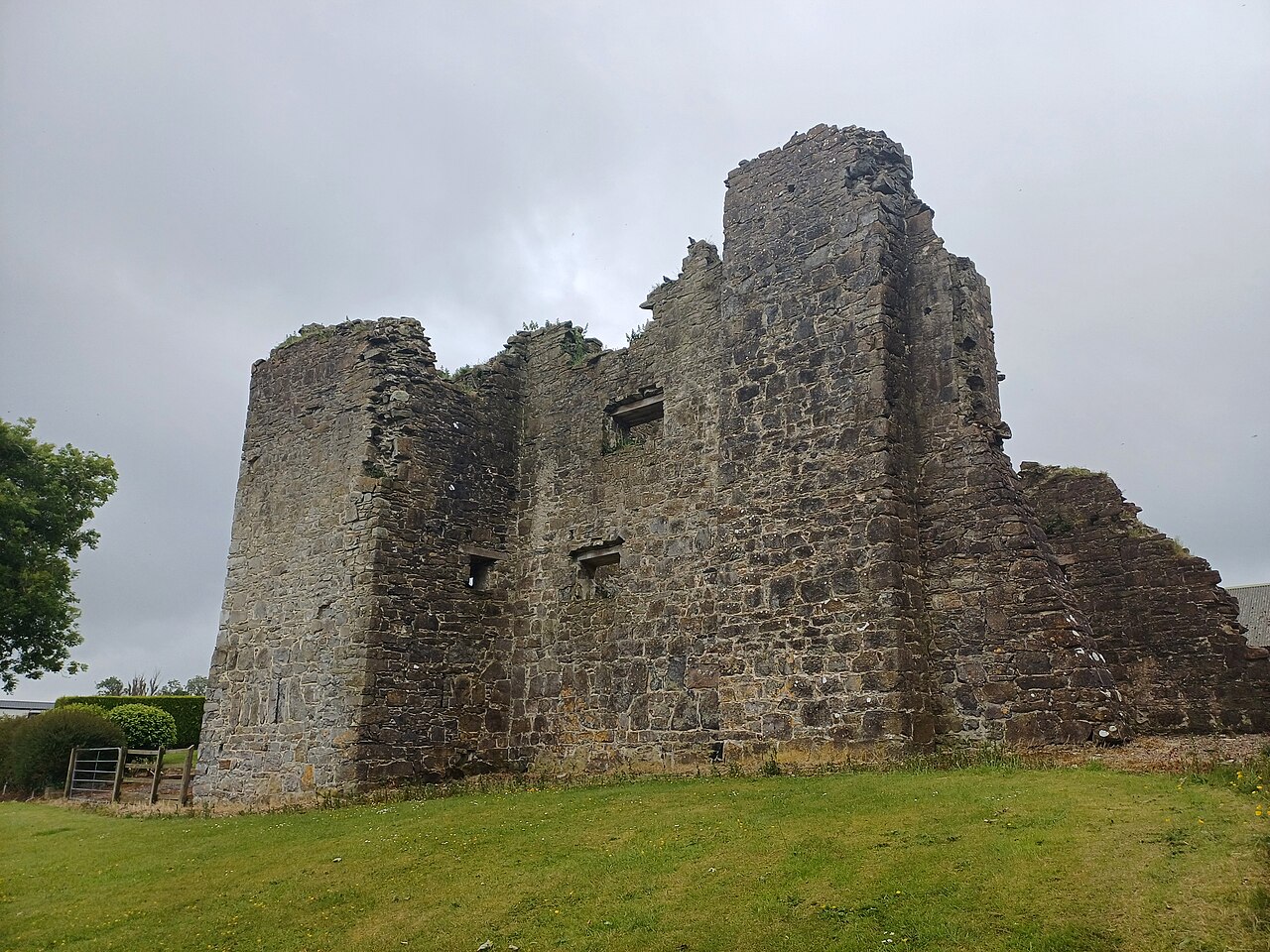
Necarne Castle, also known as Castle Irvine, is a historic castle located south of the town of Irvinestown in County Fermanagh, Northern Ireland. This castle stands as a significant example of the Ulster Plantation period, with origins dating back to the early 17th century. Over the centuries, it has undergone substantial architectural transformations, reflecting the changing needs and tastes of its owners, as well as adaptations to historical events such as World War II.
The original castle was constructed around 1619 by Gerard Lowther, a Scottish settler and planter, as part of the English and Scottish colonization efforts during the Ulster Plantation. This early fortification was typical of plantation castles, featuring a defensive bawn or curtain wall designed to protect settlers from local unrest. The castle was strategically positioned on a hill, classifying it as a hill castle, which provided a commanding view of the surrounding landscape and enhanced its defensive capabilities.
Early history and plantation origins
The lands on which Necarne Castle stands were initially granted to Gerard Lowther around 1615. Lowther's construction of the castle was part of a broader effort to establish secure settlements for British and Scottish colonists in Ulster. In 1629, the estate was leased to Christopher Irvine, whose family maintained ownership for nearly three centuries until 1922. The Irvine family played a central role in the castle's history, overseeing its development and adapting it to changing architectural styles and functions.
Architectural evolution and victorian transformation
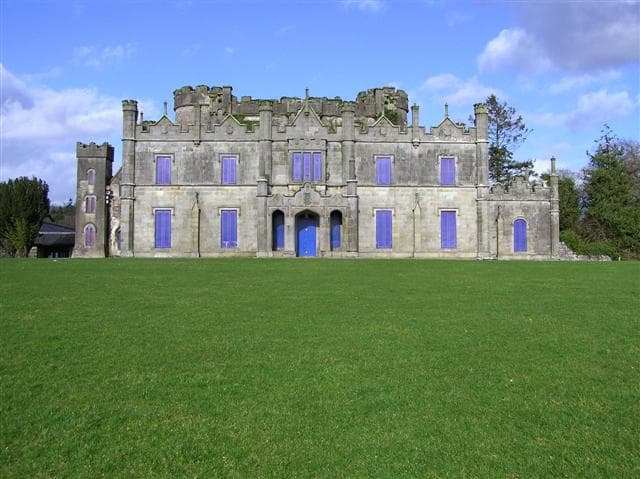
Between 1830 and 1835, Necarne Castle underwent a significant rebuilding and expansion under the direction of architect John Benjamin Keane. This renovation introduced a prominent Victorian Gothic style wing on the southwest facade, transforming the originally defensive structure into a grand country residence. The two-storey façade from this period is characterized by Gothic revival elements such as pointed arches, decorative stonework, and battlements that evoke medieval castle imagery while serving residential purposes.
The Victorian remodeling reflected the 19th-century trend of romanticizing medieval architecture and adapting historic castles for comfortable living rather than military defense. The extensive park surrounding the castle was also landscaped during this time, enhancing the estate's aesthetic appeal and recreational use.
Wartime role and military hospital
During World War II, Necarne Castle was requisitioned by the United States Navy and converted into a military hospital known as the 28th Station Hospital. Initially equipped with 200 beds, the hospital was soon expanded to accommodate 500 patients, primarily American soldiers and Royal Air Force personnel recuperating from injuries. This conversion required significant internal alterations to create wards, medical facilities, and support infrastructure within the historic structure.
The castle's role in the war effort is commemorated by a nearby Royal Air Force cemetery, established for airmen who died during the Battle of the Atlantic. This cemetery remains a poignant reminder of the castle's contribution to Allied military operations.
Post-war decline and adaptive reuse
After the war, Necarne Castle was not reoccupied as a residence and gradually fell into disrepair. In 1981, the estate was purchased by Fermanagh District Council, which later leased it to the Northern Ireland Department of Agriculture for 25 years starting in 1988. During this period, the castle's outbuildings were repurposed as part of the Necarne Castle Equine College, serving as student accommodation and training facilities for agricultural and equine studies linked to the nearby Enniskillen Agricultural College.
Despite these uses, the main castle building itself remained unused and eventually became boarded up for safety reasons due to structural deterioration. The surrounding parkland continues to be accessible to the public during daylight hours, offering visitors a chance to explore the scenic grounds and appreciate the castle's historic setting.
Architectural features and surviving elements
The present-day remains of Necarne Castle prominently display the Victorian Gothic architectural style, with its two-storey façade and characteristic Gothic revival detailing. Beneath this 19th-century exterior lie the foundations and remnants of the original early 17th-century plantation castle built by Gerard Lowther. The early structure's defensive bawn walls, typical of Ulster Plantation fortifications, influenced the layout and security features of the estate.
The 1927 restoration by Captain Richard Outram Hermon preserved much of the castle's fabric before its wartime conversion. However, the extensive modifications required for the hospital function, including ward expansions and medical facilities, altered the interior significantly. Today, the castle stands as a partially preserved ruin, with the interior closed to visitors for safety.
The estate and parkland setting
Necarne Castle is set within a spacious parkland estate characteristic of the Lakeland region of Northern Ireland, near the shores of Lough Erne. The grounds include mature trees, landscaped gardens, and open spaces that were developed during the Victorian period to complement the castle's residential function. The estate's natural beauty and historical ambiance make it a notable heritage site in County Fermanagh.
Notable visitors and cultural significance
Throughout its history, Necarne Castle has hosted prominent guests, including Lord Mountbatten and Prince Bernhard of the Netherlands, reflecting its status as a distinguished country estate. Its role during World War II as a military hospital adds to its cultural and historical importance, linking it to broader narratives of the Allied war effort in Northern Ireland.
Today, Necarne Castle serves as a poignant example of the evolution of Ulster Plantation castles from fortified settler homes to romanticized country residences and wartime facilities. Its layered history and architectural features provide valuable insights into the social, military, and cultural developments of the region over four centuries.
Frequently asked questions (FAQ)
- How do I get to Necarne Castle?
- Necarne Castle is located in Irvinestown, Northern Ireland, easily accessible by car or public transport. If you're driving, follow the A32 road, and there is parking available nearby. For public transport, check local bus routes that connect to Irvinestown.
- What is the historical significance of Necarne Castle?
- Necarne Castle, built in the early 17th century, is an important historical landmark that reflects the turbulent history of Northern Ireland. It was originally constructed as a fortified residence and has witnessed numerous historical events, including conflicts during the English Civil War. The castle's ruins tell stories of the past and are a testament to the region's rich heritage.
- When was Necarne Castle built?
- Necarne Castle was constructed in the early 1600s, specifically around 1612, by the Earl of Enniskillen. The castle has undergone various modifications and restorations throughout the centuries, contributing to its historic charm. Today, it stands as a reminder of the architectural styles and defensive structures of its time.
- Can I visit Necarne Castle?
- Yes, Necarne Castle is open to visitors, allowing you to explore its enchanting ruins and surrounding grounds. While some areas may be restricted for safety reasons, the site offers a glimpse into its storied past and scenic views of the surrounding landscape. It's advisable to check local guidelines or visitor information before your visit.
- Why is Necarne Castle popular among tourists?
- Necarne Castle attracts visitors due to its rich history, stunning architecture, and picturesque setting. The castle's romantic ruins provide excellent photo opportunities and a peaceful atmosphere for exploration. Additionally, its proximity to other attractions in Irvinestown makes it a popular stop for tourists.
- Is it possible to access Necarne Castle with mobility aids?
- While some areas of Necarne Castle may be challenging to navigate due to uneven terrain, visitors with mobility aids can access certain parts of the grounds. It's recommended to wear sturdy shoes and be prepared for a bit of walking. For specific accessibility options, check with local visitor services prior to your visit.
- What are the opening hours for Necarne Castle?
- Necarne Castle is generally open to visitors year-round, but specific hours may vary by season. Typically, the castle is accessible during daylight hours, with extended hours in the summer months. It's best to verify current opening times on the official website or through local tourism resources.
- What are the ticket prices for visiting Necarne Castle?
- Admission to Necarne Castle is usually free, making it an attractive option for visitors exploring the area. However, there may be guided tours or special events that could require a fee. Always check the latest information on potential costs before planning your visit.
- What are some nearby attractions to visit after Necarne Castle?
- After exploring Necarne Castle, visitors can enjoy nearby attractions such as Lough Erne, which offers beautiful scenery and recreational activities like boating and fishing. Additionally, the charming town of Irvinestown has shops, cafes, and historical sites worth exploring. Make a day of your visit by discovering the rich culture of the surrounding area.
Photo gallery

Information
Website
Visit websiteSources & official resources
Verify the information above using these authoritative references.
Loading map...
Visitor reviews
No reviews yet. Been here? Write the first review and help other travelers!
Write the first reviewVisited this castle? Share your experience
Your review helps other travelers and adds first-hand knowledge to our encyclopedia.