Castle Archdale Tower

Castle Archdale Tower in County Fermanagh, Northern Ireland
Lisnarick, Northern Ireland, United Kingdom
Modern (19th–20th c.)
Well Preserved

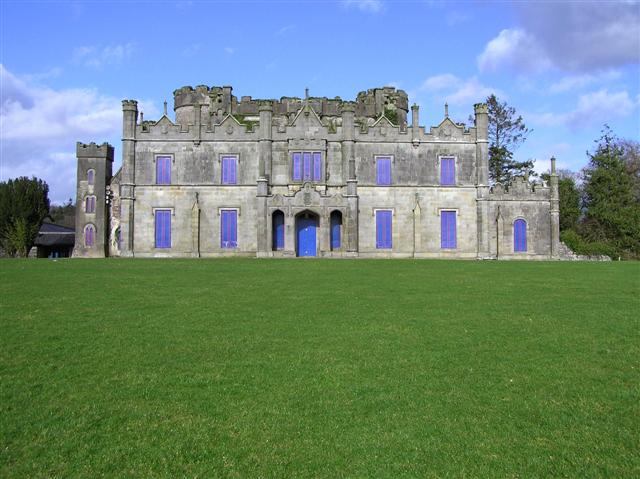
Castle Archdale Tower is a notable 19th-century folly located within the grounds of Castle Archdale Country Park in County Fermanagh, Northern Ireland. Positioned southwest of the village of Lisnarick, this tower serves as a picturesque landmark at the entrance of the park, which is part of the historic estate once owned by the Archdale family.

The architectural character of Castle Archdale Tower

Constructed during the 19th century, Castle Archdale Tower exemplifies the Victorian-era fascination with ornamental and romantic structures known as follies. Unlike defensive castles, follies were built primarily for aesthetic purposes, often to enhance the landscape or demonstrate the wealth and taste of the landowners. This tower features typical characteristics of such constructions, including a slender, vertical form and decorative stonework, designed to evoke the appearance of a medieval tower without serving any military function.

The tower’s design reflects the Romantic movement in architecture, which celebrated medieval styles and picturesque ruins. While the exact architectural style of Castle Archdale Tower is not formally classified, its form and detailing align with the Victorian penchant for Gothic Revival influences common in follies of that period.

Historical context and significance

The Archdale family, prominent landowners in the region, commissioned the tower as part of their estate improvements during the 19th century. Follies like Castle Archdale Tower were popular among the British gentry and aristocracy as ornamental features in large country parks and estates. These structures often served as focal points for walks and views, contributing to the overall landscape design and leisure experience.

Castle Archdale Tower does not have a history of military use or siege; its purpose was purely decorative, reflecting a broader cultural trend in estate landscaping during the Victorian era. The tower complements other features of Castle Archdale Country Park, which today offers visitors a blend of natural beauty and historic interest.

Castle Archdale Country Park and visitor experience

The tower stands at the entrance of Castle Archdale Country Park, a popular public park that encompasses woodland, lakes, and walking trails. The park is freely accessible to visitors year-round, allowing them to enjoy the scenic surroundings and historical ambiance. While the tower itself is not open for interior visits, it remains a striking visual element within the park's landscape.

The park offers a range of outdoor activities, including hiking, birdwatching, and fishing, making it a favored destination for both locals and tourists. The presence of Castle Archdale Tower adds a historical dimension to the natural setting, enriching the visitor experience with a glimpse into 19th-century estate culture.

Preservation and current status

Castle Archdale Tower is well-preserved as a folly and remains a distinctive feature of the Castle Archdale estate. Its condition allows it to continue serving as an evocative landmark without the need for extensive restoration. The tower’s survival contributes to the cultural heritage of County Fermanagh and reflects the architectural tastes of the Victorian period.

Frequently asked questions (FAQ)

What is the history of Castle Archdale Tower?
Castle Archdale Tower dates back to the 16th century and is a significant historical structure in Lisnarick. Originally built as a defensive fortress, it has witnessed numerous historical events and changes in ownership over the centuries, reflecting the rich heritage of Northern Ireland.
When is the best time to visit Castle Archdale Tower?
The best time to visit Castle Archdale Tower is during the spring and summer months, from April to September, when the weather is milder and the surrounding landscape is in full bloom. This period also offers longer daylight hours, allowing visitors to enjoy the beauty of the castle and its surroundings.
Can I access the interior of Castle Archdale Tower?
Access to the interior of Castle Archdale Tower may be limited due to its historical nature and preservation efforts. It is advisable to check with local authorities or visitor information for any guided tours or special events that may allow interior access.
Is it possible to take guided tours of Castle Archdale Tower?
Yes, guided tours of Castle Archdale Tower are often available, providing visitors with detailed insights into its history and architecture. These tours can enhance your experience, offering a deeper understanding of the castle's significance in the region.
What are the opening hours for Castle Archdale Tower?
Castle Archdale Tower typically opens to visitors from 10 AM to 5 PM, but it is recommended to check the official website or local visitor centers for any seasonal variations in hours. Planning your visit during these times ensures you have ample opportunity to explore the site.
Are there any nearby attractions to visit while at Castle Archdale Tower?
Yes, several attractions are located near Castle Archdale Tower, including the beautiful Lough Erne and the scenic Fermanagh Lake District. Visitors can also explore nearby historical sites, nature trails, and charming local villages that showcase the area's culture and natural beauty.
What are the ticket prices for visiting Castle Archdale Tower?
Ticket prices for Castle Archdale Tower can vary depending on the season and any special events. It is best to check the official website or contact local tourism offices for the most up-to-date pricing information and any available discounts or family passes.
How do I get to Castle Archdale Tower?
Castle Archdale Tower is easily accessible by car, located just off the main roads in Lisnarick. For those using public transportation, local bus services may provide routes to the area, but checking schedules in advance is recommended to ensure a smooth visit.

Information

Tower House

Loading map...

Visitor reviews

No reviews yet. Been here? Write the first review and help other travelers!

Write the first review

Visited this castle? Share your experience

Your review helps other travelers and adds first-hand knowledge to our encyclopedia.

Write a review

(5/5)

0/2000 characters

Your review will be visible after admin approval

Nearby castles

2 km

Old Castle Archdale

Castle Archdale Forest, United Kingdom

Old Castle Archdale stands as a historic Renaissance fortress built in 1615 on a cliff within the Castle Archdale Forest in County Fermanagh, Northern Ireland. This castle, constructed by John Archdale, an English planter from Suffolk, represents the early 17th-century wave of English settlement during the Plantation of Ulster. The castle's name "Old" distinguishes it from the later late 18th-century Castle Archdale, located further southwest. Architectural design and defensive features The castle was built on a distinctive T-plan, a common layout in Renaissance military architecture that allowed for better defense and internal organization. Surrounding the main structure was a sturdy defensive bawn measuring approximately 66 feet by 64 feet, with walls rising 15 feet high. This bawn was fortified with two flankers positioned on its northern corners, designed to provide overlapping fields of fire against attackers approaching the castle walls. The combination of the T-plan structure and the protective bawn with flankers exemplifies the strategic military architecture of the early 1600s in Ireland, reflecting the need for security amidst the turbulent political climate of the Plantation period. Historical context and significance John Archdale acquired the estate, originally known as Tullana, in 1612 after paying £5, 6 shillings, and 8 pence for 1,000 acres. The castle's construction in 1615 coincided with the English crown's efforts to establish loyal Protestant settlements in Ulster, displacing native Irish landowners. The castle played a significant role during the Irish Rebellion of 1641, a major uprising by Irish Catholics against English and Scottish Protestant settlers. It was seized by Rory Maguire, a local Irish chieftain aiming to reclaim ancestral lands lost in 1607. During this violent siege, the Archdale family suffered tragic losses; while the heir, William Archdale, was saved by his nurse, other children of the family were killed. Following the rebellion, the castle was restored to the Archdale family, who repaired and inhabited it until 1689. However, during the Williamite Wars—a series of conflicts between supporters of Catholic King James II and Protestant William of Orange—the castle was burned and subsequently abandoned, marking the end of its active use as a fortified residence. Current state and visitor experience Today, Old Castle Archdale remains a ruined structure nestled within the scenic Castle Archdale Forest Park. The ruins, freely accessible to the public, offer visitors a glimpse into early 17th-century military architecture and the turbulent history of the Ulster Plantation. The castle's location on a cliff within mature forest provides a picturesque setting that enhances the experience of exploring the remains. Though modest in scale, the ruins' bawn walls and remnants of the T-plan castle offer tangible connections to the region's colonial past and the conflicts that shaped Northern Ireland's landscape. Architectural legacy and cultural importance As a Renaissance-period castle in Northern Ireland, Old Castle Archdale exemplifies the transitional architectural styles introduced during the Plantation era, blending traditional defensive elements with emerging Renaissance influences. Its well-defined bawn and flankers reflect the adaptation of medieval fortification concepts to new military technologies and political realities. Moreover, the castle serves as a historical marker of the English settlement policies and the resulting cultural and social upheavals in 17th-century Ireland. The site's preservation within a public forest park ensures ongoing access for education, heritage tourism, and local community engagement. Location and accessibility Situated northwest of the village of Lisnarick, Old Castle Archdale is easily reachable within the United Kingdom of Great Britain and Northern Ireland. Visitors can explore the ruins at leisure without entrance fees, making it an attractive destination for history enthusiasts and nature lovers alike. Surrounding landscape and park amenities The castle is part of the larger Castle Archdale Forest Park, which offers walking trails, picnic areas, and natural scenery. This setting not only preserves the castle's environmental context but also provides a tranquil retreat that complements the historical experience.

Renaissance (15th–17th c.)
Details
5 km
Necarne Castle — United Kingdom castle

Necarne Castle

Irvinestown, United Kingdom

Necarne Castle, also known as Castle Irvine, is a historic castle located south of the town of Irvinestown in County Fermanagh, Northern Ireland. This castle stands as a significant example of the Ulster Plantation period, with origins dating back to the early 17th century. Over the centuries, it has undergone substantial architectural transformations, reflecting the changing needs and tastes of its owners, as well as adaptations to historical events such as World War II. The original castle was constructed around 1619 by Gerard Lowther, a Scottish settler and planter, as part of the English and Scottish colonization efforts during the Ulster Plantation. This early fortification was typical of plantation castles, featuring a defensive bawn or curtain wall designed to protect settlers from local unrest. The castle was strategically positioned on a hill, classifying it as a hill castle, which provided a commanding view of the surrounding landscape and enhanced its defensive capabilities. Early history and plantation origins The lands on which Necarne Castle stands were initially granted to Gerard Lowther around 1615. Lowther's construction of the castle was part of a broader effort to establish secure settlements for British and Scottish colonists in Ulster. In 1629, the estate was leased to Christopher Irvine, whose family maintained ownership for nearly three centuries until 1922. The Irvine family played a central role in the castle's history, overseeing its development and adapting it to changing architectural styles and functions. Architectural evolution and victorian transformation Between 1830 and 1835, Necarne Castle underwent a significant rebuilding and expansion under the direction of architect John Benjamin Keane. This renovation introduced a prominent Victorian Gothic style wing on the southwest facade, transforming the originally defensive structure into a grand country residence. The two-storey façade from this period is characterized by Gothic revival elements such as pointed arches, decorative stonework, and battlements that evoke medieval castle imagery while serving residential purposes. The Victorian remodeling reflected the 19th-century trend of romanticizing medieval architecture and adapting historic castles for comfortable living rather than military defense. The extensive park surrounding the castle was also landscaped during this time, enhancing the estate's aesthetic appeal and recreational use. Wartime role and military hospital During World War II, Necarne Castle was requisitioned by the United States Navy and converted into a military hospital known as the 28th Station Hospital. Initially equipped with 200 beds, the hospital was soon expanded to accommodate 500 patients, primarily American soldiers and Royal Air Force personnel recuperating from injuries. This conversion required significant internal alterations to create wards, medical facilities, and support infrastructure within the historic structure. The castle's role in the war effort is commemorated by a nearby Royal Air Force cemetery, established for airmen who died during the Battle of the Atlantic. This cemetery remains a poignant reminder of the castle's contribution to Allied military operations. Post-war decline and adaptive reuse After the war, Necarne Castle was not reoccupied as a residence and gradually fell into disrepair. In 1981, the estate was purchased by Fermanagh District Council, which later leased it to the Northern Ireland Department of Agriculture for 25 years starting in 1988. During this period, the castle's outbuildings were repurposed as part of the Necarne Castle Equine College, serving as student accommodation and training facilities for agricultural and equine studies linked to the nearby Enniskillen Agricultural College. Despite these uses, the main castle building itself remained unused and eventually became boarded up for safety reasons due to structural deterioration. The surrounding parkland continues to be accessible to the public during daylight hours, offering visitors a chance to explore the scenic grounds and appreciate the castle's historic setting. Architectural features and surviving elements The present-day remains of Necarne Castle prominently display the Victorian Gothic architectural style, with its two-storey façade and characteristic Gothic revival detailing. Beneath this 19th-century exterior lie the foundations and remnants of the original early 17th-century plantation castle built by Gerard Lowther. The early structure's defensive bawn walls, typical of Ulster Plantation fortifications, influenced the layout and security features of the estate. The 1927 restoration by Captain Richard Outram Hermon preserved much of the castle's fabric before its wartime conversion. However, the extensive modifications required for the hospital function, including ward expansions and medical facilities, altered the interior significantly. Today, the castle stands as a partially preserved ruin, with the interior closed to visitors for safety. The estate and parkland setting Necarne Castle is set within a spacious parkland estate characteristic of the Lakeland region of Northern Ireland, near the shores of Lough Erne. The grounds include mature trees, landscaped gardens, and open spaces that were developed during the Victorian period to complement the castle's residential function. The estate's natural beauty and historical ambiance make it a notable heritage site in County Fermanagh. Notable visitors and cultural significance Throughout its history, Necarne Castle has hosted prominent guests, including Lord Mountbatten and Prince Bernhard of the Netherlands, reflecting its status as a distinguished country estate. Its role during World War II as a military hospital adds to its cultural and historical importance, linking it to broader narratives of the Allied war effort in Northern Ireland. Today, Necarne Castle serves as a poignant example of the evolution of Ulster Plantation castles from fortified settler homes to romanticized country residences and wartime facilities. Its layered history and architectural features provide valuable insights into the social, military, and cultural developments of the region over four centuries.

Renaissance (15th–17th c.)
Details
5.1 km
Crevenish Castle — United Kingdom castle

Crevenish Castle

Kesh, United Kingdom

Crevenish Castle is a significant early 17th-century fortified residence located on the east bank of Lough Erne, just west of the village of Kesh in County Fermanagh, Northern Ireland. Constructed around 1618 by Sir Thomas Blennerhassett, a settler from Norfolk, England, the castle originally bore the name Castlehassett or Castle Hassett. This historic site offers insight into the turbulent period of the early Stuart era and the complex landownership and political conflicts in Ulster during the early 1600s. Historical context and ownership The castle was built during the Plantation of Ulster, a period when English and Scottish settlers were granted lands confiscated from the native Irish. Sir Thomas Blennerhassett was among these settlers and established Crevenish Castle as a fortified home and symbol of his family's status in the region. His brother was responsible for building nearby Castle Caldwell, indicating the Blennerhassett family's significant presence in County Fermanagh. After Sir Thomas, the castle passed to his eldest son, Sir Leonard Blennerhassett. The property later changed hands through marriage when Deborah Blennerhassett, Sir Leonard's widow, married Rory Maguire, a prominent Irish leader of the 1641 Rebellion in Fermanagh. Rory Maguire's involvement in the rebellion marks the castle’s connection to one of the most significant uprisings against English rule in Ireland. Following Rory's death in 1648, ownership reverted to the Blennerhassett family. However, by 1697, the castle was already described as ruinous, reflecting the impact of the mid-17th century conflicts and neglect. Architectural features and layout Though now in ruins, Crevenish Castle was originally a fortified manor house typical of early 17th-century Ulster architecture. It included a bawn, a defensive walled courtyard designed to protect inhabitants and livestock. The castle’s strategic position overlooking Lough Erne provided natural defense and control over the surrounding lands. Details of the castle’s original architectural style are limited due to its ruinous state, but it likely featured elements common to Plantation castles such as thick stone walls, narrow windows for defense, and a tower house structure. The bawn walls would have included defensive features such as battlements and possibly corner towers or flanking turrets to repel attackers. Later history and current condition Following its decline after the 17th century, Crevenish Castle fell into disrepair and today remains a ruin. It is privately owned and situated within the grounds of a caravan park, which restricts public access. Despite this, the site offers picturesque views over Lough Erne and retains enough structural remains to convey its historic presence. The castle’s ruinous condition is typical of many Plantation-era castles that suffered damage during the Irish Confederate Wars and were subsequently abandoned or repurposed. The site holds archaeological value as a representation of the early Stuart period fortifications in Northern Ireland. Visiting information and accessibility Crevenish Castle is not freely accessible to the public due to its private ownership and location within a caravan park. Visitors interested in viewing the ruins should respect private property restrictions and seek permission if necessary. The surrounding area near Kesh and Lough Erne offers other historic sites and natural attractions worth exploring. Significance in Ulster's plantation heritage Crevenish Castle exemplifies the architectural and historical legacy of the Ulster Plantation, a transformative period in Irish history. It reflects the attempts by English settlers to establish fortified homes that served both defensive and residential purposes in a contested frontier region. The castle’s association with key historical figures such as the Blennerhassett family and Rory Maguire connects it to the broader narrative of conflict and cultural change in 17th-century Ireland. Its remains contribute to understanding the social and military strategies employed during the Plantation and the resistance faced by settlers from native Irish clans. As a ruin, Crevenish Castle stands as a tangible link to this complex period of Irish history.

Post-Renaissance (17th–18th c.)
Details