Trazegnies Castle
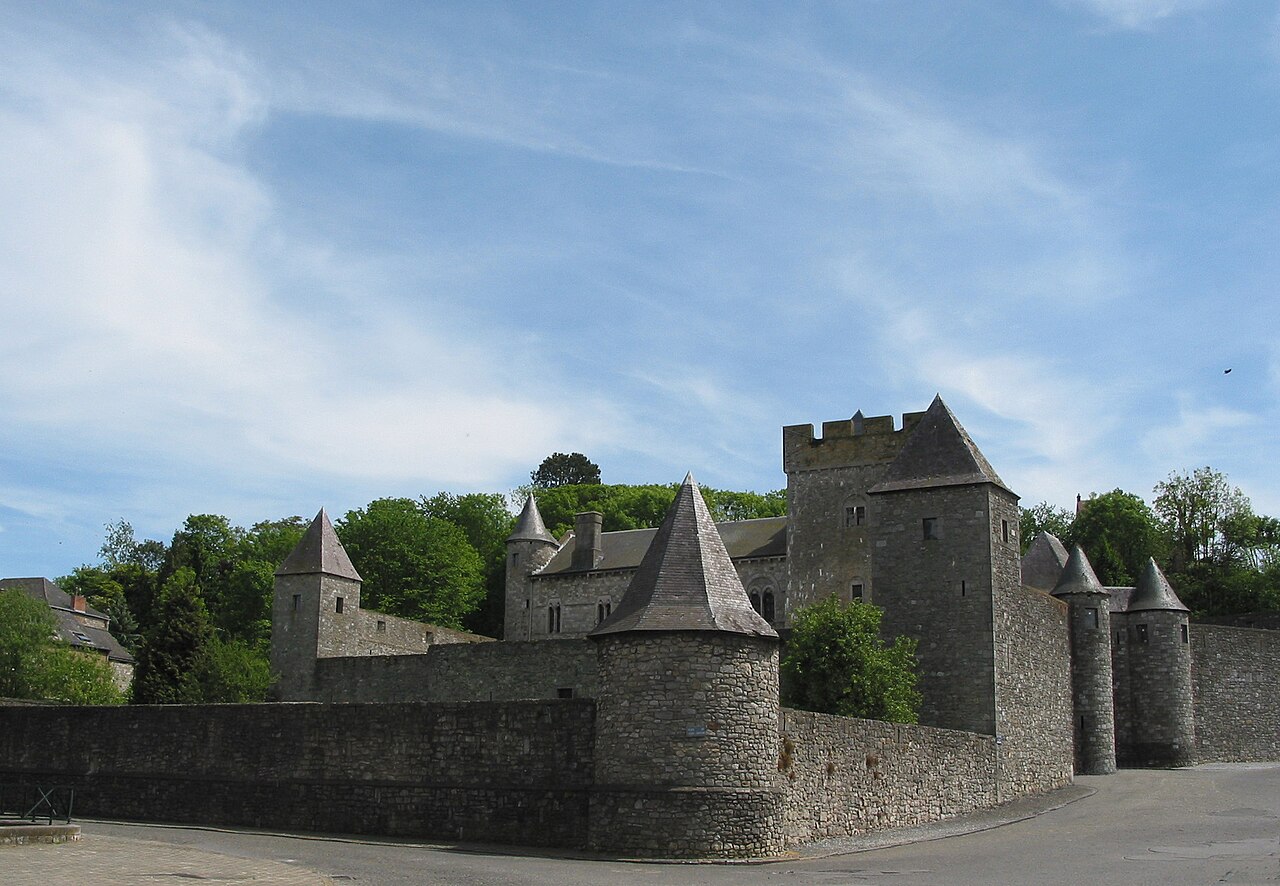
Trazegnies Castle, located in the town of Trazegnies in the province of Hainaut, Belgium, is a remarkable example of a hill castle with a rich history extending back to the 12th century. This castle stands as a testament to the region's medieval heritage and the architectural evolution through the centuries, combining elements from its original defensive purpose with later adaptations into a noble residence.
The origins and medieval significance
The castle was likely founded in the early 12th century by Gilles I de Trazegnies, a member of the noble House of Trazegnies. This family controlled a powerful and independent seigniory strategically positioned at the crossroads of three important medieval territories: the Duchy of Brabant, the County of Hainaut, and the Prince-Bishopric of Liège. This location made the castle an important military and administrative center during the high medieval period.
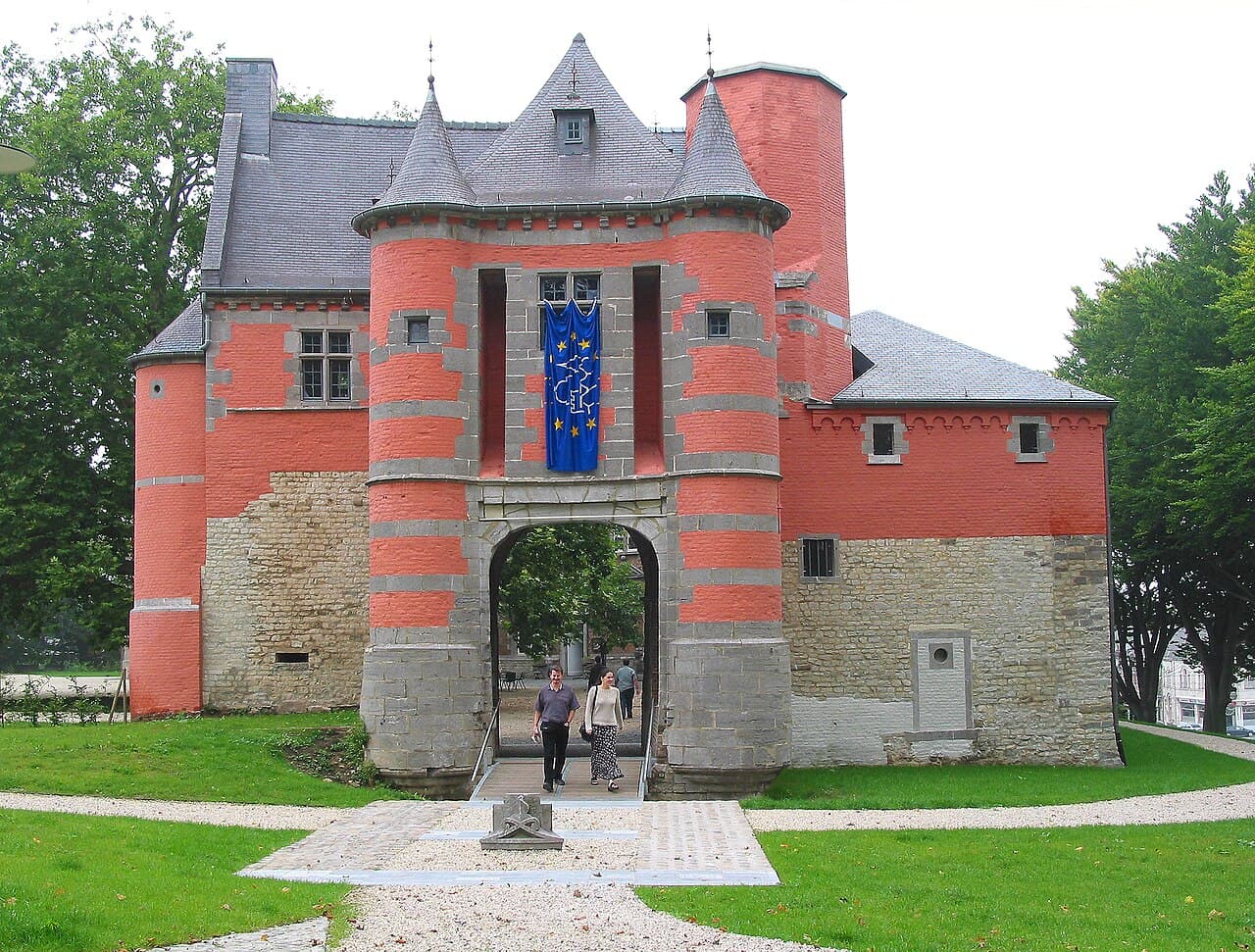
The earliest surviving part of the castle is the base of the square keep and the lower section of the gatehouse, dating from the 13th century. The castle's medieval fortifications included curtain walls, round corner towers, and a robust defensive layout designed to protect the seigniory and assert the Trazegnies family's influence.
The Trazegnies family and their historical role
The Trazegnies family was prominent in regional and European affairs. Several members participated in the Crusades, and one notably served as High Constable of France during the reign of King Louis IX. Jean III de Trazegnies was distinguished as a Knight of the Order of the Golden Fleece in 1515 and acted as a proxy groom for Isabella of Portugal on behalf of Charles V, Holy Roman Emperor in 1525.
Destruction and reconstruction
In 1554, during the Italian War of 1551–1559, the castle suffered significant damage when it was burnt and destroyed by the troops of Henry II of France. This event marked the end of the castle's purely military function.
At the end of the 16th century, the castle was rebuilt, transitioning from a fortress to a more comfortable residence. The reconstruction preserved some medieval elements, such as the lower part of the gatehouse, but also introduced new architectural styles. The early 17th century saw the construction of the main residential building in the Louis XIII style, reflecting contemporary tastes and signaling the castle's adaptation to peacetime noble life.
Architectural features and layout
The castle's layout today reflects its layered history. The medieval gatehouse remains a prominent feature, showcasing Romanesque and Gothic influences in its cellars and foundational structures. These underground spaces provide a rare glimpse into the castle's early construction phases.
The 17th-century corps de logis, built by Gillion-Othon de Trazegnies, features a brick and stone façade typical of the Louis XIII style. This contrasts with the older medieval masonry, highlighting the castle's architectural evolution.
Historically, the castle included the Beyaert wing, which connected the Louis XII wing to a circular tower. Unfortunately, this wing collapsed in 1920 due to subsidence caused by nearby coal mining activities, leaving the tower isolated from the main structure.
Ownership and preservation
The castle remained under the Trazegnies family until 1862, when the last marquis of the senior line died. The property then passed to his niece and was eventually sold to the Bascoup coal mining company. The company parceled the estate and sold the castle to private owners. In 1913, the Belgian state acquired the property.
By 1926, the castle had fallen into serious disrepair and was at risk of demolition. Thanks to the efforts of architect Marcel Simon and the association "Les Amis du Château de Trazegnies," restoration began to preserve the castle's historic fabric. Despite ongoing challenges such as structural damage from mining subsidence, restoration has continued with support from the Walloon Region.
Today, Trazegnies Castle serves cultural purposes, housing communal offices and hosting events. While the castle is privately owned, its grounds are accessible to the public, offering visitors a chance to appreciate its historical and architectural significance.
Architectural style and classification
The castle is classified as a hill castle, built primarily during the high medieval period. Its architectural style is a blend of medieval Romanesque and Gothic elements, combined with early modern Louis XIII style features from the 17th-century reconstruction. This mixture reflects the castle's evolution from a fortified stronghold to a noble residence.
Visiting information and cultural significance
While the castle itself is not fully open to the public due to its use for cultural and administrative functions, the surrounding grounds can be freely explored. Visitors can enjoy the castle's scenic setting and learn about its historical importance in the region.
Trazegnies Castle remains a significant heritage site in Belgium, illustrating the complex history of feudal power, military conflict, and architectural transformation over nearly a millennium.
Frequently asked questions (FAQ)
- What is the historical significance of Trazegnies Castle?
- Trazegnies Castle, dating back to the 13th century, is a prominent example of medieval architecture in Belgium. It served as a residence for various noble families and played a vital role in the region's history, particularly during the feudal period.
- When was Trazegnies Castle built?
- The castle was originally constructed in the 13th century, with significant renovations occurring in the following centuries. Its architecture reflects the evolving styles and defensive needs of medieval Europe.
- What are the opening hours for Trazegnies Castle?
- Trazegnies Castle is typically open to visitors from April to October, with specific hours varying by day. It is advisable to check the official website for the most current information regarding opening times and any seasonal changes.
- Can I take guided tours of Trazegnies Castle?
- Yes, guided tours are available for visitors interested in learning more about the castle's history and architecture. These tours provide a comprehensive overview and often include access to areas not open to the general public.
- Is it possible to host events at Trazegnies Castle?
- Trazegnies Castle offers various spaces for hosting events such as weddings, corporate meetings, and private gatherings. Interested parties should contact the castle's administration for details on availability and booking procedures.
- What are the ticket prices for visiting Trazegnies Castle?
- Ticket prices for Trazegnies Castle vary depending on age and group size, with discounts often available for students and seniors. It is recommended to check the official website for current pricing and any special promotions.
- When is the best time to visit Trazegnies Castle?
- The best time to visit Trazegnies Castle is during the spring and early autumn months when the weather is mild, and the gardens are in bloom. Additionally, visiting during weekdays can help avoid larger crowds often seen on weekends.
- Are there any nearby attractions to visit along with Trazegnies Castle?
- Yes, visitors to Trazegnies Castle can explore several nearby attractions, including local museums and parks that showcase the region's rich history. Additionally, the picturesque town of La Louvière is just a short drive away, offering more cultural experiences.
- How do I get to Trazegnies Castle?
- Trazegnies Castle is accessible by car and public transport, with several bus lines connecting it to nearby towns and cities. Visitors can also utilize GPS or mapping services for the most convenient routes to the castle.
Photo gallery

Information
Sources & official resources
Verify the information above using these authoritative references.
Loading map...
Visitor reviews
No reviews yet. Been here? Write the first review and help other travelers!
Write the first reviewVisited this castle? Share your experience
Your review helps other travelers and adds first-hand knowledge to our encyclopedia.