Tratzberg Castle
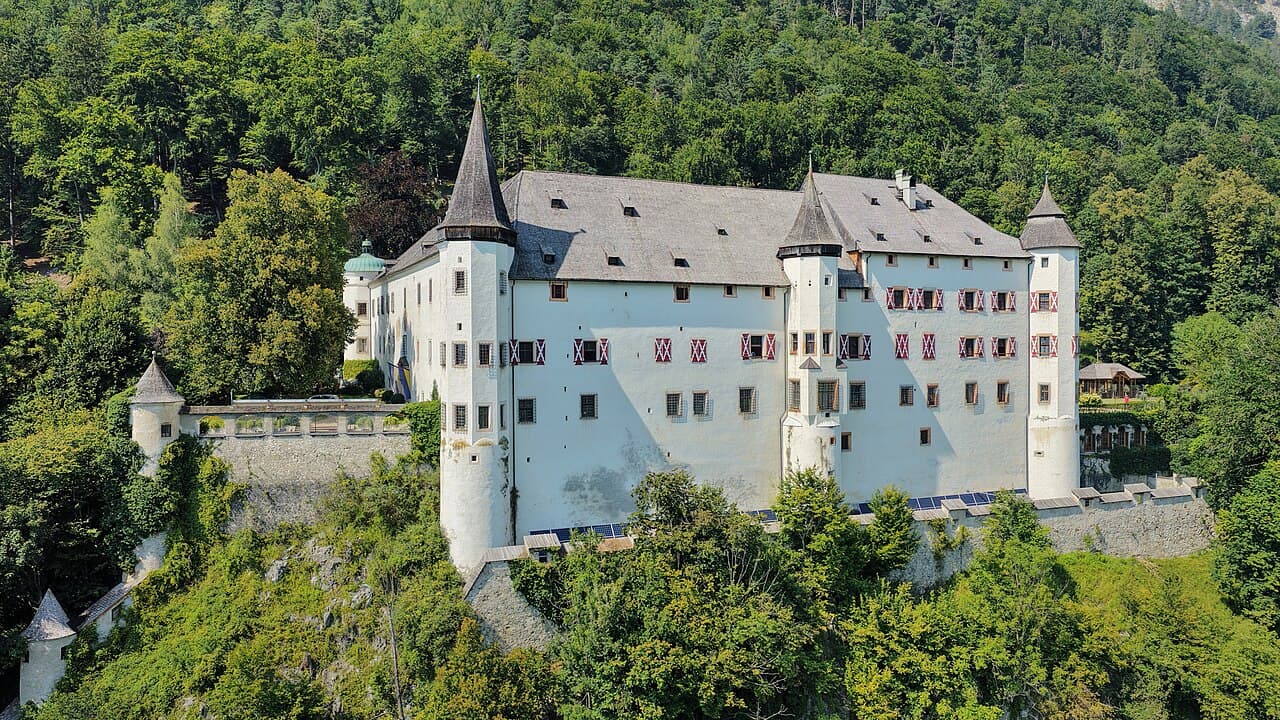
Tratzberg Castle stands prominently on a steep ridge above Jenbach in the Austrian region of Tyrol. This hill castle is a remarkable example of late Gothic and Renaissance architecture typical of the alpine territories within the Holy Roman Empire during the 16th century. Documented first in the 13th century, Tratzberg originally served as a border stronghold against Bavarian incursions and later became a favored hunting lodge of Emperor Maximilian I.
Early history and destruction
The castle's early origins trace back to the 13th century, when it functioned primarily as a defensive fortress. However, in the late 15th century, the original structure was severely damaged by fire, leaving it in ruins. Notably, Emperor Maximilian I chose not to rebuild the fortress himself but instead exchanged the ruined site with the Taenzels, a wealthy family renowned for their ownership of a significant silver mine in the region.
Construction and architectural development
In 1500, the Taenzel brothers, Veit-Jakob and Simon Tänzl, constructed the initial late Gothic elements of the current castle. Their work is distinguished by ornate decorations crafted from marble, wood, and iron, which highlight the artistic craftsmanship of the period. This phase marked a transition from purely defensive architecture to a more refined palace style.
Renaissance transformation
By 1554, the castle was acquired by Georg Knight of Ilsung, a prosperous merchant from Augsburg. He undertook substantial expansions and modifications that reflected the Renaissance spirit sweeping through Europe. The castle's painted courtyard and elegant Renaissance parlours are enduring testaments to this period of artistic and architectural flourishing.
Ownership by the fuggers and further expansion
In 1590, Tratzberg came into the possession of the Fugger family, a prominent and wealthy merchant dynasty. The Fuggers further expanded the castle, enriching its interiors and fortifications. Most of the furnishings and inventory preserved today date from their tenure, offering valuable insight into the lifestyle and tastes of late Renaissance nobility.
Period of decline and revival
Following multiple changes in ownership, Tratzberg experienced a prolonged period of abandonment lasting approximately 150 years. The castle fell into neglect until 1847, when it entered the hands of the Enzenberg family through the marriage of Franz Count Enzenberg to Ottilie Countess Tannenberg. The Enzenbergs undertook extensive restoration efforts, reviving the castle's grandeur and preserving its historical integrity.
Architectural features and preservation
Today, Tratzberg Castle encompasses around 6,800 square meters with a distinctive 5,000 square meter shingle roof. It retains many original elements, including late Gothic and Renaissance decorative details, fortified walls, and period furnishings that provide a vivid window into 16th-century Tyrolean aristocratic life. Its painted courtyard and well-preserved interiors make it one of Austria's most significant cultural monuments.
Location and significance
Situated in the alpine landscape of Tyrol, Tratzberg Castle is not only a historical fortress but also a symbol of regional heritage. Its strategic position overlooking the Inn Valley once made it a critical defensive site. Today, it attracts visitors interested in medieval and Renaissance architecture, as well as those fascinated by the history of the Holy Roman Empire's borderlands.
Current status and public access
Currently, Tratzberg Castle remains the private residence of Count Ulrich Goëss-Enzenberg and his wife, Katrin Goëss-Enzenberg. Despite its status as a family home, the castle is open to the public, allowing visitors to explore its richly decorated halls, historic chambers, and the impressive courtyard. The castle's preservation efforts have made it one of the best-preserved castles in Austria, maintaining both its architectural integrity and original furnishings.
Cultural and historical importance
Tratzberg Castle serves as a vital cultural monument, showcasing the evolution of castle architecture from medieval fortress to Renaissance palace. Its combination of defensive structures and refined residential spaces illustrates the changing needs and tastes of its noble occupants over centuries. The castle's association with notable historical figures and merchant families like the Fuggers adds to its historical depth and appeal.
Visitors to Tratzberg can appreciate not only the architectural beauty but also the layered history embodied in its walls, from its 13th-century origins through Renaissance transformations to modern conservation. The castle remains a tangible link to Austria's medieval and Renaissance past, offering educational and cultural value for scholars and tourists alike.
Frequently asked questions (FAQ)
- How do I visit Tratzberg Castle?
- Tratzberg Castle is open to the public for guided tours. Visitors can explore the castle's historic rooms and courtyard. It is advisable to check the official website for current opening hours and ticket prices before planning your visit.
- What architectural styles are featured at Tratzberg Castle?
- Tratzberg Castle showcases a blend of late Gothic and Renaissance architectural styles. The castle features ornate decorations, a painted courtyard, and elegant Renaissance parlours reflecting its 16th-century expansions.
- When was Tratzberg Castle built?
- The current form of Tratzberg Castle was built in 1500 by the Tänzl brothers, incorporating late Gothic elements. Significant Renaissance modifications followed in the mid-16th century.
- Is Tratzberg Castle still inhabited?
- Yes, Tratzberg Castle is still inhabited by the Enzenberg family, who have owned it since 1847. Despite being a private residence, parts of the castle are open to visitors.
- Why is Tratzberg Castle historically significant?
- Tratzberg Castle is significant for its role as a border fortress, its association with Emperor Maximilian I, and its well-preserved Renaissance architecture. It reflects the cultural and political history of Tyrol within the Holy Roman Empire.
Photo gallery

Information
Sources & official resources
Verify the information above using these authoritative references.
Loading map...
Visitor reviews
No reviews yet. Been here? Write the first review and help other travelers!
Write the first reviewVisited this castle? Share your experience
Your review helps other travelers and adds first-hand knowledge to our encyclopedia.