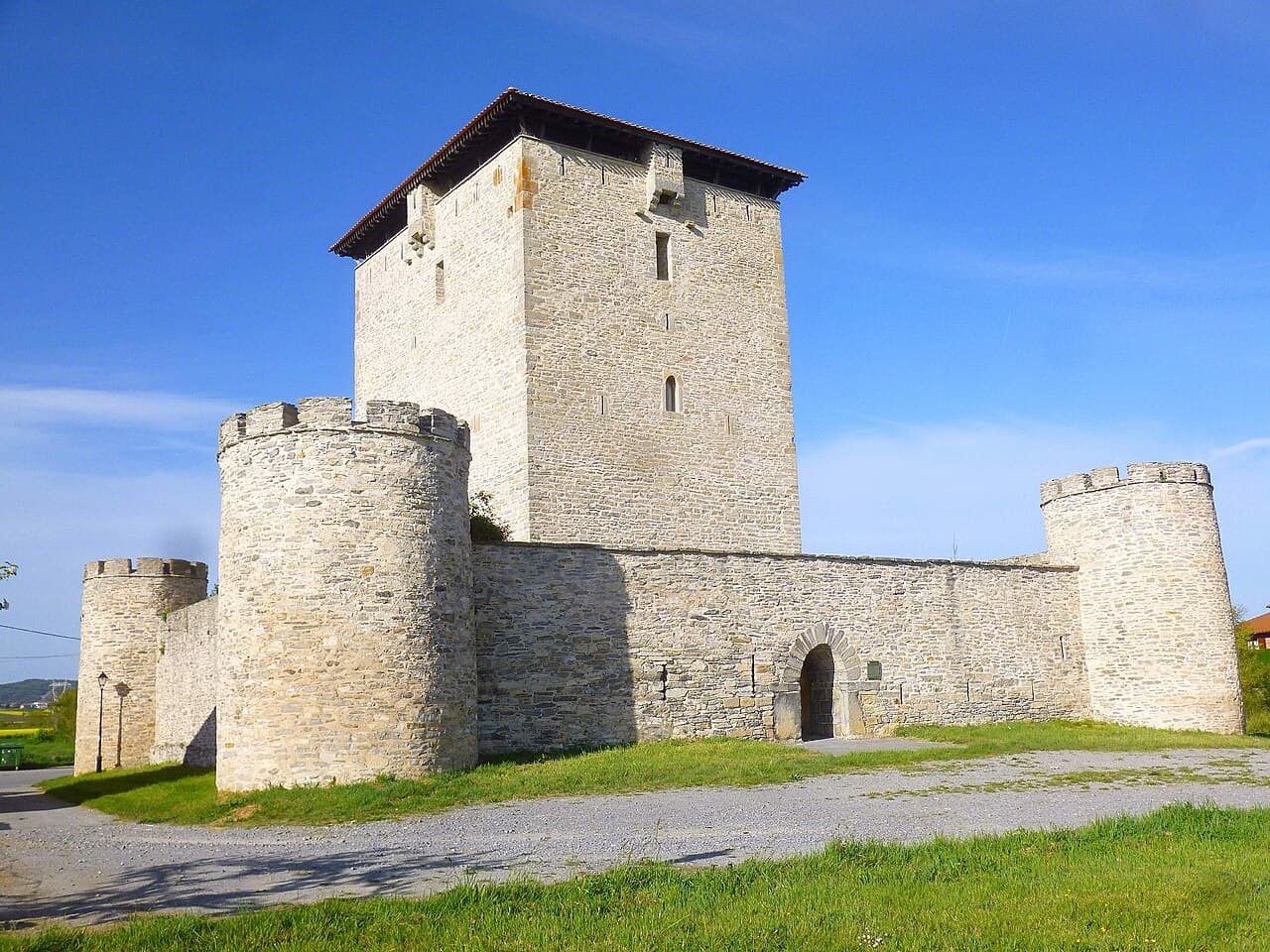
The Tower of Mendoza (Spanish: Torre de Mendoza, Basque: Mendoza dorretxea) is a significant fortified tower located near Vitoria-Gasteiz in the province of Álava, within the Basque Country of Spain. Constructed in the 13th century, this tower served as a defensive residence for the influential House of Mendoza, a noble family that played a prominent role in the history of Castile and the Basque region. The tower's strategic position near the historical routes connecting Old Castile and the Ebro River underscores its military and territorial importance during the High Medieval period.
Historical context and significance
The House of Mendoza rose to prominence in the Middle Ages, acquiring vast estates and political influence. The Tower of Mendoza was constructed as a fortified residence to assert the family's control over the surrounding lands and to provide defense against rival noble factions and other threats. Its location near Vitoria-Gasteiz, a key urban center in Álava, allowed the Mendozas to maintain oversight of important trade and military routes.
Declared a Bien de Interés Cultural in 1984, the tower is recognized for its cultural and historical value, reflecting the feudal architecture and the socio-political dynamics of medieval northern Spain.
Architectural features and design
The Tower of Mendoza exemplifies the typical High Medieval defensive architecture of the 13th century. It is primarily a bastioned fortress, designed to withstand sieges and attacks. The tower's robust stone walls are thick and punctuated by narrow windows and arrow slits, which provided both light and defensive positions for archers.
The structure is characterized by a square or rectangular footprint, rising several stories high, with battlements crowning the top. These battlements allowed defenders to patrol and repel attackers effectively. The entrance is fortified, often accessed via a raised doorway or a drawbridge over a defensive ditch or moat, enhancing security.
Internally, the tower would have contained living quarters, storage rooms, and possibly a chapel, arranged vertically with wooden floors and staircases connecting the levels. The design balances residential comfort with military functionality, typical of noble fortifications of the era.
Defensive elements
The tower's bastions are projecting parts of the walls that enable defenders to cover adjacent walls with crossfire, a feature that became increasingly important as siege tactics evolved. The thick stone walls and elevated position provided a commanding view of the surrounding landscape, allowing early detection of approaching enemies.
The arrow slits and narrow windows minimized vulnerabilities while allowing defenders to shoot arrows or crossbow bolts. The tower's height and solid construction made scaling the walls difficult for attackers.
Location and surroundings
Situated near Vitoria-Gasteiz, the capital city of Álava and the Basque Autonomous Community, the Tower of Mendoza occupies a strategic position in northern Spain. The proximity to the Ebro River and the routes leading to Old Castile made it a crucial point for controlling movement and trade between regions.
The surrounding landscape is a mix of rolling hills and fertile plains, which historically supported agriculture and livestock, sustaining the tower's inhabitants and reinforcing its role as a manorial center.
Preservation and current status
Today, the Tower of Mendoza is well preserved, retaining much of its original medieval structure. Its designation as a Bien de Interés Cultural has helped protect it from significant alteration or decay. Restoration efforts have focused on maintaining the stonework and structural integrity, ensuring that visitors can appreciate the tower's historical and architectural significance.
The tower is accessible to the public for visits, offering insight into medieval fortification techniques and noble life in the Basque Country during the High Medieval period.
Cultural importance and tourism
The Tower of Mendoza is a notable example of medieval military architecture in the Basque region. It attracts historians, architecture enthusiasts, and tourists interested in Spain's feudal past. The tower's connection to the House of Mendoza adds to its allure, linking it to a family influential in shaping regional politics and culture.
Visitors can explore the tower's exterior and some interior spaces, often accompanied by guided tours that explain its historical context, architectural features, and the lifestyle of its medieval inhabitants.
Frequently asked questions (FAQ)
- What is the historical significance of the Tower of Mendoza?
- The Tower of Mendoza is a remarkable example of 15th-century defensive architecture in Spain. It served as a strategic lookout and was integral to the region's defense during various conflicts, showcasing the military importance of the area.
- When was the Tower of Mendoza built?
- The Tower of Mendoza was constructed in the late 15th century, specifically around 1480. Its design reflects the Gothic architectural style that was popular during that period, making it a significant historical landmark.
- Can I visit the Tower of Mendoza?
- Yes, the Tower of Mendoza is open to visitors throughout the year. Guided tours provide insights into its history and architecture, making it an excellent destination for history enthusiasts.
- What are the opening hours for the Tower of Mendoza?
- The Tower of Mendoza is typically open from 10 AM to 6 PM, with extended hours during the summer months. It is advisable to check the official website for any seasonal changes or special events.
- Is it possible to access the Tower of Mendoza by public transportation?
- Yes, the Tower of Mendoza is accessible by public transportation, including local buses and trains. Additionally, the surrounding area is pedestrian-friendly, allowing for easy exploration on foot.
- What is the best time to visit the Tower of Mendoza?
- The best time to visit the Tower of Mendoza is during the spring and fall when the weather is mild and pleasant. These seasons also tend to be less crowded, providing a more enjoyable experience.
- Are there any nearby attractions to visit along with the Tower of Mendoza?
- Yes, several attractions are located near the Tower of Mendoza, including the historic town square and local museums. Visitors can also explore nearby parks and gardens that enhance the overall experience of the area.
- What are the ticket prices for visiting the Tower of Mendoza?
- Ticket prices for the Tower of Mendoza are generally affordable, with discounts available for students and seniors. It's recommended to purchase tickets online in advance to avoid long queues.

Information
Loading map...
Visitor reviews
No reviews yet. Been here? Write the first review and help other travelers!
Write the first reviewVisited this castle? Share your experience
Your review helps other travelers and adds first-hand knowledge to our encyclopedia.