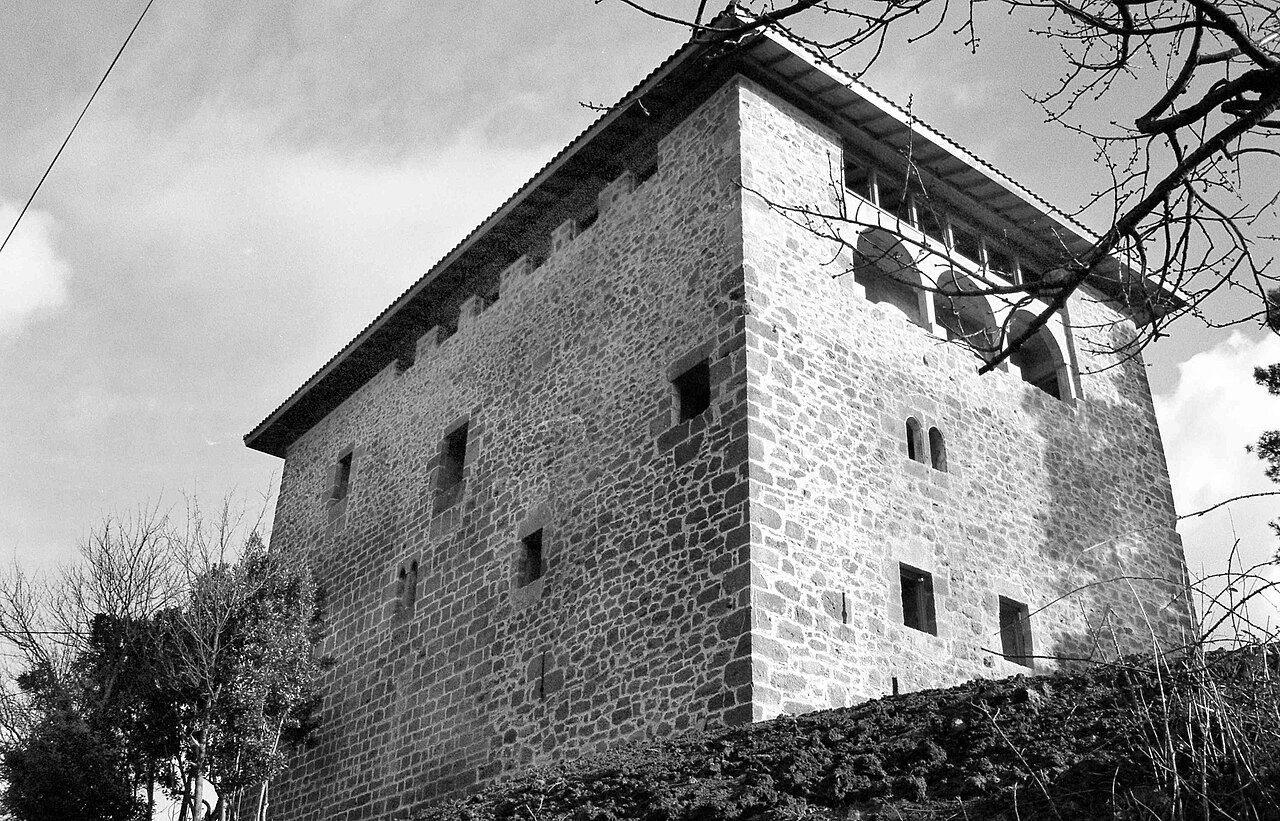
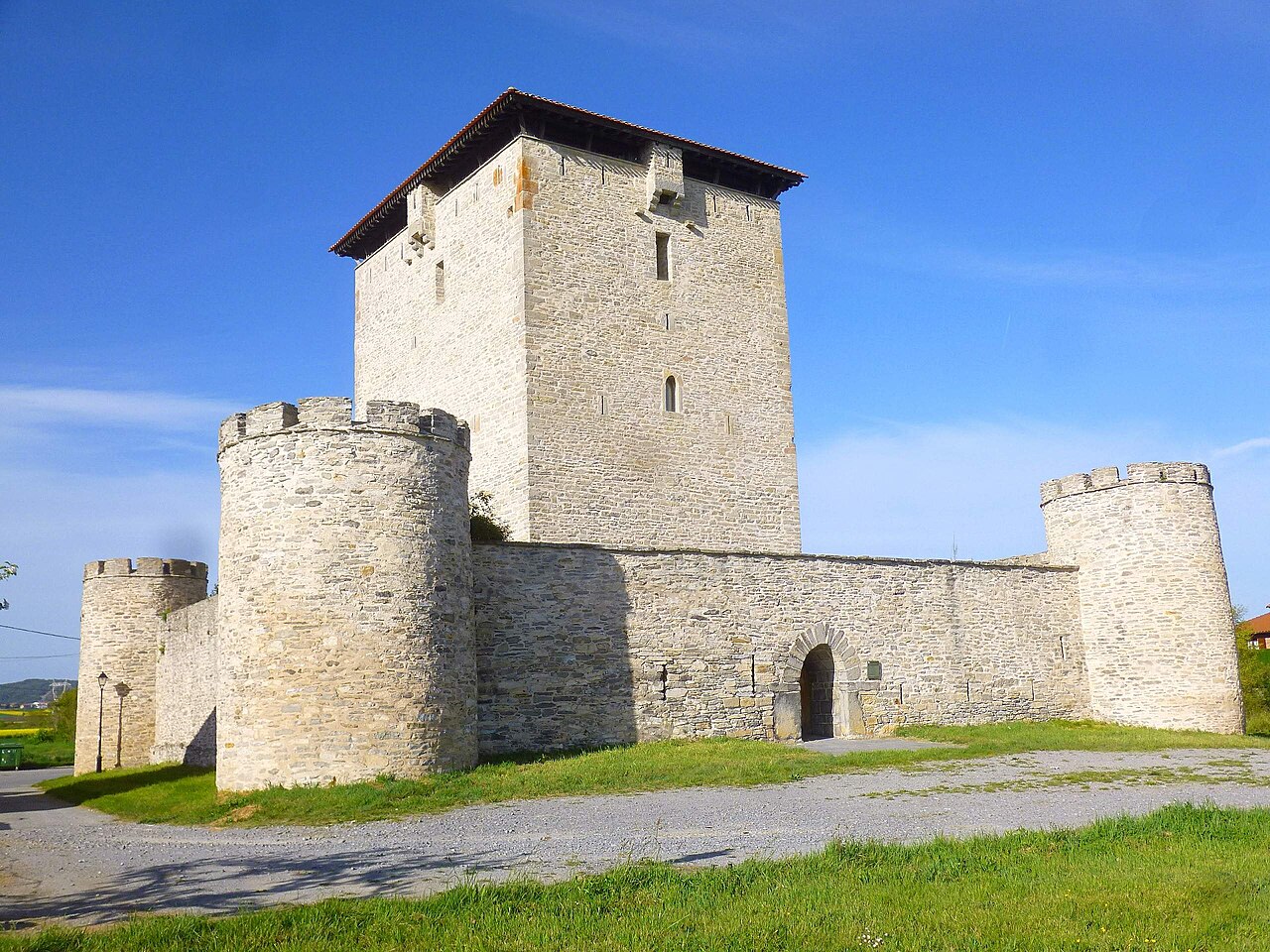
The Castle of Guevara-Gebara is a notable 15th-century hill castle located near the village of Guevara in the municipality of Barrundia, in the Basque Country of Spain. Perched strategically on Monte Guevara at about 661 meters above sea level, the fortress commanded sweeping views over the Llanada Alavesa plain and controlled the vital Royal Post Road route linking the region with the Kingdom of France. This commanding position made the castle a key military and noble stronghold during the Middle Ages and beyond.
Constructed by the medieval Basque civilization, the castle likely replaced an earlier settlement dating back to the 10th century, indicating the site's long-standing strategic importance. The fortress was closely associated with the Guevara family, a noble lineage influential in Álava from at least the 12th century. Among its notable members was Pedro Ladrón de Guevara, a 13th-century leader and Count of Álava. The Guevaras were prominent participants in the Wars of Bands, a series of internecine conflicts between Basque noble factions, siding with the Gamboínos against their rivals, the Oñacinos. These conflicts shaped the political and social landscape of the region during the Late Middle Ages.
Historical significance and military role
Throughout its history, the Castle of Guevara-Gebara served as a military bastion in critical conflicts. In the Peninsular War of the early 19th century, it functioned as a defensive site against Napoleonic forces. Later, during the First Carlist War (1833–1839), the castle became a stronghold for Carlist supporters. It endured an intense eighteen-day siege by liberal troops before falling in 1839. Following its capture, to prevent further military use, General Martín Zurbano ordered the fortress's destruction by a massive explosion using over 2,500 kilograms of gunpowder on November 30, 1839. This act effectively ended Carlist resistance in the area.
An attempt was made to rebuild the castle during the Second Carlist War (1872–1876). Large quantities of stone were transported from the nearby town of Salvatierra for restoration, but the project was never completed. By the 17th century, the castle had already begun to fall into ruin. Local folklore from this period recounts tales of a malevolent spirit haunting the site. Historical records also mention tapestries once displayed inside the castle depicting the romantic story of King Pedro the Cruel of Castile and María de Padilla, linking the fortress to regional legends and cultural heritage.
Architectural features and layout
The castle occupies a roughly rectangular footprint approximately 50 meters long and 18 meters wide. Its walls are about 1.5 meters thick, constructed from a combination of masonry and finely worked ashlar stone typical of 15th-century military architecture. The fortress’s design reflects the influence of European fortifications, notably taking inspiration from the Castel Sant’Angelo in Rome, evident in its imposing cylindrical keep and fortified layout.
The main tower and defensive elements
A dominant feature of the castle was its main tower (keep), situated on the western side of the central courtyard. The tower measures approximately 10 meters in diameter and rises to an estimated height of around 40 meters, making it a prominent lookout and last refuge during attacks. The entrance was accessed via a wooden drawbridge leading to a doorway positioned 4.5 meters above ground level, a defensive design to hinder attackers. Inside, a spiral staircase provided access to multiple vaulted chambers used as guard quarters, a kitchen, and the lord’s residence.
The castle’s defensive architecture includes numerous narrow vertical arrow slits (saeteras) designed for archers to shoot while remaining protected. Four gun ports (embrasures) were positioned to cover key approaches, some of which remain visible among the ruins. Vaulted galleries with arched ceilings extend along the southern and eastern walls on both lower and upper levels, allowing defenders to move protected within the fortress.
Outer defenses and heraldry
The outer defenses comprised towers guarding the walls and southern entrances, which controlled access to the castle’s interior. The southern wall bears a coat of arms of the Malferit family, indicating an alliance or later ownership. Despite the extensive damage caused by the 1839 demolition and the incomplete 19th-century restoration, significant remnants survive, including portions of walls, the main tower, embrasures, galleries, and southern gateways.
Cultural and local significance
Beyond its military and architectural importance, the Castle of Guevara-Gebara holds a place in local cultural memory. The tales of hauntings and the romantic tapestries link the fortress to the region’s folklore and historical narratives. Its association with the noble Guevara family and the Wars of Bands highlights the castle’s role in the Basque Country’s medieval power struggles. The site today stands as a partially preserved ruin offering insight into Basque medieval fortification and noble life.
Visitors to the site can explore the remaining structures and imagine the castle’s former strategic dominance over the surrounding landscape. The castle’s elevated position on Monte Guevara continues to provide commanding views of the Barrundia and Zadorra river basins, underscoring why this location was chosen for defense and control in the medieval period.
Frequently asked questions (FAQ)
- When was the Castle of Guevara-Gebara built?
- The Castle of Guevara-Gebara was constructed in the 15th century, likely replacing an earlier settlement from the 10th century.
- What is the historical significance of the castle?
- The castle was a strategic military fortress for the Basque noble Guevara family and played roles in the Wars of Bands, the Peninsular War, and the Carlist Wars.
- Can visitors see the remains of the main tower?
- Yes, the ruins of the main tower or keep, along with walls, embrasures, and galleries, remain visible at the site today.
- Why was the castle destroyed in 1839?
- After its capture during the First Carlist War, General Martín Zurbano ordered the castle’s destruction with a large explosion to prevent further military use.
- Is the castle accessible to the public?
- The castle remains a ruin on a hilltop and can be visited, but there may be limited facilities or guided tours available.
Information
Website
Visit websiteSources & official resources
Verify the information above using these authoritative references.
Loading map...
Visitor reviews
No reviews yet. Been here? Write the first review and help other travelers!
Write the first reviewVisited this castle? Share your experience
Your review helps other travelers and adds first-hand knowledge to our encyclopedia.