
Tower of Joan of Arc
The Tower of Joan of Arc, located in Rouen, Normandy, stands as a powerful symbol of French history and resilience. This 13th-century keep is the only surviving structure of the original Château de Rouen, a medieval fortress built between 1204 and 1210 by King Philip II of France after reclaiming Normandy from English control. The castle once dominated the northern approach to the city, serving as a vital military stronghold and administrative center for nearly four centuries.
Constructed during the high medieval period, the castle was designed to assert French royal authority and to defend the territory against English and other adversaries. Its strategic location and formidable fortifications made it a key site during the Hundred Years' War and the Wars of Religion. However, the castle's most enduring historical significance is tied to its role as the prison of Joan of Arc, the legendary French heroine and martyr.
Architectural features and medieval design
The keep, now known as the Tour Jeanne d'Arc, represents the quintessential elements of medieval military architecture. Originally part of a larger complex that included curtain walls, towers, and a moat, the keep was designed for defense and surveillance. Its thick stone walls and elevated position provided a commanding view of the surrounding landscape, making it difficult to assault or escape from.
The castle's layout reflected the typical high medieval fortress style, with a focus on strong defensive capabilities. The keep itself was a multi-story stone tower with narrow windows and arrow slits, allowing defenders to repel attackers while remaining protected. The pointed roof, a later addition from restoration efforts in the 19th century, crowns the tower and enhances its distinctive silhouette.
Historical context and significance
Philip ii and the construction of château de rouen
Following his victory over John, Duke of Normandy and King of England, Philip II commissioned the construction of the castle to solidify French control over Normandy. The fortress served as a symbol of royal power and a deterrent against English attempts to reclaim the territory.
The hundred years' war and the castle's military role
During the Hundred Years' War, the castle was a focal point of military operations. It changed hands multiple times as English and French forces vied for control of Normandy. Its robust fortifications allowed it to withstand sieges and served as a prison for high-profile captives.
Joan of arc's imprisonment and trial
The castle's most infamous chapter unfolded in the early 15th century when Joan of Arc was held prisoner in the keep. Captured by the English at the Siege of Compiègne in 1430, Joan was initially confined at Beaurevoir Castle, where she attempted several escapes. Due to the risk of further escape attempts, she was transferred to the more secure castle at Rouen.
From December 1430 until her trial in 1431, Joan was imprisoned in harsh conditions within the tower. The English authorities subjected her to intense interrogation and psychological pressure. Despite threats and the display of torture instruments, Joan remained steadfast and courageous, famously declaring that any confession would be made only under force.
Her trial for heresy, conducted by an English-controlled ecclesiastical court, culminated in her conviction and execution by burning at the stake on May 30, 1431. The Tower of Joan of Arc thus became a symbol of both her martyrdom and the turbulent history of the period.
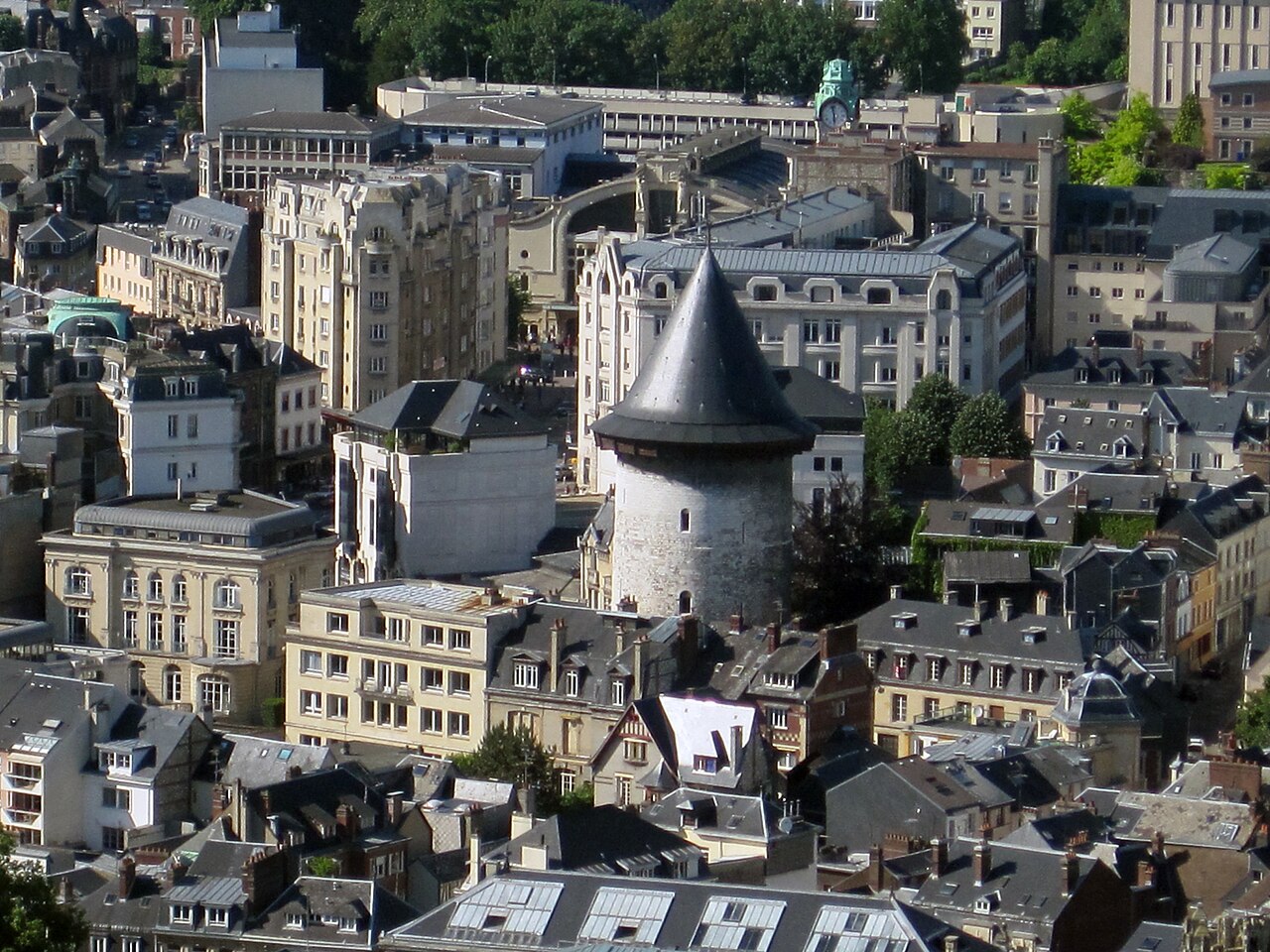
Photo by Alphaclem • CC BY-SA 3.0
Later history and preservation
Following the Wars of Religion, the castle's military importance waned. In 1591, Henry IV of France ordered the dismantling of most of the fortress, leaving only the keep intact. This was due to the vulnerability of medieval fortresses to artillery, which rendered traditional defenses obsolete.
In the 19th century, restoration efforts added the pointed roof to the keep, enhancing its historical character and preserving it as a monument. During World War II, the tower was repurposed by German occupying forces as a bunker and camouflaged to avoid detection.
Today, the Tour Jeanne d'Arc is open to the public as a museum and historical site. Visitors can explore the tower and learn about its architectural features, its role in French history, and the life and legacy of Joan of Arc. The site stands as a testament to medieval military architecture and the enduring spirit of one of France's greatest heroines.
Visiting the tower of Joan of Arc
The tower is located just north of Rouen's medieval town center, making it accessible to visitors interested in exploring Normandy's rich history. The museum offers guided tours and exhibits that provide insights into the castle's construction, the historical context of Joan of Arc's imprisonment, and the broader conflicts that shaped the region.
Visitors are encouraged to take time to appreciate the architectural details of the keep, including its stone masonry, defensive features, and the evocative atmosphere of the prison cells where Joan was held. The site also serves as a poignant reminder of the complex history of medieval France and the enduring legacy of its national heroine.
Frequently asked questions (FAQ)
- How do I get to the Tower of Joan of Arc?
- The Tower of Joan of Arc is located in the heart of Rouen, France, making it easily accessible by public transportation. You can take a bus or tram to the nearest station, which is just a short walk from the castle.
- What is the historical significance of the Tower of Joan of Arc?
- The Tower of Joan of Arc is a crucial historical site as it marks the location where Joan of Arc was imprisoned before her trial. It stands as a symbol of her bravery and the tumultuous events of the Hundred Years' War.
- When was the Tower of Joan of Arc built?
- The Tower of Joan of Arc dates back to the 15th century, though it has undergone various renovations over the years. Its construction was part of the city’s defensive fortifications during a period of conflict.
- Can I take guided tours of the Tower of Joan of Arc?
- Yes, guided tours are available at the Tower of Joan of Arc, providing visitors with detailed insights into its history and architecture. These tours are led by knowledgeable guides who share fascinating anecdotes about Joan of Arc's life and legacy.
- Why is the architecture of the Tower of Joan of Arc significant?
- The architecture of the Tower of Joan of Arc reflects the military design typical of the medieval period, showcasing remarkable defensive features. Its unique blend of Romanesque and Gothic styles makes it an intriguing subject for architectural enthusiasts.
- Is it possible to visit the Tower of Joan of Arc year-round?
- Yes, the Tower of Joan of Arc is open to visitors throughout the year, although opening hours may vary seasonally. It's advisable to check the official website before planning your visit to ensure you have the most up-to-date information.
- What are the ticket prices for the Tower of Joan of Arc?
- Ticket prices for the Tower of Joan of Arc are quite reasonable, with discounts available for students and seniors. Children under a certain age can enter for free, making it an affordable destination for families.
- What is the best time to visit the Tower of Joan of Arc?
- The best time to visit the Tower of Joan of Arc is during the spring and early autumn when the weather is mild and pleasant. This allows for a comfortable exploration of the tower and its surroundings without the summer crowds.
- Are there any nearby attractions to the Tower of Joan of Arc?
- Yes, the Tower of Joan of Arc is situated near several other historical sites, including the Rouen Cathedral and the Gros Horloge. Visitors can easily explore these attractions on foot, making for a rich historical day in Rouen.
Photo gallery

Information
Website
Visit websiteSources & official resources
Verify the information above using these authoritative references.
Loading map...
Visitor reviews
No reviews yet. Been here? Write the first review and help other travelers!
Write the first reviewVisited this castle? Share your experience
Your review helps other travelers and adds first-hand knowledge to our encyclopedia.