Toszek
Toszek Castle stands prominently on a hilltop in the town of Toszek, Poland, commanding views over the surrounding flat landscape. Its origins trace back to a wooden stronghold established around the 10th or 11th century, marking it as a site of early medieval settlement and defense. This initial fortification evolved into a fortified Opolan gord with earthworks, serving as a residence for local rulers during the High Middle Ages.
The first documented mention of Toszek appears in a 1201 papal bull by Innocent III, referencing the church of St. Peter in the settlement. By the 11th century, the gord was elevated to a castellany, a status confirmed in a 1222 record linking it to the Duchy of Racibórz-Opole. The earliest known castellan was Jakub, named in a donation act by Duke Kazimierz of Opole. Throughout the 14th and 15th centuries, the castle and town passed through the hands of the Dukes of Cieszyn and Oświęcim, with local administration managed by appointed starosts.
Medieval origins and gothic transformation
In the late 14th century, the original wooden fortification was replaced by a stone Gothic castle. Constructed with robust stone walls enclosing an oval courtyard, the castle included residential wings on the west and north sides. Its strategic position on a steep hill limited access to a single eastern approach, guarded by a drawbridge over a deep artificial moat and a forward gatehouse projecting beyond the main walls.
The castle endured multiple destructions and reconstructions, notably after a Hussite siege in 1429. Duke Przemysław of Oświęcim led the restoration, establishing the castle as his permanent seat until his death in 1484. Following the extinction of the Piast dynasty in the region, Toszek came under Czech crown control, later forming part of the Toszek-Pyskowice domain under King Matthias Corvinus.
Renaissance rebuilding under the rederns
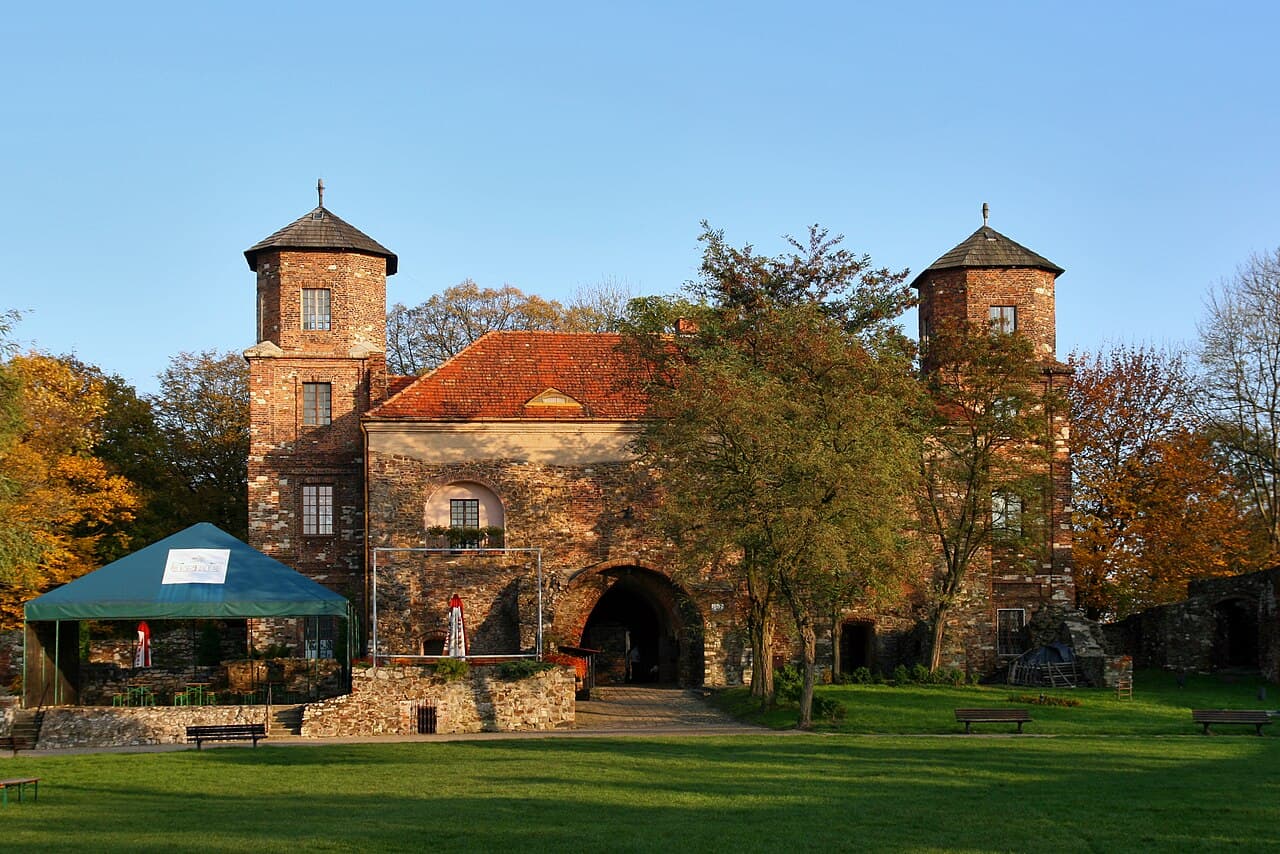
In 1557, the Habsburgs granted Toszek Castle in fief to the von Redern family. After a damaging fire in 1570, the Rederns undertook significant Renaissance-style renovations. They added a new residential building featuring two corner turrets facing the courtyard and constructed a projecting gatehouse with a risalit design. The castle's entrance was fortified further by a bailey with bastions flanking the gate and at the corners.
Georg von Redern purchased the Toszek-Pyskowice estates in 1586, maintaining ownership until 1638. The castle passed to the Colonna family, who transformed it into an early Baroque residence after a major fire in 1677. Baron Casper Collona added a residential house with twin square towers outside the western curtain wall, two towers on the gatehouse, and stables along the northern wall. One bastion was converted into the burgrave's house, serving as the castle's guardhouse.
Later ownership and decline
The castle changed hands several times in the 18th century, owned by Baron Johann Dietrich Peterswaldsky, Count Franz Carl Kottuliński, and the Posadowski family. Under the Posadowskis, the castle enjoyed its most prosperous period, with stables converted into an orangery and gardens featuring fountains and lush vegetation.
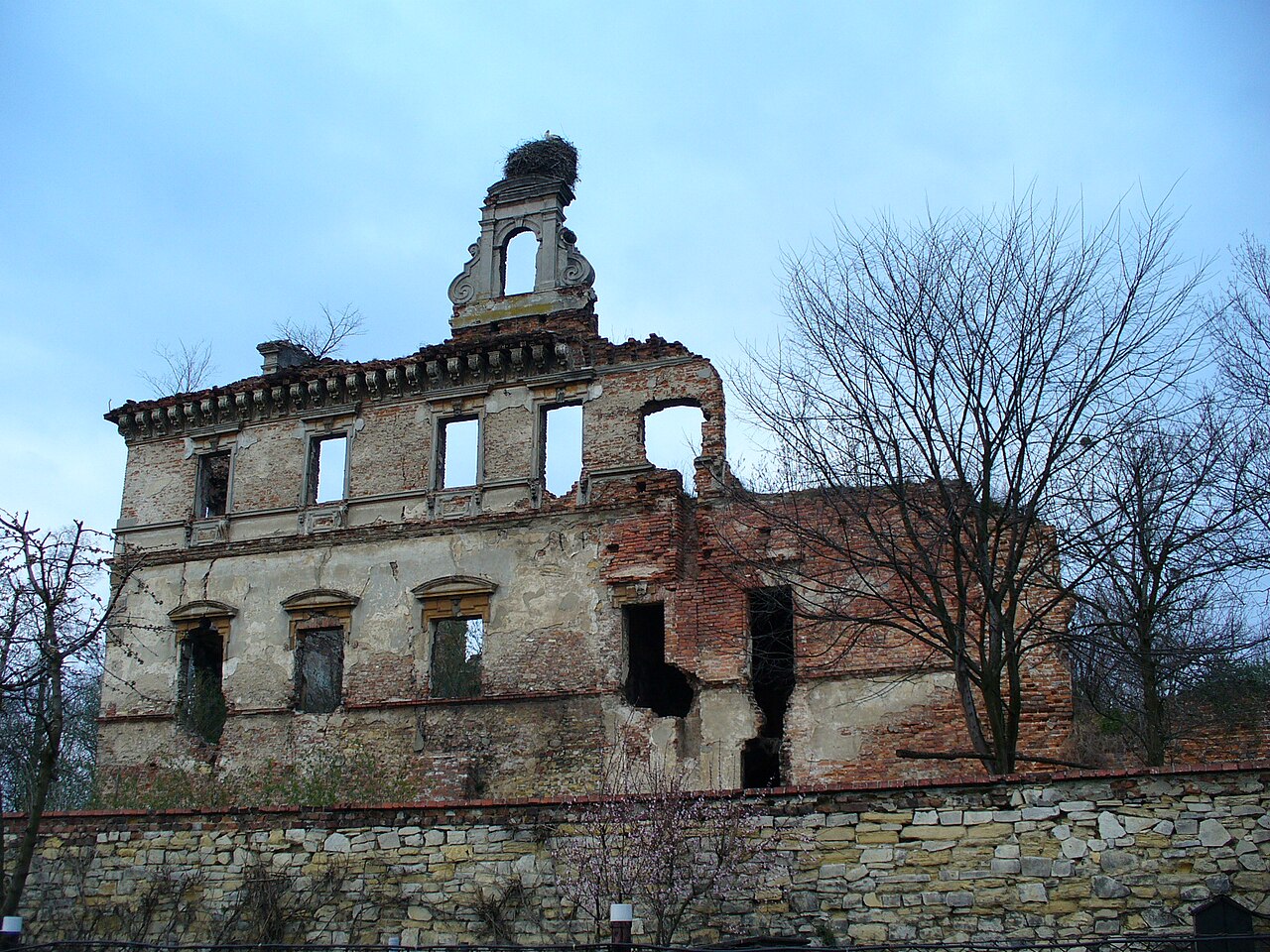
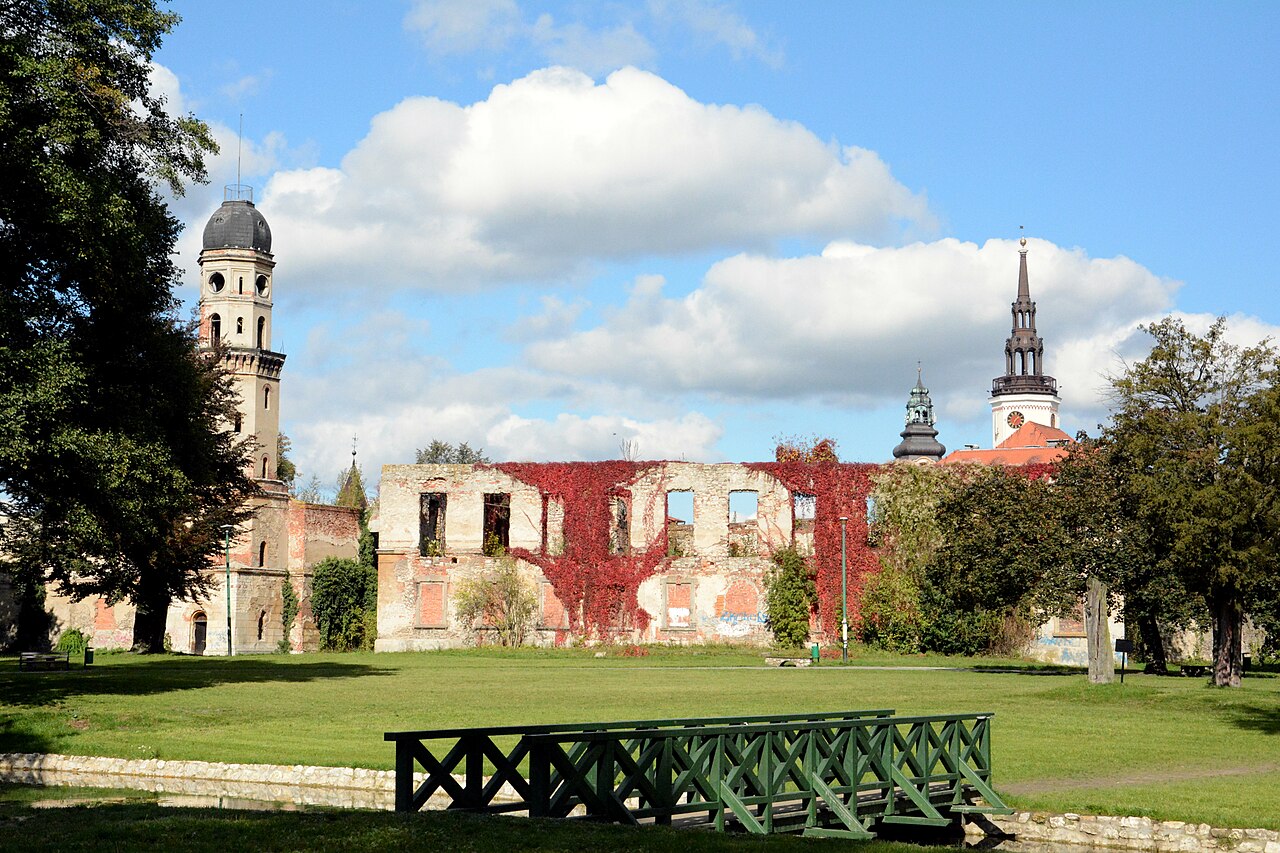
In the late 18th century, Adolph Baron von Eichendorff briefly owned the estate before it was sold in 1797 to the von Gaschin family. A devastating fire in 1811 led the Gaschins to relocate to a newly built manor at the hill's base, leaving the castle abandoned and falling into ruin.
20th-century restoration and present condition
Partial restoration efforts took place during the 1960s and 1970s, stabilizing and reconstructing key elements of the castle. Today, visitors can see the outer enceinte walls, the gatehouse with two flanking towers and a Baroque portal, and the burgrave's house. The massive north tower of the western wing remains standing, while the southern wing collapsed in 1728. The northern wall still supports a building formerly used as stables, and only foundations remain of other structures lost in the 1811 fire.
Legend of the golden duck
A famous local legend tells of Gizel von Gaschin, who during the 1811 fire descended into the castle's underground chambers to hide a family treasure. This treasure was said to be a silver basket with a golden duck incubating eleven golden eggs filled with precious stones. Gizel never regained consciousness after leaving the dungeon, taking the secret of the treasure's location to her grave. The legend endures, inspiring treasure hunters, while the family contract stipulated the treasure remained the Gaschin family's property even after selling the estate.
Architectural features and layout
The castle's layout reflects its layered history, combining medieval defensive elements with Renaissance and Baroque residential modifications. The gatehouse is the oldest masonry component, featuring a four-story tower with a quadrangular base rising to an octagonal upper section. Beneath this tower lie extensive underground chambers used for storage and defense.
The Colonna family's additions included two side towers flanking the main entrance and two ornate stone portals crafted under the direction of Milanese architect Jan Seregno. One smaller portal bears the Colonna coat of arms and was situated above the former stable entrance, while the main portal provides access to the noble residence and showcases Renaissance decorative motifs.
The northern stable building, originally designed to accommodate horses, features horse troughs recessed into the walls. This building was converted into an orangery in the 18th century, illustrating the adaptive reuse of castle spaces in response to changing needs and tastes.
Cultural significance and current use
Today, Toszek Castle serves as a cultural center and popular venue for events such as weddings, reflecting its enduring role as a landmark of regional heritage. Its ruins offer valuable insights into the architectural evolution from a medieval fortress to a Renaissance and Baroque noble residence, embodying centuries of Silesian history.
The castle's preservation and partial restoration allow visitors to explore its historic walls, towers, courtyards, and underground chambers, connecting them with the stories of the many noble families who shaped its destiny. The site remains a testament to the resilience and transformation of medieval castles in Central Europe.
Frequently asked questions (FAQ)
- How do I get to Toszek Castle?
- Toszek Castle is located in the small town of Toszek, Poland, easily accessible by car and public transport. If you're traveling by train, the nearest station is in the town itself, and local buses or taxis can take you to the castle.
- What is the historical significance of Toszek Castle?
- Toszek Castle dates back to the 13th century and has played a pivotal role in the region's history, serving as a stronghold and residence for various noble families. Its strategic location allowed it to be an important military and administrative center throughout the Middle Ages.
- When was Toszek Castle built?
- The construction of Toszek Castle began in the 13th century, with significant renovations and expansions occurring over the centuries. The castle reflects various architectural styles, showcasing its evolution from a medieval fortress to a Renaissance residence.
- Can I visit Toszek Castle?
- Yes, Toszek Castle is open to visitors, and guided tours are available to provide insight into its rich history and architecture. It’s advisable to check the opening hours and any special events before your visit.
- Why is Toszek Castle a popular tourist attraction?
- Toszek Castle attracts visitors due to its historical significance, picturesque architecture, and beautiful surroundings. The castle also hosts cultural events and exhibitions, making it a vibrant part of the community.
- Is it possible to take guided tours of the castle?
- Yes, guided tours of Toszek Castle are available, offering an in-depth look at its history and architectural features. Tours are typically available in multiple languages, enhancing the visitor experience.
- What are the opening hours for Toszek Castle?
- Toszek Castle generally opens daily during the tourist season, which runs from spring to autumn. However, it's best to check the official website or local tourist information for the most current opening hours and any seasonal changes.
- What are the ticket prices for visiting Toszek Castle?
- Ticket prices for Toszek Castle are quite reasonable, with discounts available for students, seniors, and families. Prices may vary based on guided tours or special events, so it's advisable to check in advance for the latest information.
- What is the best time to visit Toszek Castle?
- The best time to visit Toszek Castle is during the spring and summer months when the weather is pleasant, and the castle gardens are in full bloom. Additionally, many cultural events and festivals take place during this time, enhancing your experience.
- Are there any nearby attractions to explore?
- Yes, the area around Toszek Castle offers several attractions, including the charming town of Toszek with its local shops and restaurants. Nearby, you can also explore beautiful natural parks and other historical sites that add to the richness of your visit.
Photo gallery

Information
Website
Visit websiteSources & official resources
Verify the information above using these authoritative references.
Loading map...
Visitor reviews
No reviews yet. Been here? Write the first review and help other travelers!
Write the first reviewVisited this castle? Share your experience
Your review helps other travelers and adds first-hand knowledge to our encyclopedia.